


In 1960, nine years before he walked on the moon, a 30-year-old test pilot named Neil Armstrong applied to fly the X-20 Dyna-Soar — a Mach 5 reusable spaceplane being built by Boeing for the U.S. Air Force, designed to launch on a rocket booster, glide through the upper atmosphere, and land on a runway. The program spent $410 million in 1963 dollars — roughly $3.5 billion today — building a 36-foot delta-winged spacecraft sheathed in molybdenum, graphite, and zirconia heat shielding capable of hypersonic flight at the edge of space. Defense Secretary Robert McNamara cancelled the X-20 in December 1963, and the United States would not fly a reusable spaceplane until the Space Shuttle Columbia took off 18 years later in 1981.
X-20 Spaceplane Could Have Been an Early Space Shuttle

The Air Force’s X-37B Orbital Test Vehicle Mission 5 successfully landed at NASA’s Kennedy Space Center Shuttle Landing Facility Oct. 27, 2019. The X-37B OTV is an experimental test program to demonstrate technologies for a reliable, reusable, unmanned space test platform for the U.S. Air Force.
This was a plus-MACH 5 spaceplane developed by the United States that should be more than a footnote to history. It simply looked cool and was ahead of its time. Produced during the height of the Cold War from 1959 to 1962, the X-20 Dyna-Soar had success written all over it. The hypersonic spacecraft later reminded people of the Space Shuttle. Dyna-Soar stood for “Dynamic Soaring,” and that was an apropos nickname.
Hard to Focus on the Space Program
However, the United States was busy at the time. The Cold War was burning hot. The Berlin Wall was constructed in 1961. Thousands of military advisors were assisting the South Vietnamese Army (ARVN), which led to a disastrous war. More nuclear-powered submarines were being built. The timing just wasn’t right for the X-20.
An Early Space Shuttle That Glowed with Potential
One innovation that stood out was the possibility that the X-20 could be reusable like the Space Shuttle. This was a huge innovation. Plus, it would only need one pilot, so a large group of astronauts would not have to be trained, shortening the time before it flew regularly.
A Reconnaissance Platform Like No Other
The Air Force and Boeing got to work with enthusiasm. The project had much potential, and engineers and designers scrambled to be assigned to the program, thinking the space plane would be revolutionary. One use case was reconnaissance. The X-20 could have been deployed to detect the launch of Soviet nuclear weapons and keep an eye on other developments on Earth.
It Could Have Been an Orbital Missile Truck
The space plane was big enough to conduct experiments while in orbit. The pilot would have to double as a researcher, but that kind of cross-training was made possible by NASA and the Air Force. What about offensive military purposes? There was even a movement to convert the X-20 into a hypersonic bomber, perhaps with a nuclear warhead. That got strategists at think tanks like the RAND Corporation wondering if the United States could have another way to deliver weapons of mass destruction.
The Money Needed for the Program Was Alarming
But there was a problem with constructing this ambitious spacecraft. The funding was sucked out the window because of these heady objectives. The X-20 needed to be more than just a technology test bed. The Air Force wanted it as a fully functioning and mass-produced weapons platform. So, NASA agreed to help cut costs, but the budget crept up. The military and Boeing spent $410 million (or $3.5 billion in today’s dollars) on the program. This was a stinging blow, and the Department of Defense and Congress had second thoughts.
More On the X-20 Specs
The Dyna-Soar mockup was nearly 36 feet long, and the wings were delta-swept and had an over 20-foot wingspan. Its design was rounded, without the sharp angles of fighter planes. The space plane lacked landing gear with wheels; instead, it had retractable struts. The X-20 was also equipped with heat-resistant superalloys such as molybdenum, graphite, and zirconia, which accumulated around the bottom of the spacecraft.
Could Neil Armstrong Have Been Chosen as the Pilot?
NASA and the Air Force looked at what they had designed and were intrigued. It was time to choose astronauts, and pilots jumped at the opportunity to fly something like this. One applicant was a 30-year-old test pilot and aerospace engineer named Neil Armstrong. Armstrong wanted this opportunity badly because he loved the potential credit he would get for flying something this revolutionary.
The Hype Surrounding the Program Was at a Fever Pitch
The X-20 was to be dropped by a B-52 for a test flight, and that was seen as another innovation that set the Dyna-Soar program apart. The public was allowed to see the spacecraft in Las Vegas, and they loved it. The X-20 needed a huge rocket booster. This was being tested to the satisfaction of the engineers and technicians. It seemed like green pastures were ahead of the X-20.
As Robert F. Dorr wrote on Defense Media Network, “At every stage of its design and development, Dyna-Soar was capable of being a fully orbital spacecraft, but as the program moved ahead, emphasis stayed on its capabilities as a suborbital, hypersonic spaceplane/glider that could ‘skip’ along the earth’s atmosphere.”
Death From Above
Due to the early success, engineers got even more creative. If this thing could successfully reach orbit, then it could perhaps become an offensive weapon system. Plans were made for Dyna-Soar III that would launch hypersonic missiles. The Soviets would not have time to react to a missile coming from space and flying so fast that it could not be intercepted.
Too Long of a Lead Time
Another issue hindered the program. The flying prototype was not ready in the late 1950s and early 1960s. NASA and the Air Force estimated that it could take two decades for the final version of Dyna-Soar III to be ready. The Americans would be able to walk on the moon by then. The X-20 program began to lose its luster, and the Department of Defense became frustrated at these schedule slips and cost overruns.
A Victim of Cost-Cutting
President John F. Kennedy’s new Secretary of Defense, Robert McNamara, got involved. He was a brainy “whiz kid” who used a new statistical method, systems analysis, to determine which programs needed the most funding. His underlings were also schooled in this type of mathematics. They crunched the numbers, and the X-20 did not pass muster. It was canceled in 1963.
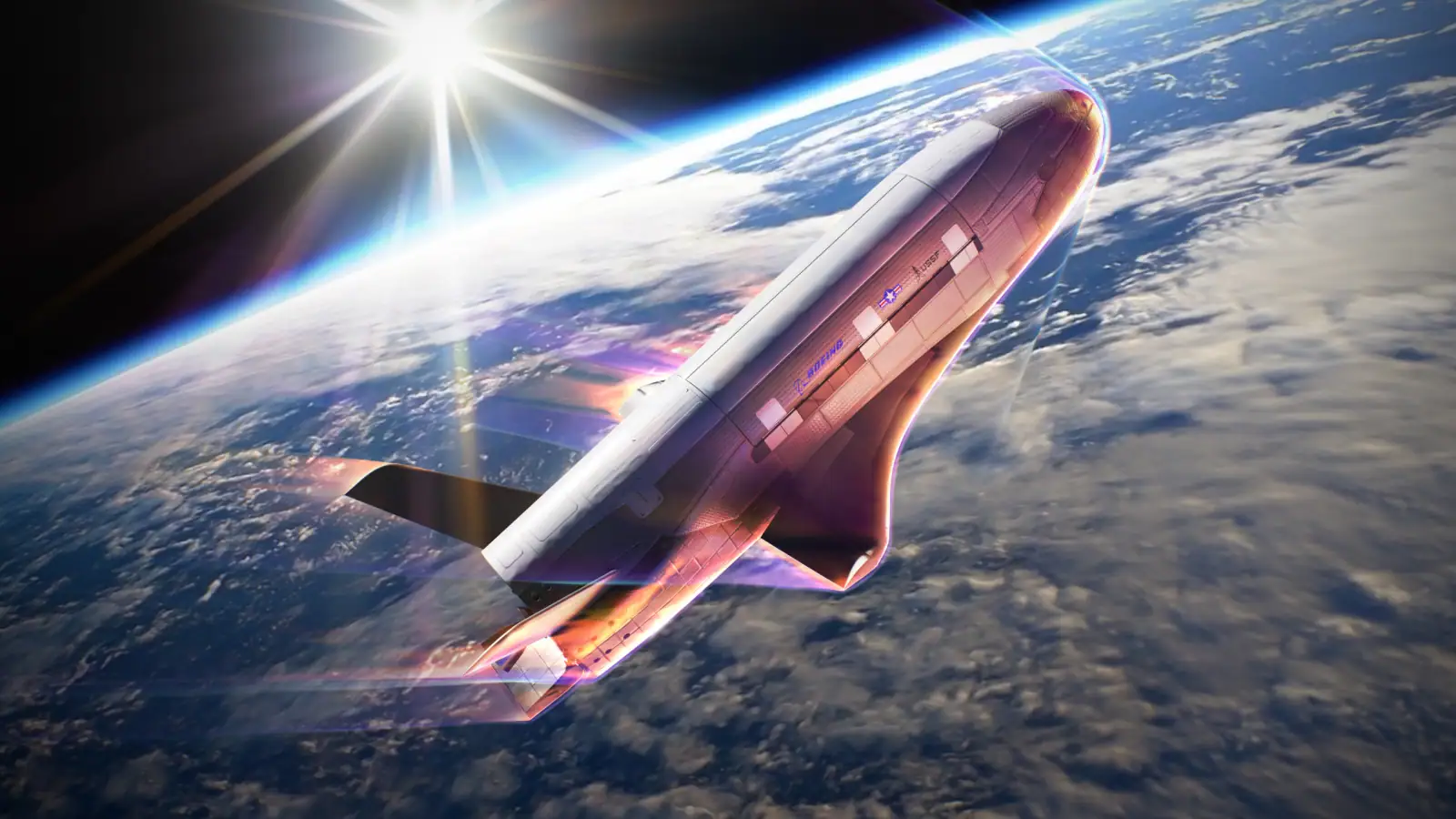
X-37B. Image Credit: Creative Commons.

X-37B Orbital Test Vehicle concludes its sixth successful mission. Image Credit: Creative Commons.
Give the Air Force and NASA credit for being way ahead of their time. The X-20 could have been groundbreaking. It just cost too much, and the technology did not meet expectations. The use cases remain relevant today, as hypersonic weapons are all the rage. Plus, a reusable spacecraft capable of offensive combat missions is something to ponder. But there was finally no joy for the X-20; it was never able to soar dynamically.
About the Author: Dr. Brent M. Eastwood
Author of now over 3,500 articles on defense issues, Brent M. Eastwood, PhD, is the author of Don’t Turn Your Back On the World: A Conservative Foreign Policy and Humans, Machines, and Data: Future Trends in Warfare, plus two other books. Brent was the founder and CEO of a tech firm that predicted world events using artificial intelligence. He served as a legislative fellow for US Senator Tim Scott and advised the senator on defense and foreign policy issues. He has taught at American University, George Washington University, and George Mason University. Brent is a former US Army Infantry officer. He can be followed on X @BMEastwood.


