

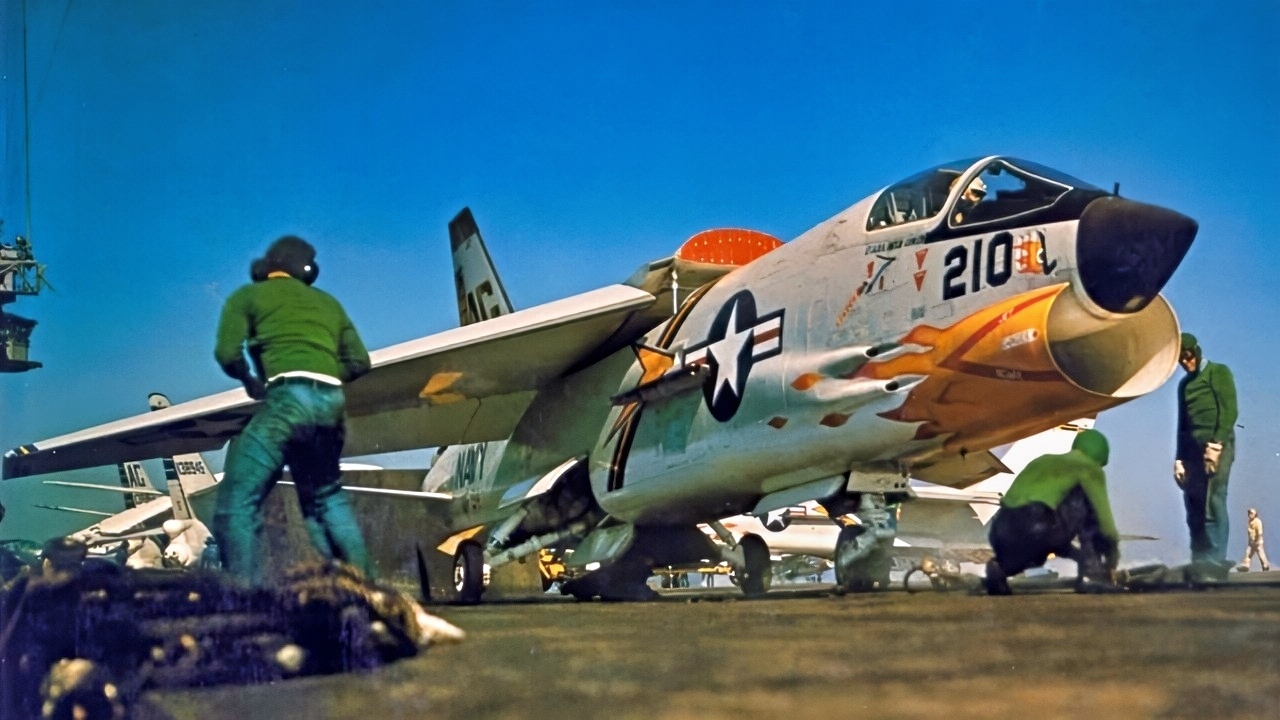
A U.S. Marine Corps pilot ejected from his F-8 Crusader fighter at 47,000 feet during a Cold War flight from Massachusetts to South Carolina. He was ejected directly into a cumulonimbus thunderstorm over Norfolk, Virginia. The pilot was not wearing a pressure suit. The temperature at 47,000 feet was -50°C / -58°F. He suffered immediate decompression. Blood seeped from his eyes, ears, nose, and mouth. His abdomen swelled from gas expansion. The storm’s updrafts deployed his parachute prematurely. He was trapped inside the thunderstorm for 40 minutes. A normal descent from 47,000 feet should take only a few minutes. The pilot was battered by hailstones and torrential rain. Lightning lit up his parachute so brilliantly he believed he had been killed. He landed near Ahoskie, North Carolina. He survived.
An F-8 Crusader Pilot Survived The Impossible
There are some stories out there that are so extraordinary, so unique, and so insane that they are sometimes hard to believe. One such story is that of Lieutenant Colonel William H. Rankin, an experienced U.S. Marine Corps pilot who flew his plane through a storm.
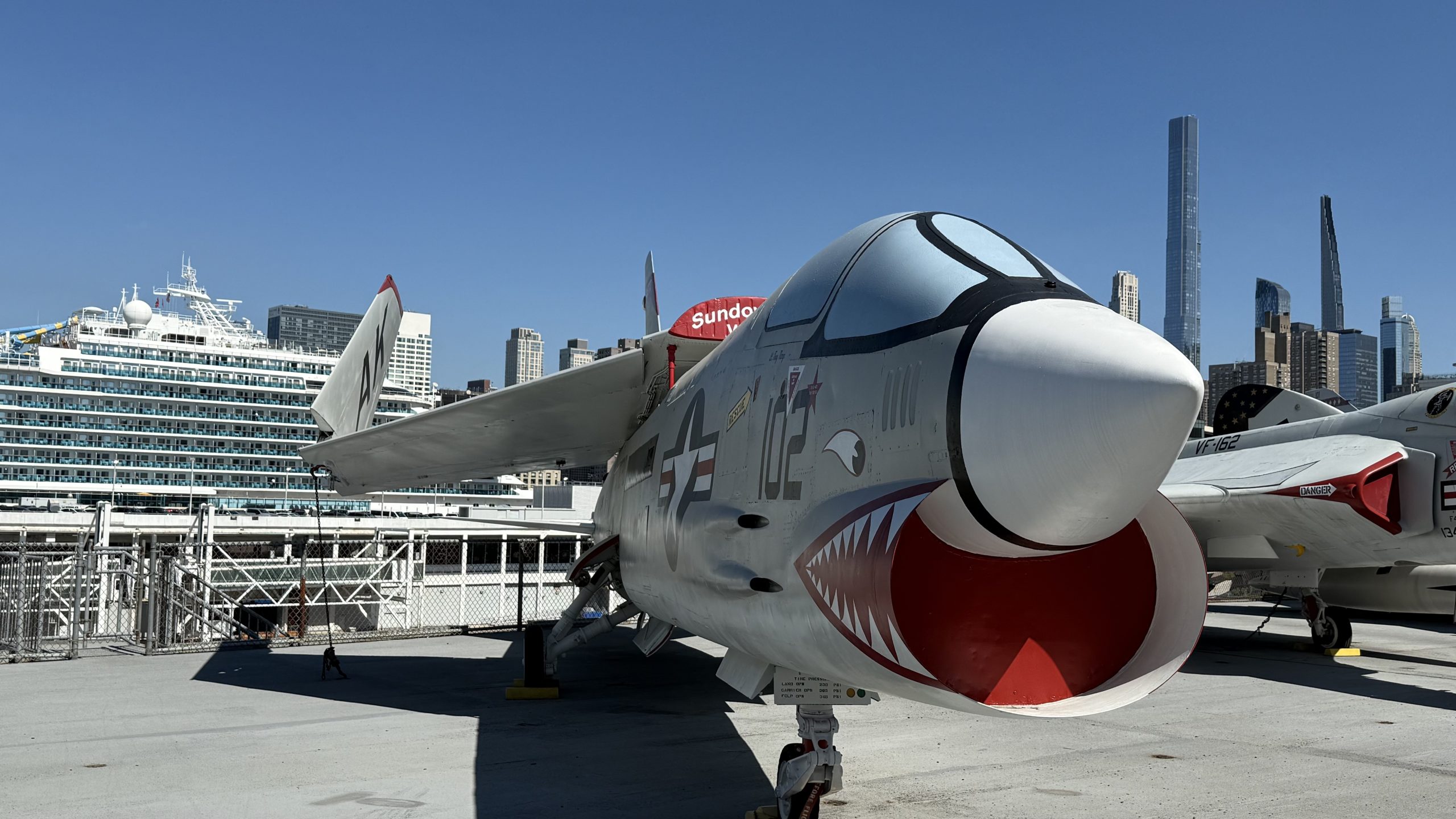
F-8 Crusader. National Security Journal Image.
During his flight, he lost his engine and was forced to eject at almost 50,000 feet without a pressure suit. Immediately suffering from frostbite and depressurization, Rankin then descended through the storm, getting violently tossed about by the harsh winds. Despite these horrific conditions, he managed to descend with his parachute and survive the encounter.
Flying too Close to the Storm
On July 26, 1959, Rankin set out on what was supposed to be a routine flight in his F-8 Crusader from Massachusetts to South Carolina. Forecasts had warned of thunderstorms along his route, but nothing seemed beyond the scope of a skilled and experienced pilot.
As Rankin approached the Norfolk, Virginia area, he encountered towering cumulonimbus clouds rising higher than expected, forcing him to climb to approximately 47,000 feet in an effort to stay above the storm system. At that altitude, the air temperature hovered around −50°C (−58°F), and survival depended on the aircraft’s pressurization and oxygen systems. For a moment, it appeared he had successfully avoided the worst of the weather.
Without warning, however, Rankin’s engine failed catastrophically. A rumbling sound filled the cockpit, followed by a flashing fire warning light. He attempted to engage auxiliary power, but the control lever snapped off in his hand, leaving him powerless in a supersonic jet at extreme altitude.
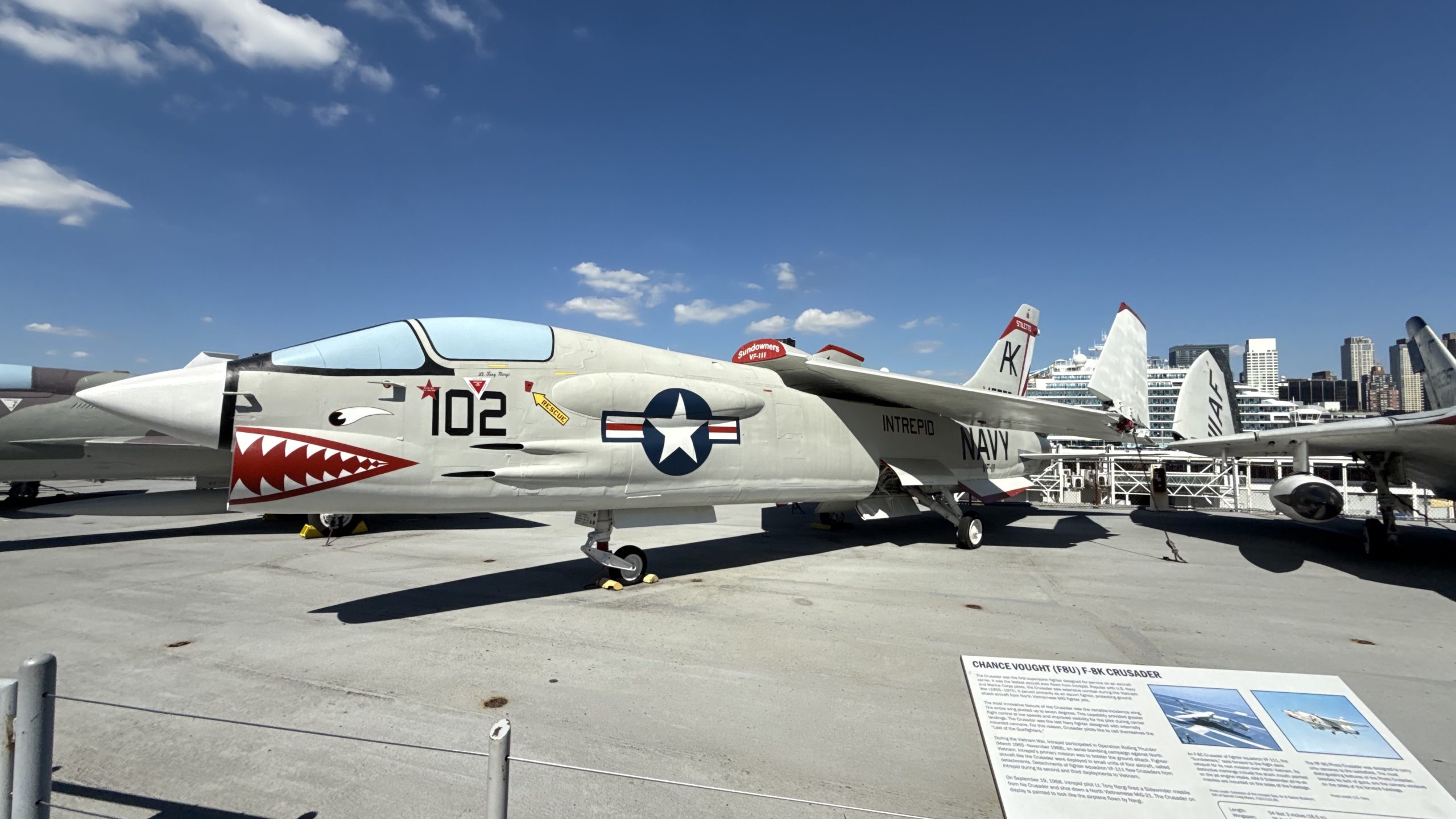
F-8 Crusader. National Security Journal Image.
With no other options remaining, Rankin made the decision to eject. At about 6:00 p.m., he was blasted out of the aircraft into the thin, freezing atmosphere far above the earth.
Falling into Darkness
The moment he left the cockpit, Rankin’s body was subjected to violent and immediate physiological stress. Without a pressurized suit, he experienced rapid decompression, causing blood to seep from his eyes, ears, nose, and mouth.
His abdomen swelled painfully as internal gases expanded, and the frigid air began to freeze exposed skin almost instantly. Despite the chaos and physical shock, Rankin managed to activate his emergency oxygen supply, a critical action that helped him remain conscious as he began his descent.
Instead of falling into clear air, Rankin plunged directly into the massive thunderstorm clouds that he had tried to avoid. His parachute, which was designed to deploy at a lower altitude, opened prematurely due to the storm’s pressure disturbances, leaving him suspended within the storm rather than falling quickly through it. Powerful updrafts and downdrafts repeatedly threw him upward and downward, trapping him inside the cloud and preventing a normal descent.
Enduring Some of the Worst Conditions
Rankin later described the experience as nightmarish.
He was battered by hailstones and subjected to torrential rain so intense that he had to hold his breath to avoid drowning. Lightning flashed all around him, appearing as bright, thick streaks that illuminated the cloud from within. The thunder was so loud and close that he could feel it physically, reverberating through his body.
At one point, a flash of lightning lit up his parachute so brilliantly that he thought he had been killed. All the while, he had no visibility whatsoever; he was surrounded by dense cloud, unable to see the ground or orient himself.
The turbulence inside the storm caused him to spin violently, making him disoriented and nauseated to the point of vomiting. The freezing temperatures, constant impacts from hail, and relentless motion created a situation that should have been unsurvivable.
Yet even more astonishing was the duration of the ordeal.
What would normally be a descent lasting only a few minutes stretched into approximately 40 minutes as the storm’s vertical air currents kept him suspended inside the cloud. He was, quite literally, trapped inside the storm, carried along by its immense and unpredictable forces.
Miraculous Survival
Eventually, the violence began to subside. Rankin emerged from the bottom of the cloud and descended into calmer air. At around 6:40 p.m., roughly 40 minutes after ejecting, he finally reached the ground near Ahoskie, North Carolina.
He landed in a wooded area, battered and severely injured but alive.
He was then admitted to a nearby hospital, where he was treated for frostbite, bruises, welts from hail impacts, and lingering effects from decompression. Despite his condition, he recovered fully.
In the years that followed, Rankin recounted his experience in his book, The Man Who Rode the Thunder, providing a detailed, deeply personal account of his ordeal. He resumed his career in the Marine Corps until he retired in 1964, after 24 years of flight service.
He eventually passed away in Oakdale, Pennsylvania, in 2009 at the age of 88.
To this day, he remains one of the few aviators to have parachuted into a thunderstorm and survived.
About the Author: Isaac Seitz
Isaac Seitz, a Defense Columnist, graduated from Patrick Henry College’s Strategic Intelligence and National Security program. He has also studied Russian at Middlebury Language Schools and has worked as an intelligence Analyst in the private sector.


