

On September 26, 1983, Soviet Lieutenant Colonel Stanislav Petrov was on the midnight shift at the Serpukhov-15 command center when his early warning satellite reported five American intercontinental ballistic missiles inbound. Protocol required him to relay the warning to Moscow, which would have launched a full Soviet ICBM retaliation. Petrov refused. He reasoned that a real American strike would involve hundreds of missiles, not five. He waited 23 minutes. Nothing hit. It was later determined the satellite had mistaken sunlight reflecting off high-altitude clouds for missile exhaust. Petrov was reprimanded for incomplete paperwork. The world learned about the incident only after the Soviet Union collapsed.
How World War III Could Have Started in 1983
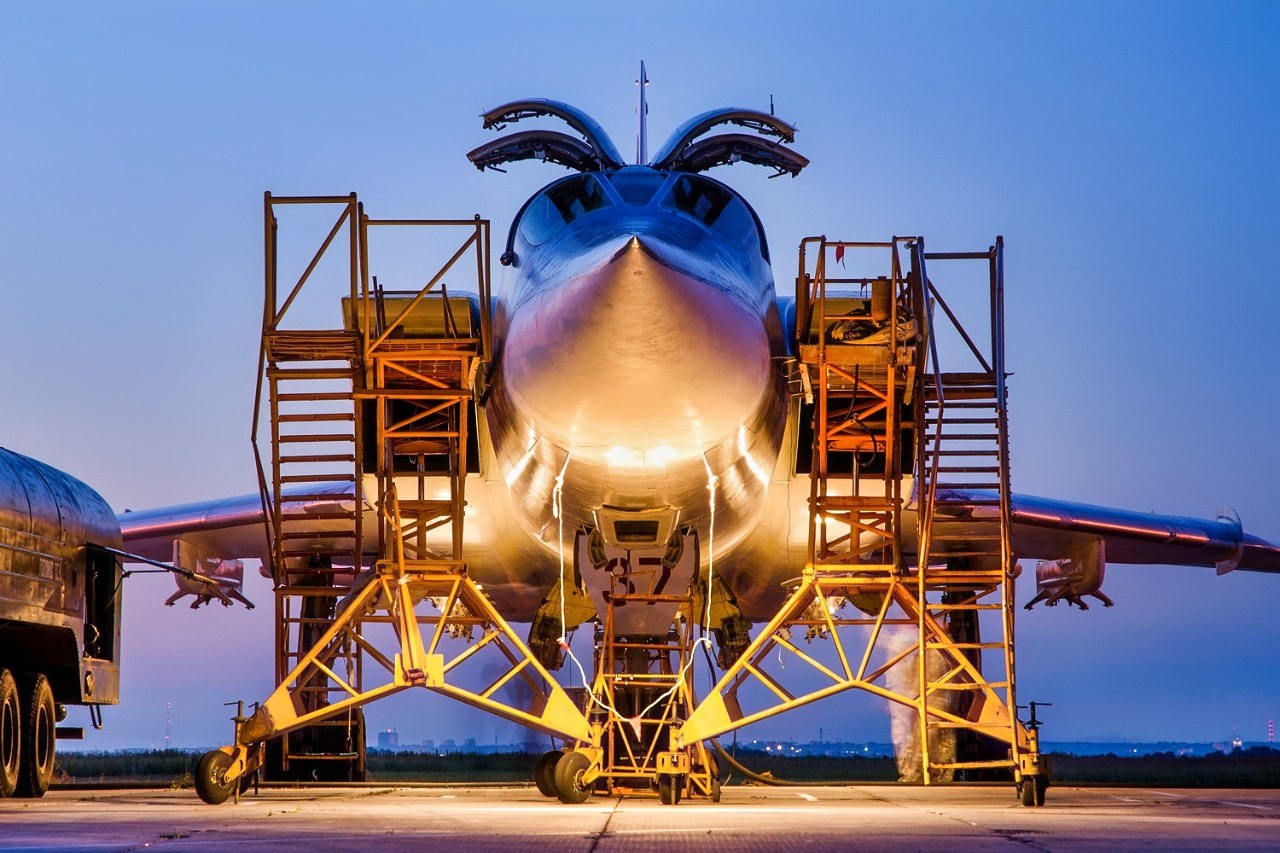
Tu-22M Bomber from Russia. Image Credit: Creative Commons.
The Cold War had its heated moments, where the United States and the Soviet Union nearly came to war, the Cuban Missile Crisis, the Berlin Wall, among other incidents, that immediately come to mind.
But at times, while nothing unusual was happening, a computer glitch nearly brought the two countries to the brink of nuclear war.
On September 26, 1983, Soviet Lieutenant Colonel Stanislav Petrov averted a potential nuclear war by deciding a computer-reported U.S. missile launch was a false alarm.
Petrov was monitoring the Serpukhov-15 command center when the satellite system warned of five incoming American ICBMs, but Petrov’s gut feeling and logical reasoning—that a real attack would involve more than five missiles—prevented a retaliatory strike.
Background On The Potential Nuclear Disaster
September 1983 was a very tense time in the Cold War. Just weeks before this potential flashpoint, on September 1, 1983, a Soviet Su-15 interceptor shot down Korean Air Lines Flight 007 (KAL 007) near Sakhalin Island after the Boeing 747 strayed into prohibited Soviet airspace.
All 269 passengers and crew, including U.S. Congressman Larry McDonald, were killed. The incident occurred amid heightened Cold War tensions, as U.S.-Soviet hostility escalated. The Soviet pilot identified the aircraft as a 747, but his commanders were convinced it was a spy plane.
Petrov’s midnight shift at the Soviet missile detection command center was shaken by the computer early warning system telling him the US had launched five ICBMs.

Tu-22M3 Russian Bomber. Image Credit: Creative Commons.
Soviet protocol was for him to relay the message to Moscow, which would then retaliate with a massive ICBM strike of its own. But Petrov broke protocol, which may have saved the world from nuclear anihilation.
Petrov reasoned that if the United States were going to strike the Soviet Union, it wasn’t going to be with just five ICBMs. He had been trained to believe that the United States would send hundreds of missiles against the Soviet Union. His gut told him it was a computer glitch.
Several Soviet satellite operators reported to Petrov that they detected no launches of American ICBMs. So, Petrov waited. His hesitation could have cost the Soviets everything if the attack was real.
Petrov Finally Reported To His Superiors Of a Computer Malfunction
“There were 28 or 29 security levels. After the target was identified, it had to pass all of those ‘checkpoints’. I was not quite sure it was possible, under those circumstances,” Petrov said to the BBC in an interview shortly before his death.
“We built the system to rule out all possibilities of false alarms,” he said to TIME magazine in 2015. “And that day the satellites told us with the highest degree of certainty that these rockets were on the way.”
Then came the sweating out period to ensure that he hadn’t been wrong. If the US had launched missiles, they would have impacted the Soviet Union in 23 minutes.
“Twenty-three minutes later, I realized that nothing had happened. If there had been a real strike, then I would already know about it. It was such a relief,” he added.

Tu-95 Bomber Russian Air Force. Image Credit: Creative Commons.

Tu-95 Bear Bomber. Image Credit: Creative Commons.
“Lucky It Was Me,” Petrov Saved The US and the USSR from a Nuclear WWIII
Petrov, in his interview with the BBC, said he wasn’t sure the computer glitch wasn’t a missile attack, putting the odds at 50/50.
Petrov was the son of a World War II veteran and was born in Vladivostok in 1939. He joined the Soviet Air Defense Forces in the early 1970s and rose to the rank of Lieutenant Colonel.
My colleagues were all professional soldiers; they were taught to give and obey orders,” he said.
Petrov added that if somebody else had been on shift, the alarm would have been raised, and the world might have been in the middle of a nuclear war.
It was later learned that the “computer glitch” that caused the false alarm occurred when the warning system mistook sunlight reflecting off clouds for engine exhaust from ballistic missiles.
“Can you imagine?” Petrov added to TIME. “It was as though a child had been playing with a vanity mirror, throwing around the Sun’s reflection. And by chance, that blinding light landed right in the center of the system’s eye.”
He was asked if he considered himself a hero.
“That was my job”, he says. “But they were lucky it was me on shift that night.”
“The Man Who Saved The World”
Petrov and the Soviets kept the incident secret for a decade. After the collapse of the Soviet Union, the story finally came to light.
Petrov received some accolades for his brave decision that fateful night in 1983. In 2004, Petrov received the World Citizen Award for “the part he played in averting a catastrophe.” Another award came in 2006, when he was honored at the United Nations. Petrov also received the Dresden Peace Prize in 2013.
But not from the Soviets. He was officially reprimanded for failing to properly log every moment of the incident. He was reassigned and denied promotion.
When he died in 2017 at the age of 77, he was known in a documentary as “The Man Who Saved the World.” It was a well-deserved title.
About the Author: Steve Balestrieri
Steve Balestrieri is a National Security Columnist. He served as a US Army Special Forces NCO and Warrant Officer. In addition to writing on defense, he covers the NFL for PatsFans.com and is a member of the Pro Football Writers of America (PFWA). His work was regularly featured in many military publications.


