

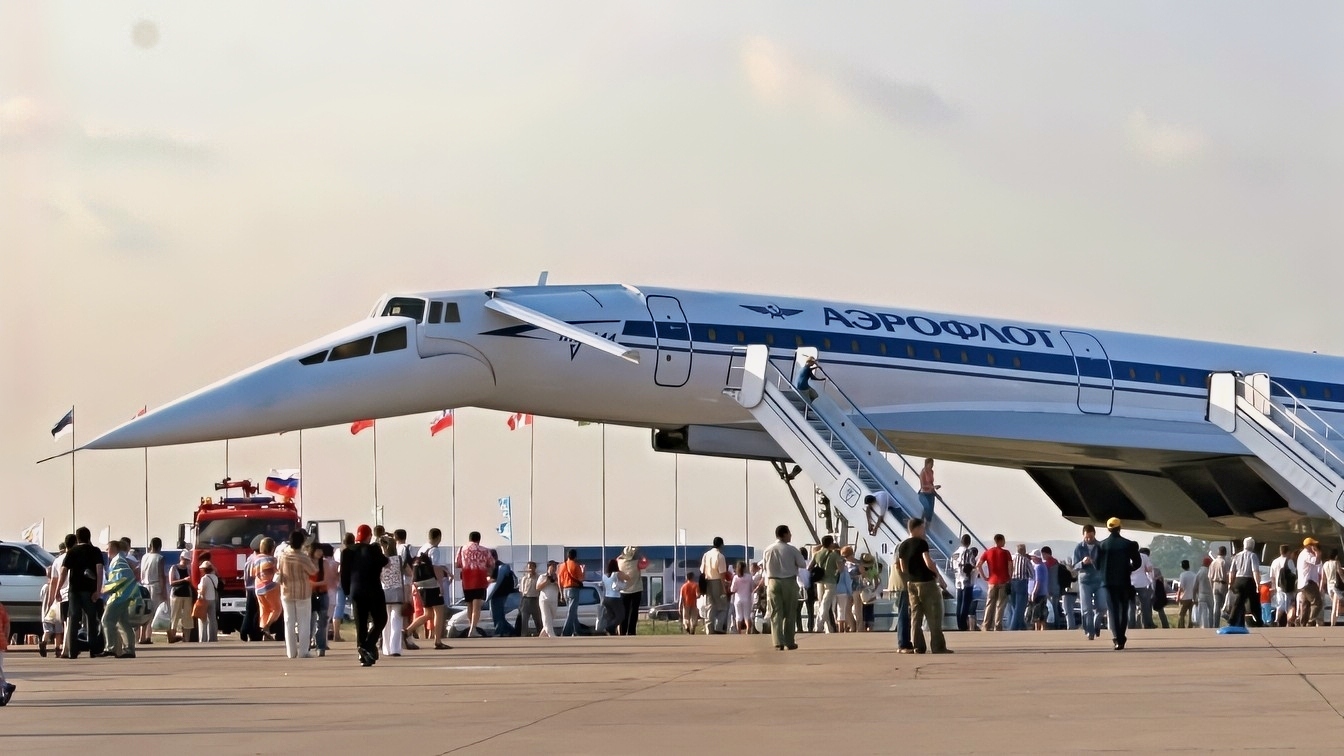
The Soviet Union built the Tupolev Tu-144 supersonic transport to compete with the Anglo-French Concorde. The aircraft was nicknamed “Concordski” in the West. The Tu-144 was the first supersonic transport to exceed Mach 2. On June 3, 1973, the Tu-144 took off in front of thousands of spectators at the Paris Air Show. The aircraft was performing a demonstration flight at Le Bourget Airport. The Tu-144 entered an aggressive maneuver, climbed steeply, then pitched downward. Aerodynamic forces exceeded the aircraft’s structural limits. The Tu-144 broke apart in midair.
The Tu-144 Was No Concorde
The crash of the Soviet Tupolev Tu-144 at the 1973 Paris Air Show remains one of the most dramatic and controversial disasters in aviation history.
Often nicknamed “Concordski” in the West because of its resemblance to the Anglo-French Concorde, the Tu-144 represented the Soviet Union’s ambitious attempt to demonstrate technological superiority during the Cold War.
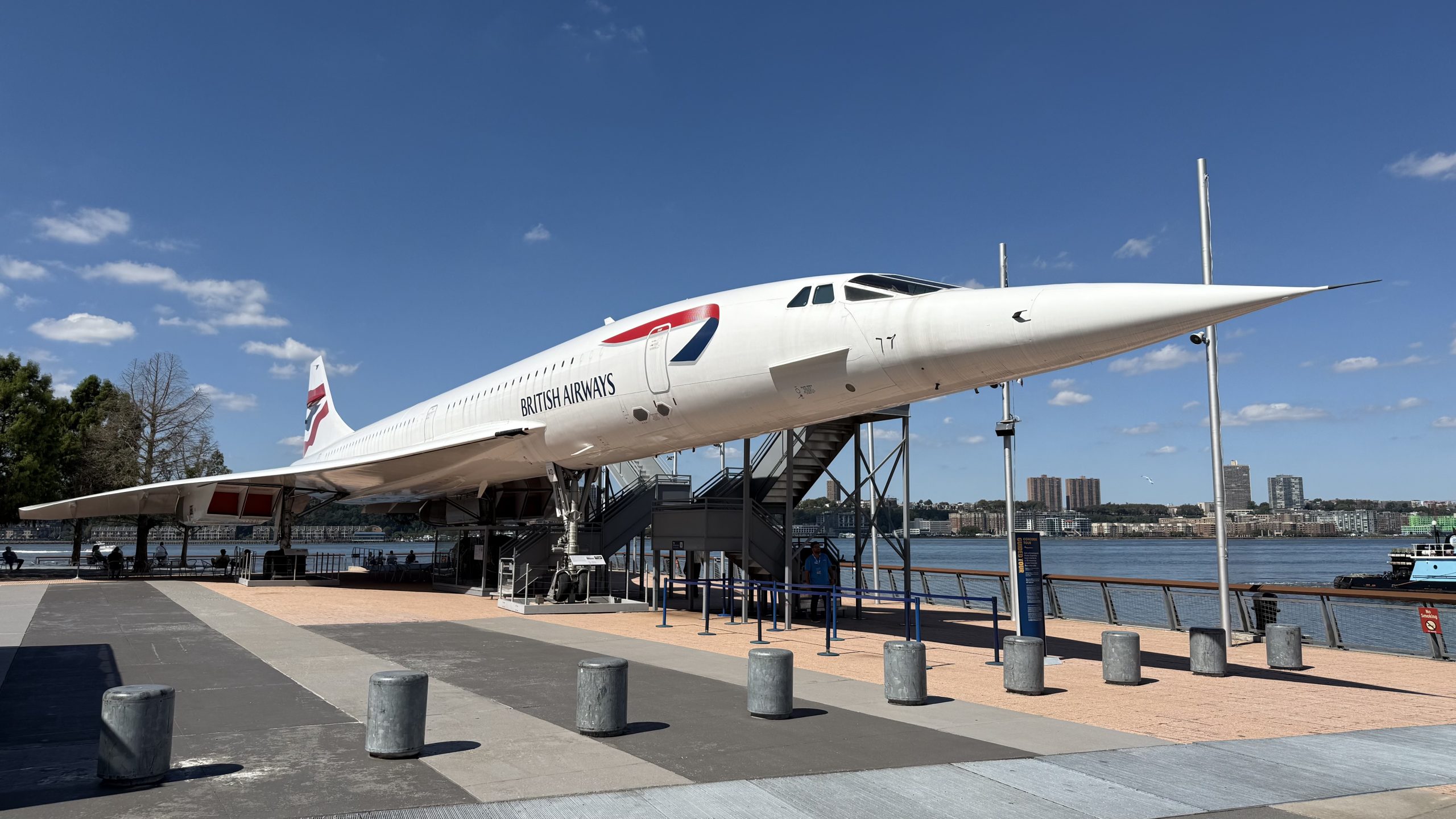
Concorde. National Security Journal Original Photo.
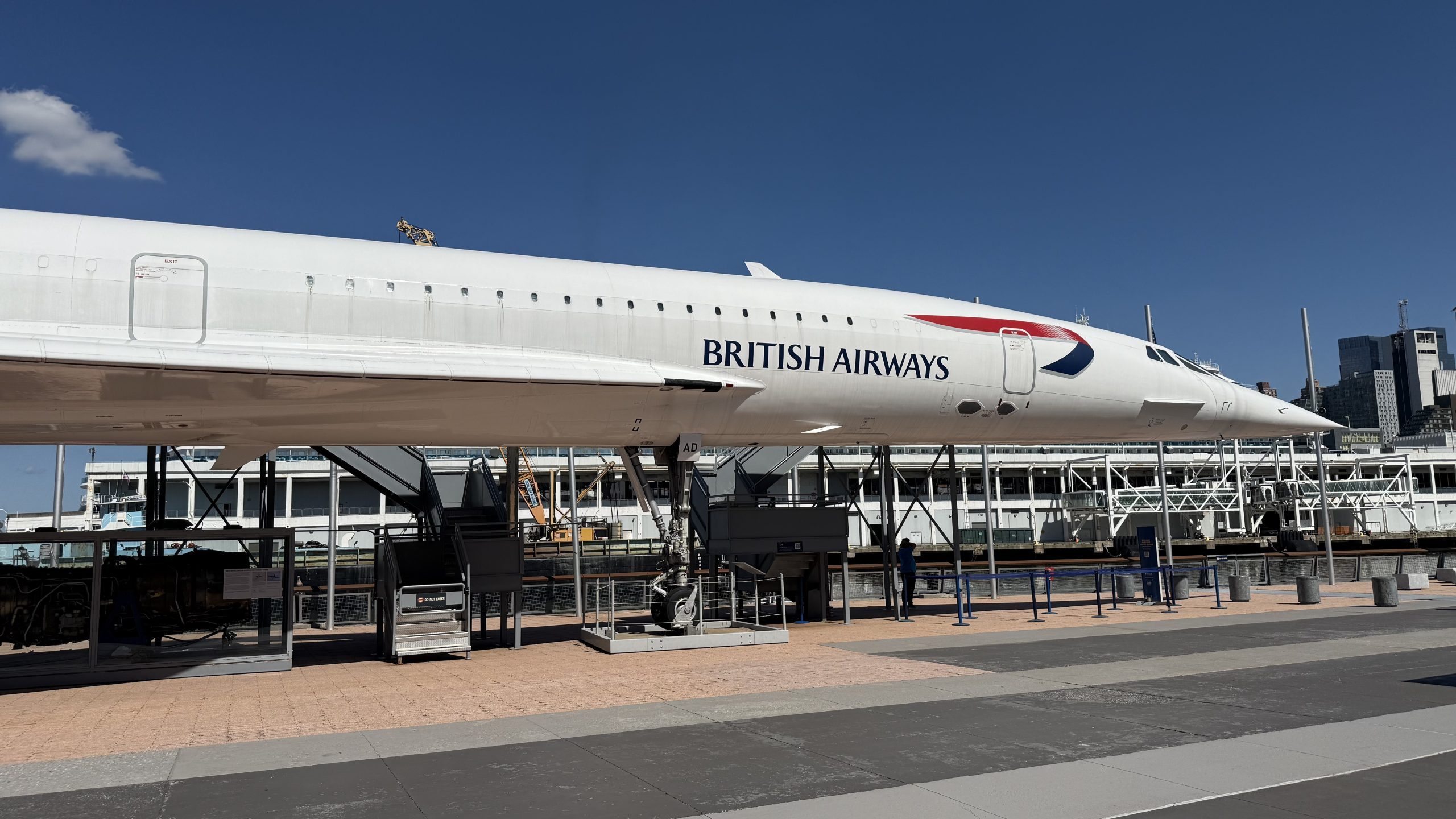
Concorde. National Security Journal Original Photo.
However, on June 3, 1973, the aircraft broke apart in midair during a demonstration flight over Le Bourget Airport near Paris, killing all six crew members and several people on the ground.
The tragedy shocked the international aviation community and cast a long shadow over the future of the Soviet supersonic transport program.
The Tu-144 emerged during a period of intense rivalry between the Soviet Union and the Western powers. In the 1960s, supersonic passenger travel symbolized national prestige and technological achievement.
Britain and France collaborated to produce the Concorde, while the Soviet Union developed the Tu-144 through the Tupolev Design Bureau.
Soviets Challenged “Concorde”
The Soviet Union was determined to prove that its aircraft could outperform the Concorde.
In fact, the Tu-144 achieved several milestones before its Western competitor, including becoming the first supersonic transport to exceed Mach 2. Soviet propaganda celebrated these accomplishments as evidence of communist scientific superiority.
However, behind the scenes, the program faced major engineering challenges.
The Tu-144 was notoriously difficult to control at low speeds, consumed enormous amounts of fuel, and suffered from reliability problems.
Engineers rushed development partly because political leaders demanded quick results in the race against the West.
The 1973 Paris Air Show provided an ideal stage for demonstrating Soviet aerospace power. The event was one of the world’s most prestigious aviation exhibitions, attracting international media, military officials, and aerospace companies.
Both the Concorde and the Tu-144 were scheduled to perform flight demonstrations, creating a symbolic competition between East and West.
The Concorde’s display earlier in the show impressed audiences with its graceful maneuvers and stable handling.
Soviet officials wanted the Tu-144 to deliver an even more spectacular performance.
Midair Break-Apart
On the day of the accident, the Tu-144 took off in front of thousands of spectators. The aircraft appeared stable during the early portion of the flight, climbing and passing over the airfield at high speed.
Then, suddenly, the aircraft entered an aggressive maneuver. Witnesses described the plane climbing steeply before sharply pitching downward.
As the pilots attempted to recover, the tremendous aerodynamic forces exceeded the aircraft’s structural limits. The Tu-144 broke apart in midair, scattering debris across the nearby town of Goussainville.
The destruction was catastrophic. All six crew members aboard the aircraft died instantly.
The wreckage also struck residential buildings, killing several people on the ground and injuring dozens more. Flames and smoke filled the area as emergency responders rushed to the scene.
Television cameras captured parts of the disaster, and images of the falling debris quickly spread around the world.
The crash transformed what was intended to be a triumph of Soviet engineering into an international humiliation.
Soviet Crew Tried “Too Hard”
Another theory suggests that the Soviet crew intentionally attempted dangerous maneuvers to outshine the Concorde’s earlier performance.
Under pressure from political authorities and eager to impress the audience, the pilots may have flown the aircraft beyond its tested capabilities.
Some analysts believe that control system problems or pilot overcorrection contributed to the fatal dive.
Because Soviet authorities released limited technical information, uncertainty has persisted regarding the precise sequence of events.
Regardless of the exact cause, the crash exposed serious weaknesses in the Tu-144 program. The aircraft had been developed under immense political pressure, and some experts argued that it entered public demonstrations before sufficient testing had been completed.
The disaster damaged the international reputation of Soviet civil aviation and reinforced Western doubts about the safety and reliability of the aircraft.
Although the Soviet Union continued the Tu-144 program after the crash, the aircraft never achieved lasting commercial success. Passenger service finally began in 1977, but operations were plagued by mechanical failures, high operating costs, and safety concerns. In 1978, another Tu-144 crashed during a test flight near Moscow, further undermining confidence in the program.
Passenger flights were soon discontinued after only a brief period of service.
About the Author: Kris Osborn
Kris Osborn is a Military Technology Editor. Osborn is also President of Warrior Maven – Center for Military Modernization. Osborn previously served at the Pentagon as a highly qualified expert in the Office of the Assistant Secretary of the Army—Acquisition, Logistics & Technology. Osborn has also worked as an anchor and on-air military specialist at national TV networks. He has appeared as a guest military expert on Fox News, MSNBC, The Military Channel, and The History Channel. He also has a Master’s Degree in Comparative Literature from Columbia University.


Nathan Fugate
May 12, 2026 at 5:26 pm
No mention of the French Mirage clandestinely flying around to take close-up photos of the Tu-144’s canards? Its what coaised the incident that led to the crash. The French and Russians colluded to cover up the true cause.