


How the SR-71 Blackbird Was Saved: The Saab JA-37 Viggen was a highly capable, advanced Swedish Cold War fighter active from 1980–2007. The Viggen was known for its incredible low-level acceleration, pioneering digital avionics, and short-field takeoff and landing (STOL) capability, which allowed it to operate from reinforced highways.
It excelled in high-speed, look-down intercepts.
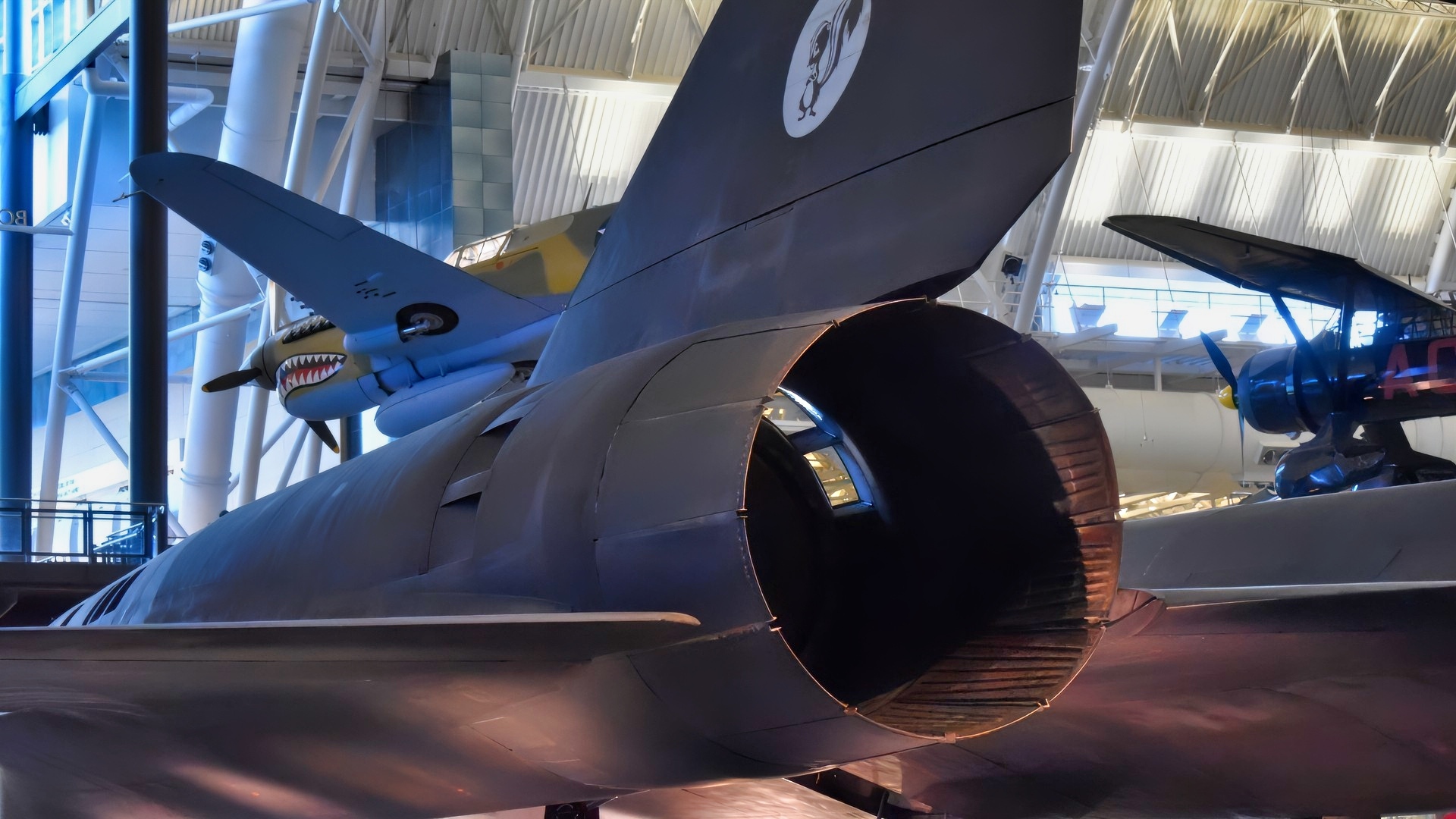
SR-71 Blackbird Rear Image. Credit: Taken on September 26, 2025 by National Security Journal.
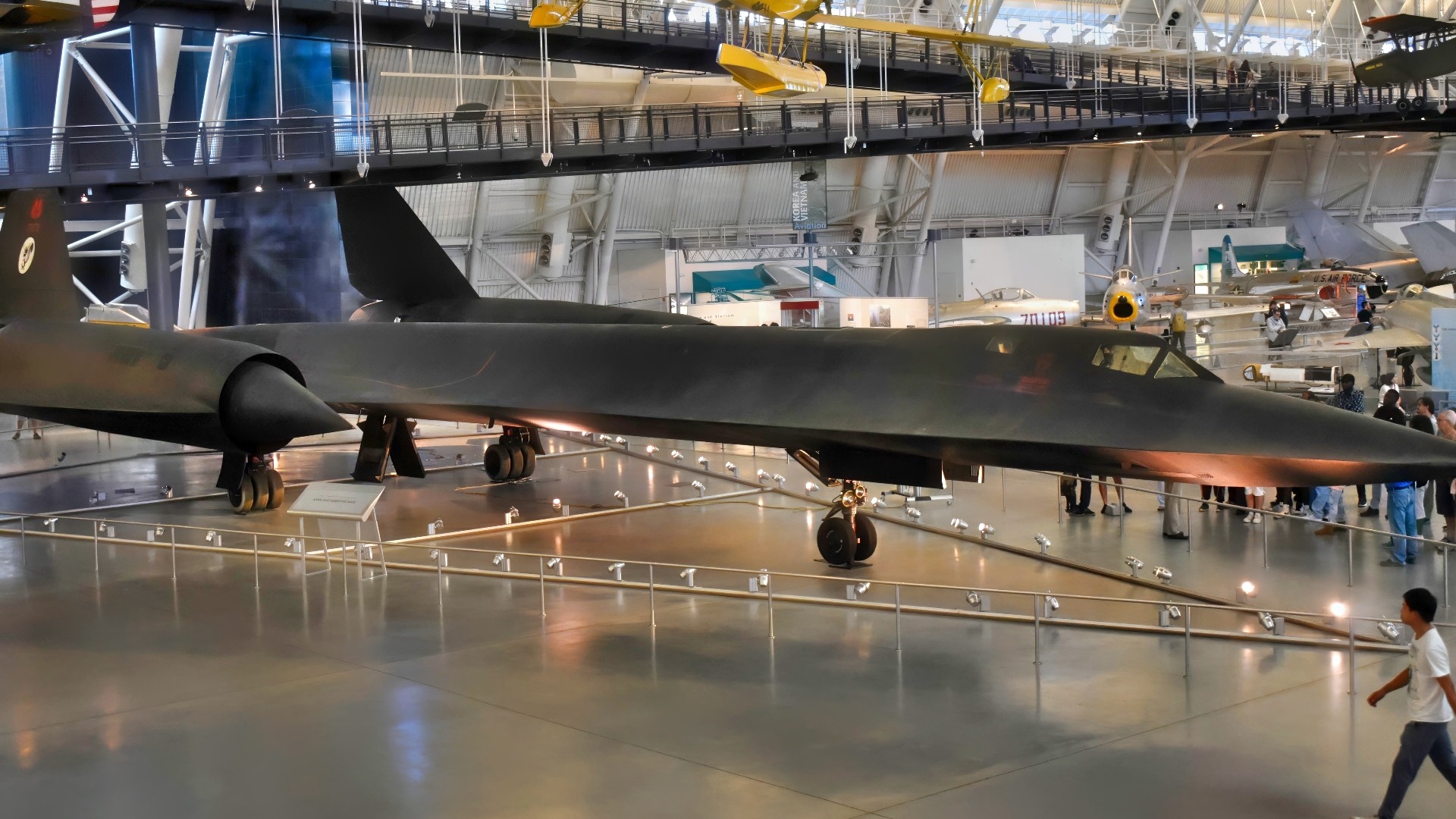
SR-71 Blackbird Smithsonian. Image Credit: National Security Journal.
Sweden built the Viggen to fulfill a Cold War need: By dispersing fighters onto highway strips under the Bas 60 and Bas 90 basing systems, Sweden could prevent the Soviet Union from wiping out the Swedish Air Force in a first strike.
The Viggen was an excellent fighter aircraft for the Swedish Air Force. It also has the distinction of being the only aircraft to ever radar-lock onto an SR-71. A Viggen did just that while flying over the route known as the “Baltic Express.” Another one provided cover from Soviet MiG-25s for an SR-71 that suffered from mechanical failure over the Baltic.
Meet The Saab JA-37 Viggen:
The Saab JA-37 Viggen was a multirole combat aircraft developed to meet Sweden’s unique Cold War defense doctrine. Designed for short-field performance and high-speed low-level attack, it combined advanced avionics with rugged operating capability.
The Viggen became a cornerstone of Swedish air defense and strike operations. The JA-37 was powered by a single engine: a license-built version of Pratt & Whitney’s JT8D with an afterburner.

Saab 37 Viggen Flying. Image Credit: Creative Commons.
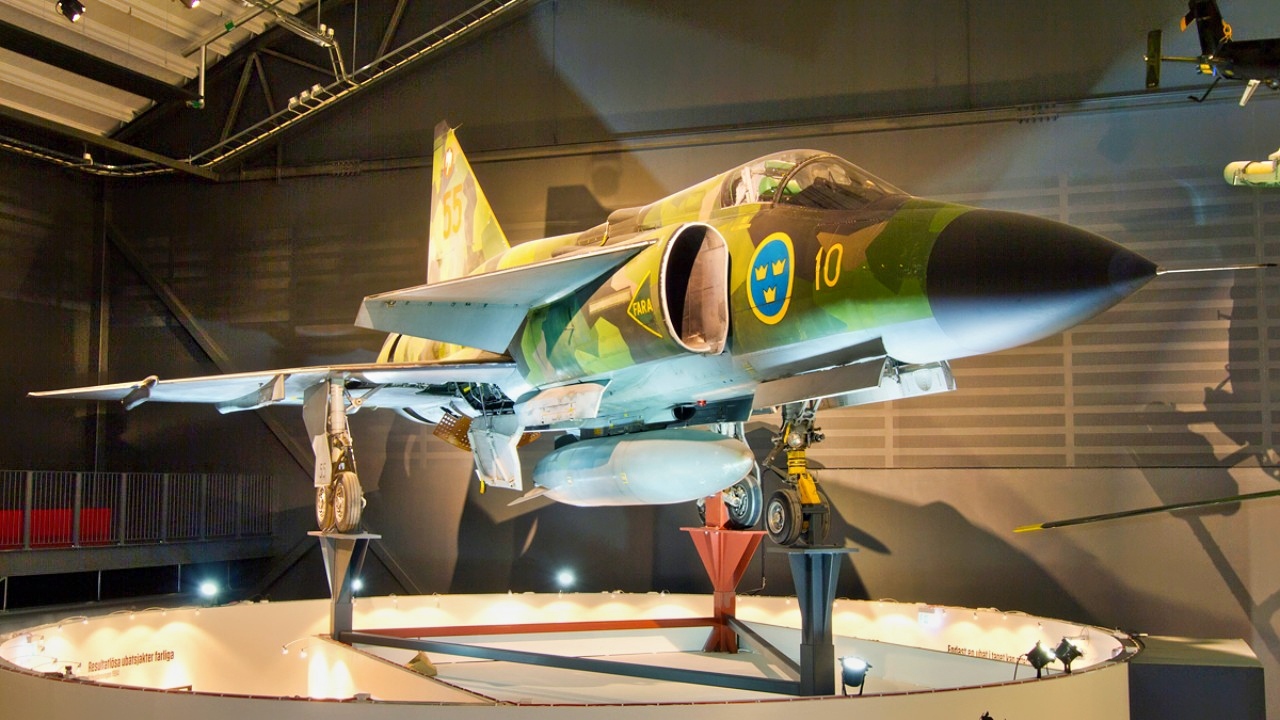
Saab 37 Viggen Fighter. Image Credit: Creative Commons.
The aircraft’s development began in the early 1950s, as the Air Force needed to replace the aging Saab 32 Lansen and Saab 35 Draken.
Sweden’s military doctrine emphasized self-reliance. Sweden needed a versatile aircraft capable of performing multiple roles, including ground attack, aerial reconnaissance, and maritime patrol. The Saab design team opted for a radical delta-wing design with canards, making the Viggen the first canard-equipped aircraft produced in quantity.
Its Volvo engine produced approximately 28,000 pounds of thrust with afterburner; the Viggen could fly faster than Mach 2 at altitude. Its maximum takeoff weight was roughly 44,000 pounds. The aircraft carried anti-ship missiles, rockets, and conventional bombs for strike missions.
The canard delta-wing layout provided excellent maneuverability and lift, especially at low speeds. The Viggen was the first aircraft to feature a fully integrated digital central computer, which was a groundbreaking innovation in 1971.
STOL Capability Worked Perfectly In Sweden’s BAS 90 Defenses:
A significant feature of the Viggen was its STOL ability. This allowed the aircraft to operate from short and rugged airstrips, offering greater flexibility and resilience in military operations.
The centerpiece of Sweden’s defenses against the Soviets was the Bas 90 air basing system, which eschewed large, centralized air bases in favor of small groups of aircraft dispersed throughout the country. The Bas 90 defense program was taken from lessons learned from the 1967 Six-Day War, during which the Israeli Air Force destroyed virtually the entire Egyptian fleet of aircraft, as well as dozens of other aircraft in other Arab countries. The Swedes did their research and crafted a strategy that works perfectly for them.
The Viggen paved the way for other STOL-capable aircraft, such as the Harrier Jet and F-35B.
Viggen Pilots Radar Intercept SR-71s Over The Baltic:
Swedish Viggen pilots trained themselves to track SR-71 Blackbirds as they flew along the same repeated flight path over the Baltic Sea, commonly known as the “Baltic Express.”
“The most spectacular alerts in the Swedish Air Force during the eighties occurred about once a week, when the Blackbird was operating in the Baltic. These were also probably the most frustrating events of the entire Cold War, with our fighters trying to reach the same altitude and position as this high-speed, high altitude target, efforts which, if successful, would allow the fortunate pilot to catch a brief glimpse of the fantastic SR-71 at quite close quarters,” recalled Rolf Jonnson, a Swedish air controller. “In total, I have five hot intercepts against the SR-71 to my credit,” said Per-Olof Eldh, Swedish Air Force JA-37 Viggen pilot. “All can be described as successful. I was visual three times; on a couple of occasions the SR-71 was contrailing, which was very useful because you could do a visual check to ensure you ended up in the right spot!”
The United States did not see neutral Sweden as a threat, so there was little mission planning oriented toward mitigating these intercepts.
However, as the Swedish pilots overcame technical hurdles through practice and planning, it stands to reason that SR-71 crews could have made these intercepts much more difficult by adjusting their flight paths. As Alex Hollings wrote, the SR-71’s success against enemy defenses was as much a product of operational planning as cutting-edge technology.
The JA-37 Viggen Escorts A Stricken SR-71 Blackbird:
The Viggen is famous for a 1987 incident during which Swedish JA-37s escorted a damaged Blackbird that had lost an engine over the Baltic Sea, saving it from potential Soviet interceptors and securing it safe passage to Germany.
The incident highlighted the Viggen’s advanced avionics, which allowed it to achieve a missile lock on the much faster SR-71—a feat unique for a foreign fighter jet.
A Swedish Viggen pilot told his story of escorting an SR-71 aircraft that suffered engine failure flying at Mach 3 with several MiG-25s in hot pursuit. The Soviet pilots were demanding that the SR-71, which had decelerated and dropped to 25,000 feet, land at the nearest Soviet airfield or be shot down.
The Swedish pilot escorted the stricken SR-71 to Danish airspace, where he later said, “It was almost unbelievable to fly close to this beautiful and impressive machine. We kept that position for the next six minutes or so, until we reached Danish airspace.
“I then landed back in Ängelholm, but my wingman landed in Karlsborg after having some minor problems with his avionic systems. Throughout the incident, my intention was to try to help fellow pilots who were in trouble.”
In November 2005, the last Viggens were retired from service, replaced by the newer and more advanced Saab JAS 39 Gripen. The Viggen was an excellent aircraft for its time, and it was a Cold War icon.
About the Author: Steve Balestrieri
Steve Balestrieri is a National Security Columnist. He served as a US Army Special Forces NCO and Warrant Officer. In addition to writing on defense, he covers the NFL for PatsFans.com and is a member of the Pro Football Writers of America (PFWA). His work was regularly featured in other military publications.


