

Key Points and Summary – The Saab 37 Viggen was more than a quirky Cold War delta-canard fighter; it was Sweden’s answer to great-power pressure, built to launch from roads, fight in any weather, and remain fully sovereign from U.S. and Soviet supply chains.
-Its digital avionics, multirole design and dispersed basing concept now echo in Saab’s Gripen and in early work on a next-generation “system of systems” that will pair a manned fighter with uncrewed platforms.
-As Sweden joins NATO, Stockholm is doubling down on the same formula Viggen proved: affordable, agile, independent airpower tailored to medium-power budgets, not superpower fantasies.
Saab 37 Viggen Offers Lessons for Its Next-Gen System
Ever wonder how the Saab JAS 39 Gripen can compete with the likes of the F-35 for a massive deal to transform Canada’s air force? Simple, history shows what Sweden can do with fighter jets.
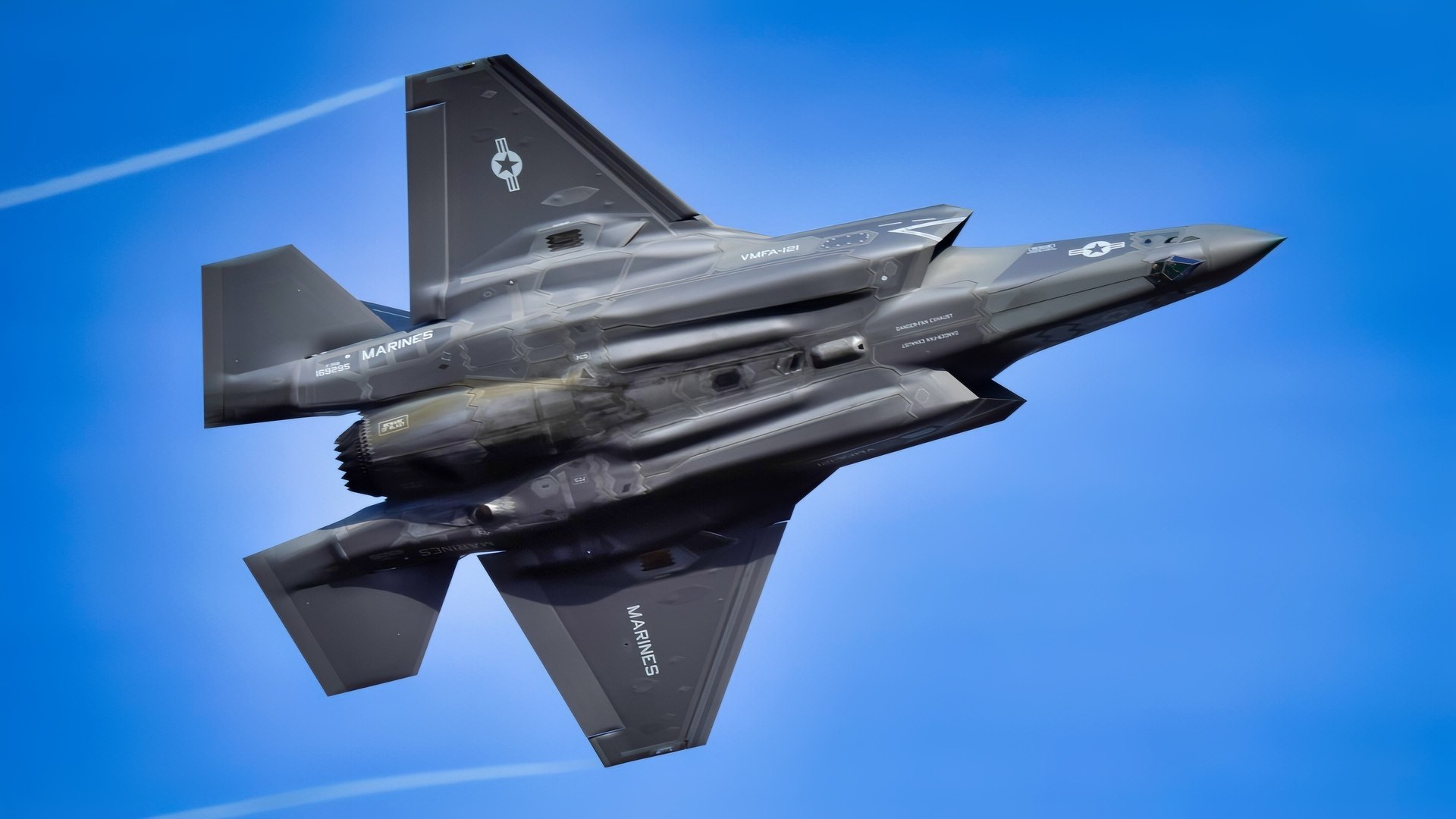
JOINT BASE ELMENDORF-RICHARDSON, Alaska – A U.S. Marine Corps F-35 Lighting II attached to Marine Fighter Attack Squadron 121 from Marine Corps Air Station Iwakuni, Japan, takes off for a training mission during Northern Edge, May 2, 2017. Northern Edge 2017 is Alaska’s premiere joint-training exercise designed to practice operations, techniques, and procedures as well as enhance interoperability among the services. Thousands of participants from all the services; Airmen, Soldiers, Sailors, Marines, and Coast Guard personnel from active duty, Reserve and National Guard units, are involved. (U.S. Navy photo by Mass Communications Specialist 2nd Class Travis Litke/Released)
Case in point: the Saab 37 Viggen.
When the Saab 37 Viggen first took flight on February 8 1967, it marked a serious turning point – not just for Swedish aviation, but for how a small, neutral nation could defend itself against a superpower.
Decades after the Cold War, as Sweden’s defense posture evolves and the company behind Viggen, Saab AB, pushes forward with new-generation aircraft and global export deals, Viggen’s story reveals something curious about how Sweden operates.
The Viggen’s history offers a fascinating look at the design philosophy and strategic foundation of Stockholm’s air-combat and industrial ambitions.
The Arrival of the JAS 37 Viggen
Much like most aircraft programs, the JAS 37 Viggen program began because Sweden’s existing air power – which was made up of aircraft like the Saab 32 Lansen and 35 Draken, was no longer sufficient.
Designers began work on the aircraft as early as the 1950s, anticipating the country’s growing military strength and presence to the east. The result of the program was not just a traditional upgrade over previous aircraft, but a radical re-thinking of what a fighter should look like.
The Viggen would feature a single engine, a delta-wing design, and forward canards, making it the first mass-produced canard-equipped combat aircraft in the world.
The fighter’s aerodynamic configuration had some significant benefits.
Notably, it allowed short take-off and landing, enabling it to operate from road runways that were not specially built for aircraft.
But the technical features alone are only part of the story. Viggen was also the first combat aircraft in the world to carry an airborne digital central computer that managed avionics and integrated weapon and sensor systems. It was a breakthrough that eliminated the need for a navigator or copilot, giving Swedish pilots more responsiveness during high-speed interception or strike missions – and it paved the way for generations of digital fighter jets that came after it.
Swedish pilots flying the interceptor variant of the aircraft, the JA-37 Viggen, even managed to intercept and pace the U.S. Air Force’s legendary SR-71 Blackbird during its runs over the Baltic Sea – holding it on radar long enough for firing, and in some cases getting close enough for the pilots to see the aircraft physically.

SR-71 National Security Journal Image.
Aviation-history accounts have long noted that no other foreign fighter has been credited with repeatedly proving this capability.
Viggen was Sweden’s answer to maintaining its neutrality while also defending its territory. The aircraft was capable of supersonic interception and ground attack and could even be used for maritime patrol.
Reconnaissance was perfectly possible too – and it was all doable in all weather conditions. It was such a victory of engineering and design that more than 329 units were built between 1970 and 190, and the jet remained the backbone of the Swedish Air Force through the end of the Cold War and beyond.
From JAS 37 Viggen to the Next Generation
Though the Viggen was retired in 2005, its DNA can be seen in Saab’s more modern designs.
The company’s current workhorse, the Saab JAS 39 Gripen, and any future fighters, can trace their lineage to the principles that guided the development of the Viggen: agility, cost-effectiveness, multirole flexibility, and independence.

JAS 39 Gripen. Image Credit: Creative Commons.
Saab recently secured a contract for ongoing conceptual studies for a future fighter design covering the years 2025-2027 – an indication that the Swedish Air Force and Saab are working to create a new evolution of its iconic fighter designs.
So far, all signs point to the development of a broad next-generation system that would encompass a manned fighter design and integrate uncrewed technologies.
Much like the American NGAD program, Sweden is looking to build on its successes in manned fighters and usher in a new era of manned-unmanned teaming systems.
In parallel, Saab is also maintaining its Gripen fleet under a new maintenance contract extending to 2029.
Saab is taking steps toward the next generation of fighters at a critical time, with the geopolitical environment changing drastically.
Sweden’s recent accession to NATO has reshaped defense expectations, and yet the core of Swedish logic remains the same: flexibility and affordability.
Sweden is not necessarily looking to build expensive or specialized stealth aircraft, but instead a fleet of aircraft it can operate domestically and export to customers across Europe and beyond, with the promise of sovereignty and independence.
And in light of these recent developments, the Viggen’s history is worth remembering. It shows that Sweden has long embodied a philosophy that values independence and cost-consciousness – and, indeed, adaptability. These are all the traits Saab is leveraging today as it markets its aircraft globally.

JAS 39 Gripen. Image Credit: Creative Commons.
More broadly, the Viggen also serves as a reminder that Western air power doesn’t always follow the trend of being bigger, stealthier, or more expensive.
For medium-sized powers or countries operating with constrained defense budgets, the tradeoffs seen in the Viggen – performance, versatility, and low infrastructure dependence – ultimately prove to be a winning strategy in current and next-generation designs.
About the Author:
Jack Buckby is a British author, counter-extremism researcher, and journalist based in New York who writes frequently for National Security Journal. Reporting on the U.K., Europe, and the U.S., he works to analyze and understand left-wing and right-wing radicalization, and reports on Western governments’ approaches to the pressing issues of today. His books and research papers explore these themes and propose pragmatic solutions to our increasingly polarized society. His latest book is The Truth Teller: RFK Jr. and the Case for a Post-Partisan Presidency.
More Military
Montana-Class vs. Yamato-Class: It Would Have Been the Ultimate Battleship Battle
The Littoral Combat Ship Might Be the Navy’s Biggest Mistake Ever


E
November 27, 2025 at 5:52 am
Except the Gripen make use of an American engine, which means dependence on USA and veto rights for the USA to prevent the Gripen being sold to a competitor.
The need to use a Eurojet or saffran engine to be purely EU and independent of the USA.
Michael Knighton
November 27, 2025 at 8:56 am
A most interesting summary of the excellent SAAB Viggen, its history and purpose.
Which to this day provides a very distinct and clear role model to many allied countries in particular, of a serious “way forward” on all fronts. Without excessive overspends, eventual “cancellations” and ludicrous waste of money.
Take note, ALL those charged with our Security, Treasury and moral responsibility for our ongoing welfare !
ALVIN J SAVOIE JR
November 27, 2025 at 9:22 am
I heard that message, not as good ring loud and clear. Your jealousy will be your demise.