

Summary and Key Points: The USS John C. Stennis entered its mid-life Refueling and Complex Overhaul in May 2021, and is expected back with the fleet by 2025.
It’s now 2026, the carrier is still in the yard, and a mix of unexpected “growth work,” pandemic-battered supply chains, and a shipbuilding industry short on skilled labor has stretched a four-year job toward five — leaving the Navy a carrier down at a moment when global demand for flattops is the highest in decades, with the USS Harry S. Truman’s own overhaul next in line.
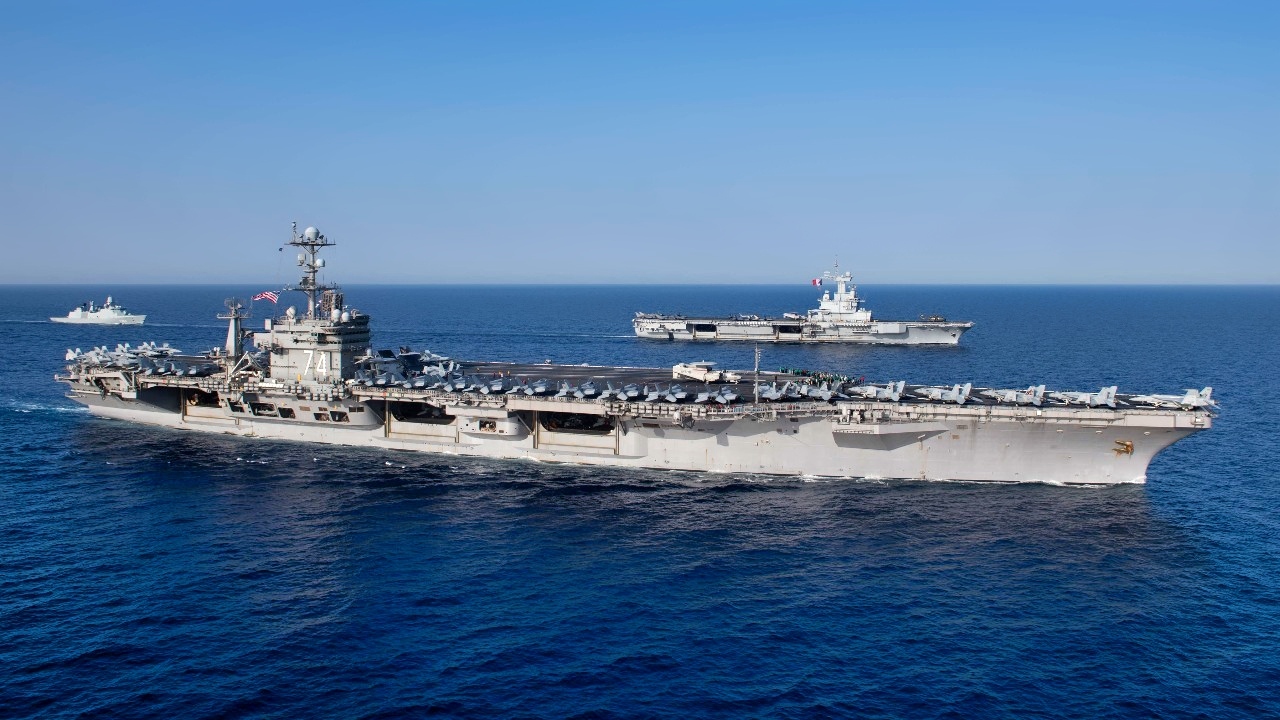
The French Marine Nationale aircraft carrier FS Charles De Gaulle (R91), and the aircraft carrier USS John C. Stennis (CVN 74) are underway in formation in the Red Sea, April 15, 2019. The John C. Stennis Carrier Strike Group is deployed to the U.S. 5th Fleet area of operations in support of naval operations to ensure maritime stability and security in the Central Region, connecting the Mediterranean and the Pacific through the western Indian Ocean and three strategic choke points. (U.S. Navy photo by Mass Communication Specialist Seaman Joshua L. Leonard)

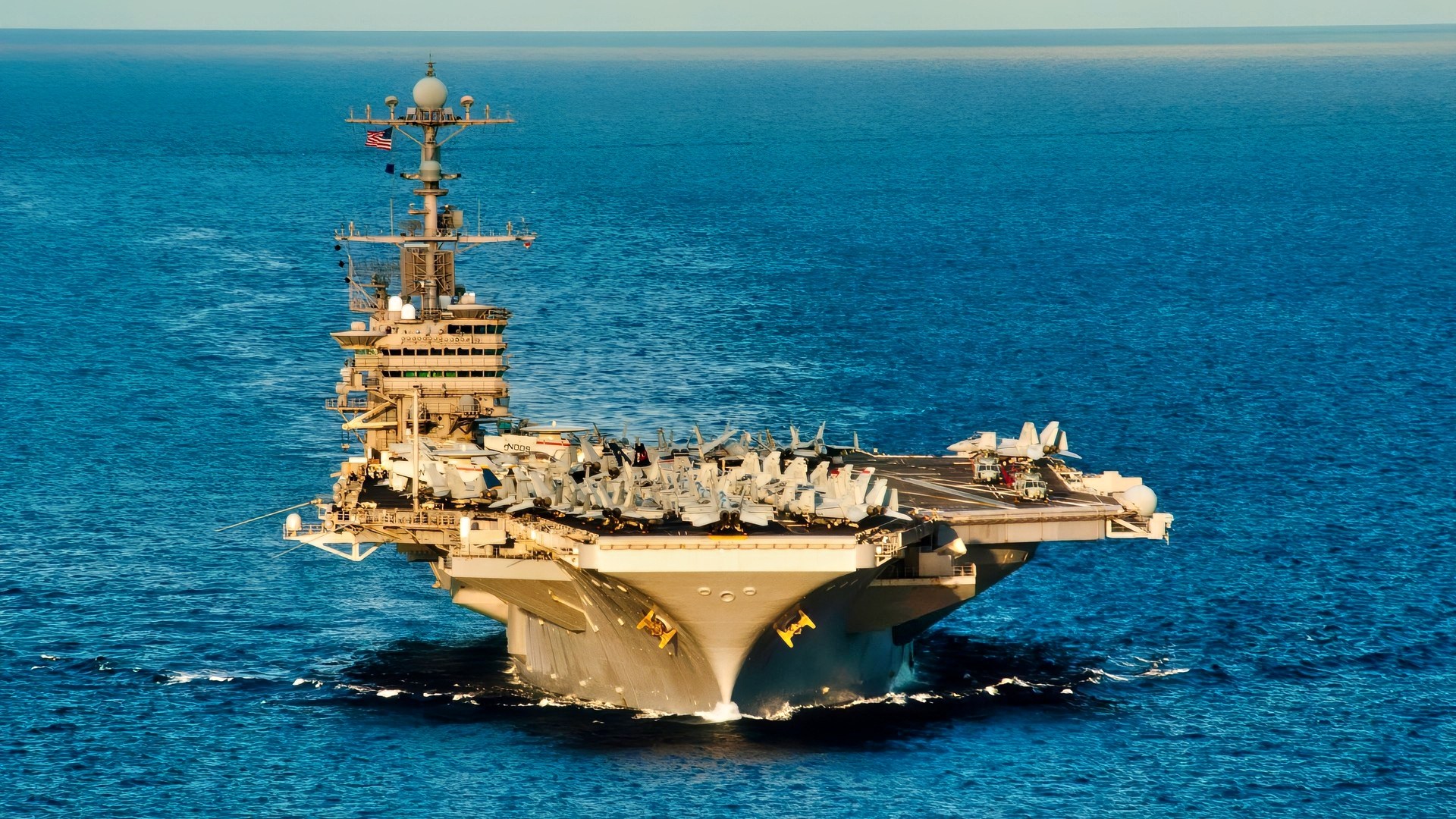
PHILIPPINE SEA(Feb. 22, 2016) USS John C. Stennis (CVN 74) sails through the Philippine Sea. Providing a ready force supporting security and stability in the Indo-Asia-Pacific region, Stennis is operating as part of the Great Green Fleet on a regularly scheduled 7th Fleet deployment. (U.S. Navy photo by Mass Communication Specialist Seaman Cole C. Pielop/Released) .
The USS John C. Stennis Isn’t Going Anywhere
In May 2021, the USS John C. Stennis (CVN-74) pulled into port in Norfolk, Virginia, to begin her Refuel and Complex Overhaul (RCOH). Originally intended to return to the fleet in 2025, the timeline has been delayed to 2026, leaving the Supercarrier out of action for five years.
These delays are not so much a failure by the Navy as the result of many unfortunate factors that have made carrier maintenance much more difficult in recent years. In 2024, Stennis completed the dry dock phase of her RCOH, and since then, work has been proceeding smoothly.
Where is Stennis Right Now?
The most recent news on Stennis’s RCOH was released in 2024, when HII announced the completion of the dry dock phase of the carrier’s overhaul. The dry dock phase is usually the most comprehensive and difficult part of the process, involving major repairs to the ship’s interior and exterior, as well as refueling its nuclear power plants. The next phase of the RCOH focuses on installing and testing new electronic components as well as improving its interior living spaces. Since this announcement, no further news has been released about the ship, which likely means that work is progressing smoothly or that any other hiccups have been too minor to warrant significant media coverage.
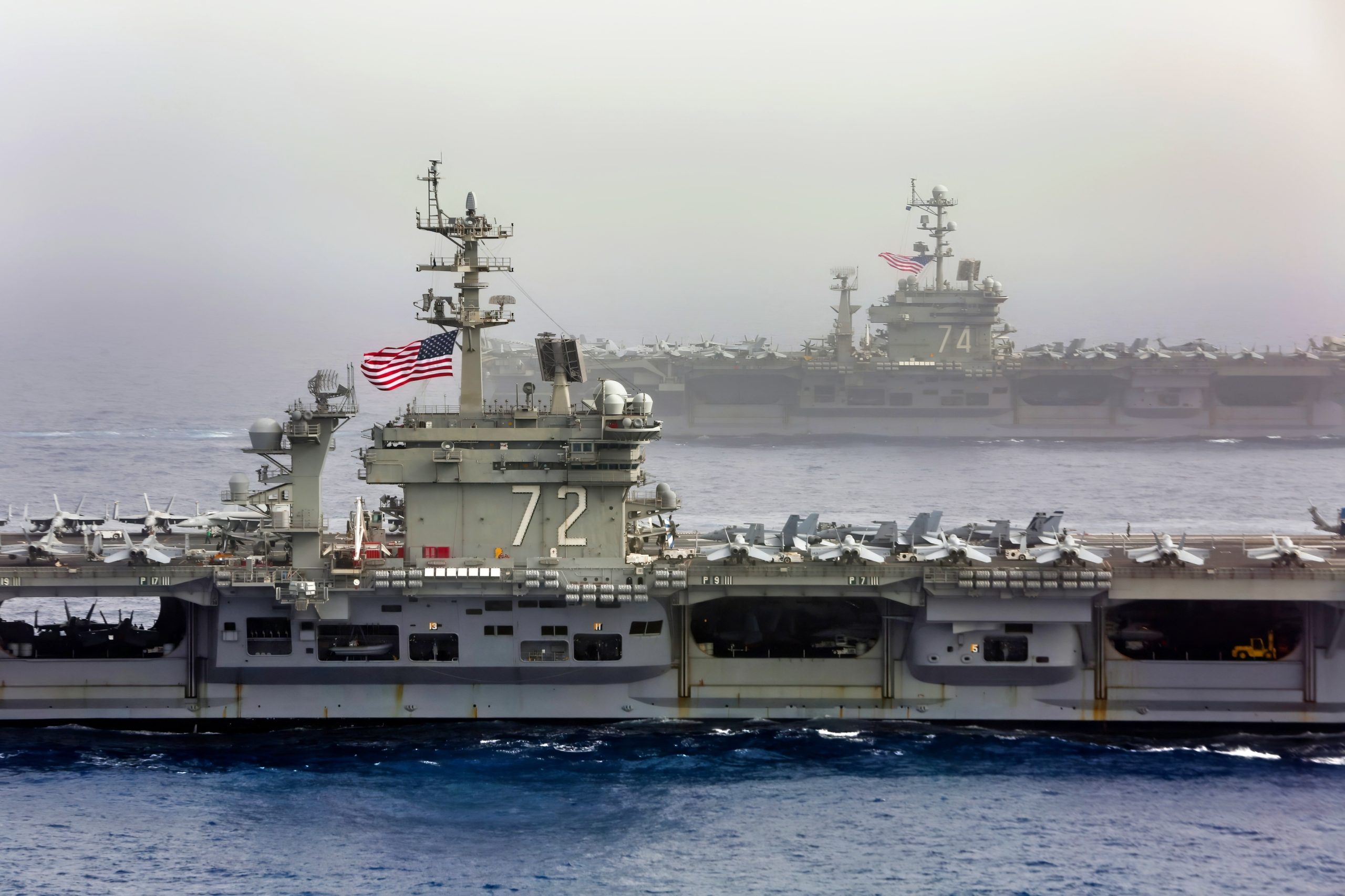
(April 24, 2019)
The Abraham Lincoln and John C. Stennis carrier strike groups conduct carrier strike force operations in the U.S. 6th Fleet. Together, the strike groups will complete high-end warfighting training, enhancing interoperability with key allies and partners in the European theater. (U.S. Navy video by Mass Communication Specialist 1st Class Brian M. Wilbur/Released)
Long and Much-Delayed Overhaul
Stennis began her RCOH on May 19, 2021, following a routine seven-month-long deployment. Immediately after the work began, shipyard workers noted a number of areas and systems on board the ship that needed urgent maintenance. This “growth work,” as the Navy refers to it, was a major factor that contributed to the delays in Stennis’s RCOH. Growth work is pretty much unavoidable after 20 or so years of service. Typically, when conducting an RCOH, delivery timelines will factor in any potential growth work. However, in the recent past, the amount of growth work discovered has exceeded initial estimates, resulting in program delays.
Manufacturing issues have also been a major source of delays on Stennis’s RCOH. Domestic American shipbuilding was hit hard by the COVID-19 pandemic, which briefly halted global supply chains and caused major disruptions to the labor force.
The shipbuilding industry fell into a pit during the pandemic, from which it is still trying to climb out. Despite investments from the Navy and efforts to revamp shipbuilding infrastructure, many major American shipbuilders, such as HII, which is in charge of Stennis’s RCOH, still face labor shortages and retention issues. Some of these issues date back to the post-Cold War budget cuts and will take years to correct.
The Legacy of George Washington’s Disastrous RCOH
Lurking in the background is the shadow of the USS George Washington (CVN-73) and its disastrous overhaul. Like Stennis, Washington’s RCOH was also plagued by delays, mainly tied to the COVID pandemic. Originally planned for completion in 2021, the timeline was pushed back by almost two years to 2023. Worse still, the sailors were required to stay aboard the ship during her RCOH, as was standard procedure at the time.
However, due to the pandemic and the construction aboard the ship, conditions were dreadful, and around nine sailors ended up committing suicide as a result.
Thankfully, Stennis’s RCOH has been nowhere near as dramatic as Washington’s. The Navy has since provided additional off-site housing facilities for sailors during RCOHs to make conditions more bearable.
While the sailors are being taken care of, the delays on Stennis are nearly identical to those in Washington, caused by growth work and industrial limitations. These two cases do not inspire confidence for the USS Harry S. Truman (CVN-75), which is currently preparing to enter into its own RCOH.
Truman’s RCOH will likely indicate whether delays are an ongoing trend or whether the shipbuilding industry has recovered from the pandemic mire.
The Navy’s Troubling Carrier Dilemma
The repeated delays in the carrier maintenance programs have forced the U.S. Navy into an uncomfortable position. With tensions around the globe heating up, the demand for flattops is at its highest in several decades.
These mounting delays have thrown a wrench into the Navy’s plans by limiting the number of carriers available to the fleet. In response, the Navy has the option to extend patrol times of its carriers to compensate for the ships currently out of action. However, this could have the unintended consequence of increasing the maintenance burden on subsequent RCOHs, likely resulting in even more delays.
Another option is to build more carriers, but this is also incredibly risky. Modern carriers like the Ford-class are incredibly expensive and complex machines. Building them requires significant time and resources that the Navy does not have.

(Feb. 25, 2019) The aircraft carrier USS John C. Stennis (CVN 74) transits the South China Sea at sunset, Feb. 25, 2019. The John C. Stennis Carrier Strike Group is deployed to the U.S. 7th Fleet area of operations in support of security and stability in the Indo-Pacific region. (U.S. Navy photo by Mass Communication Specialist 1st Class Ryan D. McLearnon/Released)
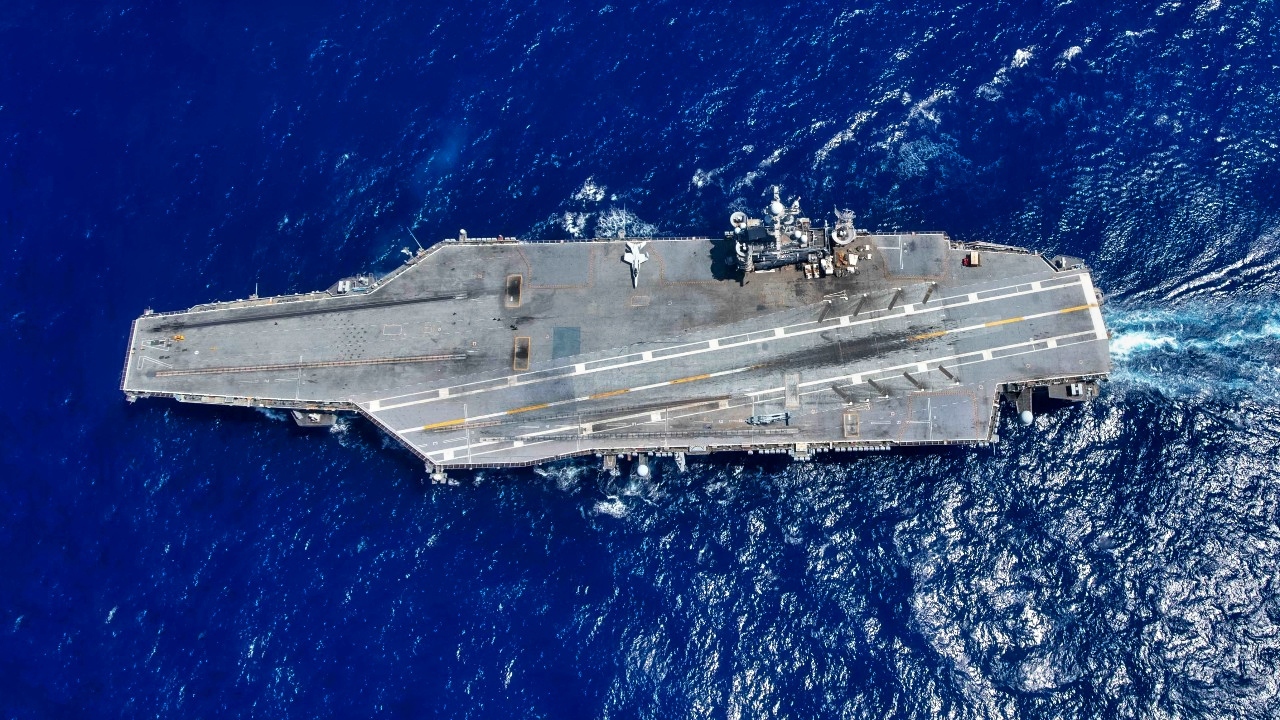
The aircraft carrier USS John C. Stennis (CVN 74), steams through the Atlantic Ocean, Sept. 7, 2019. The John C. Stennis is underway following a sortie due to Hurricane Dorian earlier this week. Commander, Navy Region Mid-Atlantic ordered all U.S. Navy installations in Hampton Roads to return to normal operations on Sept. 6, as Dorian no longer poses a threat to the area. (U.S. Navy photo by Mass Communication Specialist Seaman Jarrod A. Schad)
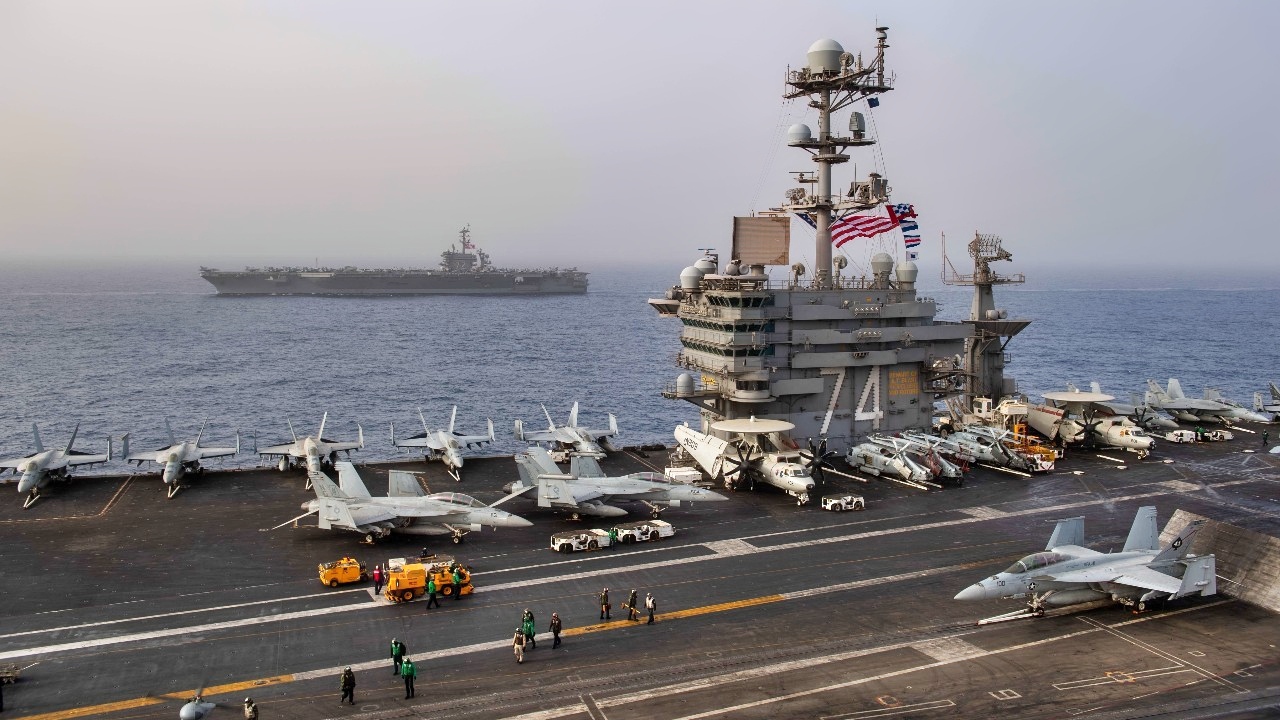
The aircraft carrier USS Abraham Lincoln (CVN 72), back, steams alongside the aircraft carrier USS John C. Stennis (CVN 74) in the Mediterranean Sea, April 24, 2019. The John C. Stennis Carrier Strike Group (CSG) 3 and Abraham Lincoln Carrier Strike Group (CSG) 12 are conducting dual carrier operations, providing opportunity for two strike groups to work together alongside key allies and partners in the U.S. 6th Fleet area of operations. John C. Stennis is underway in the Mediterranean Sea as part of the John C. Stennis Carrier Strike Group (JCSCSG) deployment in support of maritime security cooperation efforts in the U.S. 6th Fleet area of responsibility. (U.S. Navy photo by Mass Communication Specialist 3rd Class Grant G. Grady)
Additionally, the shipbuilding industry lacks the manpower and equipment necessary to build and sustain a larger carrier fleet. With enough money and political will, it could be done, but it is not likely to happen.
The best option is to focus on the issues currently causing delays to minimize maintenance time. The Navy is currently attempting to do this by investing more in shipbuilding, but it is too early to tell what effect these investments will have in the long-term.
About the Author: Isaac Seitz
Isaac Seitz, a Defense Columnist, graduated from Patrick Henry College’s Strategic Intelligence and National Security program. He has also studied Russian at Middlebury Language Schools and has worked as an intelligence Analyst in the private sector.


