
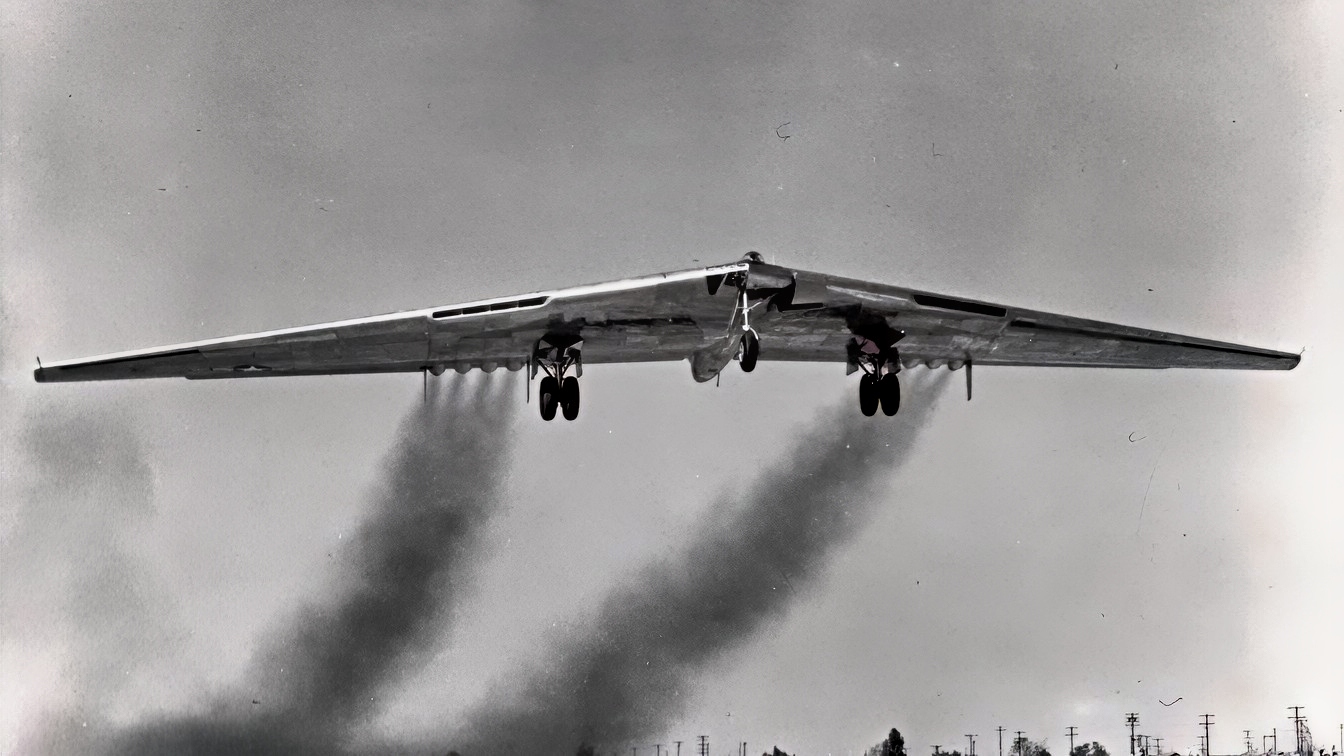
As the U.S. Air Force prepares to expand procurement of the B-21 Raider beyond the currently planned fleet of 100 aircraft and continues using B-2 Spirit stealth bombers for long-range strike operations, Northrop’s YB-49 Flying Wing remains one of the clearest early examples of how the flying-wing configuration eventually became central to stealth bomber design. Built during the late 1940s for the newly formed U.S. Air Force, the YB-49 was a jet-powered bomber prototype with no conventional fuselage or tail structure.
The aircraft first flew on October 21, 1947, from Muroc Army Air Field in California and represented one of the most unusual military aircraft projects of the early Cold War period.
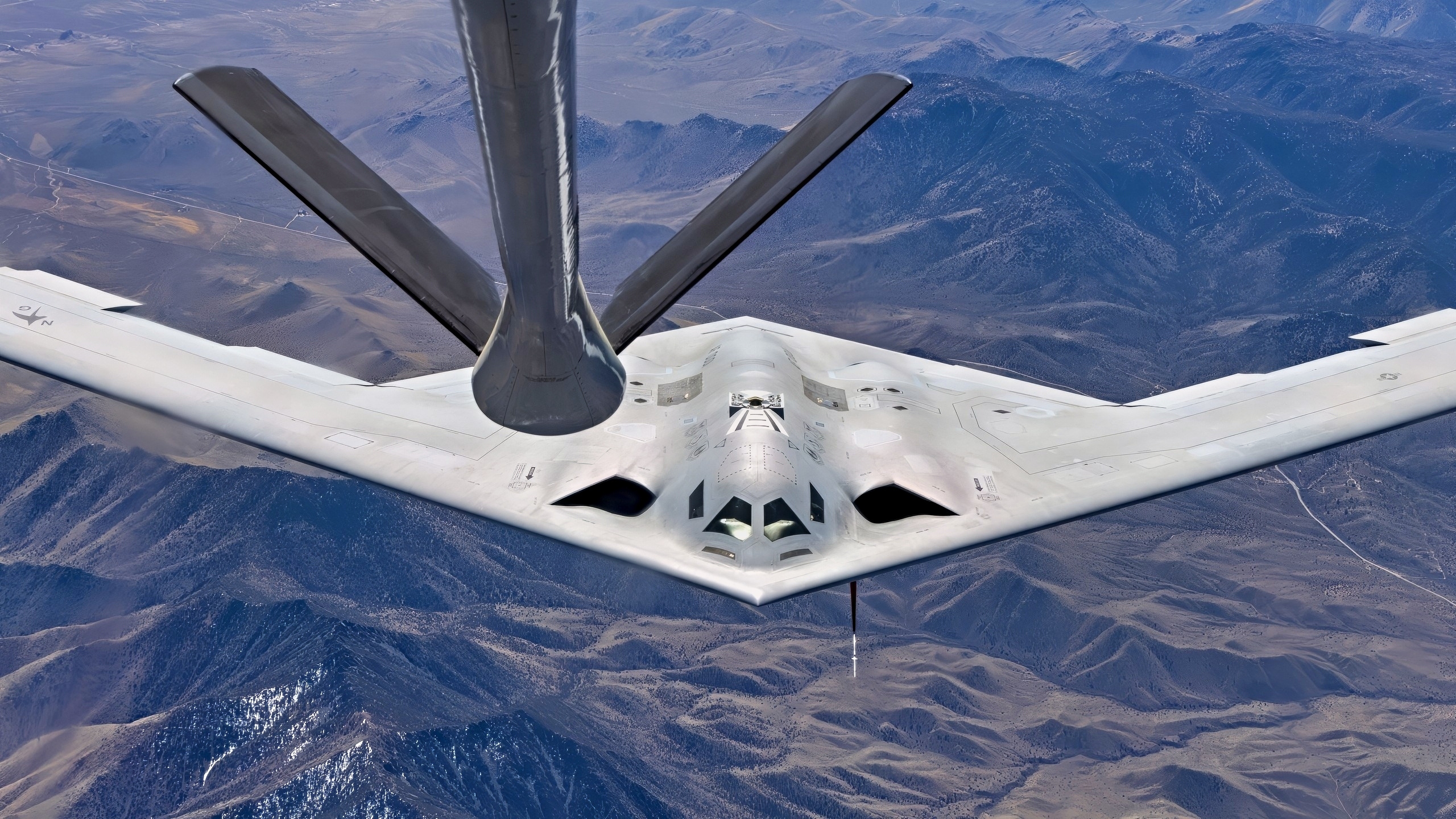
B-21 Raider April 2026. Image Credit: Creative Commons.
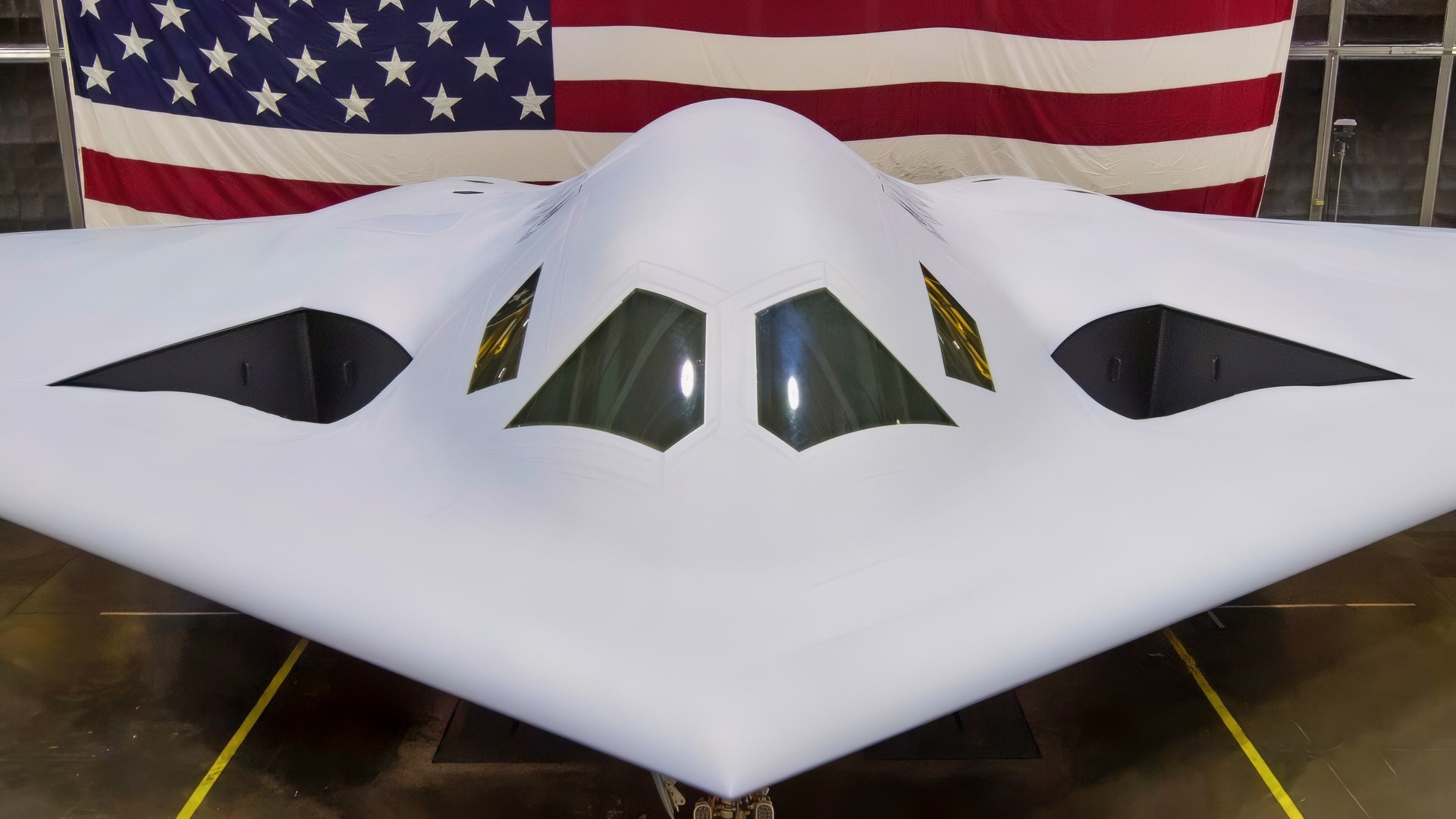
The B-21 Raider was unveiled to the public at a ceremony Dec. 2, 2022 in Palmdale, Calif. The B-21 will provide survivable, long-range, penetrating strike capabilities to deter aggression and strategic attacks against the United States, allies, and partners. (U.S. Air Force photo)
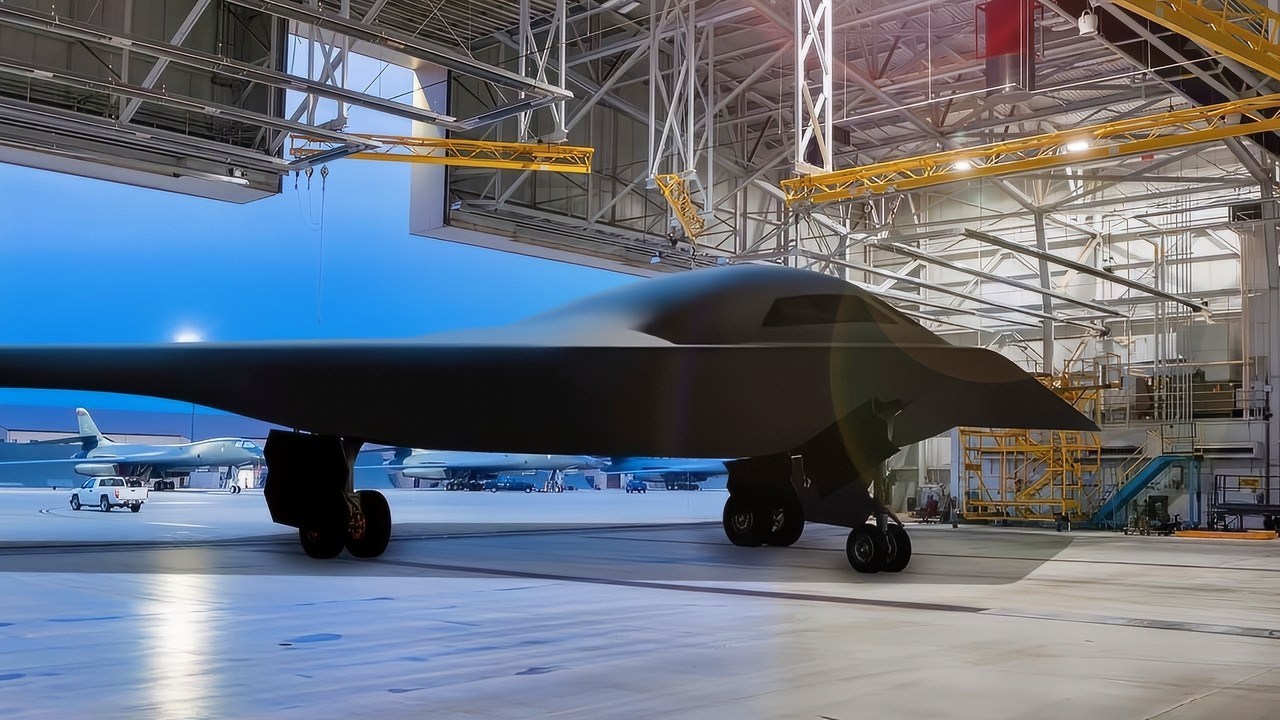
Artist rendering of a B-21 Raider in a hangar at Ellsworth Air Force Base, South Dakota, one of the future bases to host the new airframe. AFCEC is leading a $1 billion construction effort at Ellsworth to deliver sustainable infrastructure to meet warfighter demands for bomber airpower. (U.S. Air Force graphic)
The bomber never entered operational service, and the Air Force canceled the program in 1950 after a series of technical problems, crashes, and disagreements over strategic bomber requirements.
But despite that failure, the aircraft ultimately helped shape the future of stealth aviation. The flying-wing configuration pioneered by Jack Northrop during the 1940s later became the foundation for the B-2 Spirit and eventually the B-21 Raider, both of which use the same basic tailless layout to reduce radar visibility and improve long-range aerodynamic efficiency.
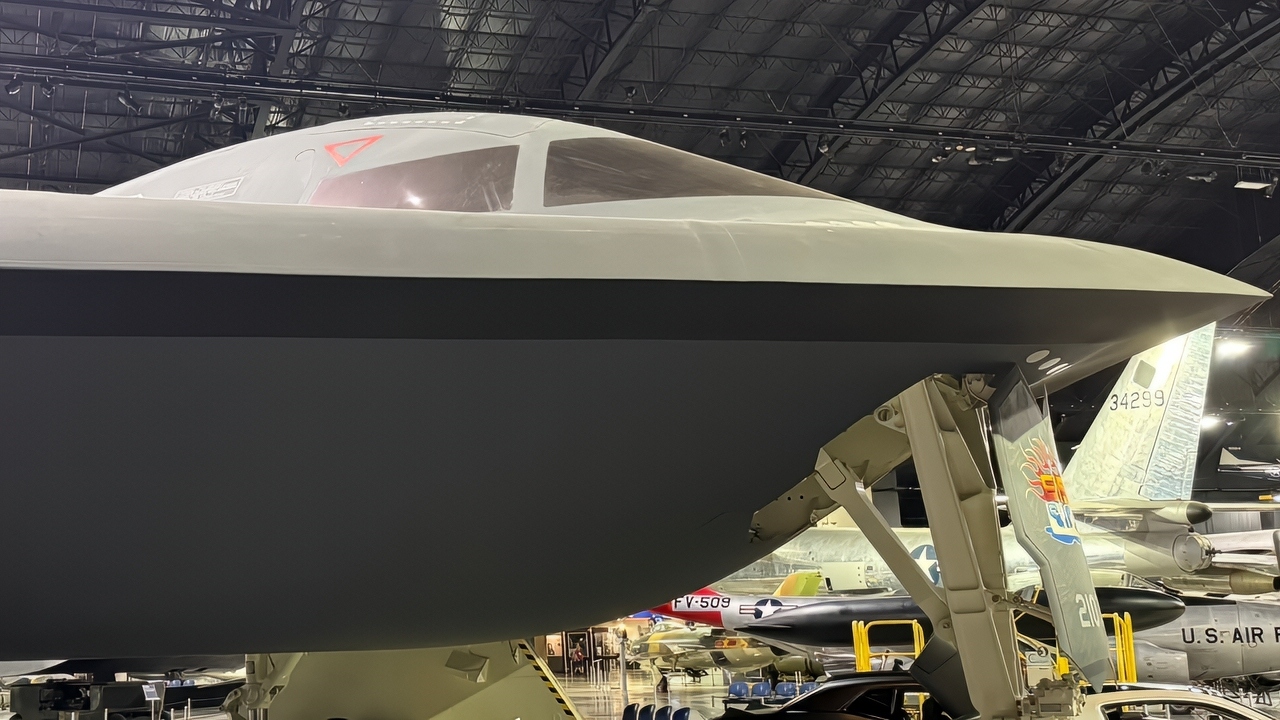
B-2 Bomber Really Close Up National Security Journal Photo

B-2 Spirit Stealth Bomber July 2025. Image Credit: National Security Journal.
The YB-49 Was Unlike Any Bomber Of Its Era
The YB-49 was an evolution of Northrop’s earlier XB-35 flying-wing bomber project, which originally used piston engines and propellers.
The Air Force and Northrop later converted the design into a jet-powered aircraft by replacing the piston engines with eight Allison J35 turbojets mounted within the wing. The aircraft had a wingspan of 172 feet and was designed to be a completely tailless flying wing.
The design was remarkable then, and it is striking now, too. Most bombers of the late 1940s still relied on conventional fuselages, large vertical tails, and bulky external structures.
The YB-49, however, blended nearly the entire aircraft into a single, smooth wing-body, with the crew positioned inside the center section of the wing.
The design was pursued primarily because of its aerodynamic advantages.
Flying wings generate less drag than traditional aircraft because they eliminate many protruding surfaces that disrupt airflow. That can improve fuel efficiency, increase range, and potentially improve speed. In the late 1940s, those characteristics mattered enormously because the Air Force was seeking aircraft capable of delivering nuclear weapons over intercontinental distances.
The aircraft completed its first flight at Muroc Army Air Field, later renamed Edwards Air Force Base, in October 1947. Test pilots reported that the aircraft was fast and unusually smooth in flight compared to many conventional bombers of the period.
The Flying Wing That Pre-Dated Stealth Aviation
The YB-49 was not designed as a stealth aircraft because, as it is understood today, stealth technology did not yet exist.
Radar itself was still relatively primitive compared to later Cold War systems, and the Air Force’s interest in the aircraft focused primarily on range and aerodynamic efficiency rather than radar invisibility. But the flying-wing shape eventually became one of the most important stealth aircraft configurations ever developed.
Modern stealth aircraft attempt to reduce radar reflections by minimizing vertical surfaces and sharp protrusions that bounce radar waves back toward enemy receivers. The YB-49’s blended flying-wing layout naturally reduced many of those reflections decades before radar cross-section reduction became a formal design science.
Flying wings also possessed aerodynamic advantages due to their efficient lift-to-drag ratio, but the designs were historically difficult to control because they lacked the stabilizing surfaces found on conventional aircraft. And that instability became one of the YB-49’s defining limitations.
During the 1940s, aircraft lacked the computerized fly-by-wire systems that later allowed inherently unstable aircraft to become operationally practical.
Pilots had to constantly correct the aircraft manually during portions of the flight, particularly during certain maneuvers and changing aerodynamic conditions. Decades later, those problems became manageable through digital flight-control systems.
The B-2 Spirit, which first flew in 1989, relied heavily on computerized stabilization systems that continuously adjusted the aircraft’s flight path. Without those computers, the B-2’s flying-wing design would likely have been extremely difficult to operate safely.
Why the Air Force Killed the YB-49
Despite its futuristic appearance, the YB-49 had serious operational problems, including instability and high fuel consumption. There were also reliability concerns regarding its use of very early jet engines.
At the same time, the Air Force increasingly favored Convair’s B-36 Peacemaker, which offered longer range and a more mature design better suited to strategic nuclear deterrence planning during the early Cold War. And we can vouch for the fact that the B-36 is massive, as our photos below show from our visit to this bomber last July.

B-36J NSJ Photo July 2025. Image Credit: Harry J. Kazianis.

B-36J Bomber National Security Journal Photo. Image Credit: Harry J. Kazianis

B-36 Bomber Dayton, Ohio USAF Museum. Image Credit: National Security Journal.
The program also suffered a major setback on June 5, 1948, when one YB-49 crashed near Muroc during a test flight, killing all five crew members onboard, including Air Force Capt. Glen Edwards. Edwards Air Force Base was later named after him.
The Air Force formally canceled the flying-wing bomber effort in 1950. Jack Northrop later claimed that the aircraft’s cancellation involved political and industrial favoritism toward Convair, although historians generally point to the aircraft’s technical limitations and the Air Force’s strategic requirements at the time as the primary reasons the bomber failed to enter service.
Ultimately, the YB-49 was too early, arriving before the technology needed to make the concept practical had fully matured.
Some four decades later, advances in computerized flight controls and radar-absorbent materials finally made Jack Northrop’s fling-wing concept practical, paving the way for the B-2 Spirit and, ultimately, the B-21 Raider.
About the Author: Jack Buckby
Jack Buckby is a British researcher and analyst specializing in defense and national security, based in New York. His work focuses on military capability, procurement, and strategic competition, producing and editing analysis for policy and defense audiences. He brings extensive editorial experience, with a career output spanning over 1,000 articles at 19FortyFive and National Security Journal, and has previously authored books and papers on extremism and deradicalization.


