

Most accounts of the US–Iran war will credit its end to military factors: the cumulative effect of U.S. naval and air assaults on the one hand, or Iranian resilience in the face of these assaults on the other. That reading isn’t wrong so much as shallow. What was decided when the shooting stopped, and on whose terms, was oil — and the outcome was mostly set before the first clash of American and Iranian forces.
Both governments hit an oil crisis the day Iran sealed the Strait of Hormuz. From there, the war turned on a single question neither side could dodge: whose crisis could be carried longer. Tehran could be carried for a long time. Washington could not.
Tehran’s Crisis Was One It Could Endure
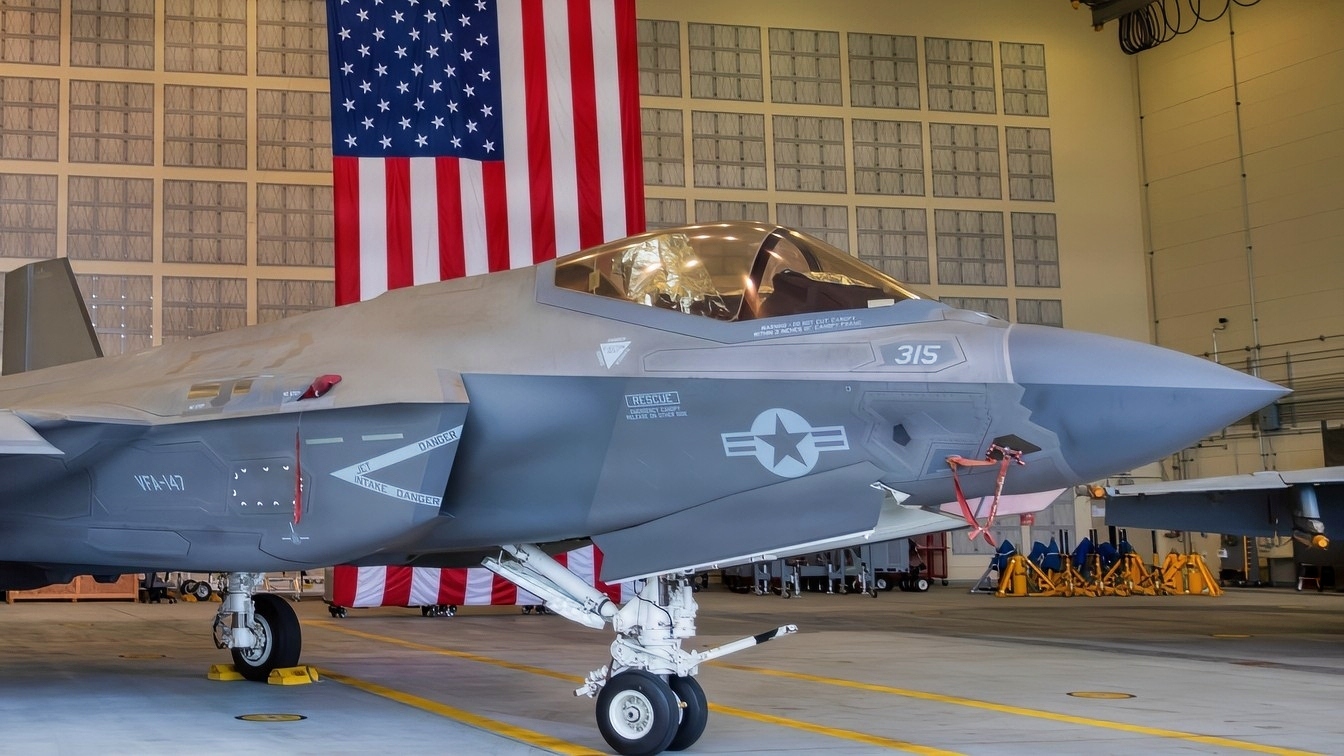
A U.S. Navy F-35C Lightning II static display from Strike Fighter Squadron (VFA) 102, Carrier Air Wing (CVW) 5 inside of Hangar 5300 during Friendship Day at MCAS Iwakuni, May 3, 2026. Since 1973, MCAS Iwakuni has held an air show designed to foster positive relationships and offer an exciting experience that displays the communal support between the U.S. and Japan. The air show encompassed various U.S. and Japanese static display aircraft, aerial performances, food and entertainment. (U.S. Marine Corps photo by Lance Cpl. Isaac De Leon)
Start with the crisis Iran faced. With the Strait of Hormuz shut, Iranian crude couldn’t leave the country any more than anyone else’s could. Oil kept coming out of the ground; the export terminals went quiet; and the storage tanks filled toward the one hard limit that matters: the point where they top out, and production has to be choked back. Shutting wells in is expensive, it can damage the fields, and it is slow. Tanks fill over weeks, not days.
And Iran was never fully bottled up. Chinese and Russian buyers kept lifting cargoes through corridors controlled by the IRGC. The storage clock ran slowly because the export collapse was partial by design, not because Iran is unusually tough. Tehran decided which flags moved and which sat. The cost was real — lost revenue, and the shut-in risk hanging over the fields — but all of it was internal, and all of it could be deferred. That is the kind of pain a state built to outlast sanctions can carry for a long time.
Washington’s Problem Wasn’t Supply — It Was Price
Now look at the crisis Washington faced. It was uglier than a supply problem and harder to manage. The United States has never run short of oil; it is a net exporter, and the Strait of Hormuz barely affects its own supply.
The problem was the price shock from choking off close to a fifth of the world’s crude. A shock that size does not stay offshore. It hit Gulf partners within hours, and it was in American pump prices and the inflation numbers by the end of the week. You cannot send a carrier to fix that.
This is the part Washington keeps underrating. The clock that mattered ran through things the United States doesn’t control and can’t reach with force. Allied economies have no appetite for a months-long siege.
A domestic electorate reads a Middle East war through the price at the pump, and reads it fast. Military dominance was real, and it did nothing for either problem. Every extra day the strait stayed shut, the bill on the American side grew faster than any pressure was going to grow on Tehran’s.
The obvious objection is escalation. The carrier groups were real; Washington could have hit harder. But escalation doesn’t drain a tank farm or calm an oil market. It does the reverse. The instrument Washington had the most of was not the instrument that could slow the clock running against it.
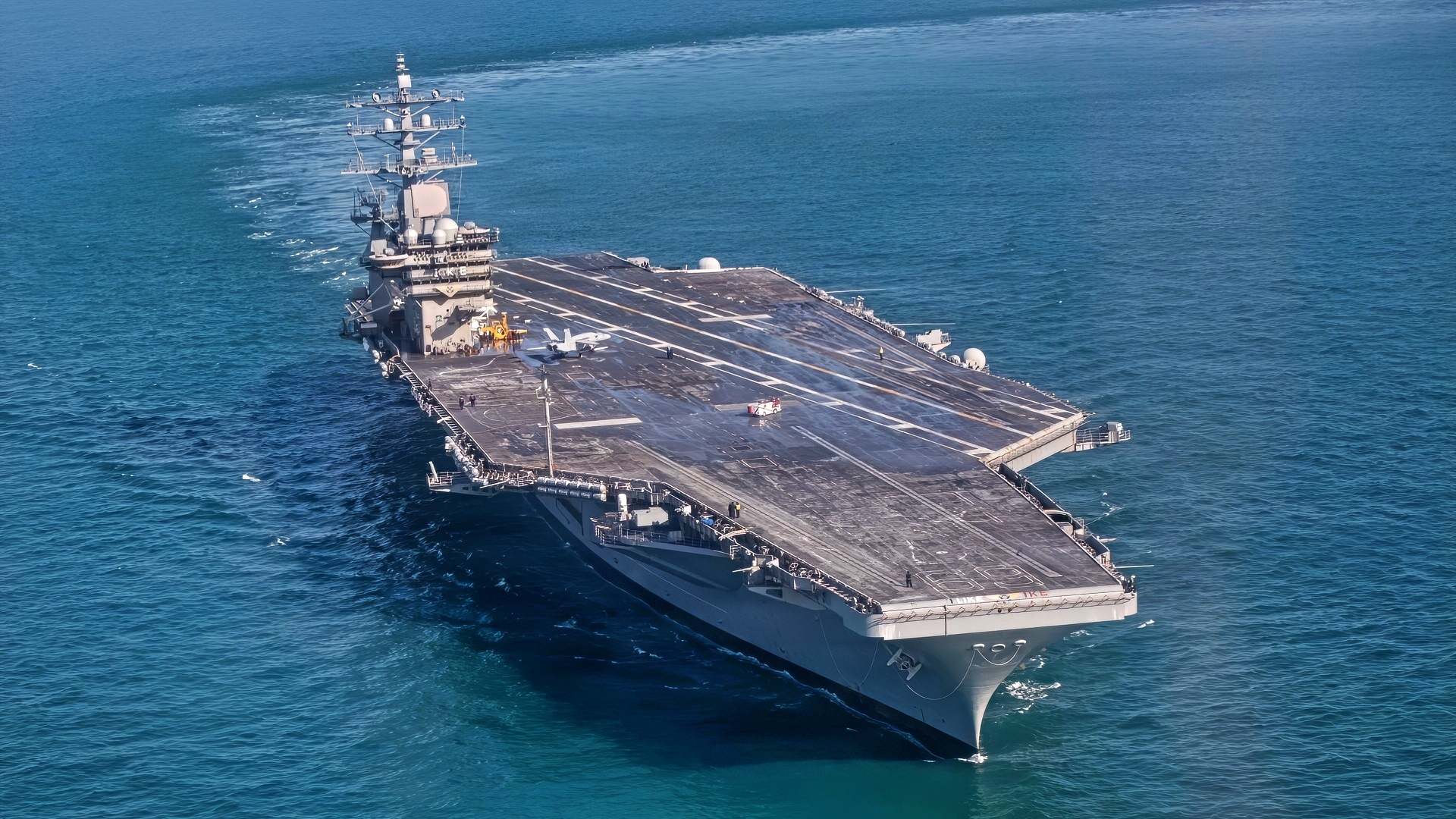
U.S. Navy Nimitz-class aircraft carrier USS Dwight D. Eisenhower (CVN 69) conducts a full power demonstration during Sea Trial in the Virginia Capes, Apr. 22, 2026. Eisenhower returned to sea and is now in the Basic Phase in the Optimized Fleet Response Plan. (U.S. Navy photo by Mass Communication Specialist Seaman Nicole Schweigert)
The Bigger Navy Doesn’t Set the Tempo
A fight like this goes to the side that can live with the ugly middle stage, and that capacity was mostly fixed before the first missile flew. Iran could sit with a storage system filling slowly. Washington could not sit with weeks of costly oil and allies edging toward panic.
The longer nothing got resolved, the more leverage slid toward Tehran. It was the same logic running under the toll-booth regime: time did Tehran’s work for it.
The Gulf capitals read all of this, and that may be the most consequential thing to come out of the war. Riyadh and Abu Dhabi watched an American security guarantee fail to shorten an oil clock by a single day.
They also saw why the chokepoint works as a weapon: the thing that breaks first is the American economy and the patience of American allies, not the Iranian state. The Gulf is not sentimental about deterrence. It is adding up what the guarantee is worth, and the number keeps falling.
What Outlasting Washington Bought
Let’s be blunt about the win right up front. Washington accepted a ceasefire that calls for a phased reopening of the Strait and conditions that traffic through the Strait be coordinated with Tehran.
Both of those conditions were the red lines that Washington said would be a non-starter just days before they were accepted. Agreeing to even discuss reopening the strait under those terms is the concession. This is what losing a game of brinksmanship looks like when the loser still has the bigger weapon.
The shooting has stopped, oil is moving again, and Iran’s coordination regime sits inside the settlement being negotiated instead of being swept away by it. A closure meant as a temporary act of desperation has hardened into leverage Tehran now exercises on its own terms.
There’s no doubt that Iran suffered losses it would rather not have taken. But in the end, it achieved its core goals: regime survival; the maintenance of its nuclear program, ballistic missile infrastructure, and proxy network; and, for the first time, the ability to close the Strait. And all of these goals were achieved at Washington’s expense.
The Clock Keeps Running After the Ceasefire
The risk now is that Washington tells itself the wrong story about why the fighting stopped — crediting force, or a good week of talks, instead of the oil-clock asymmetry that was there from the start and is now plain to the other side. Tehran has run the experiment once. It knows the result.
The test that matters won’t show up in this news cycle. It is whether the United States does the dull work of lengthening its own clock before the next chokepoint closes: reserve depth and arrangements to cushion allies, worked out before a price spike rather than during one.
None of that is as satisfying as a carrier deployment. It is also the only thing that would bind the variable that beat Washington this time. Until that work is done, closing Hormuz stays the most usable weapon Iran has — and the next government in Tehran already knows which clock runs faster.
About the Author: Dr. Andrew Latham
Andrew Latham is a professor of international relations and political theory at Macalester College in Saint Paul, MN. You can follow him on X: @aakatham.


