


NASA’s X-43D was designed to fly at Mach 15 — roughly 11,400 miles per hour, fast enough to cross the Atlantic Ocean in 18 minutes — using a hydrogen-fueled scramjet launched from a two-stage rocket at 200,000 feet. The aircraft was the planned successor to the X-43A, which set the all-time air-breathing speed record at Mach 9.65 in 2004. NASA canceled the X-43D before a single airframe was ever built, and 20 years later, no aircraft has ever flown at the speeds the X-43D was designed to reach.
The X-43D Could Have Been Truly Special: Mach 15 Speeds
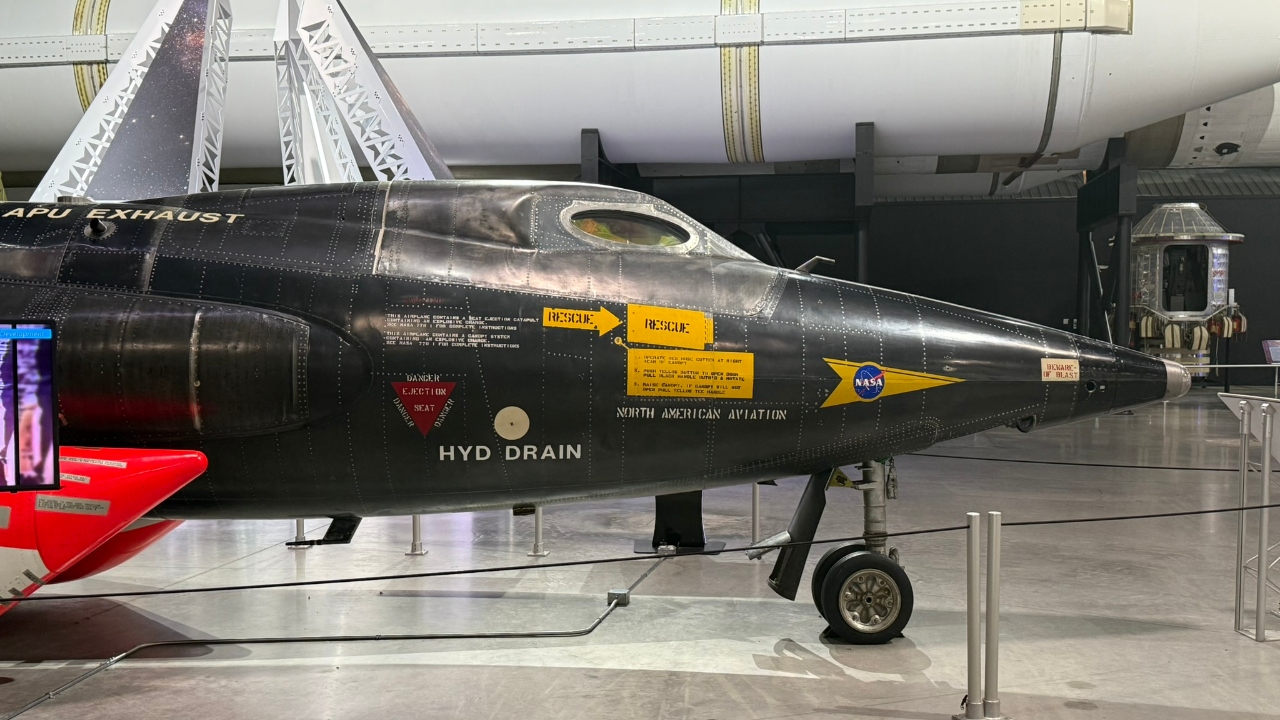
X-15 Harry J. Kazianis National Security Journal Photo.
By the early 2000s, aeronautical engineers had mastered supersonic flight. Naturally, the next step was to push even further into hypersonic flight.
While ballistic missiles reach hypersonic speeds in their terminal phase, engineers wondered whether sustained supersonic flight is possible.
Hypersonic flight, however, required overcoming immense engineering hurdles and required new tests and more data. NASA was one of the earlier pioneers in the hypersonic realm. From 2001 to 2004, it conducted a series of tests and developed several design concepts for its experiments.
One of these concepts that would never take flight was the X-43D. Derived from the X-43A, the unmanned aircraft was designed to operate at Mach 15 for sustained periods.
The X43D was a follow-up to the X-43 series of hypersonic demonstrator aircraft. As part of the broader Hyper-X Project, the experiments aimed to validate scramjet technology and push the boundaries of hypersonic flight. X-43A was the first and most successful of the series.
It was a small, unmanned vehicle designed to use a lifting-body configuration. The aircraft was not meant to land; instead, it was intended to crash into the Pacific Ocean after testing was complete. X-43A completed three test flights during the project’s tenure. During the third test flight, the aircraft reached Mach 9.65 for about 12 seconds. These results were satisfying, but NASA felt that it could reach even higher.

A U.S. Air Force B-52 Stratofortress, assigned to the 5th Bomb Wing, conducts aerial refueling with a KC-135 Stratotanker, assigned the 350th Expeditionary Air Refueling Squadron, June 14, 2024 during a presence patrol mission over the U.S. Central Command area of responsibility. The B-52 is capable of flying at high subsonic speeds, at altitudes of up to 50,000 feet, within the atmospheric tropopause, with worldwide precision navigation capability, providing a unique rapid response to senior coalition leaders globally. (U.S. Air Force photo by Tech Sgt. Ashley Sokolov)
Moving Past X-43A
The X‑43D was conceived as the natural next step after these achievements. While the X‑43A proved that scramjets could work at hypersonic speeds, the X‑43D was intended to explore whether such propulsion systems could operate at even higher speeds and for longer durations.
X-43D was designed to reach speeds of Mach 15+ using a hydrogen-fueled scramjet engine to gather data at higher flight regimes that would be impossible in ground-based tests. Unlike the X-43A, which was launched from a B-52, the X-43D would be launched from a two-stage rocket that would carry it to an altitude of around 200,000 feet before it separated and activated its engines.
Flying at Mach 15 would have exposed the vehicle to conditions far more extreme than anything encountered by the X‑43A.
At such velocities, aerodynamic heating becomes a dominant challenge. The airframe would experience temperatures that could damage or destroy conventional materials, necessitating the development of advanced thermal protection systems. In addition, airflow around the aircraft would behave in highly complex ways, generating intense shockwaves and potentially destabilizing forces. These conditions made the X‑43D an essential testbed for understanding the physics of ultra‑high‑speed flight.
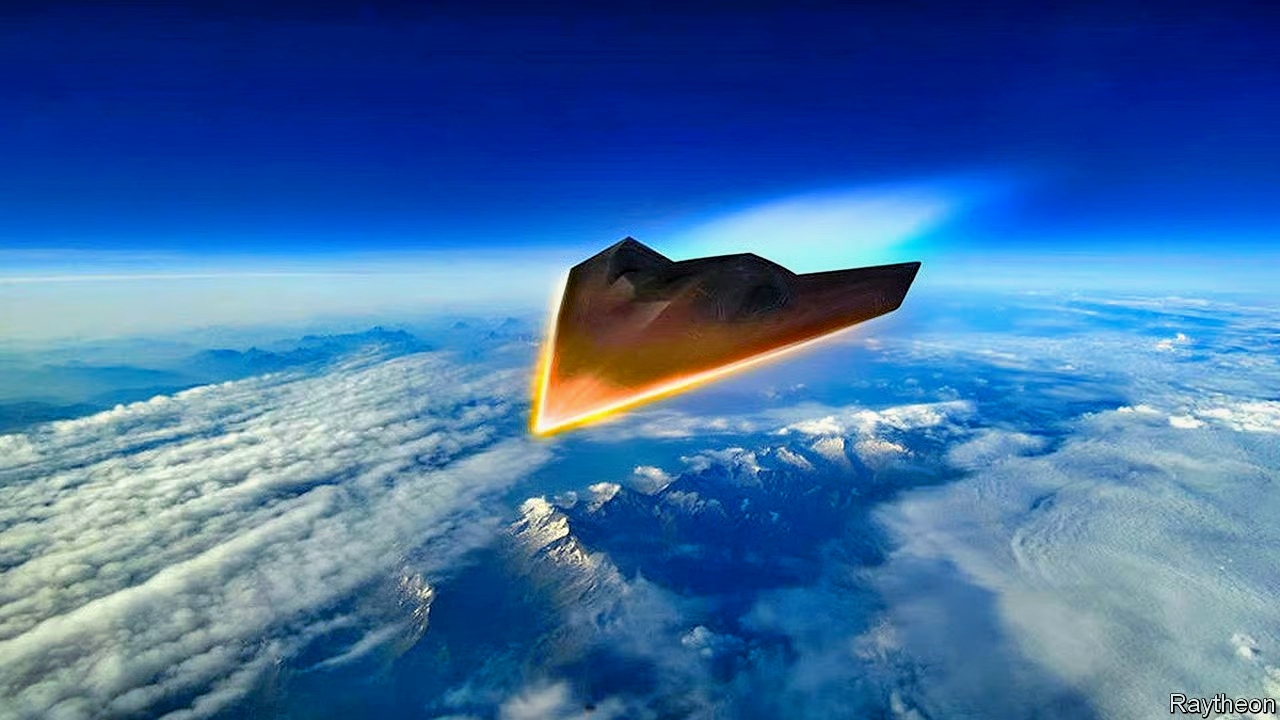
Hypersonic Glide Vehicle. Image Credit: Raytheon.

Typhon Hypersonic Missile. Image Credit: YouTube Screenshot.
Central to the design was the scramjet engine, or supersonic combustion ramjet. This engine type differs fundamentally from traditional jet engines. Instead of slowing incoming air to subsonic speeds before combustion, a scramjet allows air to remain supersonic throughout the process.
This approach enables much higher speeds than conventional engines, but it also introduces significant technical challenges. For example, maintaining stable combustion in a supersonic airflow is extremely difficult, as the fuel and air must mix and ignite in a fraction of a second.
The X‑43D would have pushed this technology to its limits, exploring whether sustained operation at Mach 15 was feasible.
Another important distinction between the X‑43A and the X‑43D lies in their intended roles and capabilities.
The X‑43A was a relatively small, disposable vehicle designed primarily to validate the basic functionality of a scramjet. In contrast, the X‑43D was envisioned as a larger and more capable platform that could operate for longer periods and gather more comprehensive data. Some conceptual studies even described multiple variants of the X‑43D, each tailored to explore different regions of the hypersonic flight envelope. This suggests that NASA saw the X‑43D not merely as a single experiment but as part of a broader research effort to map the limits of air‑breathing propulsion.
Why the X-43D Failed
Unfortunately, X-43D would never leave the drawing board and was instead replaced by other projects.
Several factors contributed to its cancellation, most notably budget constraints and shifting priorities within NASA. Hypersonic research is inherently expensive, requiring advanced materials and sophisticated testing infrastructure, and by the end of the program, it had cost around $230,000,000.
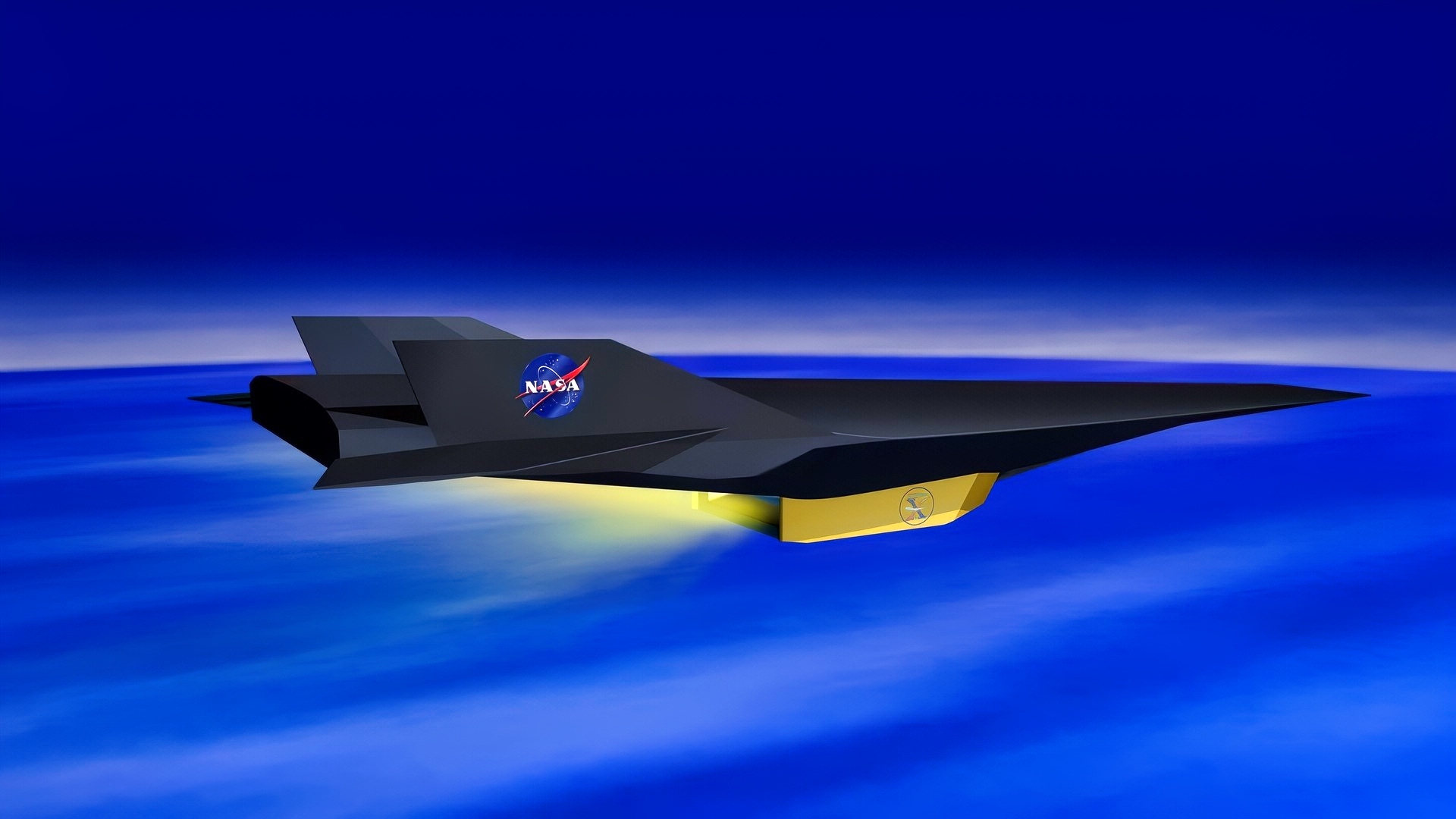
X-43A from NASA. Image Credit: Creative Commons.
As NASA’s focus shifted to other programs, including human space exploration initiatives, funding for projects like the X‑43D became harder to justify. Additionally, the technical risks associated with Mach 15 flight were substantial, and the necessary technologies were not yet mature enough to guarantee success.
Another factor that influenced the premature conclusion of the Hyper-X project was the development of other hypersonic projects. In 2006, the USAF announced the creation of the Force Application and Launch from Continental United States (FALCON) project with DARPA.
Later, it would team up with Boeing to produce the X-51 WaveRider, another unmanned air-breathing hypersonic demonstrator aircraft. Both projects were cheaper than the Hyper-X project and offered more practical results. The X-51, for example, translated directly into the Air Force’s hypersonic missile efforts, which have become more important to the U.S. in recent years.
About the Author: Isaac Seitz
Isaac Seitz, a Defense Columnist, graduated from Patrick Henry College’s Strategic Intelligence and National Security program. He has also studied Russian at Middlebury Language Schools and has worked as an intelligence Analyst in the private sector.


