


Five Ways The YF-23 Black Widow Was Better Than The F-22 Raptor
The Advanced Tactical Fighter program was born in 1981 out of a straightforward Cold War problem. The U.S. Air Force needed a fighter that could dominate the skies against the next generation of Soviet aircraft, the MiG-29 Fulcrum and the Su-27 Flanker, and whatever Moscow built after them.
The requirements were demanding for the era. The new fighter had to combine genuine low-observable stealth with the ability to outperform the latest Soviet fighters in a dogfight, and it had to supercruise, meaning sustain supersonic flight without the fuel-guzzling afterburners that every fighter of the period relied on to break the sound barrier.
No aircraft in the world combined those traits. The only operational stealth aircraft in existence, the F-117 Nighthawk, was subsonic and carried no air-to-air weapons.
Seven companies submitted proposals. By 1986, the field had narrowed to two teams, each given roughly $691 million to build two flying prototypes for a competitive fly-off. Lockheed partnered with Boeing and General Dynamics to build the YF-22.

YF-23A Side View Western Museum of Flight. Image by National Security Journal.
Northrop partnered with McDonnell Douglas to build the YF-23. Northrop approached the problem from its B-2 Spirit stealth bomber heritage, and the aircraft the company produced was unlike anything that had flown before. The YF-23 used a diamond-shaped planform, a blended wing-body fuselage, buried S-duct engine intakes, and a pair of canted all-moving tail surfaces in place of the conventional four-tail arrangement every other fighter used.
Two prototypes were built. The first, painted black, was called the Black Widow II. The second, in gray, was called the Gray Ghost.
I have stood next to both of them. The two aircraft that exist are split between the Western Museum of Flight in Torrance, California, and the National Museum of the United States Air Force at Wright-Patterson Air Force Base in Ohio, and I visited both last year. Photos and videos from both visits appear throughout this article.
Here are five ways the aircraft Northrop built arguably beat the F-22 that won.
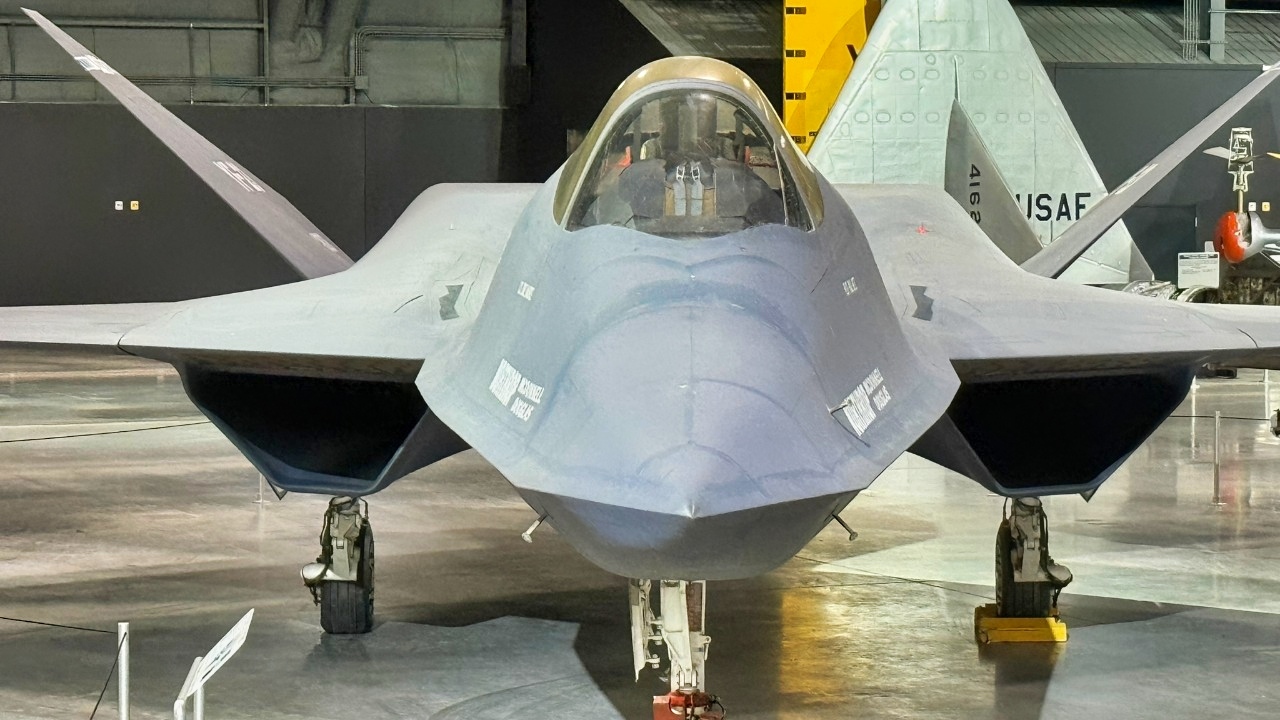
YF-23 at U.S. Air Force Museum Photo by NSJ. Taken on 7/19/2025 by Harry J. Kazianis.
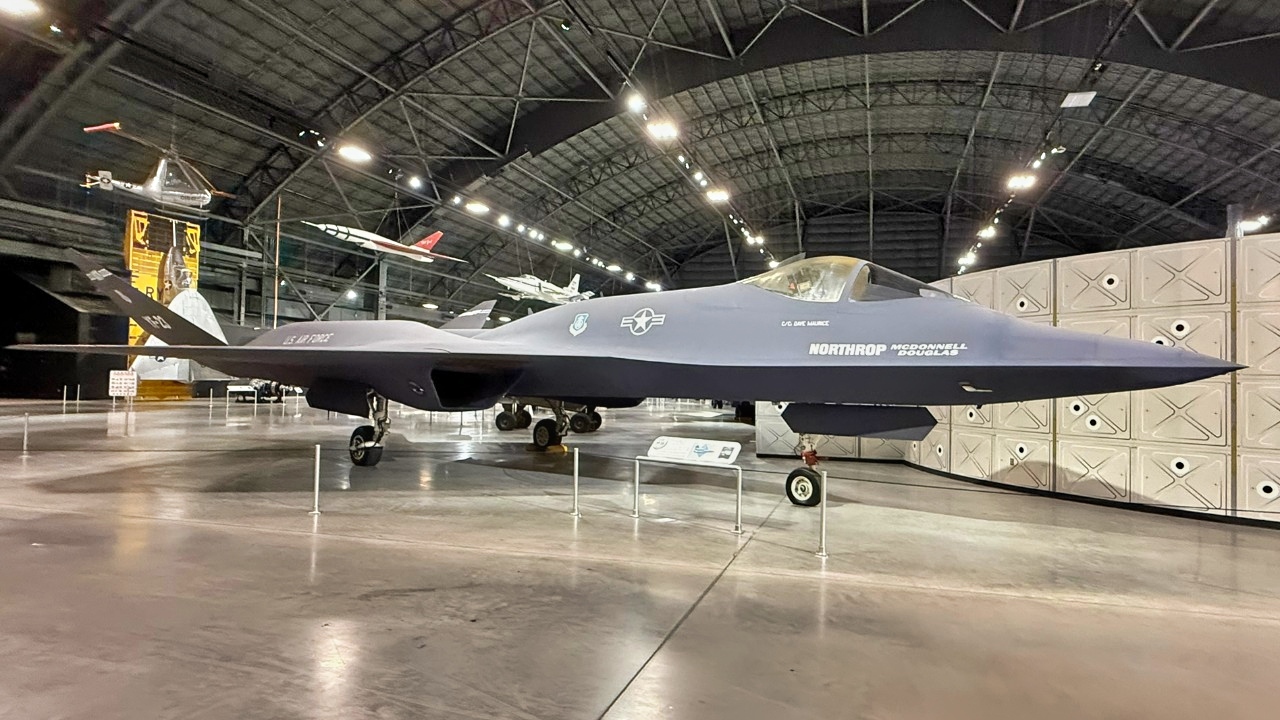
YF-23 National Security Journal Photo. Taken by Harry J. Kazianis at U.S. Air Force Museum on 7/19/2025.
One: It Was Stealthier
The single most important measurement in the entire ATF competition was radar cross-section, and the YF-23 won it. Northrop’s design carried its stealth heritage directly from the B-2 program, and the diamond planform with no conventional vertical tail surfaces produced a radar signature lower than that of the YF-22 across critical engagement aspects.
The aircraft was said to be capable of avoiding detection from nearly any radar system of the period.
The shaping was the reason. Where the YF-22 retained twin vertical stabilizers that reflected radar energy, the YF-23 eliminated them entirely, folding their function into the canted V-tail surfaces and the blended fuselage.
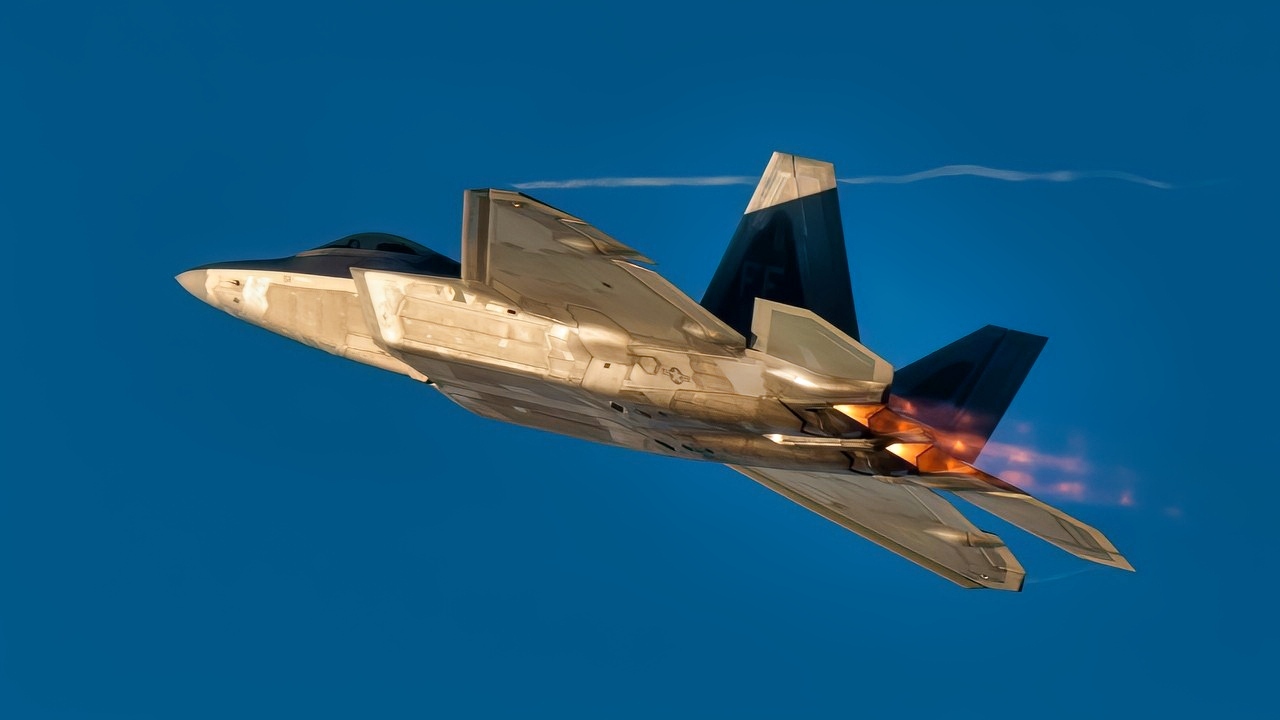
A U.S. Air Force F-22 Raptor assigned to Joint Base Langley-Eustis, Virginia, takes off during Checkered Flag 23-1 at Tyndall Air Force Base, Florida, Nov. 4, 2022. Checkered Flag is a large-force aerial exercise which fosters readiness and interoperability through the incorporation of 4th and 5th-generation aircraft during air-to-air combat training. The 23-1 iteration of the exercise was held Oct. 31 – Nov. 10, 2022. (U.S. Air Force photo by Tech. Sgt. Betty R. Chevalier)
Every edge on the aircraft was aligned to scatter radar returns away from the emitter. The result was a fighter that, in the metric the entire program was supposed to prioritize, outperformed the design that won.
Two: It Was Faster In The Way That Mattered
The YF-23 supercruised faster than the YF-22, and supercruise was the speed measurement the Air Force actually cared about.
The Black Widow could sustain roughly Mach 1.6 without afterburner, and during flight testing, the aircraft pushed its supercruise envelope out toward Mach 1.5 and beyond across the demonstration program before the first four YF-23 pilots had even completed their checkouts.
Its maximum speed reached Mach 2.2 at altitude.
The distinction between supercruise speed and afterburner dash speed is the whole point. An aircraft that can cruise at supersonic speed without an afterburner covers ground faster, reaches its targets sooner, and retains the energy to engage and disengage on its own terms, all without burning through its fuel reserves.
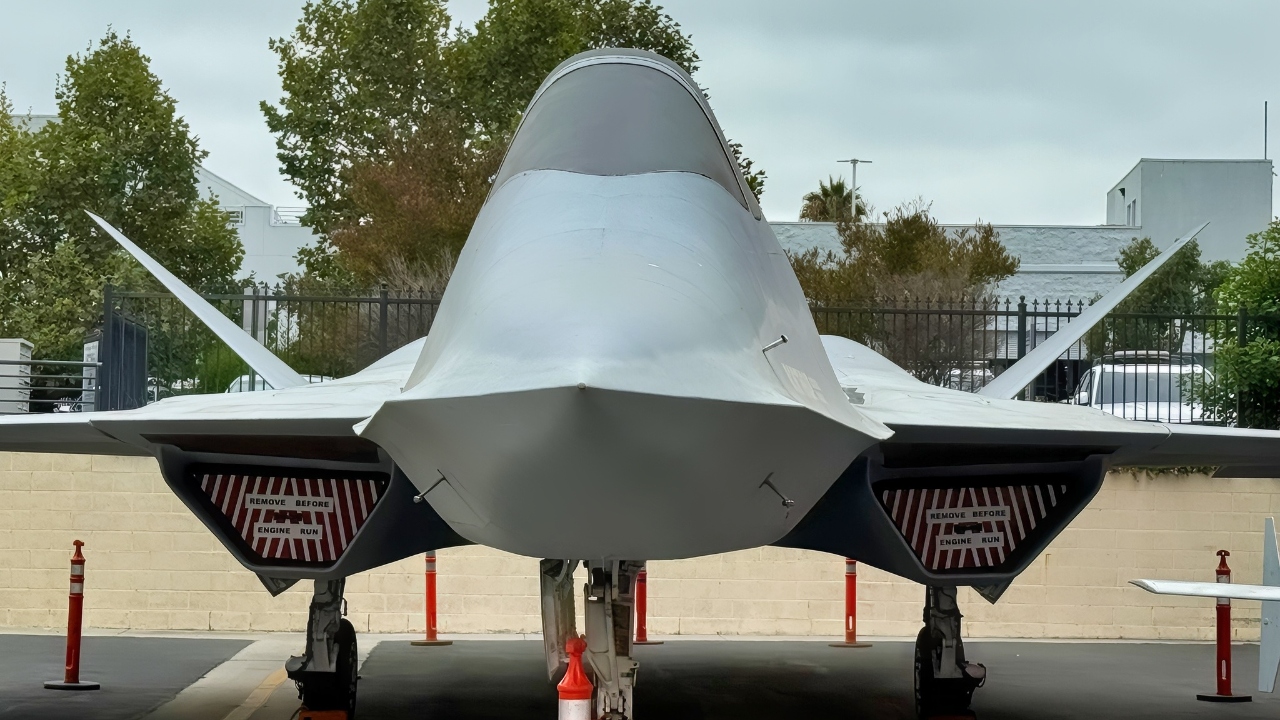
YF-23A Black Widow II Head On. Image Taken by National Security Journal at the Western Museum of Flight on August 16, 2025.
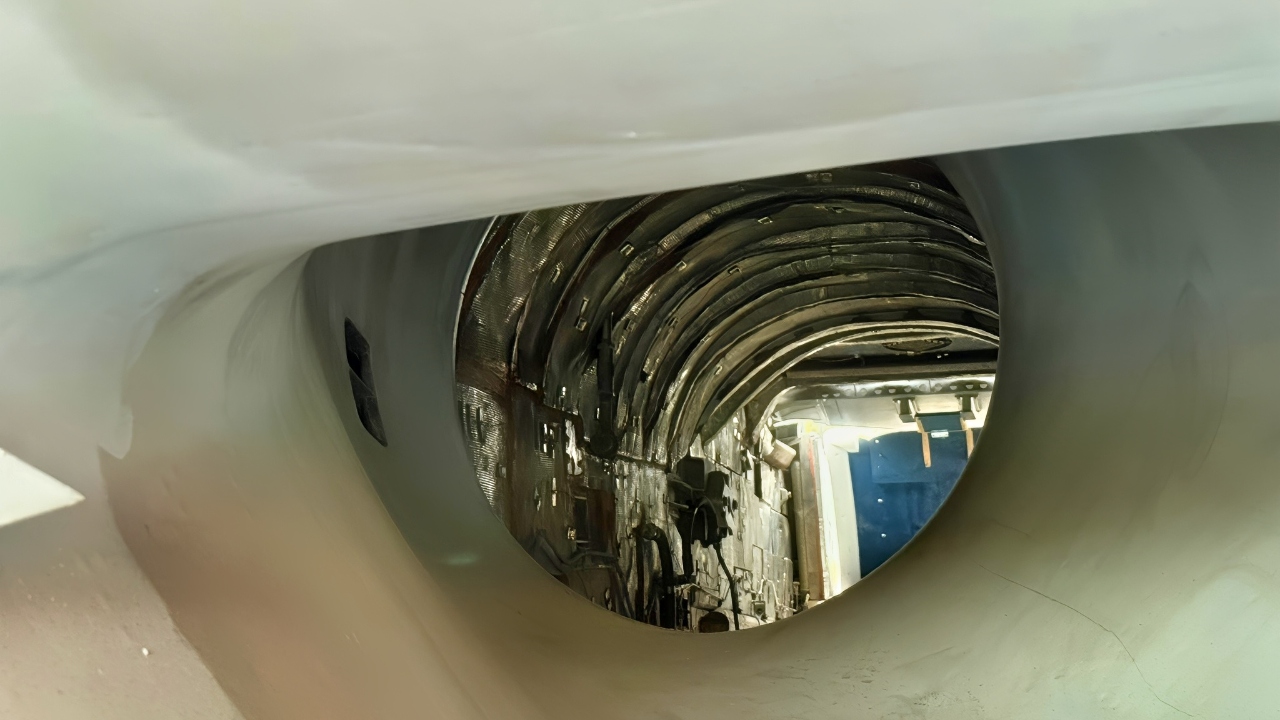
This photo was taken looking inside a YF-23A Black Widow II where the engine was removed. Photo: National Security Journal.
The YF-23 did this better than the aircraft that beat it.
Three: It Flew Farther
Range is the quiet advantage that wins wars in large theaters, and the YF-23 had more of it than the YF-22. The Black Widow’s combination of efficient supercruise and internal fuel capacity gave it a range approaching 3,000 miles and a combat radius of roughly 800 miles, with a service ceiling of 65,000 feet.
In the Pacific theater that increasingly dominates American defense planning, where the distances between bases and targets are measured in thousands of miles, and aerial refueling tankers are among the most vulnerable assets in the force, the fighter that can fly farther on internal fuel is the fighter that can actually reach the fight.
The YF-23 was built for exactly that kind of long-range penetration, and its reach exceeded that of the YF-22.
Four: It Was Harder To See On Infrared
Stealth is not only about radar. Modern air combat increasingly turns on infrared search-and-track systems and heat-seeking missiles that do not care how small your radar cross-section is.
The YF-23 addressed this with one of the most sophisticated thermal management systems ever built into a fighter.
Drawing on the same approach Northrop developed for the B-2 Spirit, the aircraft used transpiration cooling, projecting its engine exhaust across heat-absorbing tiles fitted around the nozzles and channeling the exhaust along troughs lined with cooling material in the aircraft’s upper rear deck.
The system dramatically reduced the heat signature available to enemy infrared sensors, making the aircraft far less susceptible to heat-seeking missiles. The YF-22, with its thrust-vectoring nozzles exposed at the rear of the aircraft, ran a substantially hotter and more detectable signature.
Five: Its Tail Surfaces Negated The Raptor’s Headline Advantage
The single feature the Air Force fell in love with on the YF-22 was its thrust-vectoring nozzles, which allowed the Raptor to point its nose in ways no conventional fighter could and gave it spectacular low-speed maneuverability in a dogfight.
The YF-23 had no thrust vectoring. What it had instead were enormous all-moving tail surfaces, and according to the one man uniquely qualified to judge, they largely closed the gap. Paul Metz flew the YF-23 on its first flight and later flew the F-22 as well, making him the only person to fly both aircraft.
His fellow test pilot Jim Sandberg explained that the YF-23’s massive tailerons were so powerful that they largely mitigated the perceived maneuverability advantages of the YF-22’s thrust vectoring.
The Raptor’s defining party trick, in other words, bought less of an edge over the Black Widow than the Air Force believed.
Why The Raptor Won Anyway
None of these five advantages was enough, and the reasons the YF-22 won had less to do with the aircraft than with the companies behind it.
The Air Force rated the Lockheed team lower on technical risk because the YF-22 flew more hours and more sorties during the demonstration phase, and Lockheed infused far more marketing and showmanship into its flight program.
Lockheed understood how heavily presentation weighs on an acquisition decision. Northrop flew a more conservative, engineering-focused demonstration and did not sell the aircraft the way its competitor did.
There was a reputational problem as well. In the years leading up to the competition, Northrop had been under sustained congressional scrutiny and Pentagon audits across its product line, and the Air Force understood that picking Northrop would mean defending a politically wounded contractor before skeptical lawmakers. The selection also concentrated American stealth aircraft expertise in a way the Pentagon wanted to avoid.
Northrop was already building the B-2 Spirit, and awarding the ATF to Northrop as well would have placed too much of the nation’s stealth production inside a single company, eliminating competition in the fighter sector for a generation.

YF-23 National Security Journal Photo. Taken by Harry J. Kazianis at U.S. Air Force Museum on 7/19/2025.

YF-23 National Security Journal Photo. Taken by Harry J. Kazianis at U.S. Air Force Museum on 7/19/2025.
The Lockheed team, with Boeing and General Dynamics behind it, was the safer industrial bet for a program meant to define American air power for half a century.
The Air Force chose the Raptor, and the Raptor became one of the finest air superiority fighters ever built. But the decision came down to risk, salesmanship, and industrial politics rather than the raw performance of the two airframes.
The aircraft that was stealthier, faster in the cruise, longer-legged, cooler to the infrared eye, and very nearly as agile lost the competition and never flew again.
Both prototypes sit in museums now, and standing next to them, it is impossible not to wonder how the last thirty years of air combat might have unfolded if the Air Force had picked the other diamond-shaped fighter on the ramp.
About the Author: Harry J. Kazianis
Harry J. Kazianis (@Grecianformula) was the former Senior Director of National Security Affairs at the Center for the National Interest (CFTNI), a foreign policy think tank founded by Richard Nixon based in Washington, DC. Harry has over a decade of experience in think tanks and national security publishing. His ideas have been published in the NY Times, The Washington Post, The Wall Street Journal, CNN, and many other outlets worldwide. He has held positions at CSIS, the Heritage Foundation, the University of Nottingham, and several other institutions related to national security research and studies. He is the former Executive Editor of the National Interest and the Diplomat. He holds a Master’s degree focusing on international affairs from Harvard University.


