
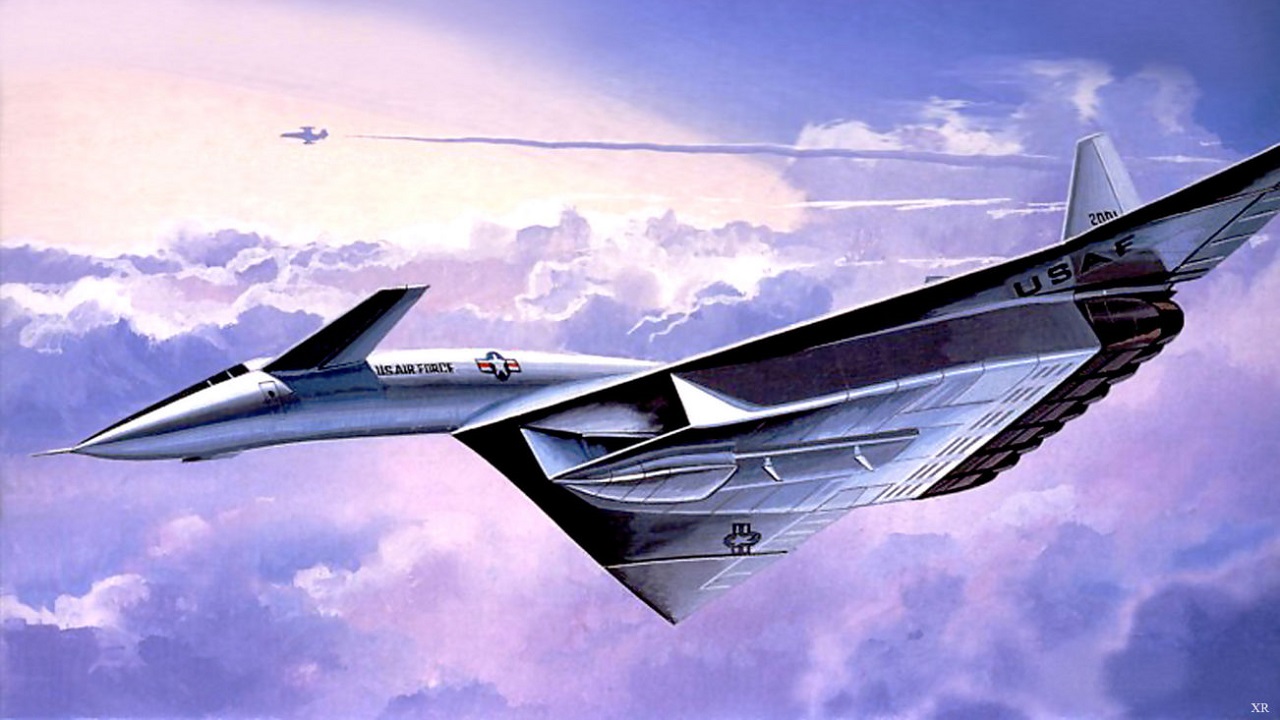
In the late 1950s, the U.S. spent $800 million building a Mach 3.1 strategic bomber that could cruise above 70,000 feet and outrun every Soviet interceptor. The North American XB-70 Valkyrie used six General Electric YJ93 engines and a delta wing employing “compression lift” to ride its own supersonic shockwaves. Then in 1960 a Soviet missile shot down a U.S. U-2, ICBMs entered service, and the Pentagon cancelled the program before any operational bomber ever flew.
The XB-70 Has a Lesson for the U.S. Air Force
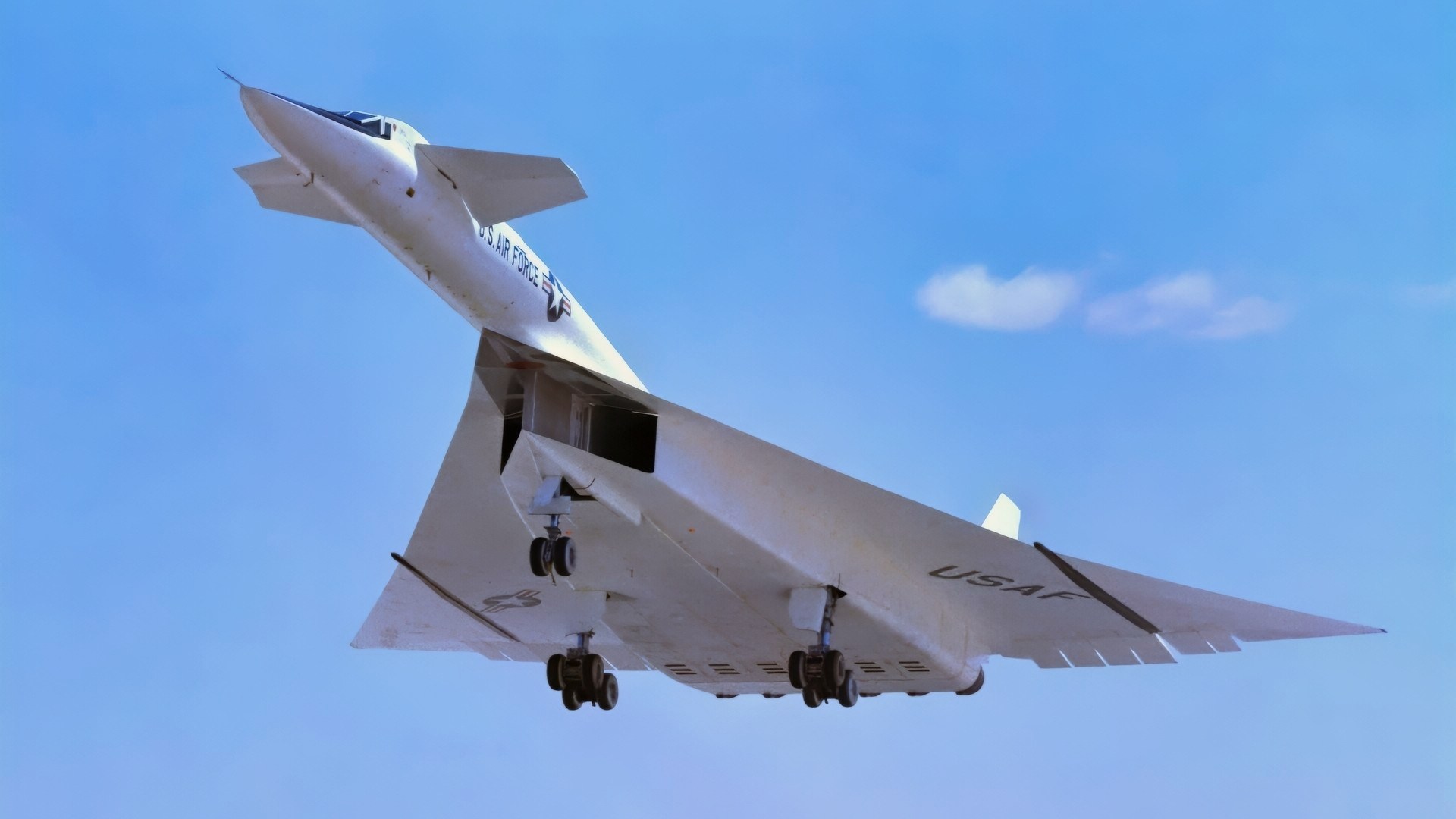
Viewed from the front the #1 XB-70A (62-0001) is shown climbing out during take-off. Most flights were scheduled during the morning hours to take advantage of the cooler ambient air temperatures for improved propulsion efficiencies. The wing tips are extended straight out to provide a maximum lifting wing surface. The XB-70A, capable of flying three times the speed of sound, was the world’s largest experimental aircraft in the 1960s. Two XB-70A aircraft were built. Ship #1 was flown by NASA in a high speed flight research program.

XB-70 at USAF Museum. Image Credit: U.S. Air Force.

XB-70 In Flight. Image Credit: Creative Commons.
The B-21 Raider is the United States’ next-generation stealth bomber that’s designed to survive and evade modern air defenses.
The aircraft is the result of years of development and planning, based on the consensus that survivability now hinges on maintaining low observability and perfecting stand-off strike capabilities. Survivability is no longer about raw speed.
In the late 1950s, however, things were very different. The logic underpinning the B-21 – or, indeed, the current B-2 Spirit – would have been unrecognizable to planners at the time.
Then, the U.S. pursued a radically different concept in the North American XB-70 Valkyrie – a six-engine bomber that was designed to fly above 70,000 feet at speeds exceeding Mach 3, thereby outrunning any interceptor in existence.
The XB-70 didn’t work out, though. It didn’t fail because it didn’t work, but because the strategic assumptions behind it collapsed before it could enter service.
The Bomber Designed to Be Untouchable
Let’s start with what the XB-70 was. This was a prototype strategic bomber that was highly ambitious for its time and was conceived in the mid-1950s as an aircraft capable of penetrating Soviet airspace at extreme speed and altitude.
In theory, the aircraft would have made interception completely impossible and required no additional support to keep the aircraft safe while conducting overflight missions – even though a defensive missile, the “Pye Wacket,” was being designed specifically to protect it.
The design was one of the most ambitious aircraft ever built. The XB-70 featured six General Electric YJ93 engines and a massive delta wing, enabling sustained flight at Mach 3.1 and altitudes exceeding 70,000 feet.

XB-70 in Dayton, Ohio Air Force Museum. Image Credit: National Security Journal.
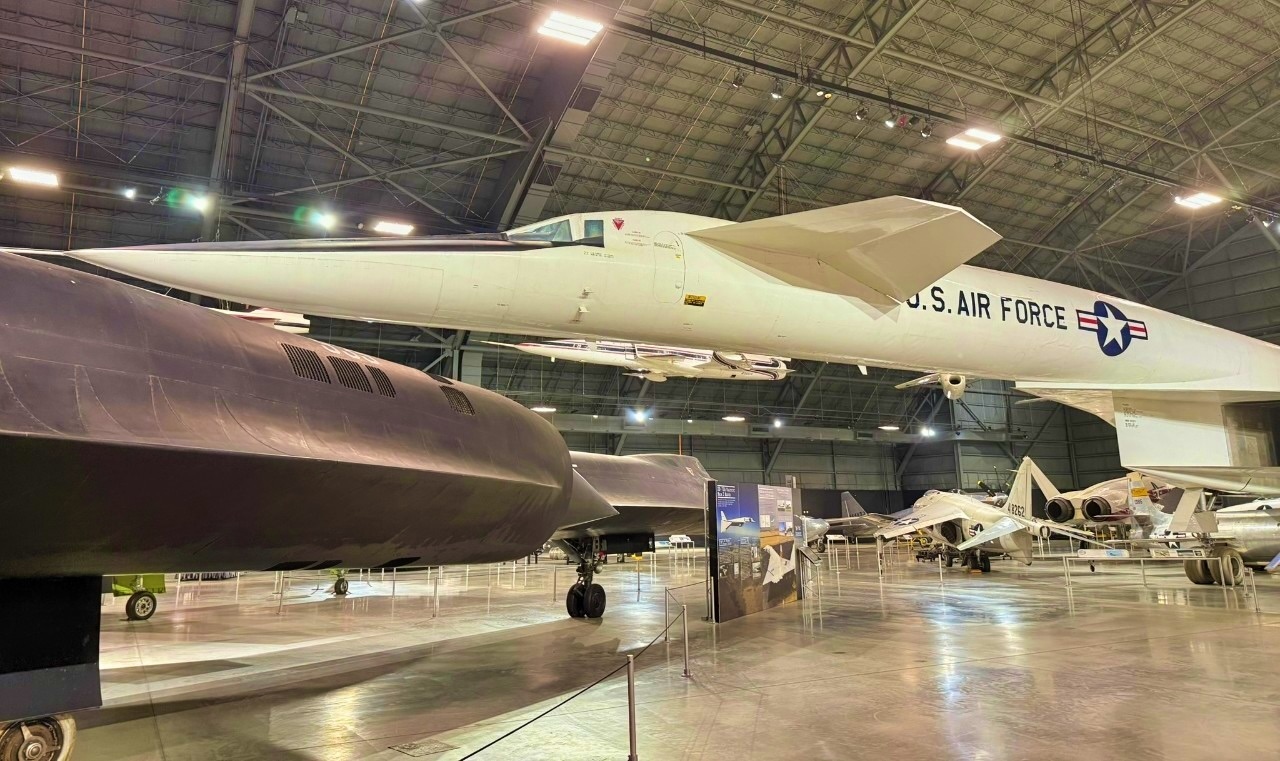
XB-70 Up Close @ U.S. Air Force Museum. Image Credit: Harry J. Kazianis/National Security Journal.

XB-70 Is a Massive Bomber. Image Credit: National Security Journal.
It relied heavily on advanced aerodynamic concepts, including “compression lift,” which used shockwaves generated at supersonic speeds to further increase lift and efficiency. At these extreme speeds, planners believed the bomber would be immune to interception because Soviet fighters would struggle to reach the same altitude, and even if they did, the XB-70 would simply pass through defended airspace too quickly to be engaged.
The program was a result of the Strategic Air Command’s focus on manned nuclear bombers at a time when missile technology was advancing. Early plans even envisioned a fleet of dozens of operational B-70 bombers – potentially as many as 60 – that would have replaced the B-52.
But as engineers were refining the physics of Mach 3 manned flight, the strategic environment around them was changing. It was an incredible feat, but it was ultimately rendered unnecessary – at least in the sense that the specific bomber they were designing eventually wasn’t needed.
Dead Before It Could Fly
The assumption that made the XB-70 a critical new asset for the U.S. Air Force – that speed and altitude guaranteed survivability – effectively collapsed in 1960. That year, a U.S. U-2 reconnaissance aircraft was shot down over the Soviet Union by a surface-to-air missile, proving that high-altitude aircraft were no longer beyond reach. It was solid proof that Soviet air defenses had fundamentally changed.
And at the same time, intercontinental ballistic missiles were beginning to enter service.
Unlike bombers, ICBMs could deliver nuclear weapons in minutes, without risking a crewed aircraft or requiring penetration of defended airspace.
Those developments forced the Pentagon to reassess, and by 1961, the Air Force had effectively lost the argument for a high-speed penetration bomber. The B-70 program was canceled before a prototype had even flown, with only two aircraft authorized as experimental test platforms.
Ultimately, the aircraft fell victim to both relevance and cost. At low altitude, where bombers would now have to fly to avoid radar, the XB-70 offered little advantage over existing aircraft like the B-52, while being significantly more expensive and complex to maintain.
Numbers vary depending on the source, but a total of $800 million in 1960s dollars was reportedly spent on the program, and had an entire fleet been built, it would have introduced unnecessary additional expenditure related to its sustainment. The Air Force was better served by the B-52.
The 1966 Mid-Air Collision That Changed the Program
By the mid-1960s, the XB-70 was no longer a proposed operational bomber, having been turned into a research platform. Following the cancellation of the B-70 program in 1961, the two completed aircraft were retained for experimental use rather than frontline service.
The Air Force, working alongside NASA, repurposed the Valkyrie to study sustained high-speed flight, aerodynamic heating, and the behavior of large aircraft at Mach 3. The decision was made to extract value from an otherwise obsolete program, with the aircraft now serving as a testbed for future high-speed aviation concepts rather than a component of the nuclear deterrent. It was no longer useless.
But even as a research platform, the XB-70 suffered a catastrophic setback on June 8, 1966. That day, the second prototype (AV-2) took part in a formation flight over California as part of a General Electric publicity photo shoot.
Multiple aircraft, including an F-104 Starfighter, formed up around the XB-70 for the event. During the flight, NASA test pilot Joe Walker, flying the F-104, moved too close to the bomber’s wingtip.
The XB-70 then generated powerful wake vortices – essentially invisible tornadoes of disturbed air. The smaller aircraft got caught up in that vortex, causing it to roll uncontrollably in the air and collide with the XB-70’s vertical stabilizers.
The F-104 exploded, killing Walker instantly. The XB-70 also lost control and entered an unrecoverable spin. Inside the bomber, the crew attempted to escape using the aircraft’s encapsulated ejection system.
Test pilot Al White managed to eject, though he was seriously injured during the process. His co-pilot, Maj. Carl Cross was unable to escape and was killed in the crash.
The aircraft that was lost had been scheduled for advanced joint NASA-Air Force testing, including research relevant to future supersonic transport aircraft – but with only one XB-70 remaining, the scope of the program was substantially reduced.
The crash itself didn’t end the XB-70 program, but the momentum was certainly lost at that point.
The XB-70 Reaches A Dead End
After the crash, the remaining XB-70 continued flying as a research aircraft until 1969, conducting over 100 test flights for high-speed aerodynamics research. And the flights delivered valuable data.
For example, engineers gained insights into sustained Mach 3 flight and aerodynamic heating – the rapid increase of temperature on surfaces caused by air friction. Engineers also learned how these large aircraft behaved at extreme speeds. The aircraft also contributed to research programs exploring supersonic transport concepts, including studies of sonic boom effects.
But those contributions didn’t change the fact that the XB-70 wasn’t a platform any branch of the U.S. military needed. No Mach 3 bomber ever followed the XB-70.
In the years that followed, the Air Force began using low-altitude penetration to avoid radar and eventually moved toward stealth technology, birthing the B-2 Spirit bomber and, now, the B-21 Raider.
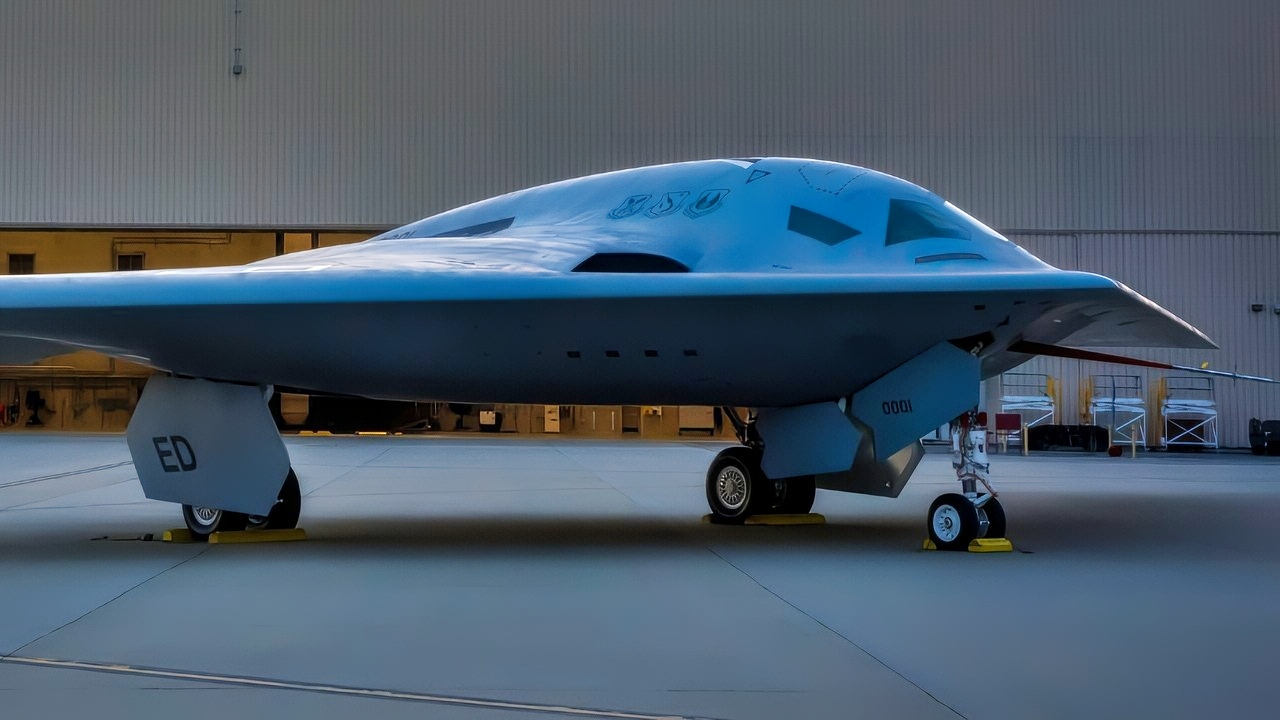
The B-21 Raider is designed with an open systems architecture, enabling rapid insertion of mature technologies and allowing the aircraft to be effective as threats evolve. The bomber was designed up front for supportability and maintainability-based upon decades of lessons learned and best practices from prior aircraft programs-to improve long-term affordability and outcomes in operations and sustainment. The B-21 first flight is anticipated to take place in calendar year 2023. (U.S. Air Force photo)
The XB-70 also left behind some abandoned concepts that were directly connected to its original mission, including the “Pye Wacket” defensive missile – a high-speed, flying saucer-shaped air-to-air weapon designed to protect the bomber at its top speeds. The missile program was canceled once the B-70 itself was terminated.
About the Author: Jack Buckby
Jack Buckby is a British researcher and analyst specializing in defense and national security, based in New York. His work focuses on military capability, procurement, and strategic competition, producing and editing analysis for policy and defense audiences. He brings extensive editorial experience, with a career output spanning over 1,000 articles at 19FortyFive and National Security Journal, and has previously authored books and papers on extremism and deradicalization.


Julian Grenfell
May 10, 2026 at 3:50 am
Yes, but not the SA-5 SAM. Also, there would have been a problem with later variants of the SA-2 SAM. For the manned bomber, low level (300 feet or below) was the only answer.