

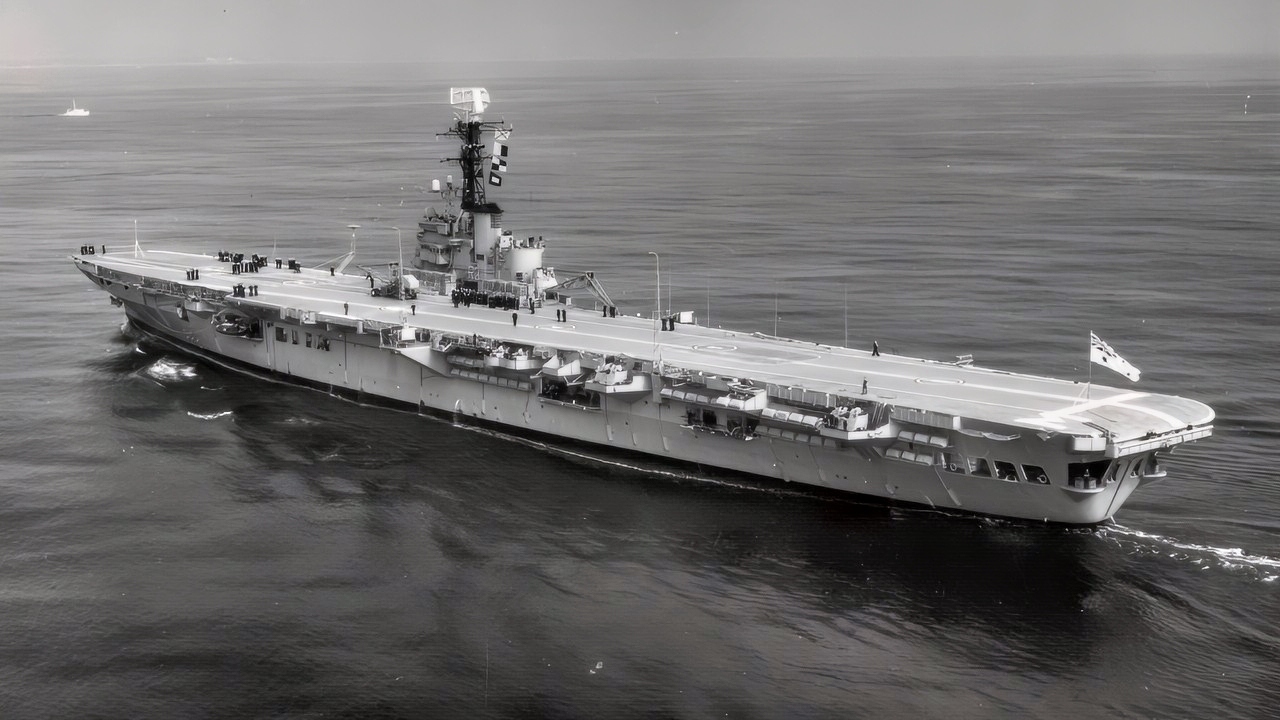
Aircraft Carrier HMAS Melbourne Served 27 Years in the Australian Navy — It Deployed to Vietnam and the Indonesia-Malaysia Confrontation
As a former U.S. Army infantry soldier, I admire the Australian military for its strength in anti-terrorism and counter-insurgency operations. The Australians have their own Special Air Service Regiment modeled after the British, and these Tier One operators can punish the enemy. Ninety of the commandos may be in the Middle East now. They have handed out some death and destruction over the years and are highly respected in the global special operations community.

An M1A1 Abrams tank from 1st Tank Battalion, 3rd Marines, maneuvers before a live fire assault at Shoalwater Bay Training Area, Queensland, Australia, on May 25, 2001 for Exercise Tandem Thrust 2001. Tandem Thrust is a combined military training exercise involving more than 18,000 U.S., Australian, and Canadian personnel who are training in crisis action planning and execution of contingency response operations.
(DoD photo by Sgt. Bob O’Donahoo, Australian Army. (Released))
Hard Luck Carrier Almost Served Three Decades
However, the Australian military once had some other notable bragging rights. The Aussies owned their own aircraft carriers, making their navy one of the strongest maritime forces in the Indo-Pacific.
One Australian carrier was HMAS Melbourne, which served from 1955 to 1982. This was not the most battle-tested ship. It never saw combat, and it encountered some bad luck. The Melbourne suffered two deadly collisions – one with an Australian vessel and the other with a United States ship.
Sold to China for Scrap
Unfortunately, the HMAS Melbourne was sent to China, where it was torn apart for scrap and pilfered for any valuable items. However, the People’s Liberation Army Navy, knowing that it would someday have its own carriers, observed the HMAS Melbourne while it was still intact and gathered important intelligence about its catapults and arresting gear.
The Melbourne Sucked Resources Away from Other Ships
The HMAS Melbourne was the third carrier in the Australian Navy’s history, though it was costly to operate. Frequently requiring maintenance, the Melbourne proved more trouble than it was worth. Australia did enjoy projecting power in its region, carrying the flag to promote freedom of navigation and protecting its shores in style. Not to mention, Australian pilots had the chance to prove their courage by launching and landing on flat-tops in severe weather or at night.
The Future Did Not Look Bright for Melbourne
However, Melbourne was still a solution in search of a problem. The duties of power projection and the guarantee of sovereignty with sea power could be handled by other ships. The Australian naval high command faced a tough decision. Should it spend the money and resources on the carrier? This boost to prestige and morale was significant. Or should it abandon the costly flat-top and invest in destroyers and frigates that could increase the number of warships? That would benefit the Navy as a whole in the long run.
It Was an Asset That Could Prevent the Enemy from Encroaching with Submarines
One reason for maintaining the carrier was its strength in undersea warfare. Aircraft from Melbourne were highly skilled at detecting enemy submarines that approached too close to Australian shores.
Helicopter-borne sonar systems could easily detect and track a boat. This capability was extremely valuable. HMAS Melbourne also featured an angled flight deck to improve efficiency and enable quicker launches and landings.
The Melbourne was deployed during the Vietnam War and the Indonesia-Malaysia showdown from 1962 to 1966, but no aircraft from the vessel ever fired a shot in anger.
Then Bad Luck Took Over on a Regular Basis
The crew might have also believed they were on a cursed ship. There were mishaps and near-misses that made sailors question what they had gotten into. The Melbourne collided with two friendly ships. One was another Australian vessel, and the other was a U.S. Navy destroyer.
Not Safe to Operate
Collisions weren’t the only issue. The carrier faced problems with its aircraft. Up to 30 were either downed or damaged for various reasons. Some hit the water hard after launch, while others couldn’t land due to problems with the arresting gear.
Would There Be Another Vietnam?
Australia made strategic decisions about Melbourne and what it meant to be a regional power in the Indo-Pacific. Sixty thousand military personnel served in Vietnam, but the defense forces were ineffective, and while the Aussies excelled at jungle warfare, generals and admirals didn’t believe they would ever be able to aid an ally in such a tough conflict.
Let the Air Force Do the Flying
The military decided to focus on the air force, with longer-range strike aircraft such as the F-111 and later the F/A-18F and F-35. The Australian Navy also lacked the modern escort ships needed to establish a sufficient carrier strike group. The Melbourne was considered expendable, marking the end of an era for carrier aviation.
The Aircraft Carrier as a Chinese Casino
Here’s where the story takes a somewhat humorous turn. The Chinese were planning to buy it and turn it into a floating casino. Gambling is popular in the People’s Republic, so why not have a ship equipped with thousands of card tables and slot machines?

China New Carrier Type 003 CCTV Screencap Photo.
This May Have Been a Ruse
Suspicious minds believed this was a Chinese cover story. The People’s Liberation Army Navy probably wanted the Melbourne for military purposes or at least a powerful ship for research and development.
Australia ensured the Chinese couldn’t take it to sea by removing all the electronics and welding the rudder so it couldn’t operate. Unfortunately, the Aussies left the arrestor gear and the catapult intact, allowing the PLAN to learn plenty from them.
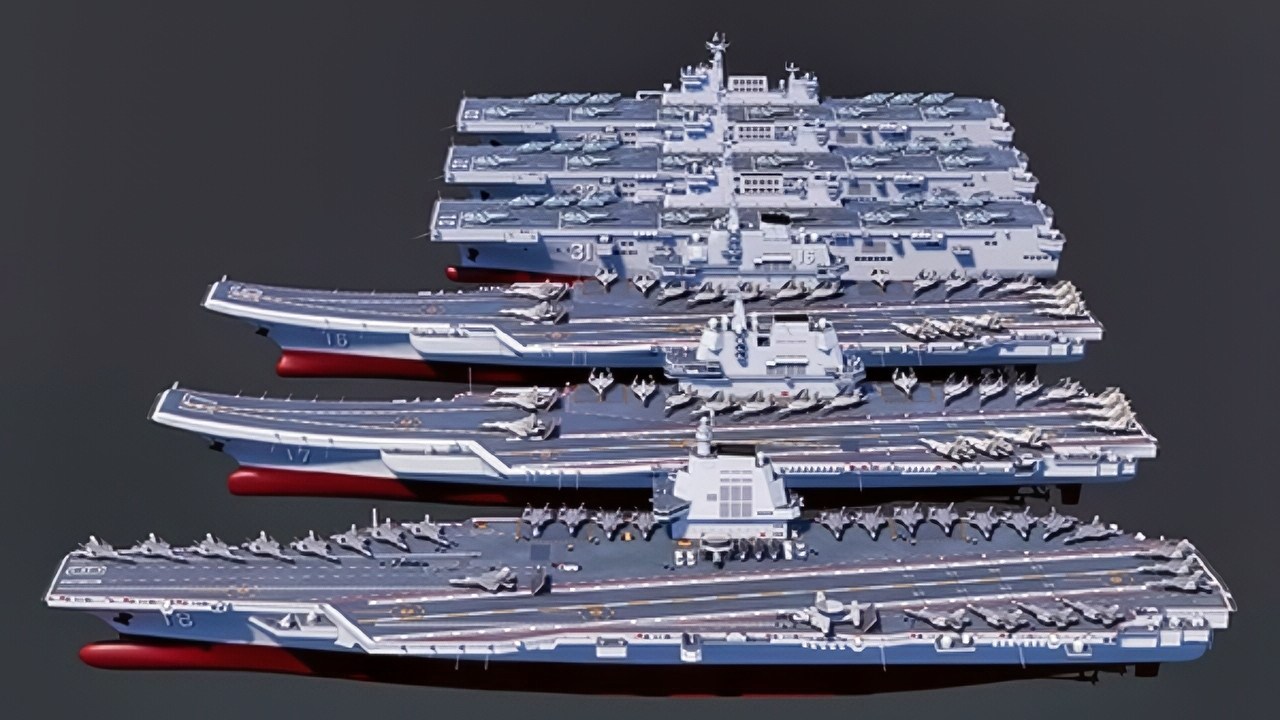
China Aircraft Carriers In Focus. Image Credit: X Screenshot.
China purchased the carrier for its scrap metal, disappointing Australians who wanted to invest in and operate their own flat-top.
This was a tough issue to consider. Now Australia worries about the rise of a belligerent power that has bullied countries in the Indo-Pacific.
A carrier could be useful, even one like the HMAS Melbourne, which had bad luck.
About the Author: Brent M. Eastwood, PhD
Author of now over 3,500 articles on defense issues, Brent M. Eastwood, PhD, is the author of Don’t Turn Your Back On the World: A Conservative Foreign Policy and Humans, Machines, and Data: Future Trends in Warfare, plus two other books. Brent was the founder and CEO of a tech firm that used artificial intelligence to predict world events. He served as a legislative fellow for US Senator Tim Scott and advised the senator on defense and foreign policy issues. He has taught at American University, George Washington University, and George Mason University. Brent is a former US Army Infantry officer. He can be followed on X @BMEastwood.


