


Boeing’s Sweet Revenge: A First Look at the F/A-XX That Looks Like an F-47
Key Points and Summary
-The U.S. Navy’s F/A-XX sixth-generation fighter program, once sidelined in favor of the Air Force’s F-47, has been given a new lease on life.
-Top naval leaders are now eagerly awaiting the selection of a prime contractor. Fueling the excitement, a new conceptual rendering from Boeing shows a design with striking similarities to its F-47, hinting at potential shared development.
-This revival marks a major coup for Boeing, which now seems positioned to potentially build the next-generation fighters for both the Air Force and the Navy, a sweet revenge after losing out on the F-22 and F-35.
The F/A-XX Is Back…as the F-47?
When the Trump Administration greenlighted the F-47 Next Generation Air Dominance (NGAD) 6th-generation fighter jet program back in March, it was a considerable boost of good news for the United States Air Force, as the USAF’s current fleet has been beset by the twin maladies of old age and alarmingly low readiness.
However, to put a reverse spin on an old metaphor, that major piece of good news for the Air Force entailed a dark cloud obscuring the silver lining for the US Navy, as its own budding 6th-generation fighter jet program, the F/A-XX, wasn’t killed outright, but put on virtual life support, as it was given a bare bones minimal survival budget.
Luckily, that minimal budget did allow for “maintaining the option for F/A-XX in the future.” Now, much to the relief of the Navy brass, the F/A-XX is being given a new lease on life…and in an ironic twist, the finished product may end up bearing at least a passing resemblance to the F-47.
Bottom Line Up Front (BLUF) on F/A-XX
This latest intriguing tidbit of news comes to us courtesy of Aviation Week reporter Brian Everstine in a 28 August 2025 article titled “New Boeing F/A-XX Rendering Hints At Possible Similarities To F-47.”
To wit: “A new rendering of Boeing’s proposed F/A-XX design provided to Aviation Week indicates the company may be incorporating parts of its design for the US Air Force’s F-47 into the Navy program … The new rendering, first shown in a presentation at the Tailhook Symposium last week, shows the aircraft highly obfuscated by clouds as it flies over a Navy carrier. The clouds are covering sections of the aircraft where potentially canards and wingtips would be visible. No tail is visible … Both the F/A-XX rendering and the two released depictions of the F-47 are designed to hide much of the aircraft’s shape.” Mr. Everstine added that “The F/A-XX design’s cockpit appears to have a similar shape to the F-47.”

F/A-XX Fighter from Boeing. Image Credit: Boeing.
Of course, the F/A-XX won’t be a perfect spitting image of the NGAD, and that only makes sense, as the former warbird will be intended for aircraft carrier flight deck operations, whilst the latter warbird will not.
For one thing, the Navy plane will use a derivative engine, whilst the Air Force plane is expected to use a new adaptive power plant. For another thing, the F/A-XX’s radome appears significantly smaller than the wide radome of the F-47, which appears to lead to two canards.
NOTE: Canards are horizontal surfaces mounted on the fuselage, positioned in front of the main wing, whose purpose is to enhance longitudinal stability and control. They’re employed by China’s current 5th Generation stealth fighter, the Chengdu J-20 Weilong (“Mighty Dragon;” NATO reporting name “Fagin”).
Boeing Execs Must Be Happy, Too
Besides being good news for the Navy, the revival of the F/A-XX is a double coup for Boeing, as they’re also the company that’s been awarded the F-47 contract.
This is a bit of sweet revenge for the beleaguered aerospace firm, as their entry into the 5th Generation stealth fighter race, the X-32, never got approved for the production phase, and Lockheed Martin Skunk Works ended up laughing all the way to the bank with both the F-22 Raptor and the F-35 Lightning II.
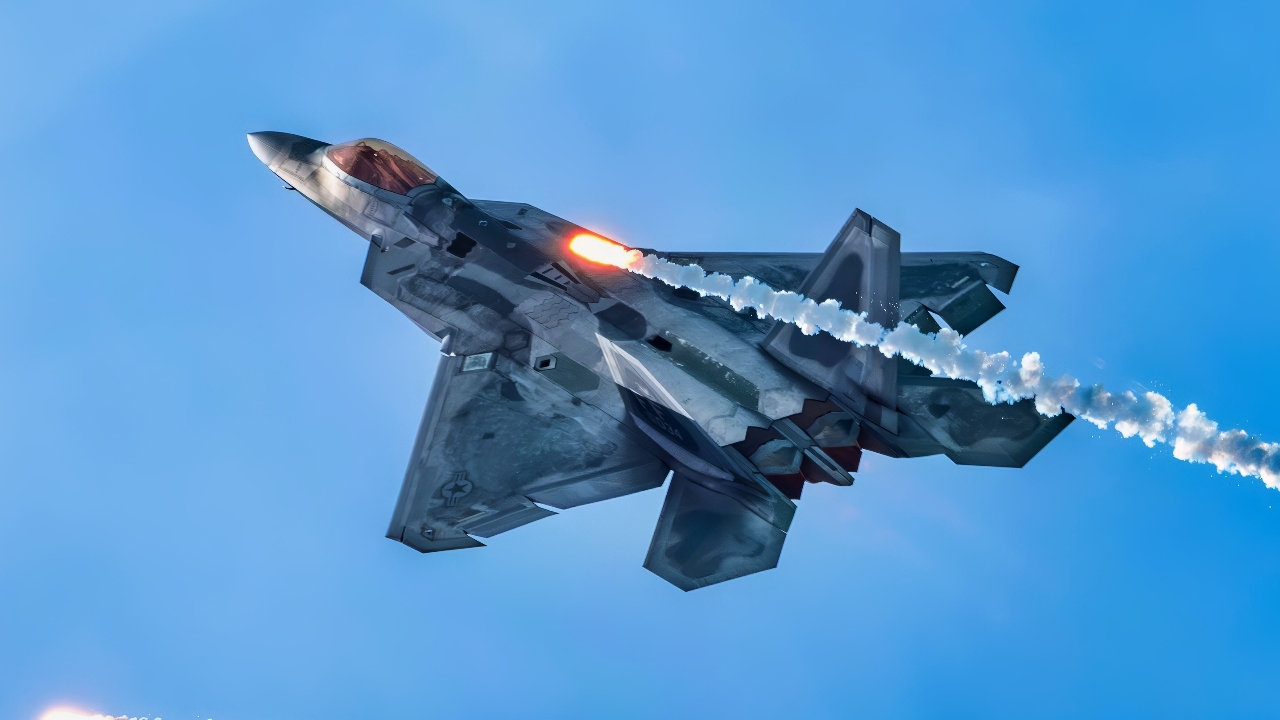
U.S. Air Force Capt. Nick “Laz” Le Tourneau, F-22 Raptor Aerial Demonstration Team commander, performs an aerial maneuver during the Cocoa Beach air show in Florida, July 12, 2025. The team joined the community in celebrating Cocoa Beach’s 100th anniversary, marking a century of coastal heritage and patriotic spirit, while showcasing the unmatched power, agility, and precision of America’s fifth-generation fighter and reinforcing public trust in the Air Force’s mission to fly, fight, and win. (U.S. Air Force photo by Staff Sgt. Lauren Cobin)
Now the Boeing bigwigs can take heart in the proverb that “He who laughs last laughs loudest.”
Vice Admiral Cheever’s Perspectives
On August 26, 2025, the Center for Strategic and International Studies (CSIS)—a prestigious Washington, DC-based public policy think tank—hosted a virtual event titled “The Future of Naval Aviation: A Conversation with VADM Cheever.”
The VADM Cheever in question is Vice Admiral Daniel L. Cheever (call sign “Undra”), USN, Commander, Naval Air Forces/Commander, Naval Air Force, U.S. Pacific Fleet. Over the course of his 37-year Naval Aviator career, “Undra” has accumulated over 5,000 flight hours and over 1,100 carrier-arrested landings.
The event was moderated by RADM Ray Spicer, USN (Ret.), Chief Executive Officer and Publisher, US Naval Institute (USNI), with Kari A. Bingen, director of CSIS’s Aerospace Security Project, delivering opening remarks.
As might be logically expected, one of the topics discussed by VADM Cheever was his beloved Navy’s 6th Generation program.
Though he didn’t mention the F/A-XX by its exact name, the good admiral waxed enthusiastic about the program: “It’s going to be a very exciting aircraft. I’m looking forward to the downselect … I’ll leave it to the professional acquisition folks … but I’m looking forward to that because that sixth-generation means air superiority in that timeframe in the future, which means sea control. And as long as you have air superiority, you have sea control around the globe.”
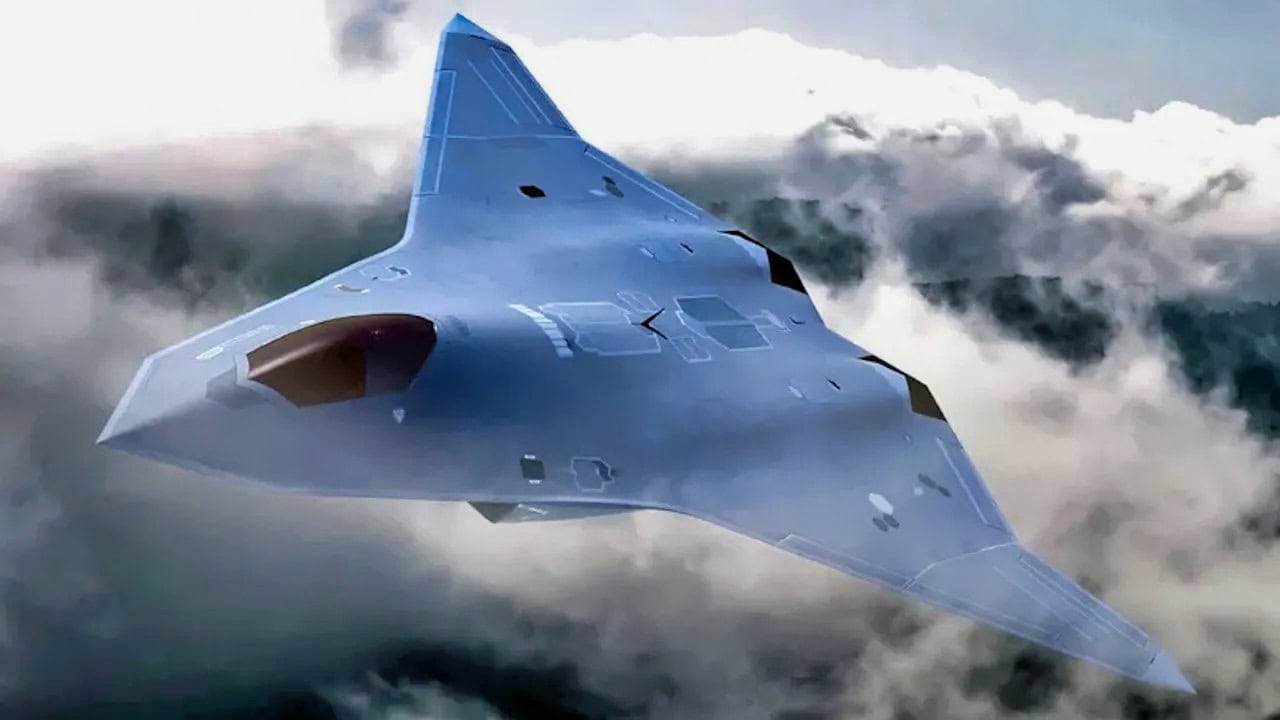
F/A-XX Fighter Mockup. Image Credit: Creative Commons.
Cheever added that “We decided that a 4th, 5th, and 6th Generation mix [of aircraft] is the right blend for the fleet.”
The F-35C currently fulfills the 5th Generation role, whilst the F/A-18 Super Hornet, along with the E/A-18 Growler and E-2D Hawkeye, are the 4th Generation planes. Regarding the future 6th Generation warbirds, he said that they will replace both the Super Hornets (for the fighter and ground-attack missions) and the Growlers (for the electronic warfare [EW] role).
Exciting times are ahead for the US military aviation, with the USAF and USN alike.
Stay tuned, dear readers.
About the Author: Christian D. Orr, Defense Expert
Christian D. Orr is a Senior Defense Editor. He is a former Air Force Security Forces officer, Federal law enforcement officer, and private military contractor (with assignments worked in Iraq, the United Arab Emirates, Kosovo, Japan, Germany, and the Pentagon). Chris holds a B.A. in International Relations from the University of Southern California (USC) and an M.A. in Intelligence Studies (concentration in Terrorism Studies) from American Military University (AMU).
More Military
The Ford-Class Aircraft Carrier Has a Message for the U.S. Navy
‘They Are Learning’: North Korean Troops Are Adapting to Drone Wars in Ukraine


Krystal cane
September 3, 2025 at 11:36 am
Is the message Donald Trump’s already sold this information to Russia and the Chinese and his secretary defense is a drunken idiot is that the message