


In 1995-96, the U.S. Navy sailed two aircraft carriers through the Taiwan Strait after Beijing tried to blockade Taipei. China stood down and was humiliated. Senior National Security Editor Brandon Weichert argues China spent the next 30 years building the answer. The People’s Liberation Army Rocket Force’s anti-access and area-denial arsenal now includes the DF-21D carrier killer, the DF-26 Guam Killer with a 4,000-kilometer range tested for anti-ship use in 2020, and the DF-17 hypersonic glide vehicle. China does not need to sink an American carrier to win — Beijing just needs to threaten one credibly enough to keep American carriers out of the First Island Chain.
China’s Aircraft Carrier War Plan Is Clear

PHILIPPINE SEA(Feb. 22, 2016) USS John C. Stennis (CVN 74) sails through the Philippine Sea. Providing a ready force supporting security and stability in the Indo-Asia-Pacific region, Stennis is operating as part of the Great Green Fleet on a regularly scheduled 7th Fleet deployment. (U.S. Navy photo by Mass Communication Specialist Seaman Cole C. Pielop/Released) .
If (more like when at this point) a war between the United States and the People’s Republic of China (PRC) erupts, it will likely be fought somewhere in the First Island Chain (the region stretching from the Kamchatka Peninsula through Japan and Taiwan down to the Philippines).
And should that war come, the United States Navy would be at the forefront of military action against China. Specifically, the US Navy’s mighty aircraft carrier fleet would be the tip of that spear.
But China has spent the better part of a decade laying the groundwork for this very fight in the First Island Chain.
They’ve created a robust (and growing) anti-access/area-denial (A2/AD) network designed to stymie the American carrier force’s ability to operate in contested regions. Chinese A2/AD capabilities will likely keep US carriers out of range.
In contrast, Chinese forces conduct offensive operations against Taiwan, Japan, or the Philippines (depending on the exact nature of the conflict).
While the Americans were kept out of range by China’s A2/AD capabilities, it’d be up to the region’s militaries to pull together and defend themselves against China.
Yes, countries like Japan have impressive militaries that pose a threat to the Chinese military.

China Aircraft Carrier. Image Credit: Creative Commons.
Without the US military’s guaranteed support, though, the region’s militaries would struggle to stop China from using military force effectively.
The Missile Arsenal Designed to Threaten America’s Carriers
The backbone of China’s People’s Liberation Army Rocket Force (PLARF) is a growing family of anti-ship and land-attack missiles. These include the DF-21D, often called the “carrier killer.” As its name suggests, the DF-21D is the weapon designed to threaten US aircraft carriers.
Then there’s the DF-26 and DF-26B, which are longer-range missiles nicknamed the “Guam Killer.” Again, the obvious intent of this weapon is to hold America’s expansive military bases on Guam hostage.
Then the Chinese added the DF-17 hypersonic glide vehicle into their A2/AD arsenal–a system that not even the US military has in its own arsenal (let alone any effective defense against).
More importantly, Beijing has been pushing the threat envelope for this family of A2/AD weapons deeper.
In other words, the Chinese are trying to ensure they can threaten US carriers that dare to enter a potential conflict over the First Island Chain, keeping them out of the fight entirely.

(Feb. 25, 2019) The aircraft carrier USS John C. Stennis (CVN 74) transits the South China Sea at sunset, Feb. 25, 2019. The John C. Stennis Carrier Strike Group is deployed to the U.S. 7th Fleet area of operations in support of security and stability in the Indo-Pacific region. (U.S. Navy photo by Mass Communication Specialist 1st Class Ryan D. McLearnon/Released)
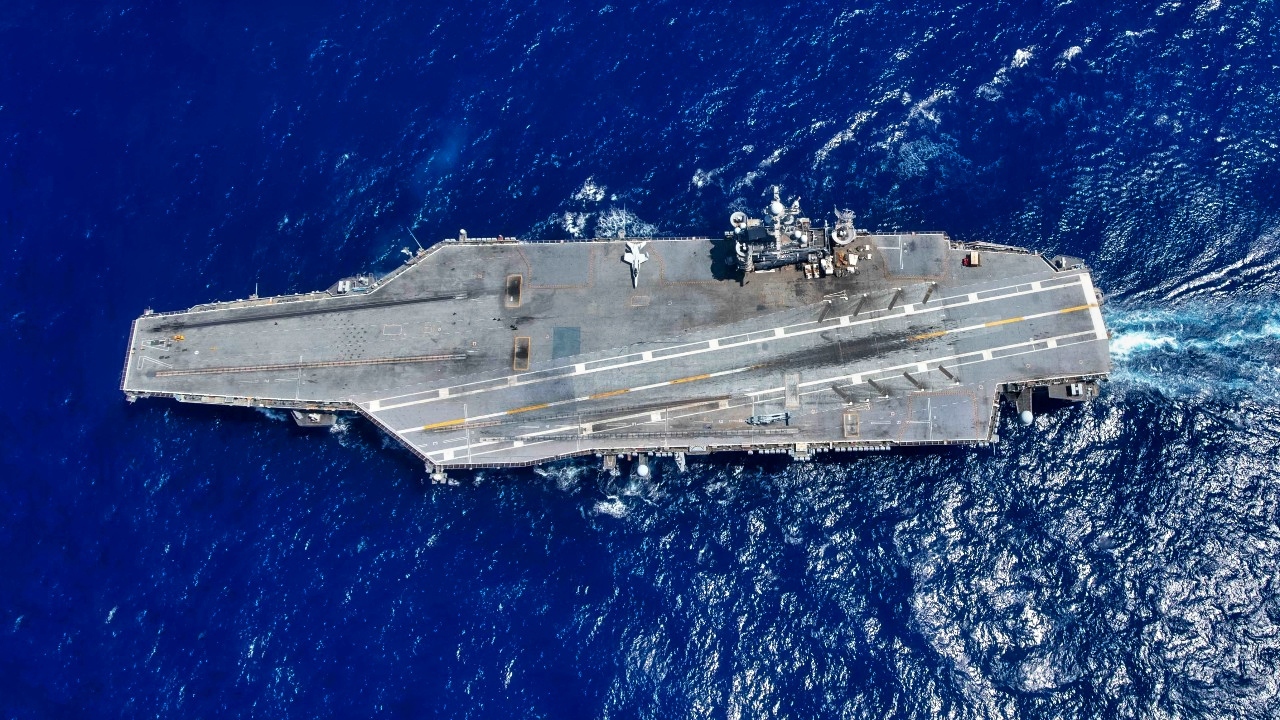
The aircraft carrier USS John C. Stennis (CVN 74), steams through the Atlantic Ocean, Sept. 7, 2019. The John C. Stennis is underway following a sortie due to Hurricane Dorian earlier this week. Commander, Navy Region Mid-Atlantic ordered all U.S. Navy installations in Hampton Roads to return to normal operations on Sept. 6, as Dorian no longer poses a threat to the area. (U.S. Navy photo by Mass Communication Specialist Seaman Jarrod A. Schad)
China’s expanding A2/AD capabilities are therefore deterrents to US naval power projection.
Per CSIS, the DF-26, for instance, has an astonishing 4,000-kilometer range, can carry both conventional and nuclear payloads, and even has anti-ship capability, as tested in 2020.
China Doesn’t Need to Sink Every Supercarrier
China doesn’t have to sink every American carrier.
They just need the ability to threaten to do so believably. Besides, all China has to do is damage the flight deck of an American carrier to render it useless and impose such high costs on the Americans in terms of losing one of its 11 carriers for a protracted time that the Americans essentially abandon the entire region to China.
Indeed, China has spent decades applying the hard lessons learned from the Taiwan Strait Crisis of 1995-96, when the Americans casually sailed two aircraft carriers through the Taiwan Strait after Beijing had attempted to blockade it over disagreements with Taipei’s political leadership.
After sailing with impunity through the Taiwan Strait, the Chinese stood down, were humiliated, but vowed never to endure such humiliation again.
Beijing’s A2/AD strategy is the apotheosis of those lessons learned.
The Americans, meanwhile, have done little to perfect their own strategy, which is why Washington still relies on the same capabilities against China in 2026 that it did in 1996.
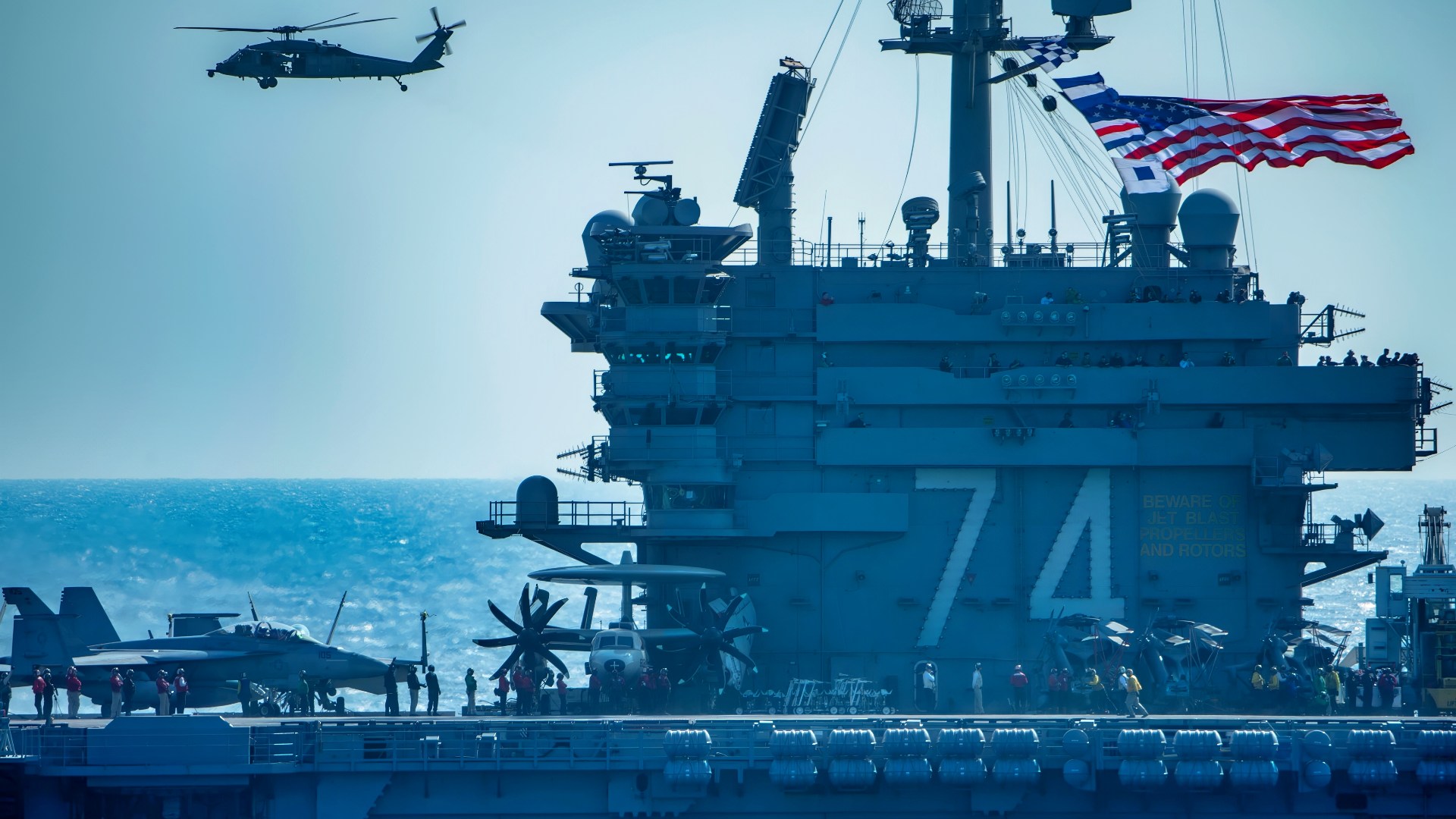
ARABIAN SEA (Dec. 14, 2018) The Nimitz-class aircraft carrier USS John C. Stennis transits the Arabian sea with the Essex Amphibious Ready Group (ARG) and 13th Marine Expeditionary Unit (MEU). The John C. Stennis Carrier Strike Group, Essex ARG, and 13th MEU are conducting integrated operations in the Arabian Sea to ensure stability in the Central Region, connecting the Mediterranean and the Pacific through the western Indian Ocean and three strategic choke points. (U.S. Navy photo by Mass Communication Specialist 3rd Class Tyler Diffie)
That’s never a good sign.
The End of the Aircraft Carrier Era?
China has built a system designed to kill the carrier era. They probably don’t want to actually sink or even damage an American carrier.
They’d rather psyche the US leadership into fearing that such an outcome is likely if hostilities between the two sides commenced over the First Island Chain.
Because Washington has relied too heavily on aircraft carriers as its primary platform for naval power projection, the US now finds itself stuck.
If China attacks somewhere in the First Island Chain, the only real American responses would come from its carrier force, which China can now hold back with the mere threat of China’s robust A2/AD network. The Americans might still try to deploy some carriers within range of China’s A2/AD network.
That would likely force China to attack. And then what does Washington do once one (or more) of its vaunted carriers is either irreparably damaged or, Heaven forbid, sunk?
MORE – The Dodge Durango of Submarine: The Virginia-Class Is Best on Planet Earth
About the Author: Brandon J. Weichert
Brandon J. Weichert is the Senior National Security Editor at 19FortyFive.com. Recently, Weichert became the editor of the “NatSec Guy” section at Emerald. TV. He was previously the senior national security editor at The National Interest. Weichert hosts The National Security Hour on iHeartRadio, where he discusses national security policy every Wednesday at 8 p.m. Eastern. He hosts a companion show on Rumble entitled “National Security Talk.” Weichert consults regularly with various government institutions and private organizations on geopolitical issues. His writings have appeared in numerous publications, among them Popular Mechanics, National Review, MSN, and The American Spectator. And his books include Winning Space: How America Remains a Superpower, Biohacked: China’s Race to Control Life, and The Shadow War: Iran’s Quest for Supremacy. Weichert’s newest book, A Disaster of Our Own Making: How the West Lost Ukraine, is available for purchase at any bookstore. Follow him via Twitter/X @WeTheBrandon.


