

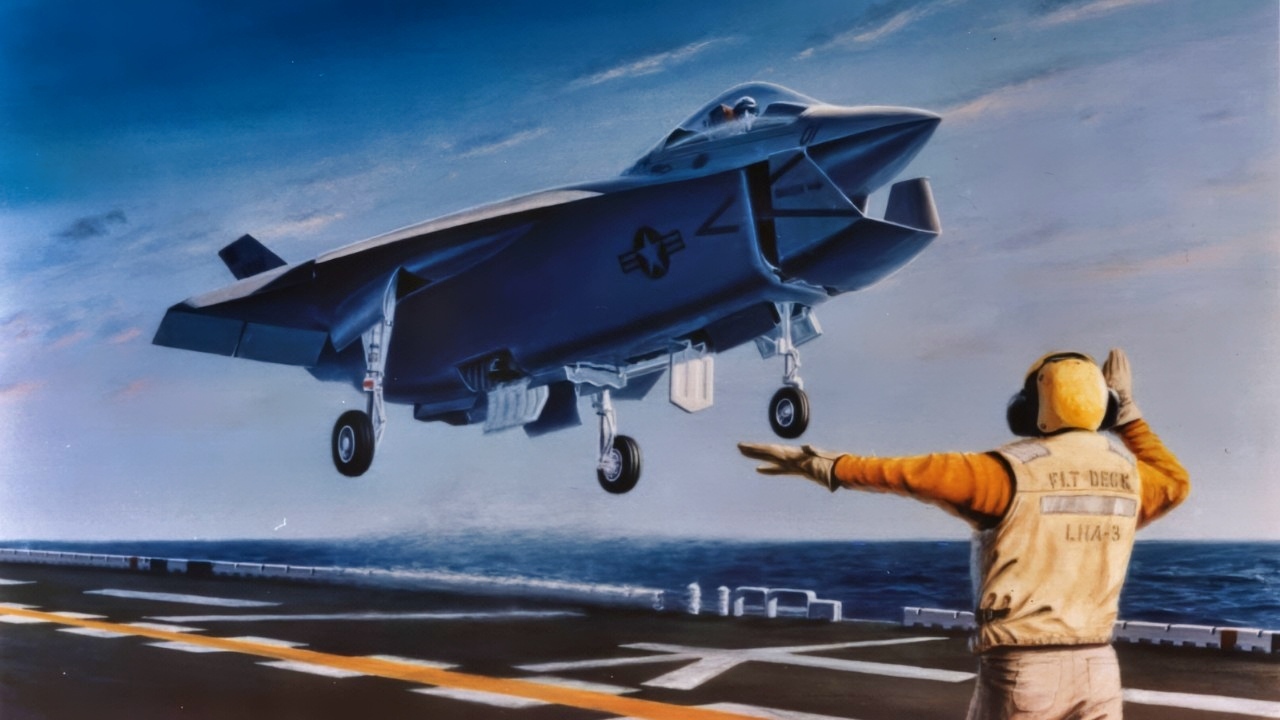
Key Points and Summary – In a hypothetical dogfight, the Boeing X-32 prototype is overwhelmingly outmatched by China’s operational J-20 “Mighty Dragon.”
-The X-32, a failed contender in the Joint Strike Fighter competition, was praised by its test pilot for its smooth handling but was ultimately doomed by an inferior and overheating vertical landing system.
-The J-20 is a mature, modern fifth-generation stealth fighter with superior speed (Mach 2.25 vs. Mach 1.6), advanced radar, and supercruise capability.
-While an American pilot might give the “ugly” X-32 a fighting chance, the J-20’s advanced technology gives it the decisive edge.
Dogfight: The Boeing X-32 Vs. The Chinese J-20 Mighty Dragon
National Security Journal readers always enjoy pondering fictional matchups of combat aircraft.
So we are raising the bar by pitting the Chinese J-20 Mighty Dragon against the Boeing X-32 – a plane that was never built. (Two prototypes were constructed and now reside in museums.)

A Sideview of the Boeing X-32 JSF. Image Credit: Harry J. Kazianis/National Security Journal.
Meet The X-32, The F-35’s Ugly Stepsister
Starting in September 2000, the X-32 made 66 flights during a four-month testing period for the Joint Strike Fighter program. These flights demonstrated the aircraft’s handling qualities for in-flight refueling, weapon bay operations, and supersonic flight.
The X-32 was crewed by a single pilot and was powered by a Pratt & Whitney JSF 119-614 afterburning turbofan engine. Approximately 50,000 pounds of thrust pushed the aircraft to a top speed of Mach 1.6, or about 1,200 miles per hour.
The aircraft would carry either the 20-mm M61A2 cannon, or the 27-mm Mauser BK-27 cannon; 6 Advanced Medium Range Air-to-Air missiles; 2 x 2,000-lb. guided bombs; and 15,000 lbs. of a full range of external stores.
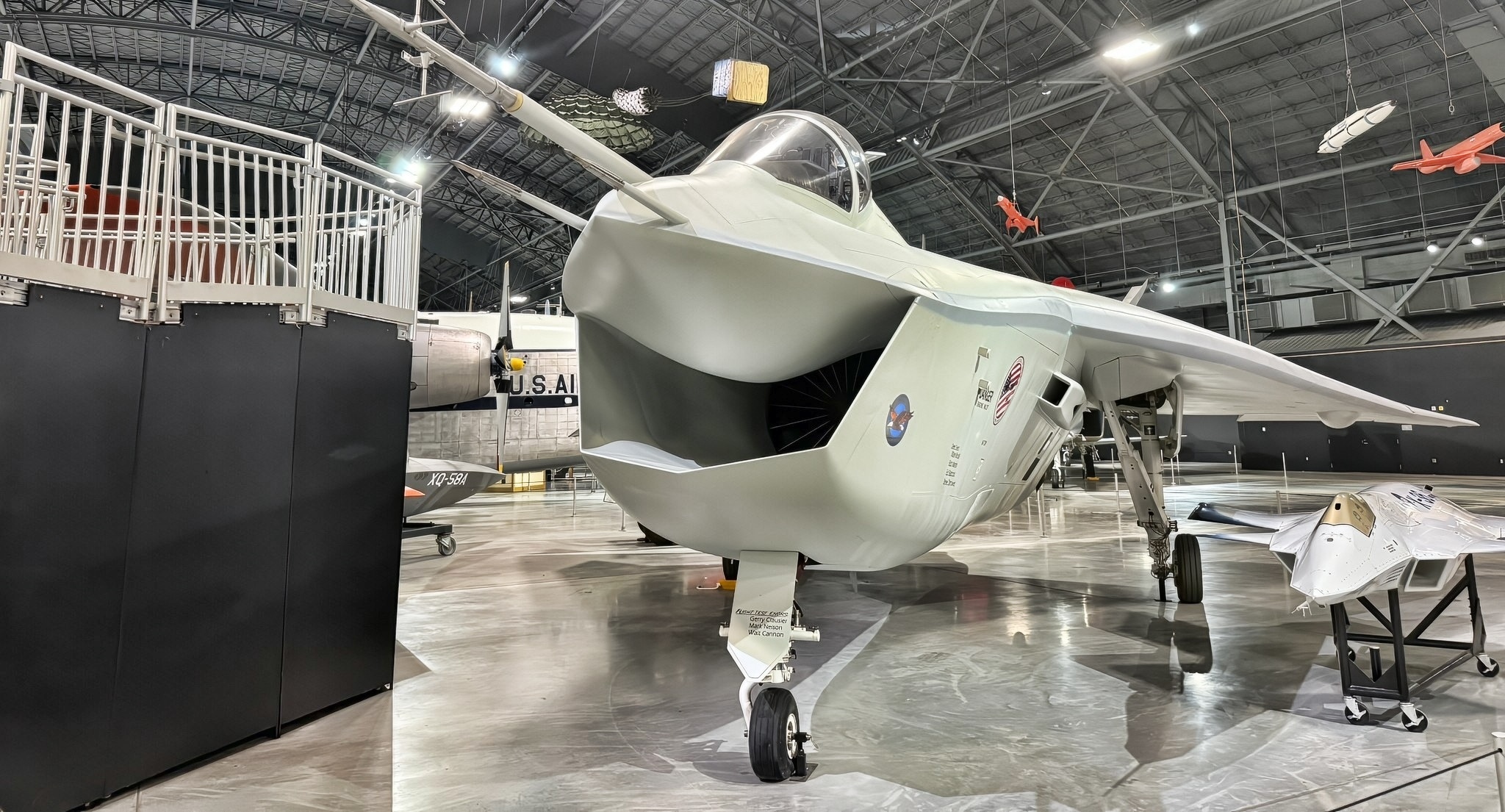
Boeing X-32 Bright Image. Credit: National Security Journal.
Vertical landings proved the difference in the Joint Strike Fighter competition: The Lockheed Martin X-35 performed significantly better, thanks to its advanced lift fan and exhaust system.
The X-32’s weaker design caused hot air from the plane’s exhaust to be recirculated into its modified intake, weakening thrust and leading to overheating issues.
The X-32 Wasn’t Pretty; It Was Ugly
The X-32 wasn’t your typical fighter aircraft. Its vast, yawning intake was not pleasant on the eyes. In short, it was ugly.
Some pilots likened it to a smiling hippo. Looks aside, however, the stealth fighter handled well.
“Boeing knew they had a problem with that, if you will, and to address it, they had a little mantra that said, ‘Look, you’re taking it to war, not to the senior prom.’ That got a lot of traction,” said retired Navy Comm. Phillip “Rowdy” Yates, a former naval aviator who served as the test pilot for the Boeing team and said he was thrilled to fly it.

Boeing X-32 Fighter Artist Drawing U.S. Air Force.
Yates said the chance to test the X-32 was the high point of his career as a test pilot: “Dream come true,” he said. “You can use all those trite phrases. Many of my peers and contemporaries were likely envious of what I was able to accomplish with the X-32. I don’t know how to say it any better than just that it was the highlight of my career.”
Yates tested how the aircraft responded during carrier approaches and evaluated the handling properties of the X-32.
“Did it feel like an airplane you’d want to take to the boat?” A retired naval aviator asked Yates during an interview.
“That’s exactly the comment I made,” Yates responded. “They had leveraged F-18 handling qualities and control laws extensively for the X-32. Having flown the F-18 at the ship, that was the comment I made after just a couple of FCLP [Field Carrier Landing Practice], what we could call bounce periods, that I would take that aircraft to the ship tomorrow.
“It was handling that smoothly and precisely. I could make fine corrections, as well as gross corrections, to return to the centerline and the glide path. There were no issues with the handling qualities of the X-32 that I flew,” Yates added.
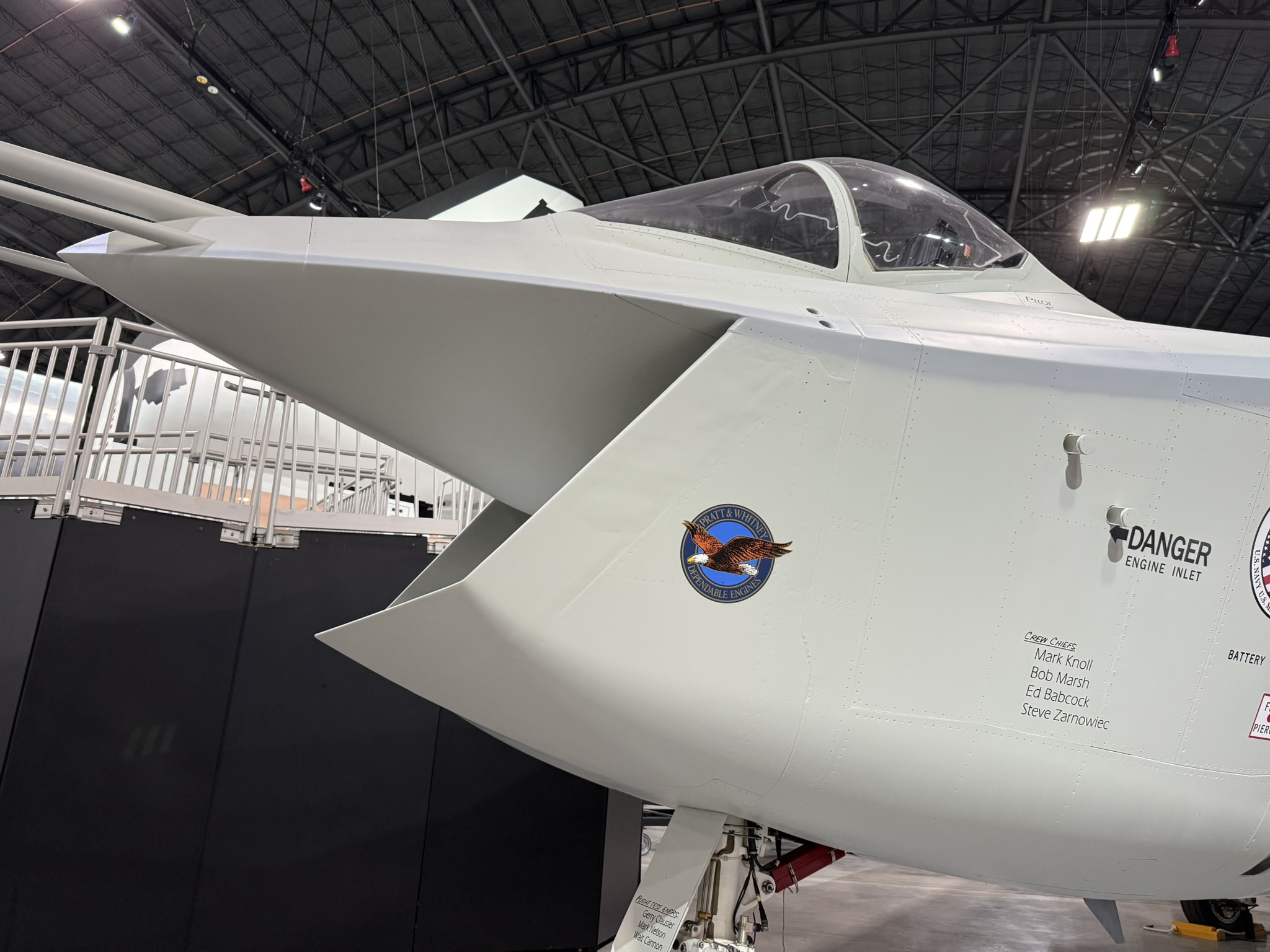
Boeing X-32 National Security Journal Photo. Taken on 7/19/2025.
The X-32 lost the JSF competition, but some of its components have been kept and used. The “JSF Array” radar, developed for the X-32, became the basis for the Raytheon AN/APG-79 radar that flies on board the F/A-18E/F Super Hornet and the EA-18G Growler.
China’s J-20, The Mighty Dragon
China’s J-20 was designed and built by the Chengdu Aircraft Industry Group. The Mighty Dragon is a fifth-generation fighter that has the NATO designation of Fagin.
The J-20 is a large aircraft, with a wingspan of 44 feet, a length of 67 feet, and a maximum take-off weight of 81,660 pounds.
While early models of the J-20 utilized twin Russian AL-31FM2 engines, based on the engines that powered the Russian Sukhoi Su-27, later models switched to Chinese WS-10B powerplants. The switch was part of a broader transition by China’s fighter fleet to using domestically produced engines.
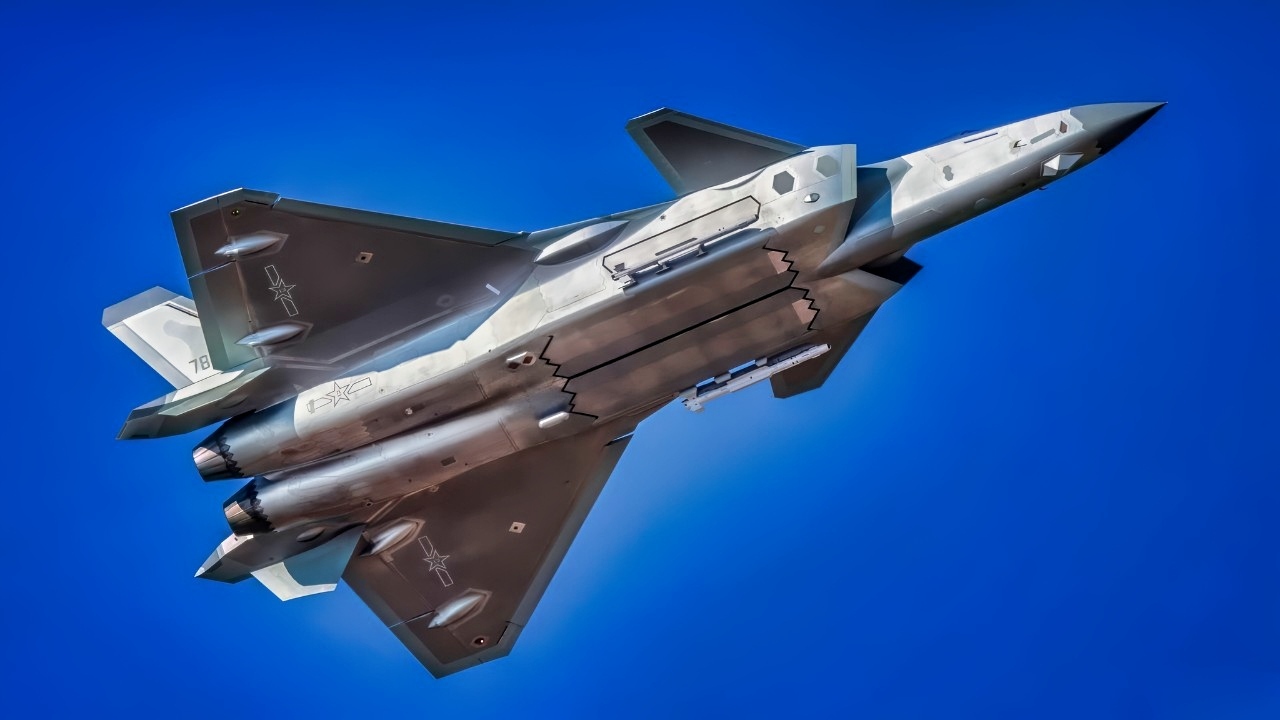
J-20 Takes Flight For China. Image Credit: Creative Commons/PLAAF.
The J-20 has also tested the new and more powerful WS-15 engine, which pushes the Mighty Dragon to Mach 2.25. (With WS-10 engines, the J-20 has a maximum speed of Mach 2.)
The jet is capable of carrying various weapons, including the long-range PL-15 and PL-21 missiles, and the LS-6 precision-guided bomb.
Air-to-Air Combat: Will The X-32 Win?
The J-20 would significantly outperform the Boeing X-32, which never entered production after losing the Joint Strike Fighter competition to Lockheed Martin.
The J-20 is a modern, operational stealth fighter with superior speed, stealth capabilities, advanced radar, and supercruise capability. In contrast, the X-32 was a prototype that failed due to issues with its Short Takeoff and Vertical Landing capabilities, and its overall inferior performance compared to its rival.
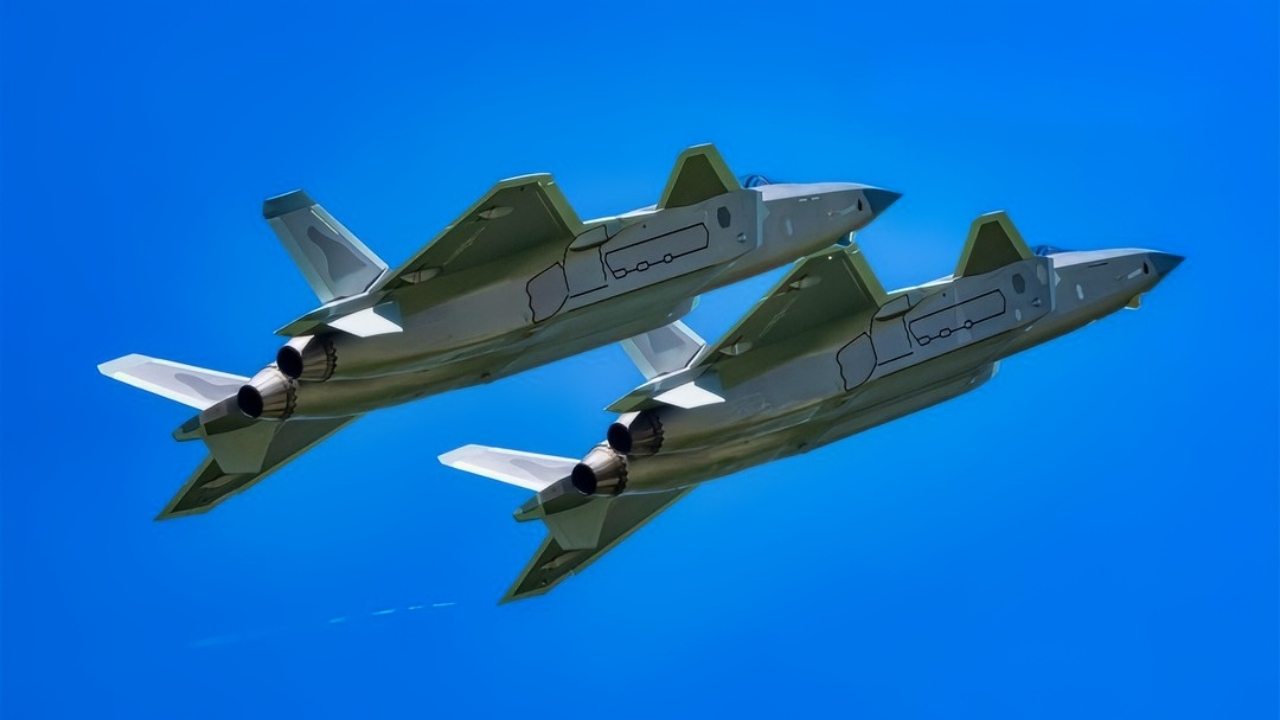
J-20 Fighter In Formation PLAAF Photo
The J-20’s engine is much more powerful, boosting its top speed to Mach 2.25, compared to the X-32’s Mach 1.6.
The J-20 boasts a high level of survivability and situational awareness, thanks especially to its JLJ-5 active electronically scanned array (AESA) radar system. The J-20 also features supercruise capability without the need for afterburners.
In 4 Words: The X-32 Would Lose
With an American pilot at the controls, the X-32 might have a chance, but the X-32 lost to the X-35 for a reason. The J-20 is an exceptional aircraft.
It may not be better than an F-22 or an F-35, but it is more than a match for the X-32.
About the Author: Steve Balestrieri
Steve Balestrieri is a National Security Columnist. He served as a US Army Special Forces NCO and Warrant Officer. In addition to writing on defense, he covers the NFL for PatsFans.com and is a member of the Pro Football Writers of America (PFWA). His work was regularly featured in many military publications.
More Military
Study This Photo: Boeing Just Dropped New F/A-XX Fighter Image
J-20 vs. F-35I Adir: Which Fighter Would Win?


J
August 31, 2025 at 8:06 am
Why write an article about this? It’s a poor attempt to make China look good. An inferior design was tested and not chosen. Then you look to compare its capabilities to an adversaries chosen design. Meanwhile the US has a 20 plus year old aircraft that is still leagues ahead of chinas best aircraft if an air battle was to take place. The only reason China can claim any air success is from the stolen intellectual property from all the other nations of the world.