


On October 4, 1957, Avro Canada unveiled the CF-105 Arrow — a Mach 2 supersonic interceptor capable of climbing to 50,000 feet, the most advanced fighter in North America. The same day, the Soviet Union launched Sputnik, and the strategic logic for the Arrow began to evaporate. Sixteen months later, Prime Minister John Diefenbaker canceled the program on February 20, 1959, ordered every prototype and blueprint destroyed, and the Avro engineering team scattered to NASA, where several went on to design the Mercury, Gemini, and Apollo spacecraft.
CF-105 Arrow: It Could Have Been a Game-Changer
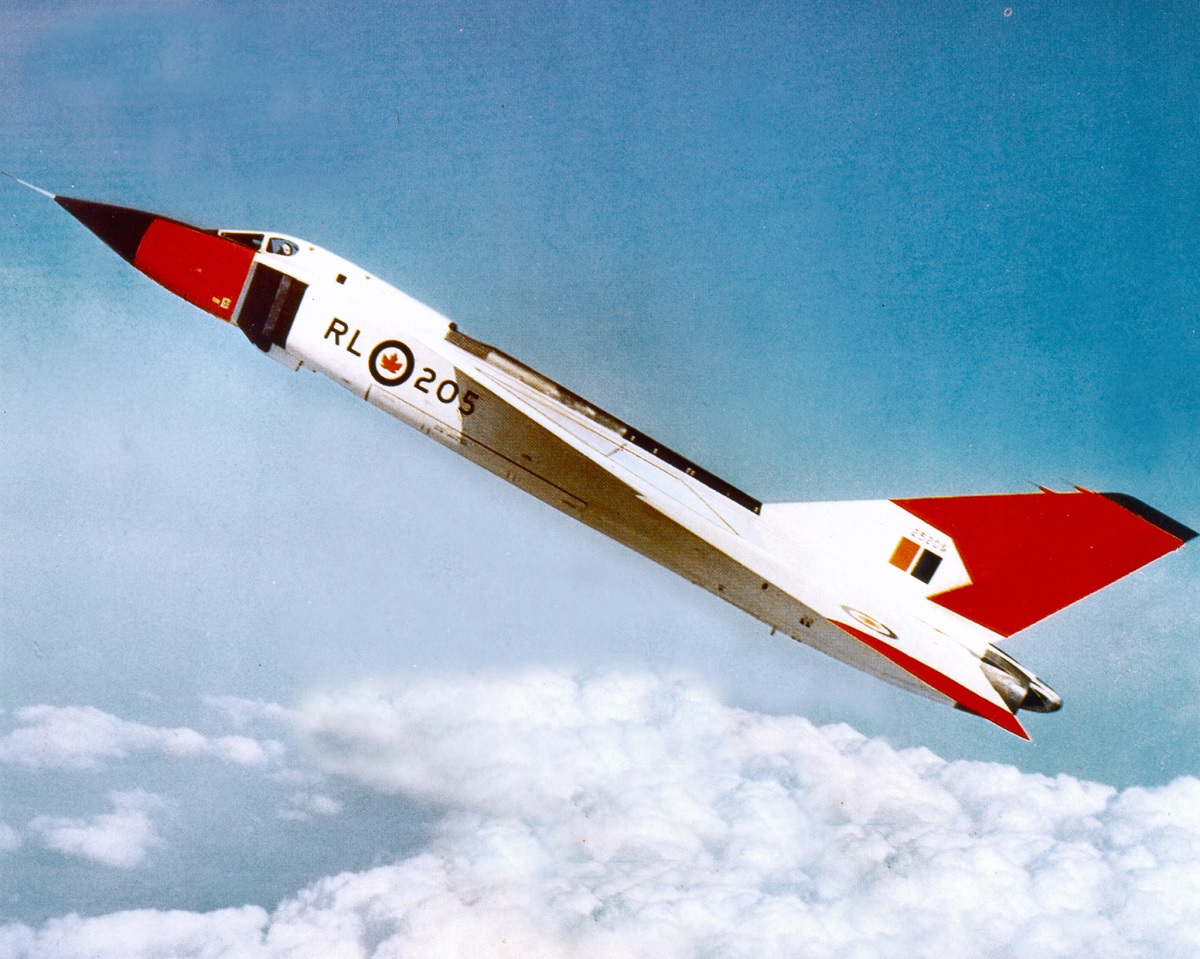
CF-105. Image Credit: Creative Commons.
Canada was rightfully proud of the Avro Canada CF-105 Arrow. It was the 1950s, and the Great White North was ready to help NATO if the Soviet Union ever attacked U.S. troops or alliance soldiers in Europe. The advent of this fighter jet was going to show the world that the Canadians had their own aerospace industrial base capable of competing with the United States and other allies. Designers, engineers, and technicians had poured their hearts and souls into the airplane. This had success written all over it, and pilots could not wait to get into the cockpit.
Combining Homeland Security and Overseas Aerial Combat
The idea behind the CF-105 Arrow was to not only protect the immense shoreline from enemy aircraft in air policing mode, but to eliminate Soviet bombers. This was a high-flying, agile, and quick supersonic interceptor that could have made a difference in a NATO-Soviet conflict.
MACH 2 Warbird Would Have Been a Hit
The jet could hit MACH 2 and reach 50,000 feet. Not bad for an airplane designed in the 1950s. The Soviets would have taken notice and planned to have escort fighters to protect their precious strike aircraft from the pesky Arrow. This would have been one of the best air superiority jets in North America, rivaling even some of the better ones in the U.S. Air Force.
The Canadian Engineers Worked Hard on the Features
It wasn’t easy to produce the CF-105 Arrow. The swept-wing design would be difficult to replicate in serial production. The fly-by-wire control tools took time to install. New engines had to be integrated. But the Canadians were able to overcome these obstacles with a dose of ingenuity not seen before.
The Canadian Government Held Its Breath
This wasn’t easy for the government either. The Canadian defense industrial base wasn’t strong at the time. Money and resources were scarce for the peace-loving country. The costs of the new systems and power plants were considerable. Bean counters became worried that this was going to be a money pit, even though the finished airframes had so much promise.
No Chance for Overseas Sales
Another problem for the Arrow was that it wouldn’t be sold successfully in the export market. These foreign sales could have helped fund the production line. But the United States and its main allies, such as the United Kingdom and France, had no reason to import fighters, as their own factories were churning out new models.
A Boost to Canadian Patriotism
On October 4, 1957, the Arrow was introduced to the public, and the Canadians loved it. They were so proud of their factories and the people who designed the warbird. But a revolutionary development spoiled the party. The Soviet Union launched Sputnik, the world’s first satellite. Now the celebration was overtaken by events.
New Strategic Realities
The aerospace industry would be changed forever. Strategists in the Soviet Union and the United States wondered whether they could apply knowledge from spaceflight to develop Intercontinental Ballistic Missiles (ICBMs). Some physicists wondered whether there would be a space war. The CF-105 Arrow became outdated quickly. The Soviets were moving away from bombers as the main part of the nuclear triad. Perhaps the CF-105 would not be needed for the mission it was designed for.
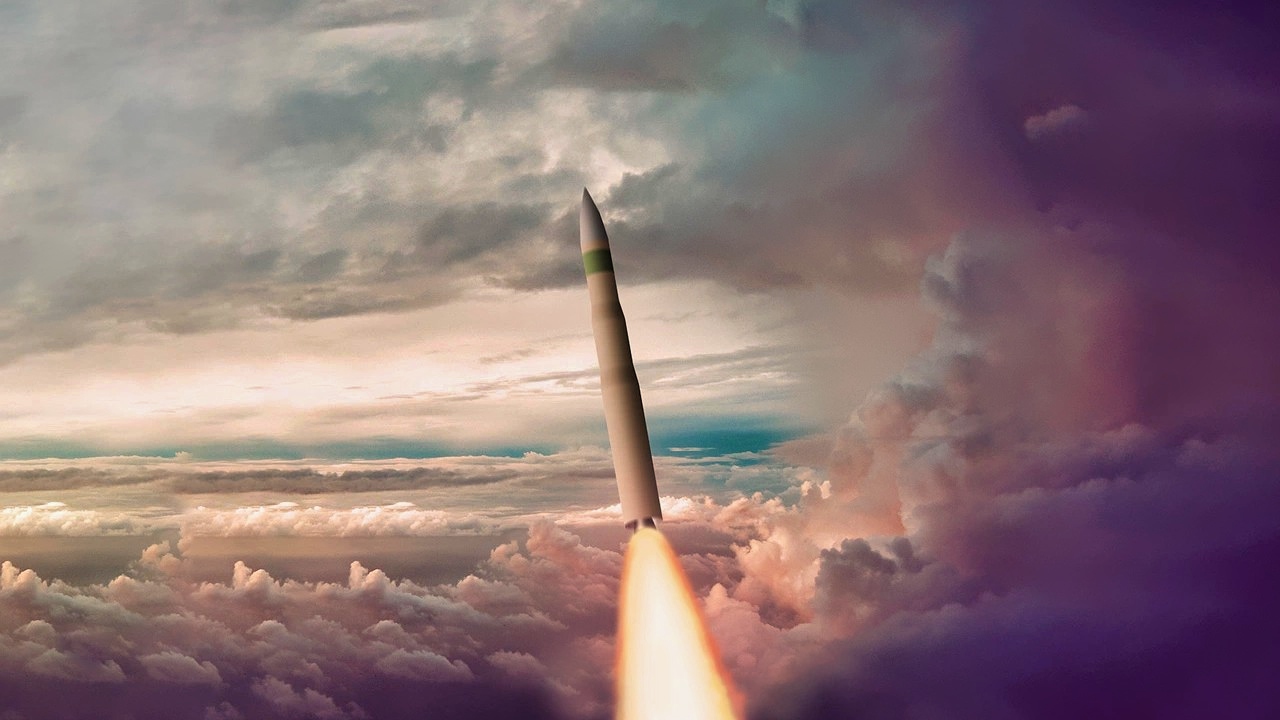
Sentinel ICBM U.S. Air Force. Image Credit: Creative Commons.
Politics Got Involved
Then there were domestic political pressures. The Progressive Conservatives wanted an austerity policy. That meant defense budgets would be trimmed. Prime Minister John Diefenbaker was a budget hawk and wanted to get out his red pen, crossing out defense line items that required substantial spending. He looked at the sunk costs for the Arrow and did not like what he saw.
Ballooning Costs Alarmed the Prime Minister
The Arrow was known for having cost overruns during design due to the new engines, fly-by-wire controls, and avionics improvements. Diefenbaker thought he would get political credit by being stingy with the budget and viewed the Arrow as a program to nix.
Black Friday Could Not Have Been Darker
On February 20, 1959 — known as Black Friday — the Arrow program was shut down. Diefenbaker made a huge mistake due to political blowback. The cancellation was eerily abrupt.
Every prototype, every blueprint, and every tool was removed for good within months. Five Arrows were built, and none were kept. This is one of the most disappointing airplane cancellations in the history of the Cold War.
Let the American Worry About Defense
The Canadian government believed it was more convenient and cost-effective to rely solely on American military might and aircraft to protect NORAD. But this was a black mark on Canada. Ordinary Canadian citizens questioned why such a good airplane with enormous potential was discarded like an old rifle.
The Best Engineers Hit the Exits
The people involved in designing the airplane were rightfully upset and left Canada in search of their next project, feeling punished by the government. This brain drain hurt the Canadian aerospace industry for years. Some took jobs at NASA that ultimately helped the American space program.
The Arrow’s demise taught lessons to countries that were not known for producing fighter jets. Budget a large sum of money and set it aside so politicians cannot claw it back. Try to produce airplanes that can be sold on the export market to fund further production. And do not give up so easily. The Canadians erased a good fighter jet from history, and this would have repercussions for their defense acquisition strategy for decades.
About the Author: Brent M. Eastwood, PhD
Author of now over 3,500 articles on defense issues, Brent M. Eastwood, PhD, is the author of Don’t Turn Your Back On the World: A Conservative Foreign Policy and Humans, Machines, and Data: Future Trends in Warfare, plus two other books. Brent was the founder and CEO of a tech firm that predicted world events using artificial intelligence. He served as a legislative fellow for US Senator Tim Scott and advised the senator on defense and foreign policy issues. He has taught at American University, George Washington University, and George Mason University. Brent is a former US Army Infantry officer. He can be followed on X @BMEastwood.


