

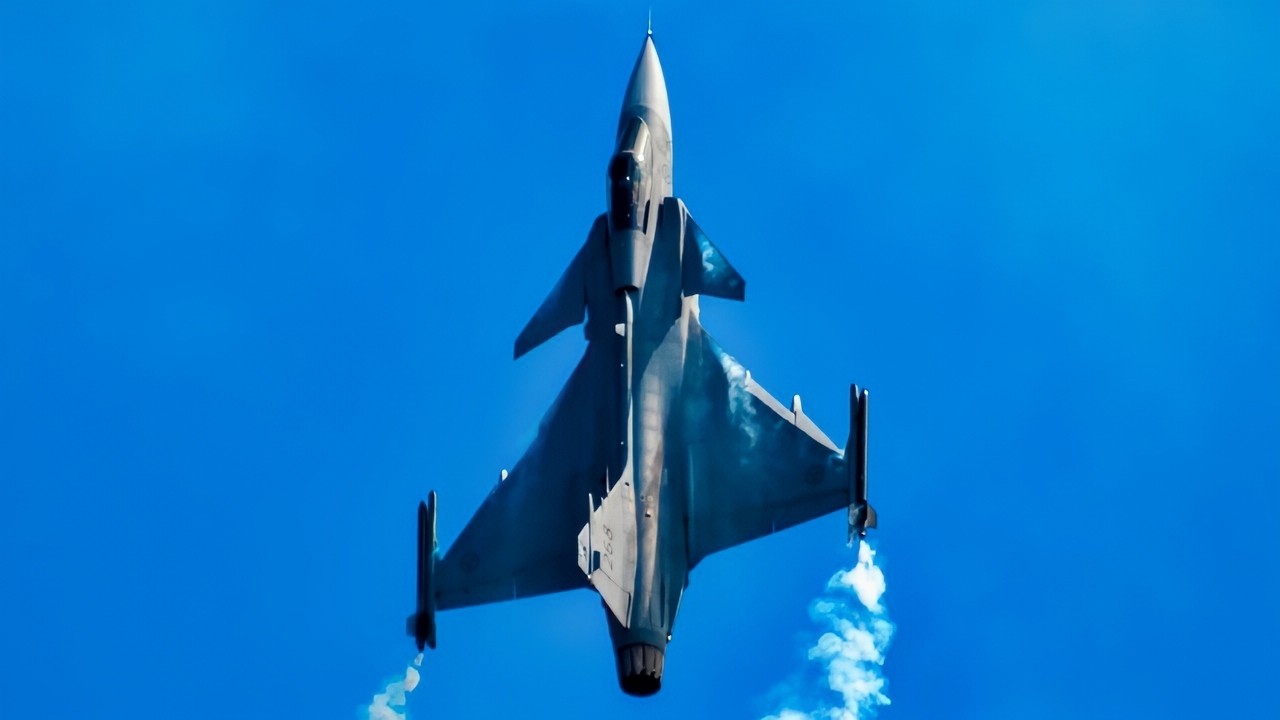
Mark Carney has been handed a genuinely hard problem, and folded inside it is an unusually clean solution, at least, that’s what I would argue. Canada’s CF-18 Hornets are decades past their prime, having entered service in the 1980s and been life-extended well beyond their intended careers. Ottawa has signed for 88 Lockheed Martin F-35s but has locked in only the first 16. And the prime minister has spent a year pledging to wean Canadian defense off its near-total reliance on the United States. The reflexive way to honor that pledge, canceling part of the F-35 order to buy Swedish Gripens instead, would start a fight with Washington that Canada does not need. There is a smarter path, and the latest reporting suggests Ottawa is now seriously weighing it: keep the entire F-35 order and add a fleet of Canadian-built JAS 39 Gripens on top of it.
The CF-18 Problem Carney Inherited
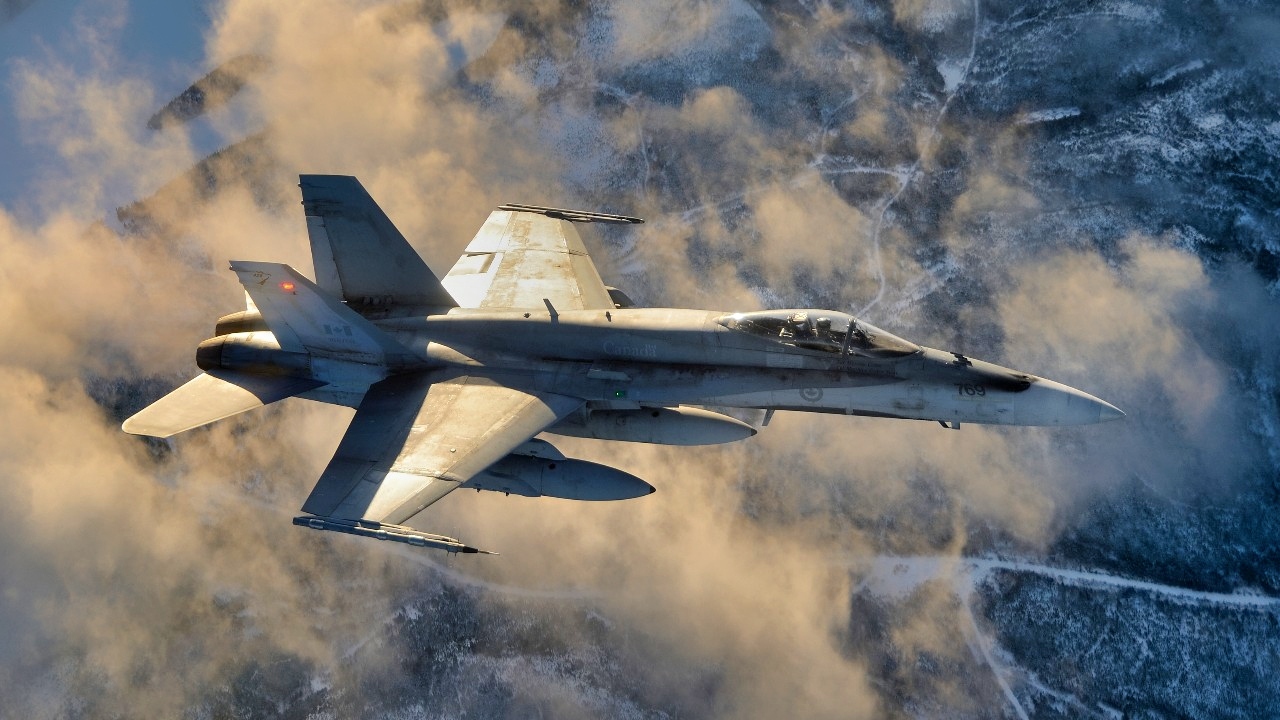
Canada Air Force CF-18. Image Credit: Creative Commons.
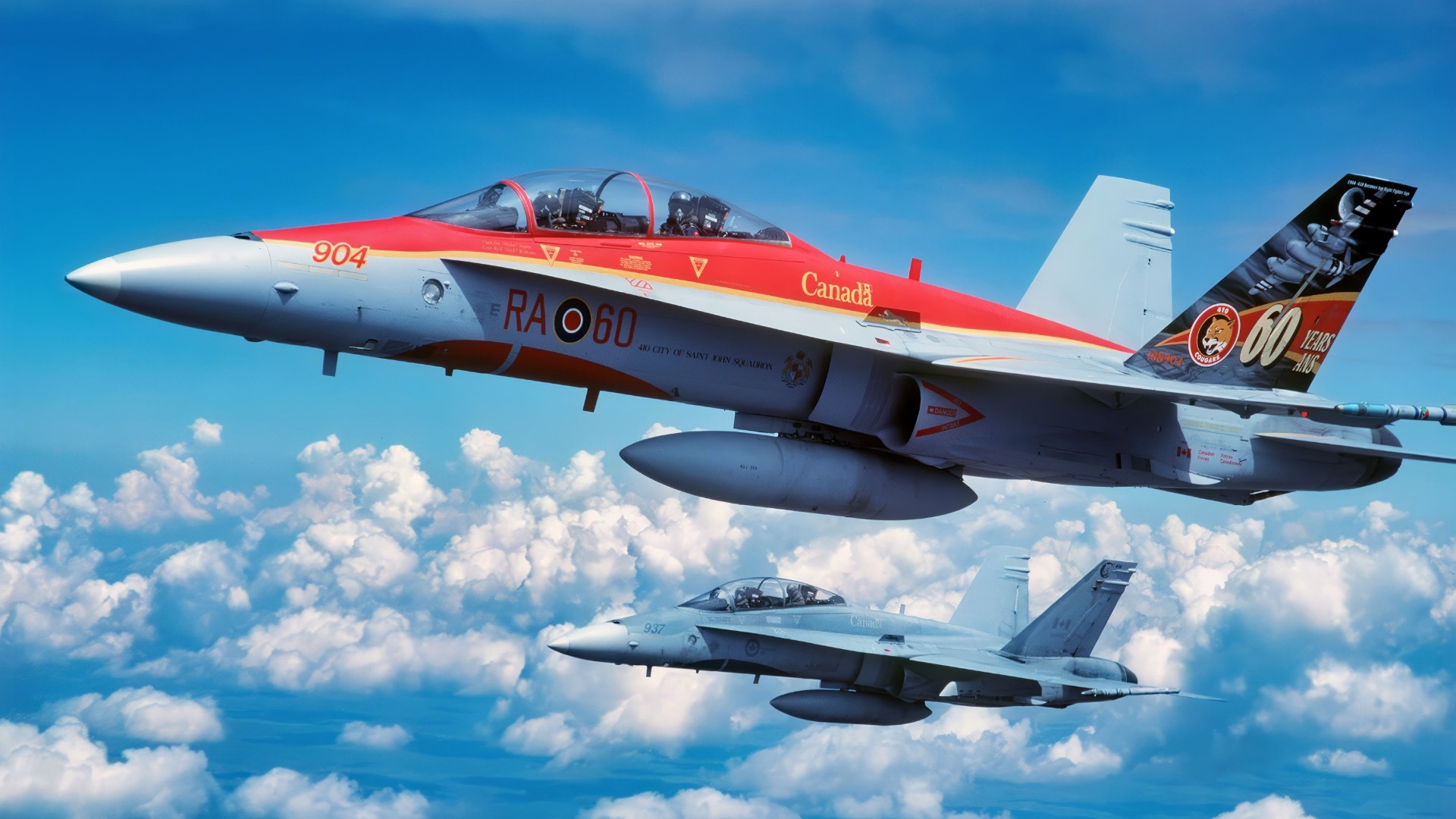
Two Canadian Forces, 410 Squadron CF-188B Multi-Role Fighters, one painted in special anniversary colors, flying over the Utah Test and Training Range (UTTR) for planned engagements during the Tiger Meet of the Americas. The Inaugural Tiger Meet of the Americas brought together flying units from throughout North America that have a Tiger or large cat as their unit symbol. The Tiger Meet of the Americas closely mirrors the North Atlantic Treaty Organization (NATO)/Europe Tiger Meet in its goal of fostering camaraderie, teamwork and tactics familiarization.
The pressure to act is real and overdue. The Royal Canadian Air Force is still flying a Hornet fleet that should have been retired years ago, and the replacement saga has dragged on so long that it has outlived multiple governments.
Canada committed to the F-35 in 2022 and 2023, but only the first 16 jets are actually under contract, with deliveries set to begin next year and the remaining 72 still uncommitted on Lockheed’s books.
Soon after taking office, Carney ordered Defense Minister David McGuinty to review whether the full F-35 buy still represented the best value for the country, a review that was supposed to take three months and has yet to produce a public verdict.
I would argue that the review opened a door. McGuinty told Parliament this spring that the assessment remained underway and that Canada could buy foreign fighters in addition to or instead of part of the original plan. Those four words, “in addition to,” are the whole argument. They signal that Ottawa is no longer treating this as a binary between the American jet and a European one, but as a question of how to build the force the country actually needs.
Why Canceling F-35s Would Backfire for Canada
The temptation to slash the F-35 order is understandable and wrong. The most attention-grabbing version of the mixed-fleet idea, first reported by La Presse, would cut the buy to roughly 30 F-35s and add about 60 Gripens. The appeal is obvious to a government elected on a platform of standing up to Donald Trump. The problem is the collateral damage.

Canada F-35 Fighter Display. Image Credit: Creative Commons.

U.S. Air Force Capt. Kristin “Beo” Wolfe, F-35A Lightning II Demonstration Team commander and pilot, takes off from Selfridge Air National Guard base for the 2020 London SkyDrive Air Show in Canada Sep. 12, 2020, Harrison Township, Mich. The F-35 Demo Team flew alongside the F-16 Viper, the F-22 Raptor, the A-10 Thunderbolt II, and the Air Force Thunderbirds aerial demonstration teams in London, Ontario, Canada. (U.S. Air Force photo by Capt. Kip Sumner)
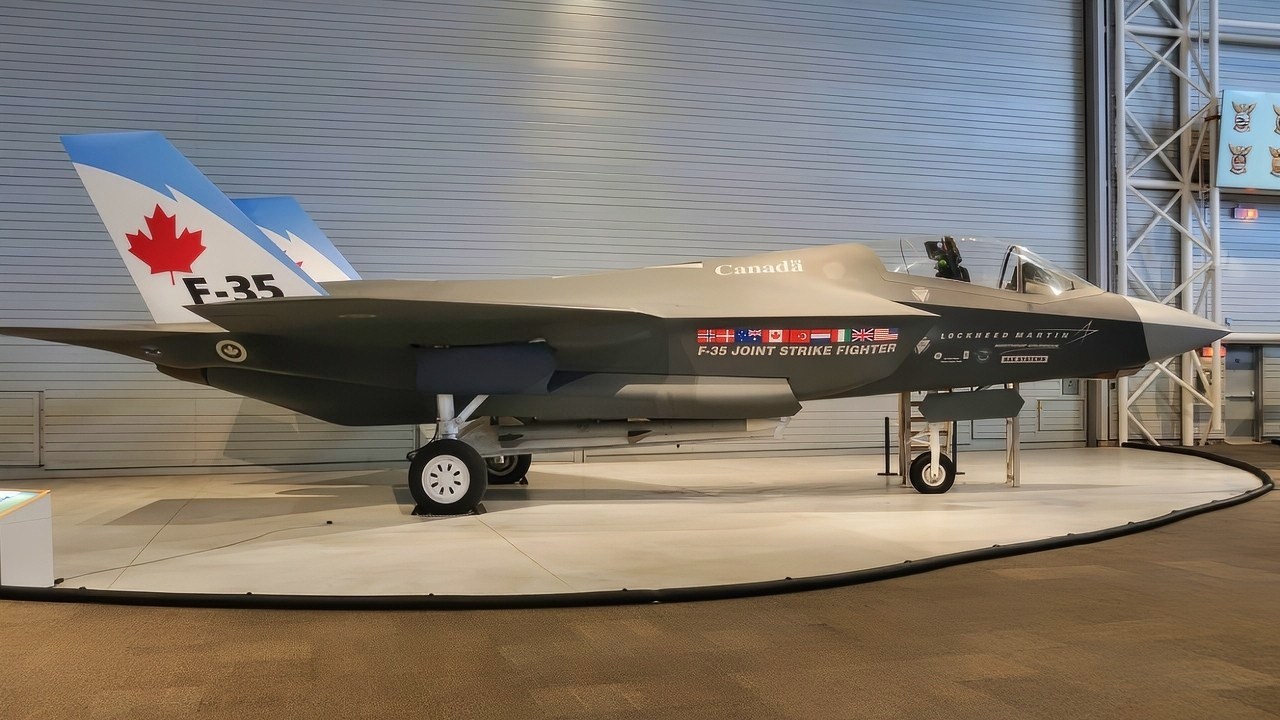
Canada F-35. Image Credit: Creative Commons.
Washington has already signaled that deep cuts to the F-35 order could complicate NORAD relations and the deep interoperability that allows Canadian and American pilots to fight as one air force over the continent they jointly defend.
The stealthy fifth-generation F-35 is also the aircraft the RCAF itself wanted and ranked first in its own competition. Canada needs that capability, and it needs the alliance goodwill that comes with honoring a signed commitment.
Gutting the order to make a political point would trade a real military and diplomatic asset for a symbolic win, and it would hand Trump a grievance at the worst possible moment, with the future of the Canada-U.S.-Mexico trade agreement already entangled in the fighter file.
The Additive Mixed Fleet: 88 F-35s Plus Gripens
The version of the plan that resolves the dilemma is the one that adds rather than subtracts. Reporting now indicates Ottawa is examining a fleet expansion well beyond the original 88 jets, toward a combined force of more than 100 and potentially as many as 140 aircraft, keeping 72 to 88 F-35s and adding up to 72 Canadian-assembled JAS 39 Gripen Es.
This is the elegant answer hiding in a messy debate. And I think it makes total sense.
Keep the full F-35 buy, and there is no cancellation for Washington to retaliate against, no blow to NORAD integration, no broken contract.
Add the JAS 39 Gripen alongside it, and Canada gets everything the diversification argument is reaching for.
The math also flatters the approach, because the 72 uncommitted F-35s remain a live piece of leverage that Carney can hold in reserve during trade talks without having to actually walk away from them. He gets to keep the bargaining chip and the airplanes at the same time.
Saab As A Canadian Prime: GlobalEye, Jobs, And Exports
The industrial case is where the additive plan turns from defensible to genuinely attractive. Saab has already proven it will treat Canada as a partner rather than just a customer. In late May, Ottawa entered negotiations to buy five to six GlobalEye airborne early-warning aircraft worth more than C$5 billion, choosing the Swedish system over established American-linked offerings from Boeing and L3Harris. That decision showed Ottawa is willing to pick a Swedish solution when the jobs and the strategic logic line up.
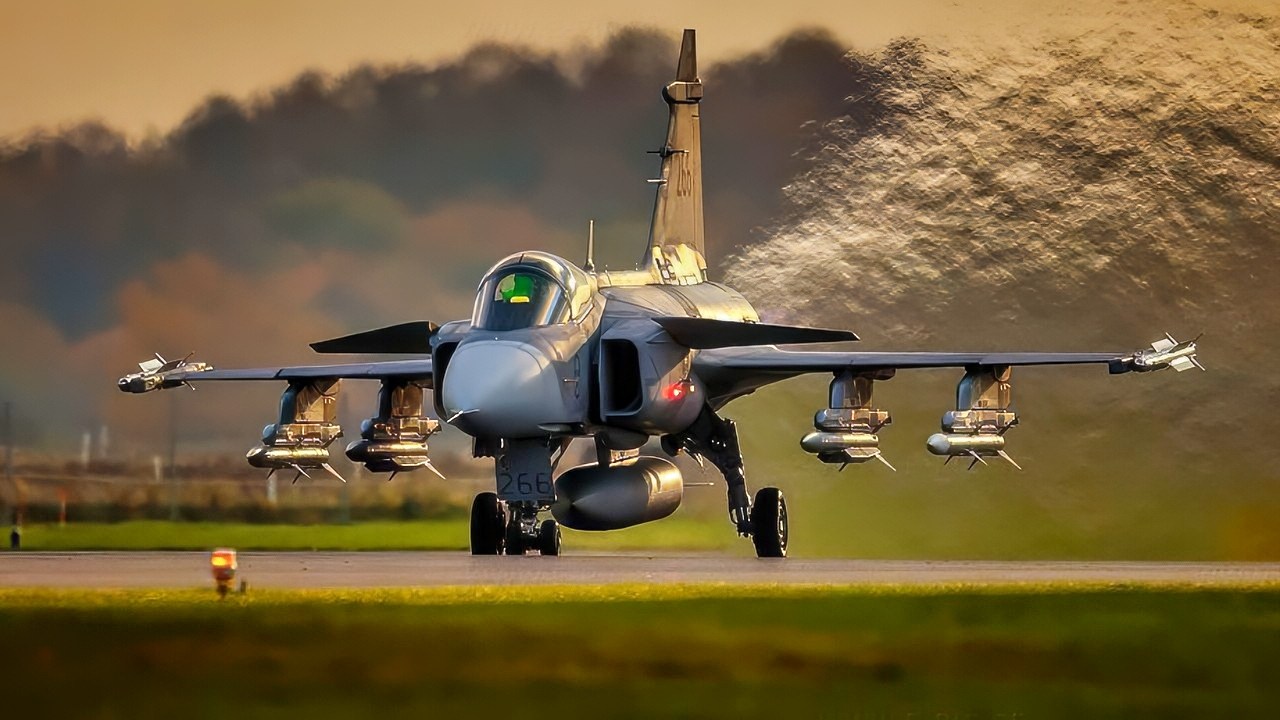
JAS 39 Gripen SAAB Image Handout

JAS 39 Gripen Flying in Formation.
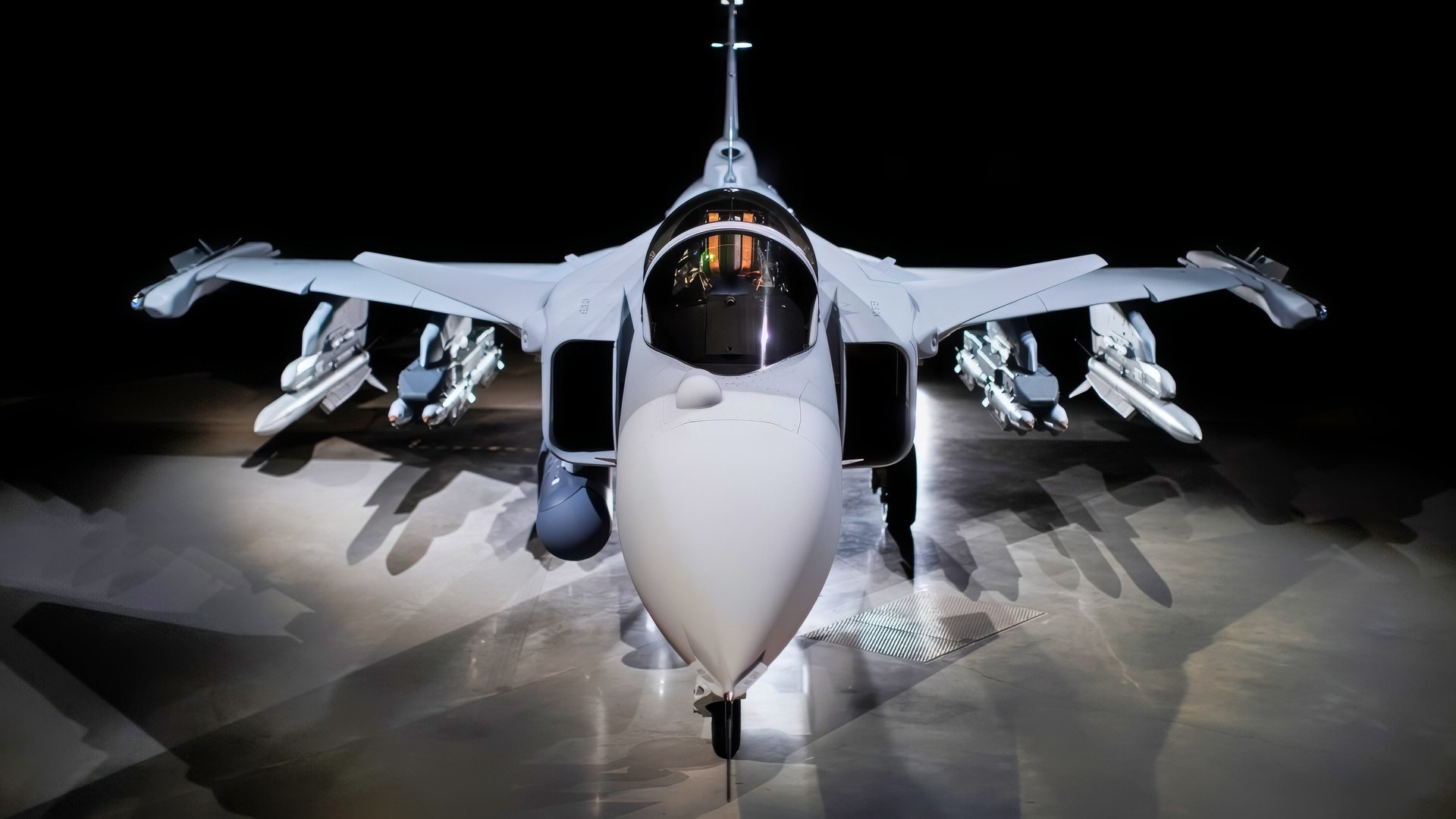
JAS 39 Gripen by Saab. Image Credit: Saab.
A JAS 39 Gripen buy would make that structural. Saab has offered to assemble the jets in Canada and has given the government specifics on how quickly it could stand up a domestic production line, along with the export potential and lower cost such a facility could generate, since the Gripen is currently built only in Sweden and Brazil and is markedly cheaper to operate than its stealth counterpart. A Canadian Gripen plant would make Saab a domestic prime contractor, anchor high-end aerospace work at home, and give Canada a stake in selling the aircraft abroad. That is the kind of industrial return the F-35 program, for all its strengths, has never offered Ottawa on the same terms.
What The Gripen Adds That The F-35 Can’t
The two aircraft are not redundant; they are complementary. The F-35 brings stealth, sensor fusion, and the high-end capability needed to operate inside contested airspace alongside allies. The Gripen brings something different and, for Canada specifically, valuable: a fighter that is cheaper to fly and maintain, designed from the outset to operate from short and austere runways with minimal support. For a country that has to police the largest and most thinly defended airspace in the alliance, including a vast Arctic that demands dispersed operations far from major bases, a rugged, low-cost workhorse is not a consolation prize. It is a capability the stealth fleet does not provide.
The combination also fixes the readiness problem at the root. More airframes mean more aircraft available on any given day, directly addressing the downtime that has plagued the aging Hornet fleet. And sourcing roughly half the future force from a non-American supplier insulates Canada from the kind of leverage a single dominant vendor can exert, which is precisely the strategic autonomy Carney described at Davos when he argued that allies will diversify to hedge against an uncertain world. An “elbows up” posture that costs Canada nothing in its alliance with Washington is the best kind.
The Real Costs Of A Two-Fighter Fleet
The honest objections are about money and complexity, and they deserve a straight answer. Operating two distinct fighters means two supply chains, two training pipelines, and two maintenance ecosystems, which is inherently more expensive than running a single type. The RCAF’s own preference for a unified F-35 fleet rests partly on that logic, and senior figures, including Industry Minister Mélanie Joly, have at times questioned the arrangement’s economic balance. Critics also argue, not without reason, that a larger fleet only pencils out if Carney’s promised defense-budget increases actually arrive, since the whole concept depends on having the funds to run more than one fleet at once.
Those are real costs, not disqualifying ones. Canada is committed to raising defense spending regardless, the readiness and sovereignty gains offset some of the duplication, and the industrial benefits of a domestic Gripen line return money to the Canadian economy that a pure F-35 buy sends abroad. The premium for a two-type fleet is the price of not betting the entire future of Canadian air power on a single foreign supplier in an era when that supplier’s reliability has become a live political question.
For a middle power trying to rebuild a credible air force while reclaiming a measure of independence, paying for it would be money well spent, and it would place more of the world’s best fighters under Canadian command than the original plan ever contemplated. This seems to solve the F-35 debate for Canada.
About the Author: Harry J. Kazianis
Harry J. Kazianis (@Grecianformula) was the former Senior Director of National Security Affairs at the Center for the National Interest (CFTNI), a foreign policy think tank founded by Richard Nixon based in Washington, DC. Harry has over a decade of experience in think tanks and national security publishing. His ideas have been published in the NY Times, The Washington Post, The Wall Street Journal, CNN, and many other outlets worldwide. He has held positions at CSIS, the Heritage Foundation, the University of Nottingham, and several other institutions focused on national security research and analysis. He is the former Executive Editor of the National Interest and the Diplomat. He holds a Master’s degree focusing on international affairs from Harvard University.


telangpu chuanpu
June 9, 2026 at 12:34 pm
The royalist royal canafian air force wants to become a premier air power in the northern hemisphere.
With massive purchasez of f-35s and jas-39s. To fight canada’s dreaded adversaries.
What a laugh.
Who are actually canada’s real adversaries for today.
OttaWa’s adversaries are now front and center in the country.
Alberta is looking for independence, while british columbia is grappling with being overrun by immigrants.
Gangs of violent hooligans and guns-for-hire criminals now control large areas of some major cities, and a few even have connections with foreign governments, or at least their intelligence agencies.
So, the canafian defense ministry wants to buy advanced fighter jets to fight adversaries.
What a stupid joke. Stupi-dest joke in north america today.
Matt
June 9, 2026 at 10:12 pm
Yeah sure, let’s cancel JTF2 and hire mall cops.
That’s what “Gripen for Canada” sounds like.
The RCAF doesn’t want Gripen. Never did. If the military won’t touch it, the government can’t pick it.
And Canada ordering GlobalEye without Gripen is the giant flashing clue everyone keeps ignoring.
Gripen isn’t on the menu. It never was.
READERS: copy-paste this post and my comment into a reputable search or AI tool to expand and validate the facts for yourself. I’m not replying here.
REPLIES: Expect plenty of contrarian replies trying to twist minor details to sound smart. Do your own homework for the real truth.