

Key Points and Summary – Cheap, mass-producible cruise missiles and drones, which have proven devastatingly effective in Ukraine, could be the decisive weapons in a future war over Taiwan.
-Taiwan is in the best position to exploit this, as it is scrambling to build a low-cost arsenal to overwhelm a Chinese invasion fleet just 130km away.
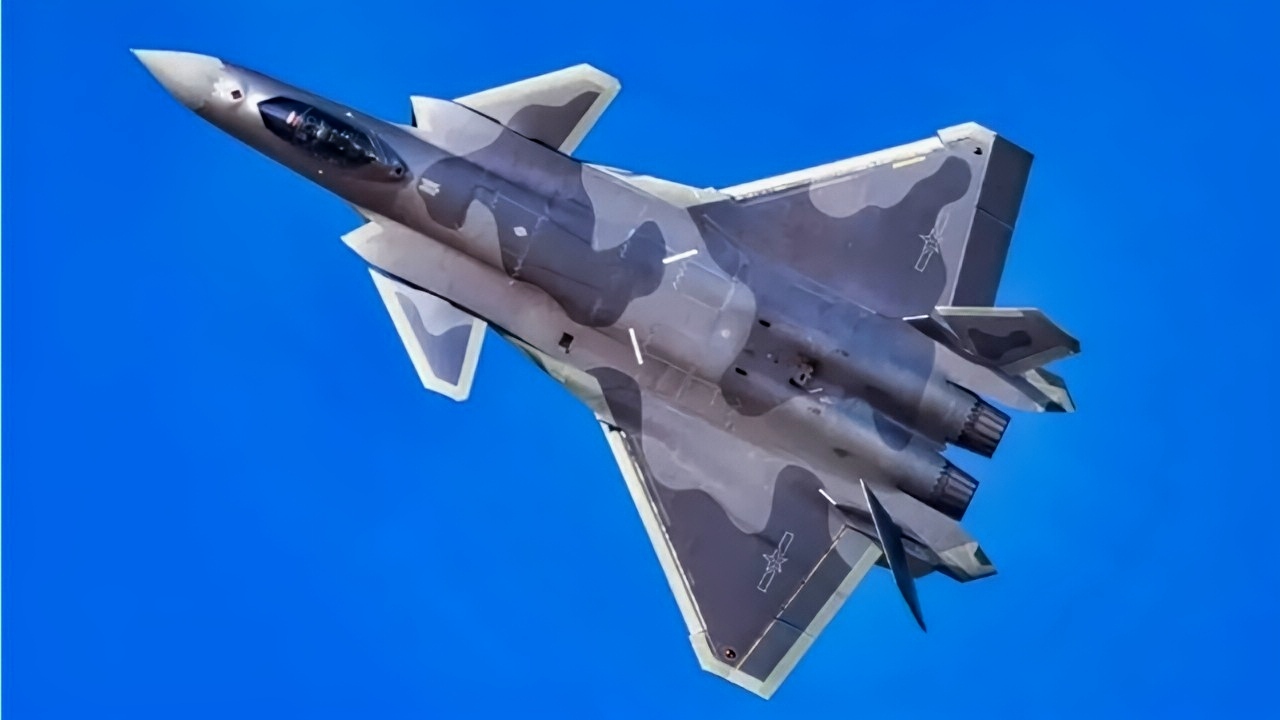
China J-20 Mighty Dragon in 2021. Image Credit: Chinese Internet.
-While China could also use cheap drones to add depth to its expensive “boutique” missile arsenal, the United States faces a major strategic problem.
-The U.S. lacks forward bases, and its new Marine Littoral Regiments are not logistically equipped to handle the high volume of missiles required, meaning America risks missing out on this munitions revolution.
China’s Missiles Are Too Expensive. Taiwan’s Are Getting Cheaper
Cheap ground-launched cruise missiles could be the decisive weapons of the next Pacific war. They’re concealable, mobile, just accurate enough to hit some of the time, just powerful enough to inflict meaningful damage and—most importantly—simple enough to be inexpensive and mass-producible. These munitions could sink fleets, wipe out air forces, unravel supply lines and devastate war industries.
Look at the damage inflicted on the Russian oil industry by Ukraine’s Flamingos and other cheap but conventional cruise missiles and by the new generation, one-way attack drones that are essentially dirt-cheap cruise missiles.
Thousands of kilometres away in the Western Pacific, the country with the most and best cheap cruise missiles could have an edge in war across the Taiwan Strait. That’s good news for Taiwan, mixed news for China—and challenging news for the United States.
Surely mindful of Ukraine’s success developing and deploying an array of cheap cruise missiles and attack drones often costing just $100,000 or less, Taiwan is scrambling to develop and deploy similar munitions, with the national defence-technology institute leading the way.
They include the Chien Feng IV one-way attack drone, which is a Taiwanese take on the Iran-designed Shahed, thousands of which Russia flings at Ukrainian cities every month. The institute is also working on an 800-km ground-launched cruise missile based on the Barracuda-500 from US firm Anduril. For that, it has capped the unit cost at just $200,000.

J-36 Fighter. Image Credit: Screenshot from X.
Geography favours the Taiwanese missile arsenal. A Chinese invasion fleet sailing across the 130-km-wide Taiwan Strait is a strike planner’s dream—if that planner has enough munitions on hand. There’d be no need for a meticulous strategy meant to deliver second- and third-order effects on complex enemy systems and dispersed infrastructure. Just shoot.
Just shoot every available missile and drone at the fleet, as fast as possible and for as long as possible. ‘Cheaper cruise missiles offer them [the Taiwanese] some of the necessary scalability in their arsenal,’ said an expert associated with the US military. Lacking authorisation to speak to the media during a US government shutdown, the expert asked not to be identified.
The 400 US-made Harpoon anti-ship missiles that Taiwan is acquiring alone would have a ‘large effect on weakening the initial Chinese invasion,’ the Center for Strategic and International Studies in Washington concluded in a 2023 report. Now imagine Taiwan has thousands of inexpensive missiles and drones in addition to those hundreds of Harpoons and other high-end munitions.
Expect Taipei to spend big on cheap missiles. ‘Taiwan has incentives, an imperative even, to generate its own [area-denial/anti-access] complex that China will find formidable and difficult to penetrate,’ the expert said. ‘Cheap, mass-producible missiles could be a key component of that.’
China’s own incentives are somewhat different. Between its air force’s air-launched cruise missiles, the navy’s sea-launched cruise missiles and the rocket force’s ground-launched cruise missiles, China already has an extremely powerful missile arsenal.
This arsenal, thousands of missiles strong, is mostly made up of boutique munitions whose unit costs, while classified, almost certainly exceed the bargain-basement sticker prices on Ukrainian Flamingos, Russian Shaheds, Taiwanese Chien Feng IVs and Barracuda-500s. The comparative priciness of Chinese missiles means its armed forces must make tradeoffs: if it wants to add a major new weapon, it may need to retire another.

MD-19 Drone from China Screenshot from Chinese Social Media.
Notably, China ‘has stopped adding short-range ballistic missiles to its ballistic missile inventory (and may be reducing such inventories) in favour of other forms of firepower,’ CSIS concluded.
In that context, the Chinese riffs on the Shahed—the new DFX-50 and DFX-100 attack drones—could add depth to the Chinese missile inventory without forcing the armed forces to cut back some other capability.
And despite the sheer size of the Chinese missile arsenal—potentially thousands of cruise and ballistic missiles—China could benefit from more munitions. If a Chinese attack on Taiwan lasted longer than a month, its armed forces may run out of ballistic missiles and could be down to a third of its cruise missile stock, CSIS calculated.
The third major possible player in a war over Taiwan could face serious constraints as it tries to grow its own arsenal with cheap cruise missiles and drones. The distance between Taiwan and China is so short that the weapon range is generally not a pressing issue.
For the United States, however, distance would be the major constraint if it intervened in a Chinese invasion attempt. The closest US base to Taiwan is the Kadena airfield on Okinawa, 600 km away. And there are scant few back-ups. US war plans for the region are all a ‘time-distance-fuel problem,’ Lieutenant Colonel Michael O’Brien, then the commanding officer of Marine Fighter-Attack Squadron 314, said in 2023.
The US Defense Department is eyeing several cheap cruise missiles. A powered version of Boeing’s JDAM bomb, for one—as well as Lockheed Martin’s Common Multi-Mission Truck and, of course, Anduril’s Barracuda. All would be significantly cheaper than the US military’s current cruise missiles, the $1.5-million-apiece Jassm-ER and its cousin, the Lrasm.

JASSM Missile National Security Journal Photo
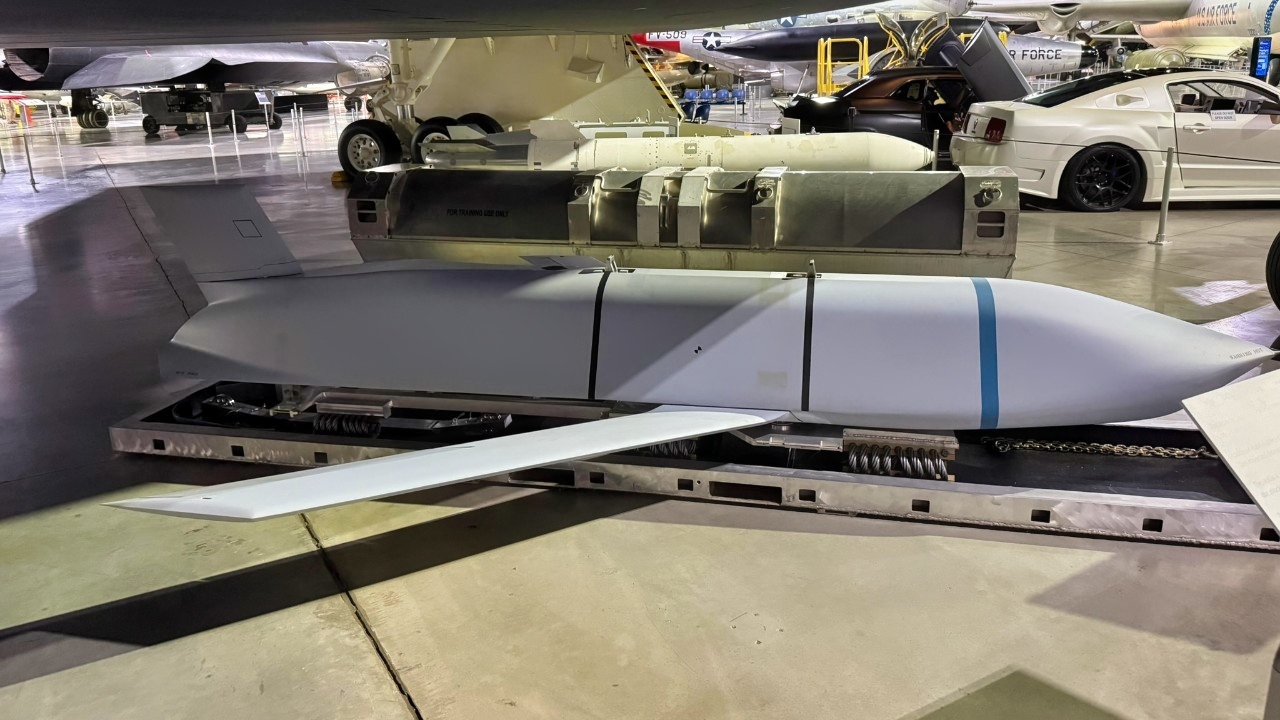
JASSM ‘Stealth’ Cruise Missile. Image Taken by National Security Journal at the U.S. Air Force Museum on 7/19/2025.
There’s good reason why US cruise missiles, cheap or expensive, are strictly air-launched or, in the case of the Barracuda, have an aerial version. The US Air Force’s heavy bombers are the primary launch platforms for the US’s most important missiles for a Taiwan war scenario—because they’re untethered to the few US bases in the region.
There just aren’t many places where US forces can stage ground-launched munitions in the class of the Shahed and Chien Feng IV. The US Marine Corps is standing up several littoral regiments whose main mission is to set up small outposts on islands on or within the first island chain (stretching from Japan to Indonesia) and whose strike missiles include ground-launched NSMs weighing 400 kg and ranging at least 180 km.

CH-7 Drone from China. Image Credit: Creative Commons.
The littoral regiments should be first in line to get any cheap cruise missiles that the Pentagon buys. But these regiments are already struggling to tailor their kit to the conditions in which they plan to operate. The regiments can’t expect much support or resupply, and they can expect to live in the surf, sand and jungle while under the constant threat of enemy bombardment.
Light and durable equipment is in. Heavy and complex equipment is out. Citing their unwieldiness, the Marine Corps has already cancelled an effort to equip the littoral regiments with launchers for 1.6-tonne Tomahawk cruise missiles.
If the point of cheap cruise missiles is to launch a lot of them, fast, can the Pentagon expect Marine littoral regiments to use such munitions effectively? If a littoral regiment can’t ship and maintain a few Tomahawk launchers, can it realistically ship and maintain hundreds or even thousands of Barracudas or Shahed-style drones?
Cheap cruise missiles could win the next Pacific war. US forces should be worried they may miss out on this munitions revolution.
About the Author: David Axe
David Axe is a journalist and filmmaker based in Columbia, South Carolina. This first appeared in ASPI’s The Strategist.
More Military
The Air Force Only Has 19 B-2 Spirit Stealth Bombers
Why the U.S. Navy Needs Lasers for an ‘Infinite Magazine’
U.S. Navy F/A-18 Super Hornet Fighter: How Hard Is It To Fly?
Unstoppable: Delta Force Is the Very Best Special Forces Unit on Planet Earth
Could a U.S. Navy Nuclear Aircraft Carrier Tip Over In a Storm?


