


Key Points and Summary – A former Army journalist recounts his personal brushes with the special operations world, which led to a deep dive into the U.S. Army’s Delta Force, also known as Combat Applications Group (CAG).
-Delta is the “Tier One” counter-terrorism unit, and while its entry requirements seem broad, the selection process is grueling, testing endurance and land navigation.

U.S. Army Pvt. 1st Class Ian Wojick, assigned to 552nd Military Police Company, 25th Infantry, aims a DroneBuster, an anti-drone weapon, toward the sky during the Joint Pacific Multinational Readiness Center Exportable (JPMRC-X) exercise at Fort Magsaysay, Philippines, June 1, 2025.
This iteration of the JPMRC-X marks the second Combat Training Center (CTC) rotation conducted in the Philippines. As part of the Army’s premier regional CTC, JPMRC-X enables the U.S. Army, joint force, allies, and partners to develop skills in realistic environments and conditions. Through exportable capabilities, JPMRC-X strengthens war-fighting readiness, enhances multilateral relationships, and contributes to regional security and stability in the Indo-Pacific. (U.S. Army photo by Staff Sgt. Keith Thornburgh)
-Operators, often recruited from Special Forces and Rangers, are experts in marksmanship, demolitions, and intelligence.
-Organized into kinetic and support squadrons, CAG operates under JSOC and can be a direct asset for the President, as demonstrated in the 2019 raid that killed Abu Bakr al-Baghdadi.
Why Delta Force Is the Best
I was not special operations-qualified during my five years in the U.S. Army, but special ops seemed to follow me around. It started with Army Special Forces, when, as a Public Affairs military journalist, I was attached to the 19th Special Forces Group for a desert-training exercise at the National Training Center in Fort Irwin, California.
My Connection to Special Operations Forces
I did my job as a journalist, but I was also assigned double-duty on the Quick Reaction Force. I would take photos and write articles during the day, and then stay out all night with the QRF guarding the forward operating base or setting up ambushes during the war game.
These performances caught the eye of the Command Sergeant Major of the battalion and he ordered me to go to Army Special Forces selection—the first hurdle to earning the Green Beret.
I was up for the challenge, but the commanding officer of the battalion got involved and overruled the Command Sergeant Major. The lieutenant colonel said I should be in officer training, so it was off to Army ROTC after that.
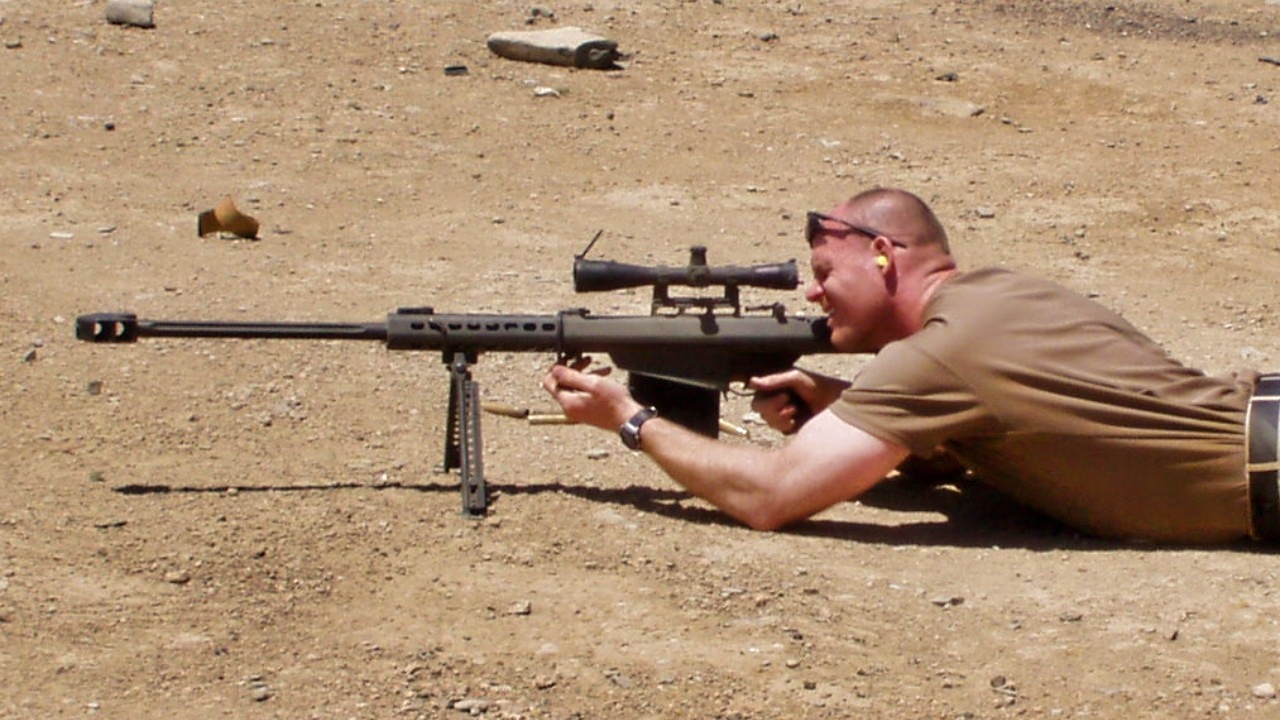
M821A1 Rifle. Image Credit: U.S. Army.
Introduction to Delta Force
During that experience I learned a lot about U.S. Army Delta Force, which is also called the Combat Applications Group, or CAG. An observer/controller at another military exercise recommended I read Delta Force by Charlie Beckwith and Donald Knox and Inside Delta Force by Eric Haney.
I dutifully complied, but there was a problem: These books were decades old, and after 9/11, CAG had been transformed beyond its original mandate.
There Is a Delta Link to West Virginia
I also trained at Camp Dawson, West Virginia, as a cadet. The land navigation course there was frequented by CAG operators. I learned to terrain-associate during this course, and on one occasion I saw Delta Force members in plain clothes training on ATVs. Rumor had it that CAG selection was being held in the West Virginia mountains, and it was extremely difficult to be chosen for CAG training. SOFREP.com has a great primer about Delta Force that aptly summarizes the challenges.
The Only Easy Day Was Yesterday
The interesting thing about CAG, according to SOFREP, is that the requirements to be eligible for selection are not that stringent. Candidates need to be 21 years old, E-4 to 0-3 in rank, airborne-qualified or willing to go to jump school, earn a 110 on the ASVAB, and be able to get secret clearance.
Almost every junior-grade member of the Army is eligible. But the initial training is every bit as difficult as you could imagine, especially the 18-mile all-night land navigation course and the heavy rucking endurance needed to complete the selection process. Expertise in weapons and small-unit tactics is a must. This is why Delta often recruits from Army Special Forces and the Army Rangers, even though service members with different military occupational specialties are welcome to try out.
The above is the simple part. CAG is very complex—operators are tasked with layers of different jobs. For the operator’s training course, the CAG trainee must be one of the best marksmen in the Army. These operators are also experts in demolitions, breaching, intelligence tradecraft, and executive protection.
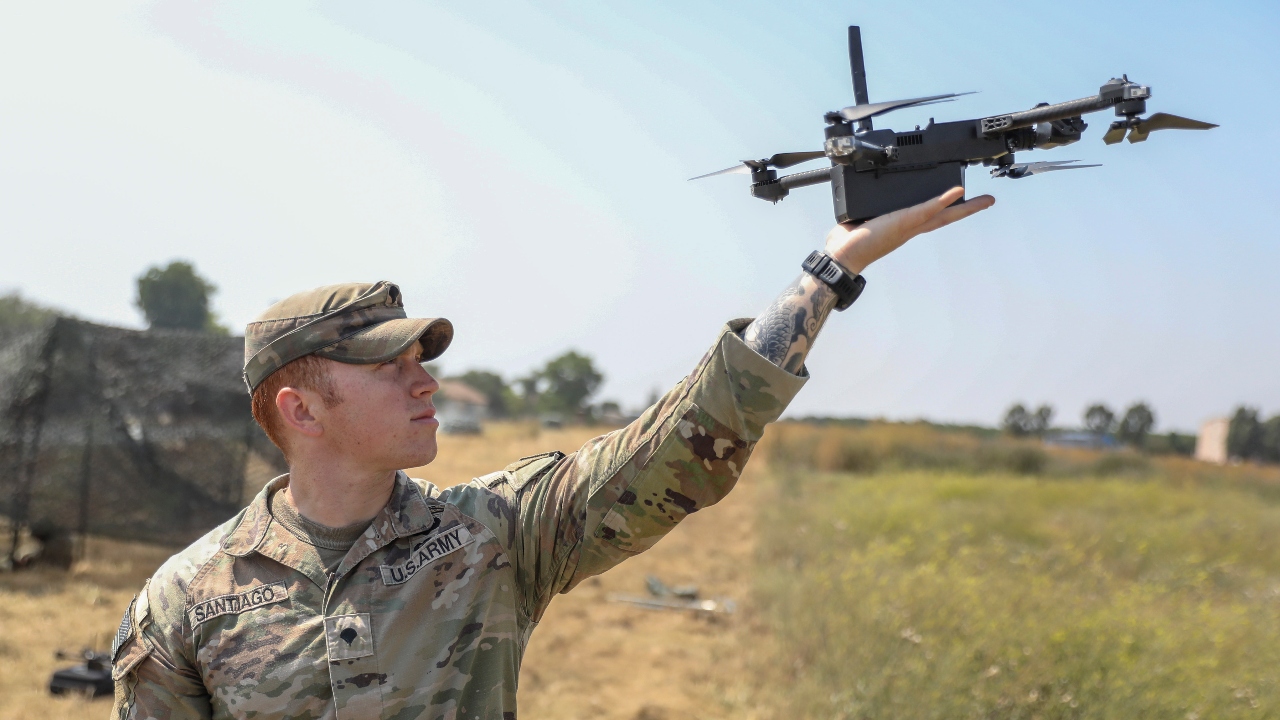
U.S. Army Spc. Harry Santiago IV, assigned to the Multi-Functional Reconnaissance Company, 2nd Brigade Combat Team, 101st Airborne Division (Air Assault), launches a Skydio X2D drone on Mihail Kogalniceanu Air Base, Romania, July 09, 2025. V Corps provides essential support to multinational training and exercises of robust and evolving complexity, scope, scale, rigor, and operational conditions and provides targeted security force assistance alongside national and multinational corps and divisions. (U.S. Army photo by Spc. Breanna Bradford)
CAG has been busy since 1980, first assisting with the failed rescue of American hostages in Iran. They helped prepare the battlefield for the invasion of Grenada in 1983, the operation against Panama in 1989, Operation Desert Storm in 1990–1991, and the Battle of Mogadishu in 1993. They carried out so many different operations during the war on terror that CAG operators were often deploying with no breaks for years.
The most famous recent CAG operation was the in 2019 of Abu Bakr al-Baghdadi, the founder and leader of ISIS.
How Is CAG Organized?
Delta task organization starts with squadrons A, B, C, and D. These are the kinetic guys who carry out the most direct actions, such as hostage rescues and jackpot raids, as well as reconnaissance and surveillance.
There is also an aviation squadron, a clandestine intelligence collection squadron, a computer network operations squadron called the “Digital Devils,” and the squadron dedicated to testing exotic weapons and developing doctrine and new tactics, techniques, and procedures.
One of the reasons Delta is so powerful is that they can act as a presidential level or National Command Authority asset that answers to the White House. When the Trump administration wanted to remove Baghdadi from the battlefield, CAG got the call and executed it with deadly efficiency.
Delta also falls under Joint Special Operations Command, which includes Seal Team Six, also known as Navy Development Group. Sometimes U.S. Army Rangers assist Delta operators, as they did during the Battle of Mogadishu.
Known as Tier One operators, CAG is a collection of the very best—the apex predators of special ops. I have known of one friend who made it through to serve on CAG. Once he switched over to the “Dark Side,” he never talked to me again, to retain secrecy. You would never suspect that this individual, who I went to college with, was anything more than a harmless fraternity brother.
Some CAG members like to blend in, get married, start a family, and look like any other dad on the street. You would never suspect them as members of The Unit. Others get a massive amount of tattoos, are swollen with muscles, and wear an ever-present beard, ballcap, and sunglasses; they look like genuine bad dudes you don’t want to mess with.
CAG has a huge budget with the best weapons and communications systems in the business. It’s a tight and secretive brotherhood—and maybe more than a brotherhood. Rumor has it that Delta has women members to fill out the various squadrons. They are probably adept in intelligence analysis, but with so many women getting Ranger-qualified these days, I’d imagine some are encouraged to go through selection to be direct action operators.
CAG is one hellacious group of fighters. They are powerful because they are the best marksmen, the best land warfare operators, the best at free fall parachuting, the best at eliminating terrorists, and the best at hostage rescue and preparation of the battlefield.
Make no mistake, these are some of the most lethal fighters in the world.
I’m glad they are able to do dangerous things to maintain U.S. national security.
About the Author: Brent M. Eastwood
Brent M. Eastwood, PhD is the author of Don’t Turn Your Back On the World: a Conservative Foreign Policy and Humans, Machines, and Data: Future Trends in Warfare plus two other books. Brent was the founder and CEO of a tech firm that predicted world events using artificial intelligence. He served as a legislative fellow for US Senator Tim Scott and advised the senator on defense and foreign policy issues. He has taught at American University, George Washington University, and George Mason University. Brent is a former US Army Infantry officer. He can be followed on X @BMEastwood.
More Military
Nimitz-Class Aircraft Carrier USS Carl Vinson Has a Message for the U.S. Navy
The Navy’s New DDG(X) Destroyer Looks Like a Missile and Laser Machine
Germany’s Big F-35 Fighter Purchase Comes Down to 1 Word
Eurofighter Typhoon vs. JAS 39 Gripen E: Who Wins Summed up in 4 Words
JAS 39 Gripen E vs. Dassault Rafale Fighter: Who Wins in a Fight Summed Up in 4 Words


