

WARSAW, POLAND – The long-running US Council on Foreign Relations journal, Foreign Affairs, has this month published an assessment that asks and attempts to answer the question increasingly heard in the corridors of the Pentagon and the many American intelligence services: “Is China’s military ready for war?”
The Last War China Fought Was 1979
Those who are sceptical of that proposition have plenty of company.
One of the first data points pushed forward in any assessment along these lines is a rebuttal question: “when was the last time the People’s Liberation Army (PLA) actually fought in the field against anything resembling a peer competitor.”
The answer is the 1979 Sino-Vietnamese War. Both sides in this conflict claimed victory afterwards, but from the Chinese side, it ended up being a very costly one.
Deng Xiaoping, who was the penultimate ruler of the PRC at the time, is thought by some analysts to have instigated the conflict just to “teach the Vietnamese a lesson.”
The other half of the theory is that he went to war against Hanoi specifically because he anticipated tremendous losses. In this manner, it would reveal the dysfunctional nature of the PLA, which was equipped with outdated, inferior weaponry and operated under an obsolescent political structure. The poor performance of the force gave him the justification he needed to clean house and begin a top-to-bottom modernization of the entire armed forces.
That modernization is still ongoing almost a half-century later. Under Chinese Communist Party (CCP) General Secretary XI Jinping, that “building a modern military” continues today at an accelerated rate.
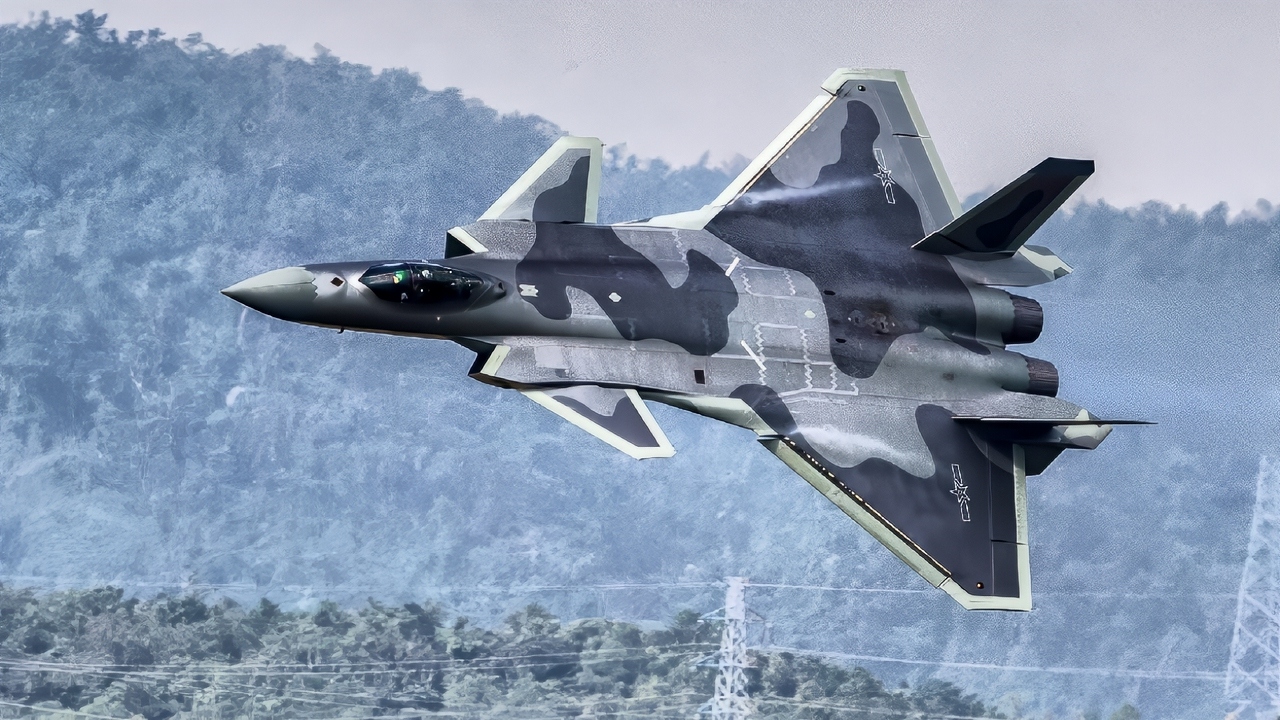
Some of the most spectacular advancements in new weaponry have been observed in the past eight months.
The Impact of Seemingly Endless Purges
Recently, Xi has unleashed a new round of purges of the People’s Liberation Army (PLA) senior leadership.
Since the 20th CCP National Party Congress that was held in October 2022, more than 20 senior PLA officers from the armed force’s four services—Army (PLA), Navy (PLAN), Air Force (PLAAF), and Strategic Rocket Force (PLASRF)—have either disappeared from public view and/or have later been unceremoniously discharged.
In addition, an additional cast of generals has also been reported to be missing from public view, which could mean another round of purges is in the offing. But what is unprecedented is that since autumn 2023, three of the six uniformed members of the party’s Central Military Commission (CMC), the top body of the CCP that is the supreme authority over the entirety of the armed forces, have been removed from their positions.
Never before have half the CMC senior generals been dismissed within such a short time frame. What is doubly inexplicable is that Xi himself had previously promoted all three generals. They were appointed to the CMC in 2022, just after the Chinese party leader had established his near-total control over the CCP at the 20th Party Congress.
With such turmoil at the top, it becomes hard to see how the PLA could accomplish the goal of “taking back” Taiwan by 2027, as Xi has supposedly ordered his generals to plan for.
The smart money says that another round of purges could adversely affect the PLA’s readiness to fulfil that mission.
There are some tangible reasons to believe that cashiering so many senior officers will have numerous negative consequences.
Some of those that the Foreign Affairs assessment predicts are:
–Weapons modernization programs will likely be slowed down. In a climate of “heads being chopped off,” there will be those unwilling to take any chances of being blamed for failures in the weapons development and testing process. The normal ponderous procedures that go to great lengths to ensure a “zero defects” outcome will move the dates for any new weapon systems to the right.
-Command structures will be thrown into disarray. Serious decision-making within the PLA could be turned into one that comes to a halt until those involved have determined “which way the wind is blowing.”
-Last, but not least, is how a series of actions along these lines would most likely weaken morale within the PLA. A force that sees how capricious its political leadership can be and has a “here today – gone tomorrow” chain of command will inevitably become demoralized. Would such a force be capable of effectively fighting against a peer competitor? Would they perform as dismally as Russian President Vladimir Putin’s forces have in Ukraine?
China’s Military: Politics vs. Readiness
Both before and after the conflict in Vietnam, the CCP leadership was inclined to send the force into battle, regardless of its overall fitness to do so.
As the Foreign Affairs essay points out, “political calculations trumped military readiness and favorable domestic conditions. Chinese leaders viewed these operations as conflicts of necessity, not choice or opportunity.”
If Xi’s program of purges today ends up sabotaging PLA readiness, then the question must be asked: how and when the military can be employed with some reasonable chance of success. If the purges and continued anti-corruption efforts persist, they telegraph a relatively low level of confidence in his military leadership on the part of Xi.
This leaves the PLA only capable of what it has always initially designed for – making war on its civilian population. Given that dynamic, one has to ask just what the expectations would be from Xi if he sends the PLA off to invade Taiwan.
Ordering them to take the island is one thing. Whether they are prepared and capable of doing so is another question.
About the Author: Reuben F. Johnson
Reuben F. Johnson has thirty-six years of experience analyzing and reporting on foreign weapons systems, defense technologies, and international arms export policy. Johnson is the Director of Research at the Casimir Pulaski Foundation. He is also a survivor of the Russian invasion of Ukraine in February 2022. He worked for years in the American defense industry as a foreign technology analyst and later as a consultant for the U.S. Department of Defense, the Departments of the Navy and Air Force, and the governments of the United Kingdom and Australia. In 2022-2023, he won two awards in a row for his defense reporting. He holds a bachelor’s degree from DePauw University and a master’s degree from Miami University in Ohio, specializing in Soviet and Russian studies. He lives in Warsaw.
More Military
We Almost Touched the F-117 Stealth Fighter


Jim
July 27, 2025 at 1:47 pm
I like your thesis as to why Deng Xiaoping instigated the war. It could be both, you know, a twofer. Yes, he wanted to kick some Vietnamese booty for good measure (like a big brother picking on a little brother… just because he can… little brother sometimes surprises and gets the better of big brother…)
And, the second contention makes sense… Deng must have known China’s military was inadequate for a would-be, nascent superpower of the 21st Century. Deng was a practical & smart man, which Chinese generally are… until, captured by an ideology… as most men who succumb to dogma and antiquated ideas get… frozen into failed ideas. (As Mao’s ideas were pure text book Communism with a Chinese twist)… Chinese are not Communists at heart, they are bargainers and wheeler-dealers looking for the “Angle” which gets them ahead of the game… often, the Chinese diaspora has ended up dominating the locals… which has led to an expulsion a time or two, or grumbling and bad feeling from the locals.
Chinese are smart & aggressive businessmen.
So much for the Chinese mind and spirit.
Can they fight? When they threw human waves at G. I.’s in Korea they had their victories and their losses.
Numbers of men… numbers of equipment… numbers matter… and tactics… the Chinese had effective tactics in Korea, given lack of sophisticated equipment.
Some Chinese will fight well… others not so well… that’s truth in this man’s army across the World.
But the numbers tell… also we watch, observe, and measure their military exercises to see how they perform in practice…
… how well will they perform in actual combat?
Taiwan isn’t worth finding out whether the Chinese and their technology can fight & win wars with modern training techniques and modern equipment.
From what I’ve seen reported regarding Chinese military exercises… all looks well… from the Chinese side.
But you never know until first contact with the enemy and beyond… and a bloodied nose a time or two.
Chinese are aggressive in business… will they be aggressive in war?
I think the Chinese will fight… and even if “patchy” in performance, at times, their over all numbers will weigh on any United States defense of Taiwan, plus, having interior-lines of logistics for defense & attack (Taiwan is 100 miles offshore) is simply an advantage which can’t be readily overcome by U. S. supposed wonder weapons.
Our men are great warriors, but don’t put them in unwinnable positions or give them unwinnable missions.
That’s what the warhawks want to do: put our men in an unwinnable war against China over Taiwan.
Stupidity and arrogance have been many a man’s downfall… and, so too, many a nation.
Let’s not make that mistake… worse than any crime.