


Key Points and Summary – A second prototype of China’s three-engine Chengdu J-36 has appeared near CAC’s Chengdu airfield, roughly ten months after the first leak.
-New visuals show major design shifts: F-22-style 2D thrust-vectoring nozzles replacing recessed YF-23-like exhausts, revised diverterless inlets, and a side-by-side main gear—pointing to aerodynamic and structural refinement more than pure signature reduction.
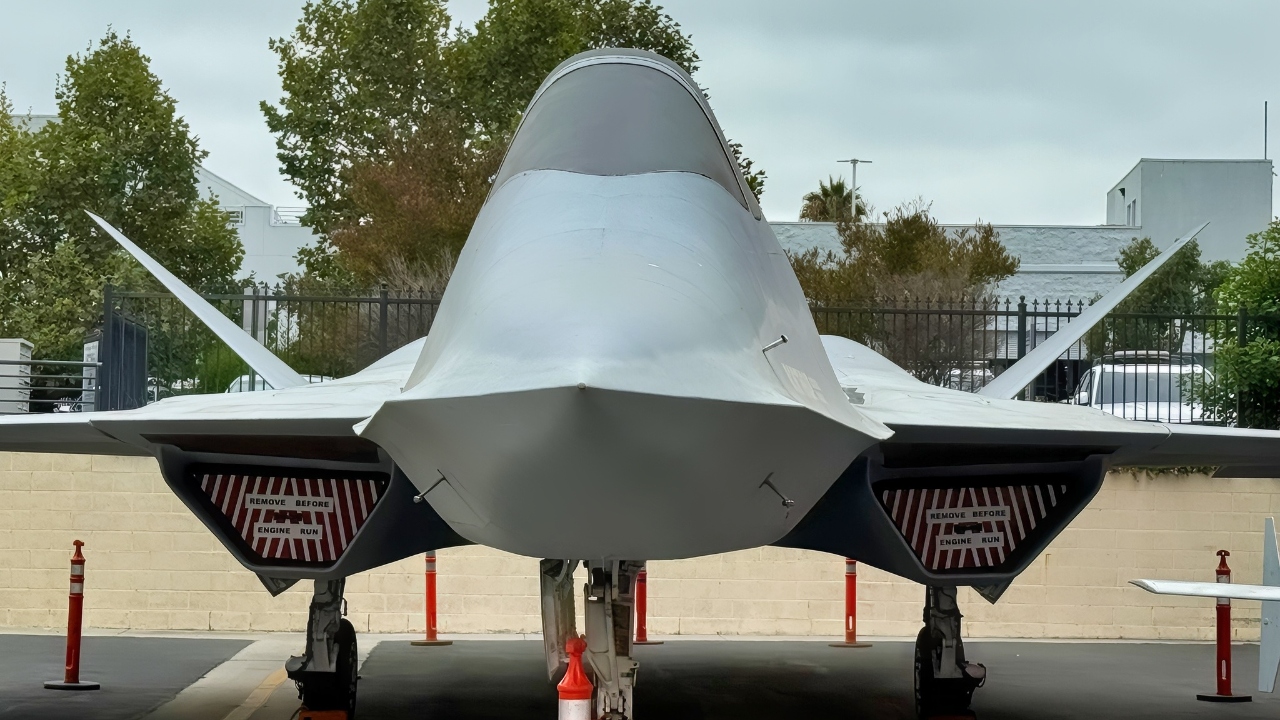
YF-23A Black Widow II Head On. Image Taken by National Security Journal at the Western Museum of Flight on August 16, 2025.
-Notably, the J-36 flew in formation with a two-seat J-20S, hinting at early integration concepts and future control of collaborative combat aircraft. Analysts read the tempo as a sprint to counter rumored U.S. NGAD progress since 2019—an iterative, accelerated push to close a looming 6th-gen gap.
What Do We Know About The New, Second Chengdu J-36 Prototype?
WARSAW, POLAND – Asian news services are reporting sightings of a second prototype of the Chengdu Aerospace J-36 stealth fighter.
These reports began last month when multiple media outlets reposted images that had been circulating on social media sites in the People’s Republic of China (PRC).
The images appear to show a second prototype of the large, three-engine, stealthy combat aircraft design, unofficially designated the J-36.

J-36 Fighter X Screenshot Image.
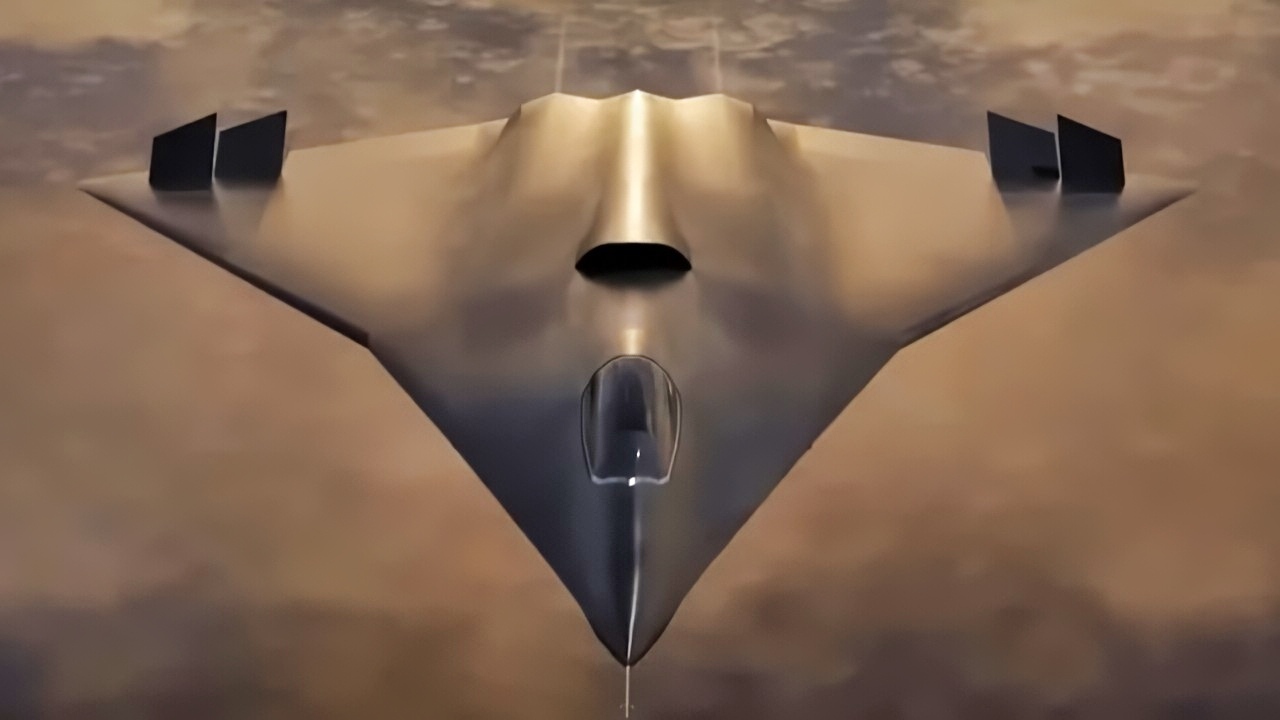
J-36 Fighter YouTube Screenshot/Artist Rendering.
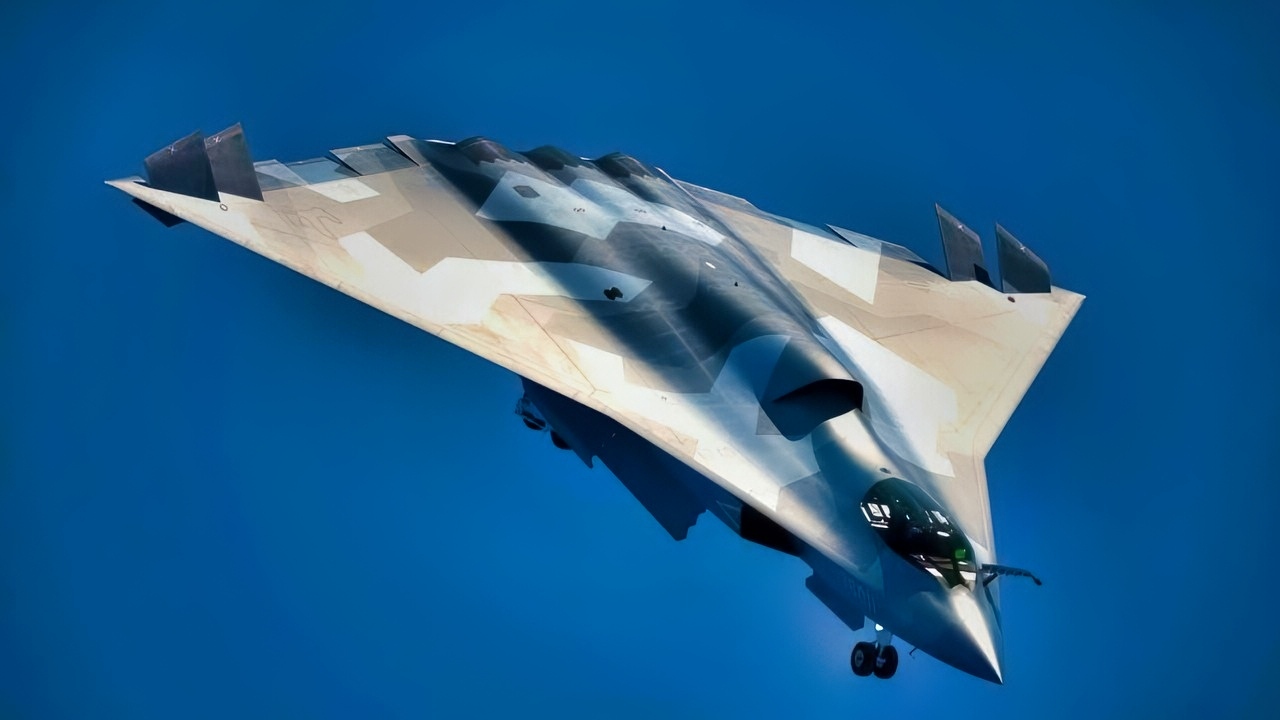
J-36 Fighter Artist Rendition from X Screenshot

J-36 Fighter. Image Credit: Screenshot from X.
These newer images show the aircraft taking off near the defense-industrial regional capital of Chengdu in Sichuan province.
These images appeared approximately 10 months after the first prototype was showcased on some of these same social media sites on December 26, 2024, which coincidentally marked the 131st anniversary of the birth of the PRC’s first leader, Mao Zedong.
The changes to the aircraft’s design in this second prototype appear to show a clear intent to improve the aircraft’s aerodynamic performance.
The current interpretation is that the Chengdu design team is attempting to achieve something approaching the US 6th-generation levels of stealth.
At the same time, they appear to be refining the design to create an aircraft that surpasses the US-made F-22 in speed, range, and endurance.
In 1 Word: Change
Several videos emerged on October 31 and were subsequently posted on various PRC and international aircraft enthusiast websites.
This footage surprisingly showed what appeared to be the new 6th-generation J-36 stealth fighter, while also flying in formation with the other famous Chengdu aircraft, the 5th-generation J-20, which first flew in January 2011.
Some of the videos that were posted show that the model flying with the J-36 is the two-seat J-20S
. All of these flights are taking place near the aerodrome that is part of the facilities associated with the Chengdu Aircraft Corporation (CAC).
The airfield, the design, and engineering are all co-located with Aircraft Plant No. 132, the manufacturing facility for all Chengdu designs.
This video shows the first publicly seen example of a combined formation flight between a 6th-generation PRC aircraft design and an operational 5th-generation fighter already in service with the People’s Liberation Army Air Force (PLAAF).
The maneuvers of the aircraft give the impression that the PLAAF is not just testing the J-36 design, but also evaluating how it would function operationally in integration with the existing previous generation.
Another assessment being made after seeing this different, second prototype is that the development and refinement of this design is an iterative process. Flying these prototypes, which have some very distinct characteristics, also shows how rapidly the Chengdu team is trying to validate this aircraft concept.
The J-36 is also being evaluated for its ability to control unmanned, collaborative combat aircraft, a feature common to almost every 6th-generation program in development worldwide.
Design Details
Some of the features of the second prototype are being described as “upgrades” over the configuration of the first aircraft that was first seen last December. One of these changes is a new, angular exhaust nozzle, a fundamental design change from the recessed exhaust nozzles seen on the prototype.
The nozzles equipped on this second aircraft are very close analogs to the two-dimensional thrust-vectoring exhaust system used on the F-22 Raptor, the first American 5th-generation stealth fighter. This change on the J-36 may have been to address issues of aerodynamic performance – particularly in stability and control regimes – rather than lowering the radar cross section.
The first J-36 prototype was built with recessed exhaust nozzles, similar to those of the YF-23 design, to reduce the aircraft’s infrared signature. That heat signature is an issue for the aircraft, as it has a three-engine configuration, which would require mitigation of the exhaust section’s heat emissions far beyond that of other two-engine designs.
The newer prototype also has a revised version of the diverterless supersonic inlets seen on the earlier prototype.
China’s 6th-gen J-36 jet flies with the 5th-gen J-20 for the first time. pic.twitter.com/0s8qgf9pza
— Clash Report (@clashreport) October 31, 2025
There has also been a shift from a tandem to a side-by-side main landing gear point. This would be one of the changes made as part of the validation of both the aerodynamic performance and the structural considerations.
What is a distinct possibility is that the PLAAF is accelerating these programs, such as the J-36, to keep pace with the US Air Force and to avoid the “technological surprise” of the US having a 6th-generation aircraft already in series production before the end of this decade.
Panic in the J-36 Program?
A National Security Journal (NSJ) article published last month said that the US Air Force had been flying 6th-generation NGAD demonstrators as far back as 2019. This was years before most assumptions, meaning that the program is much further along than Beijing might have initially suspected.
As it seems, the rumoured 2nd J-36 prototype was finally revealed showing some interesting changes:
1. the side intakes are revised (now a DSI (?), formerly caret)
2. redesign main landing gear (now two wheels side by side rather than tandem).
3. exhausts looks like TCV pic.twitter.com/qK63434yiS— @Rupprecht_A (@RupprechtDeino) October 28, 2025
“There may be – at least from the Chinese perspective – some panic in the J-36 program now,” said one PRC military analyst who spoke to National Security Journal (NSJ). “They are now trying to accelerate the J-36 to the extent that they can, which would account for all of these different adjustments to the original design.”
About the Author: Reuben F. Johnson
Reuben F. Johnson has thirty-six years of experience analyzing and reporting on foreign weapons systems, defense technologies, and international arms export policy. Johnson is the Director of the Asia Research Centre at the Casimir Pulaski Foundation. He is also a survivor of the Russian invasion of Ukraine in February 2022. He worked for years in the American defense industry as a foreign technology analyst and later as a consultant for the U.S. Department of Defense, the Departments of the Navy and Air Force, and the governments of the United Kingdom and Australia. In 2022-2023, he won two awards in a row for his defense reporting. He holds a bachelor’s degree from DePauw University and a master’s degree from Miami University in Ohio, specializing in Soviet and Russian studies. He lives in Warsaw.
More Military
The British Army’s Big Challenger 3 Tank Mistake Still Stings
F-35 Stealth Fighter Program Has Passed the Point of No Return
The Iowa-Class Battleships Have A Message for Any Navy on Earth
Canada Has a Big Message for the Eurofighter Typhoon
The Mach 2 F-16 Fighting Falcon Fighter Has a Message for the U.S. Air Force


GhostGuitars
November 8, 2025 at 1:03 pm
Haste makes waste. That line is more true now more than ever. They rushed the Fujian, made running changes to their plans for the ship and now have serious flaws in the ship. They’re doing at it again with their latest plane …and they don’t even have a worthy engine in the air yet.