


Key Points and Summary – China’s Chengdu Aircraft Corporation has flown what appear to be the only two J-36 prototypes together in formation—an eye-catching first that may foreshadow a high-profile anniversary flypast. The timing aligns with December 26, Mao Zedong’s birthday and roughly a year after the aircraft’s public emergence.
-The second prototype, first confirmed in late October, shows visible changes—especially around the exhaust area—suggesting evolving work on signature control and maneuver performance.

J-36 Fighter. Image Credit: Screenshot from X.
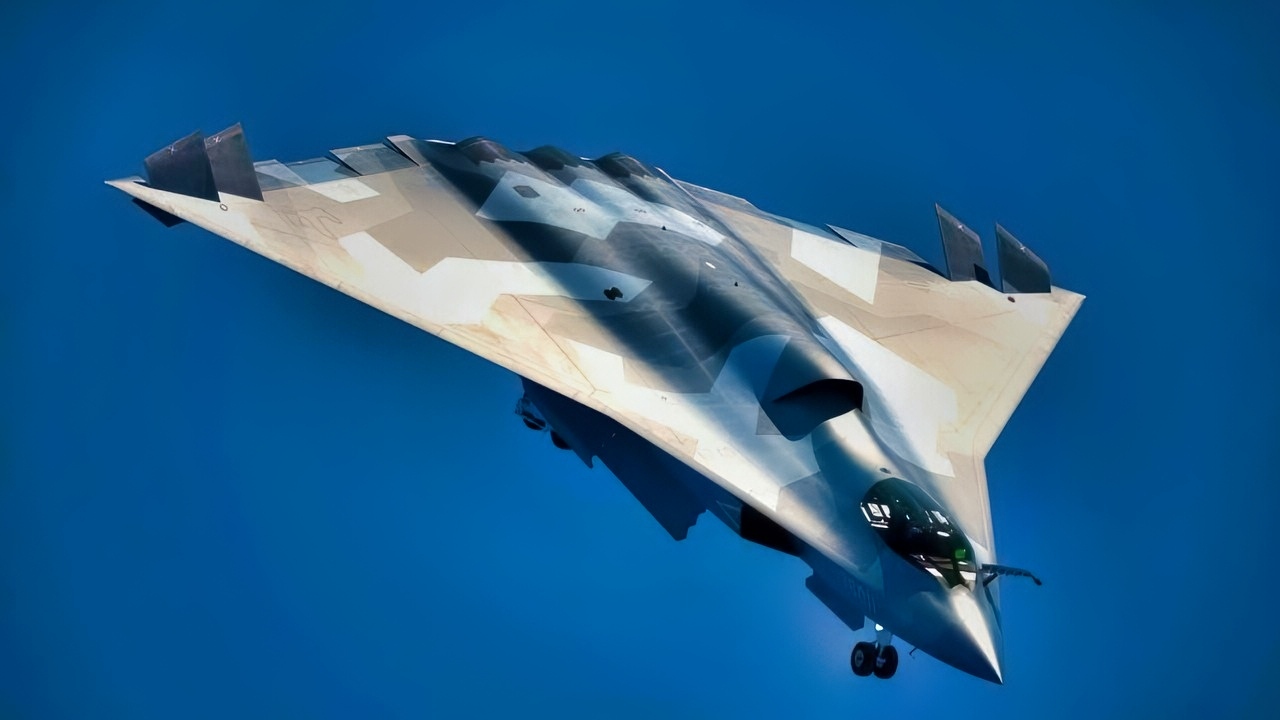
J-36 Fighter Artist Rendition from X Screenshot
-The J-36’s defining claim remains its long-range, heavy-payload “fighter-bomber” size and unusual three-engine configuration, underscoring Chengdu’s rivalry with Shenyang’s competing design.
Two Chengdu J-36 Fighters Seen in Formation for the First Time
Chengdu Aircraft Corporation flew what are believed to be the only two prototypes of its J-36 long-range sixth-generation fighter jet. The two aircraft were seen operating in formation together for the first time in what may be a practice flight for an upcoming anniversary.
December 26 is the birthdate of Mao Zedong. The date is also the one-year anniversary of the public unveiling of the aircraft.
A retired NATO-nation intelligence officer who was responsible for regular assessments of the Chinese military explained to National Security Journal that “there are several reasons why Chengdu would want to show these aircraft flying together come next Friday.”
“One, and from the Chinese mentality the most important, is that it gives Chengdu bragging rights,” he explained. “The design team will want to show up their competitors at Shenyang Aerospace, which gives them the chance to show-off, so to speak.
“A second motivation can be seen from how CAC have gone off on a bit of a publicity offensive as of late. The J-36 designer was featured in a long article in the South China Morning Post recently, emphasizing that the J-36 was well ahead of its ‘competitors,’ meaning both the U.S. and Shenyang Aerospace. Smart money says that this is how they will try to romance more funding for their programs from Beijing’s central budget.”
First and Second Prototypes
All bragging aside, Chengdu’s design is the first sixth-generation fighter in any country that was confirmed to be in flight testing. Demonstrating just how deep the rivalry is between Chengdu and Shenyang, the first appearance of the J-36 last December was followed only hours later by the release of footage of another sixth-generation fighter.
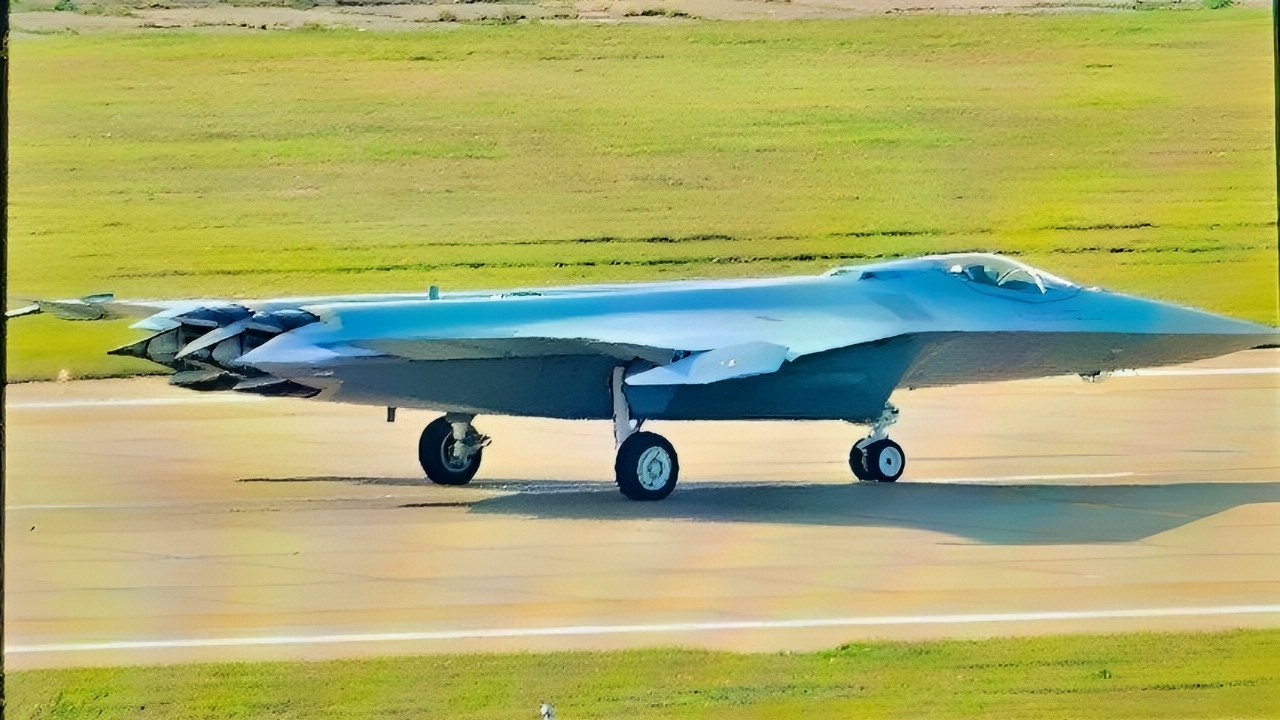
J-50 Fighter Image from X
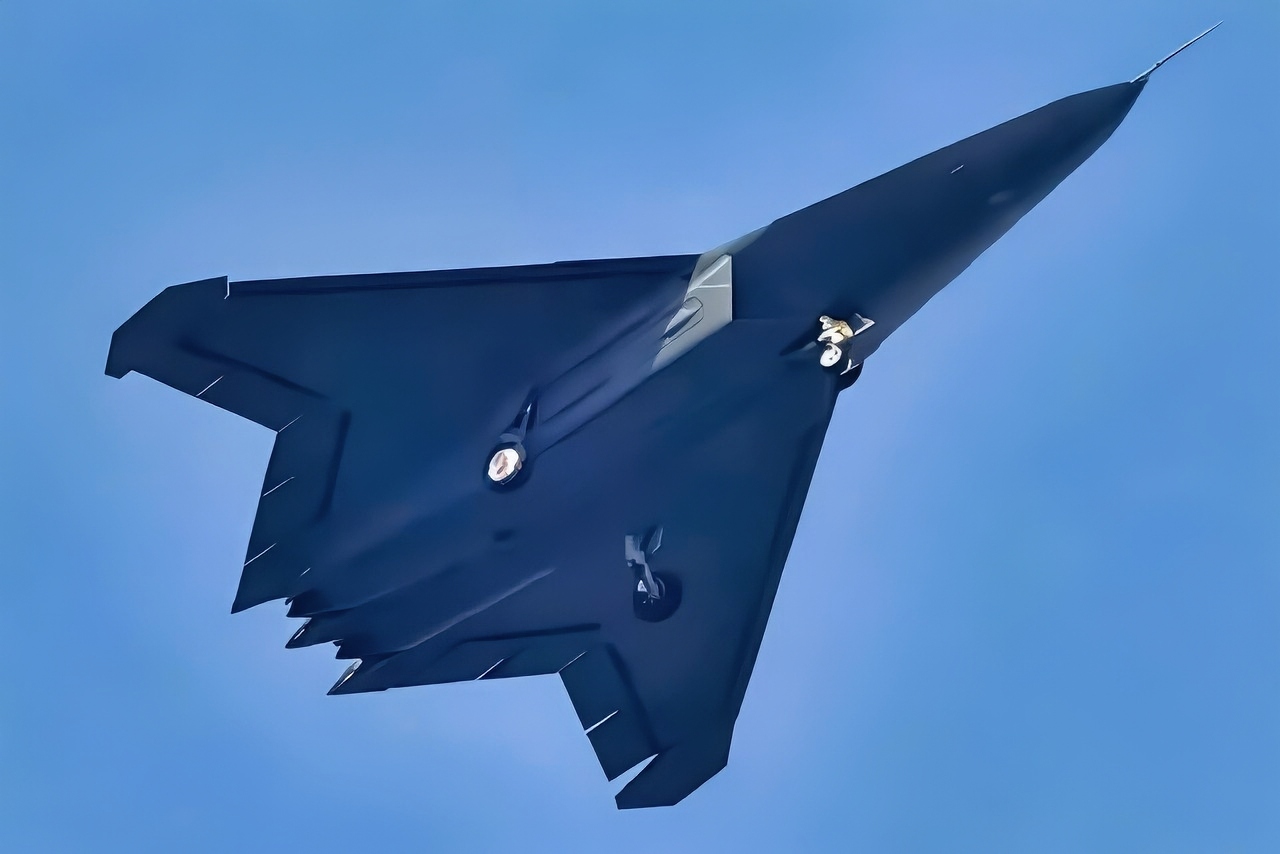
J-50 Fighter from China Weibo Image
This second video was showing none other of the J-50/XDS prototype developed by Shenyang.
The second J-36 prototype was first confirmed to be in flight testing on October 28. Photos of this aircraft show it has some meaningful differences with the first aircraft.
The new J-36 aircraft included a new angular design for the exhaust nozzles. The first has recessed exhausts. What can be seen from the video footage indicates that one of the main functions of these nozzles is to provide thrust-vectoring control for the aircraft.
Both nozzle designs can also permit the aircraft to maintain a lower radar cross section, as well as suppress the infrared signature of the engine exhausts. The first prototype featured exhaust petals recessed into trenches on the upper trailing edge of the fuselage.
This design is similar to the Northrop Grumman YF-23 prototype, which utilized a wide deck to diffuse the exhaust gases. This exhaust pattern would cool and mask the heat signature without compromising performance.

YF-23A Black Widow II National Security Journal Photo. Taken at the Western Museum of Flight by Harry J. Kazianis on August 16, 2025.
Revolutionary Design
The J-36 is in fact one of the most revolutionary new fighter designs of the past half century. It follows the Chengdu penchant for developing aircraft capable of operating at extended ranges. Chengdu’s J-20 fifth-generation fighter already boasts a range exceeding almost all Western fighters. But the J-36 is almost twice as good, with an anticipated combat radius of more than 4,000 kilometers. The aircraft is much larger than its predecessor—almost in the class of a fighter-bomber. This has generated predictions that it will be capable of carrying not only a much larger and longer-ranged radar, but also a heavier missile payload.
The larger radar will be a major boost for anti-ship missions far from the coastline. It would enable the aircraft to operate autonomously, without relying on an Airborne Early Warning and Control platform such as the KJ-500.
The aircraft is also the first fighter fitted with three engines instead of just one or two. Even more curious, the central engine is of a different design than the other two.
This central dorsal engine features a stealthy Diverterless Supersonic Intake similar to the F-35, while the two lower engines have more complex, F-22-style trapezoidal inlets. The differences might indicate a trade-off in which the stealth performance of the central engine compensates for a higher radar cross-section but lower infrared signature of the other two.

A U.S. Navy F-35A Lightning II with the U.S. Navy F-35C Airshow Demonstration Team performs an aerial demonstration over Rickenbacker International Airport during the Columbus Air Show, Aug. 24, 2025. This year’s event featured more than 20 military and civilian planes, including a KC-135 Stratotanker from the 121st Air Refueling Wing, which served as the base of operations for military aircraft participating in the show. (U.S. Air National Guard photo by Staff Sgt. Ivy Thomas)
As mentioned above, the second prototype adds thrust-vectoring nozzles to the engines for better maneuverability, creating a unique combination not tried by any other recent design team.
About the Author: Reuben F. Johnson
Reuben F. Johnson has thirty-six years of experience analyzing and reporting on foreign weapons systems, defense technologies, and international arms export policy. Johnson is the Director of Research at the Casimir Pulaski Foundation. He is also a survivor of the Russian invasion of Ukraine in February 2022. He worked for years in the American defense industry as a foreign technology analyst and later as a consultant for the U.S. Department of Defense, the Departments of the Navy and Air Force, and the governments of the United Kingdom and Australia. In 2022-2023, he won two awards in a row for his defense reporting. He holds a bachelor’s degree from DePauw University and a master’s degree from Miami University in Ohio, specializing in Soviet and Russian studies. He lives in Warsaw.


Shitty-bang-bang
December 21, 2025 at 4:24 pm
China NGADs are coming ???
Coming where, California, new jersey, Georgia, texas, cape Canaveral ?
Humans need not be mean or filled with a desire to paint a false picture of others, or to quickly fault others for merely wanting to take care of themselves.
But US is mean and ugly to others though, and always has dark thoughts of them.
Recently I visited a new mall near my area, and I saw a young child filled with happiness upon reaching inside.
I was thinking, why can’t grownups be like those little kids, filled with happiness.
But today, now, grownups or ‘adults’, well-fed and burly, possess really bad evil thoughts about some or many other people, people who’re just being only slightly different from the ‘mainstream’ or majority.
Well-fed and well-supplied people such as zelenskyy, biden, netanyahu, macron, starmer, baerbock and the news agencies like reuters.
That’s the reason why half of our world today, now, is gripped or overcome by paranoid russophobia or some other totally inexplicable phobias.
Other people develop novel weapon systems yet prefer to keep them at home, but US is different.
US prefers to deploy them far from home, even deploy them right at the very front doorstep of rivals.
As a result, under the presidency or leadership of Biden (and trump), the world has started to badly unravel and to descend into chaos and bloodshed. And unspeakable genocidal happenings.
Thanks to well-fed people like Biden and netanyahu and zelenskyy, and thanks to reuters and BBC, and guardian and CNN, the global propaganda media of warmongers.
Thanks, everybody, muchas gracias !
Anthony Melton
December 22, 2025 at 2:06 am
More CCP propaganda! China’s military could not even beat the Girl Scouts of America! Their newest ships and planes are a joke and won’t last five years, less if they ever see combat!