


China has reportedly test-fired its YJ-20 hypersonic anti-ship missile from a Type 055 destroyer, with leaked footage emerging in December and the South China Morning Post claiming the missile reached Mach 10 in its terminal phase. The weapon uses a boost-glide flight profile that climbs into the upper atmosphere before plunging into a hypersonic dive — a trajectory engineered to exploit altitude gaps in U.S. Navy Aegis and carrier escort missile defenses, with a range that can reach U.S. aircraft carriers up to 1,500 kilometers from China’s coast. The footage emerged the same week the United States and the Philippines launched Balikatan 2026 with 16,000 personnel training within striking range of the Taiwan Strait.
China’s YJ-20 Is Dangerous

(Left to right) Australian ANZAC Class frigate HMAS Stuart (FFH 153) and USS Jack H. Lucas (DDG 125) wait off the coast of the Pacific Missile Range Facility in Kauai, Hawaii, as they prepare for Flight Test Aegis Weapon System-32 (FTM-32), held March 28, 2024.
China’s missile arsenal is expanding, and its aim is clearly to push the U.S. Navy as far away from the western Pacific as possible. A new generation of hypersonic and long-range anti-ship weapons is steadily taking center stage in Beijing’s plans for a hypothetical war over Taiwan or the South China Sea, with the YJ-20 recently becoming the subject of much global chatter.
The weapon is China’s first operational sea-based hypersonic anti-ship missile, and Chinese military-linked accounts released footage in December that appeared to show a missile being fired from a Type 055 destroyer.
U.S. Launches Major Pacific Exercise
Interesting Engineering reports that the footage surfaced as the United States and the Philippines launched Balikatan 2026, their biggest joint military exercise yet. The mammoth task involves over 16,000 personnel and the participation of other regional allies, such as Japan and South Korea.
The PLA has yet to confirm when the leaked YJ-20 launch footage was filmed, but as usual, its emergence was likely calculated to flex its muscles.
Beijing has long attempted to portray Balikatan as provocative, given that elements of the exercise are located near Luzon, the Philippine island just 155 miles off Taiwan’s coast. The reality is that the U.S. is preparing itself to defend Taiwan after decades of threats from Beijing.
The so-called “Eagle Strike-20” YJ-20 missile is as bold a message as any from Beijing that they are less than pleased with this arrangement.
The South China Morning Post, a Hong Kong-based newspaper with strong links to the Chinese Communist Party (CCP), claims that the missile exceeded Mach 6 during its cruise phase before accelerating to over Mach 10 en route to its target. The outlet said the missile’s range of some 1,000 to 1,500 kilometers could permit Chinese naval forces to imperil aircraft carriers and large surface combatants well off China’s mainland coastline.

(Oct. 16, 2025) The Arleigh Burke-class guided-missile destroyer USS Paul Ignatius (DDG 117) renders honors to the USS Roosevelt (DDG 80), Oct. 16, 2025. Paul Ignatius is on a scheduled deployment in the U.S. 6th Fleet area of operations to support the warfighting effectiveness, lethality and readiness of U.S. Naval Forces Europe-Africa, and defend U.S., Allied and partner interests in the region. (U.S. Navy photo by Seaman Bradley Wolff)
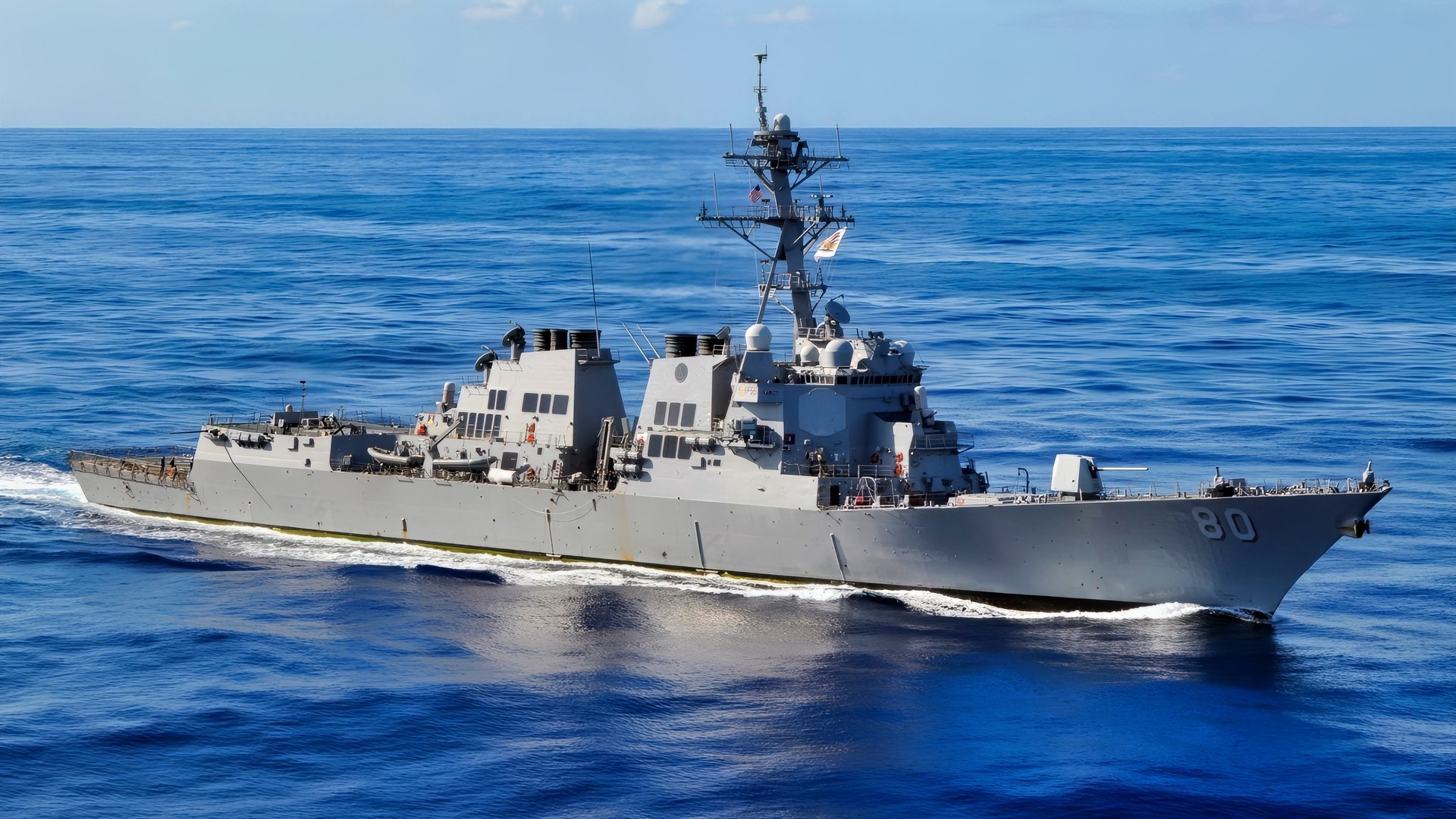
ATLANTIC OCEAN (Sept. 06, 2008) – The guided-missile destroyer USS Roosevelt (DDG 80) steams through the Atlantic Ocean. Roosevelt is deployed as part of the Iwo Jima Expeditionary Strike Group (ESG) in support of maritime security operations in the Navy’s 5th and 6th fleet areas of responsibility. The Iwo Jima ESG is made up of Roosevelt, homeported at Mayport, Fla.; the amphibious assault ship USS Iwo Jima (LHD 7); the amphibious dock landing ship USS San Antonio (LPD 17); the amphibious transport dock ship USS Carter Hall (LSD 50); the guided-missile cruiser USS Vella Gulf (CG 72); the guided-missile destroyer USS Ramage (DDG 61); all homeported at Norfolk, Va.; and the fast attack submarine USS Hartford (SSN 768), homeported at Groton, Conn. U.S. Navy photo by Mass Communication Specialist 2nd Class Jason R. Zalasky (Released)
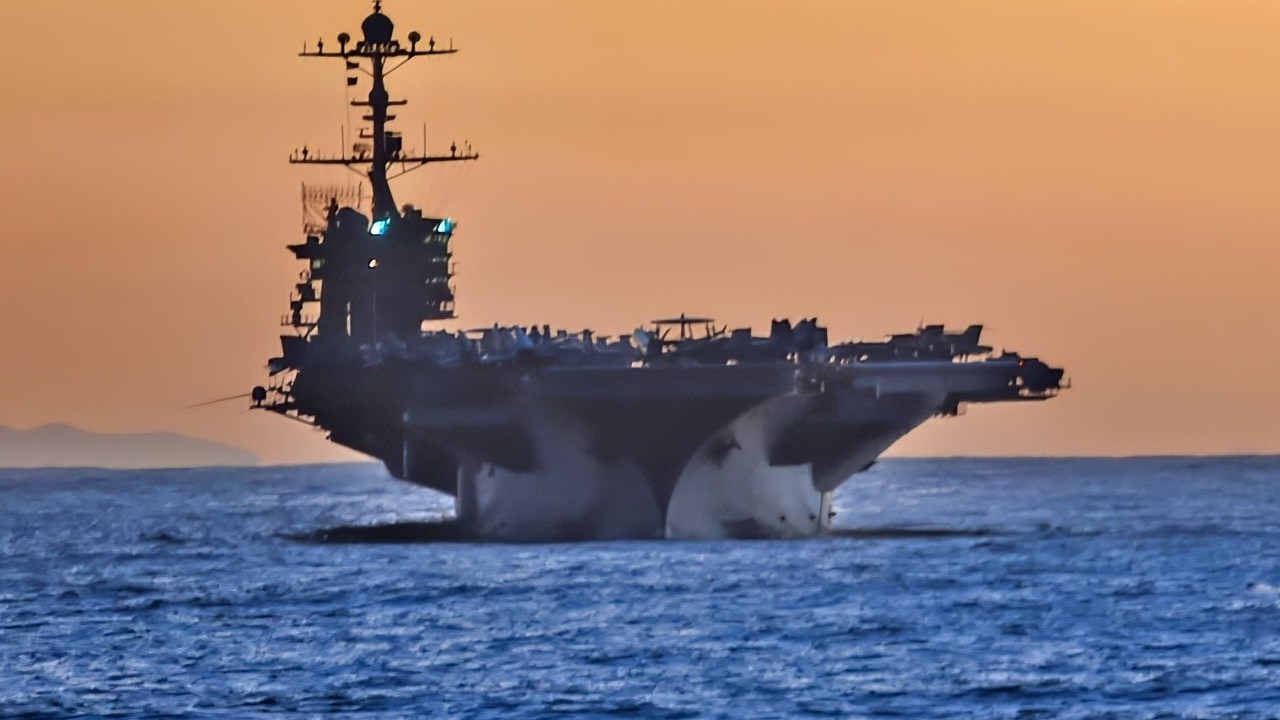
151111-N-KM939-021 PACIFIC OCEAN (Nov. 11, 2015) – USS John C. Stennis (CVN 74) travels behind the guided-missile destroyer USS Stockdale (DDG 106) during a Missile Exercise (MSLEX). Sailors from the John C. Stennis Strike Group are participating in a sustainment training exercise (SUSTEX) to prepare for future deployments. (U.S. Navy photo by Mass Communication Specialist 3rd Class David A. Cox/Released)
The missile also reportedly uses a boost-glide flight profile rather than the traditional ballistic arc. After its launch, the weapon climbs into the upper atmosphere before plunging into a hypersonic glide phase engineered to exploit gaps in current enemy missile defense systems.
SCMP reported that the YJ-20’s glide altitude may sit between the effective engagement envelopes of several existing Western interceptor systems, potentially complicating attempts by Aegis-equipped destroyers or carrier escorts to track and destroy the weapon in flight.
The missile’s maneuverability is another concern. During the terminal dive, YJ-20s allegedly perform high-speed lateral movements that are tough to detect, reducing the reaction times of the targeted ships.
Leaked Footage Confirms Fresh Tech
In February, The Aviationist noted that a PLA Navy J-15 carrier fighter had been pictured carrying what appeared to be two YJ-15 anti-ship missiles. The missile was first openly shown off during Beijing’s September military parade last September, and seems designed to offer Chinese carrier aviation a far longer striking reach.
Defense outlet Janes claimed that the YJ-15 could have a range of up to 1,800 kilometers. The missile’s design, including numerous air intakes and a compact body, could indicate it has ramjet or scramjet propulsion to achieve supersonic speeds over long distances.
The Aviationist said the missile is part of a rapidly diversifying Chinese anti-ship arsenal that already includes the YJ-18 cruise missile, the hypersonic YJ-20, and the “carrier killer” DF-21D anti-ship ballistic missile. China is also no longer relying on a single launch platform and is instead developing overlapping maritime strike capabilities across destroyers, submarines, bombers, stealth aircraft, and carrier aviation
PLA Flexes Its Muscles
Pro-PLA accounts allege that a Type 055 destroyer, traveling close to the aircraft carrier Liaoning, launched another YJ-20 missile during drills near Philippine waters, with reports noting that the launch itself remains unverified, though Chinese naval exercises east of Luzon had already been publicly reported.
Beijing is also expanding maritime strike capability into stealth aviation. Earlier this year, USNI News reported that China’s J-20S stealth fighter variant would receive maritime strike capabilities in addition to its air superiority role.
The aircraft could significantly complicate operations for U.S. and allied naval forces operating inside the first island chain stretching from Japan to the Philippines.
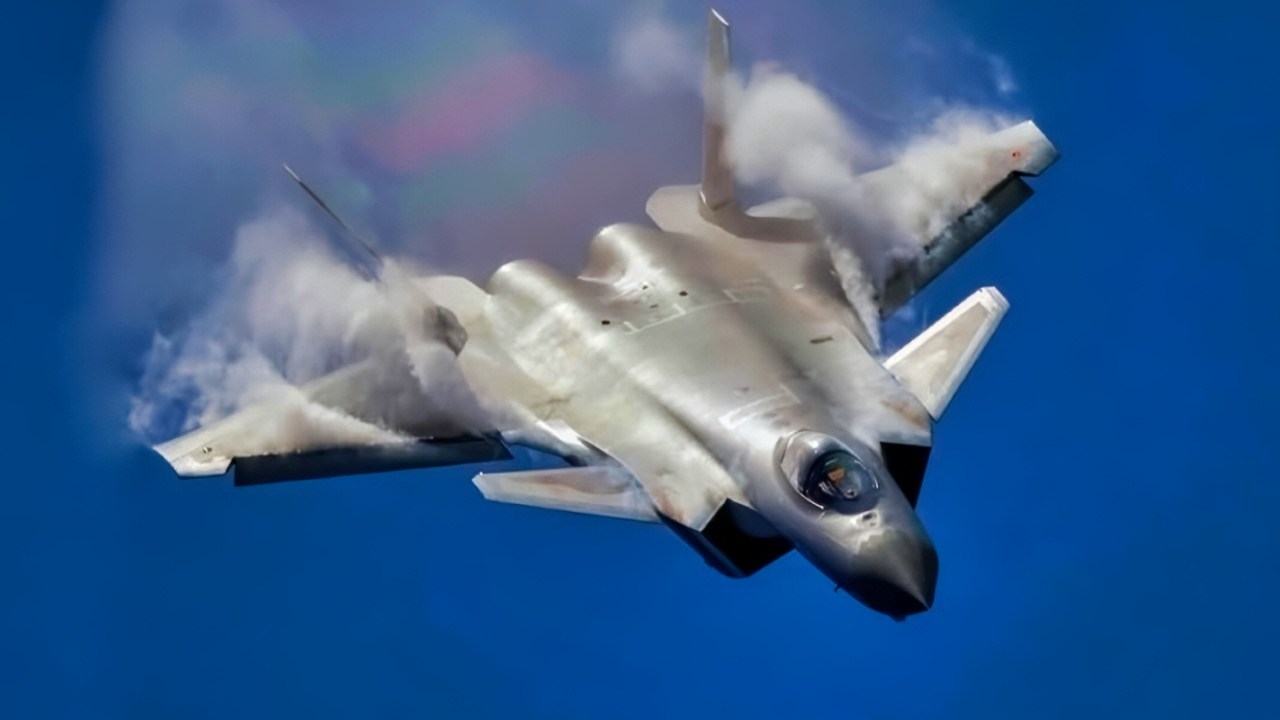
J-20S Fighter Chinese Internet Image.
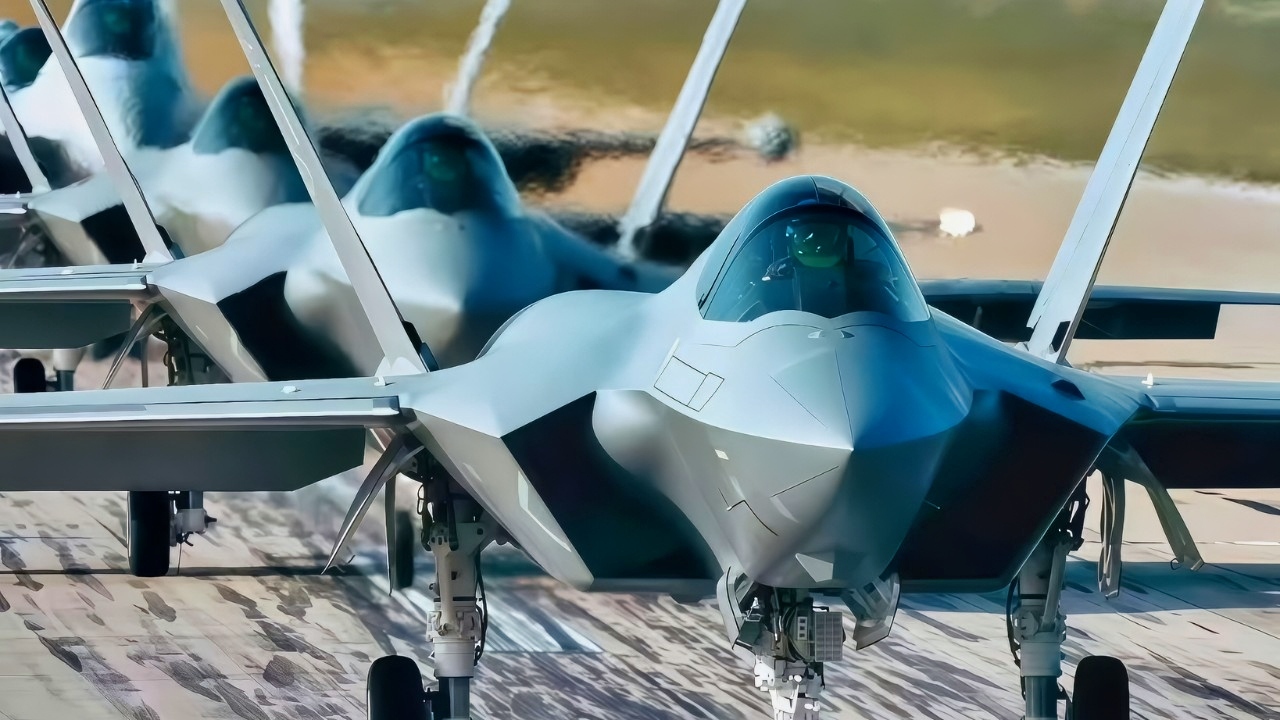
J-35 Fighter In Elephant Walk PLAAF Photo.
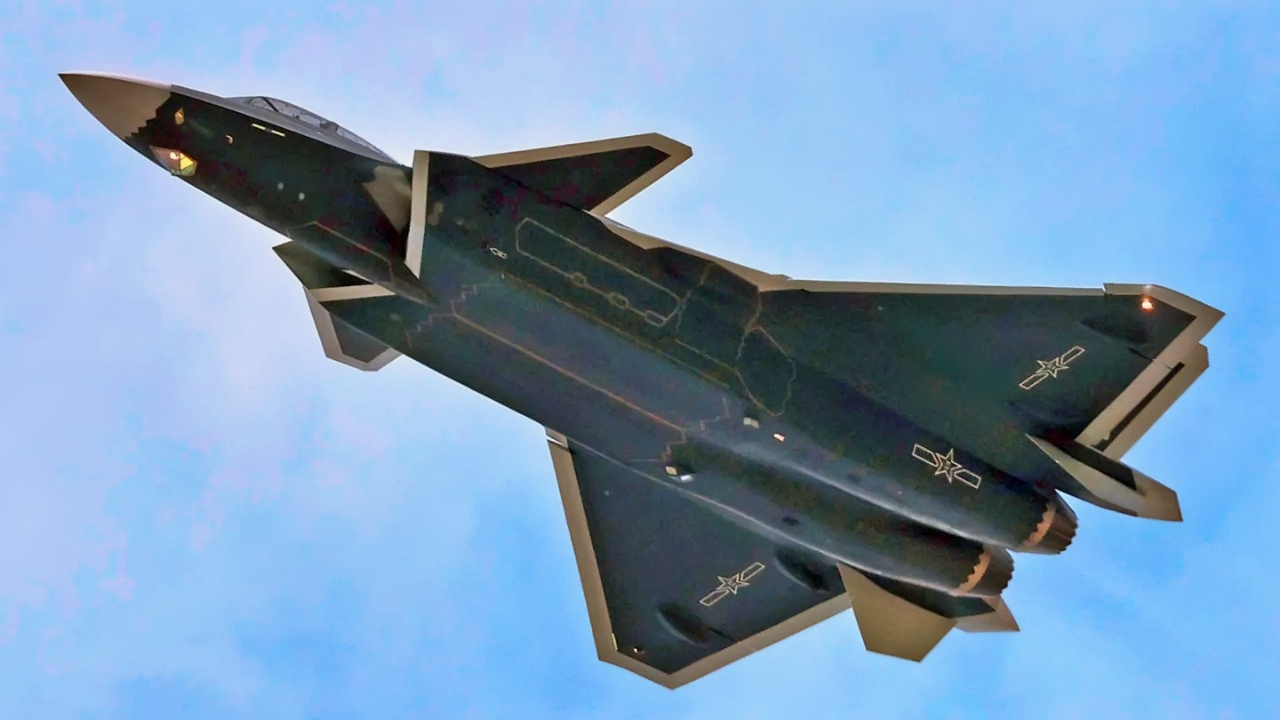
J-20S Fighter from X Screenshot. Image Credit: X.
The pace of development has unsettled military planners across the Indo-Pacific because it reflects more than individual missile breakthroughs. It suggests China is steadily building an integrated system intended to challenge decades of American naval dominance in the region.
At the same time, however, Beijing’s missile expansion is unfolding alongside a sweeping internal military purge. This week, Chinese state media announced suspended death sentences for former defense ministers Li Shangfu and Wei Fenghe, both deeply tied to procurement and missile-related institutions within the PLA.
About the Author: Georgia Gilholy
Georgia Gilholy is a journalist based in the United Kingdom who has been published in Newsweek, The Times of Israel, and The Spectator. Gilholy writes about international politics, culture, and education. You can follow her on X: @llggeorgia.


geh-geh
May 8, 2026 at 5:46 pm
Yj-30, yj-15, df-21d and yj-17, yj-19, etc…etc, are merely representing individual bullets to target the aggressor.
What’s also needed today is a gathering or instant hail of bullets, and this is where systems like the gdf-600 come in.
The gdf-600 consists of a hypersonic vehicle, that upon approaching the aggressor, whips up or whips open a bunch of separate warheads to confound and bamboozle the aggressor’s missile defense.
Just how would the aggressor’s highly vaunted sm-6 missile cope with a bunch of incoming deadly payload. Impossible, man.