

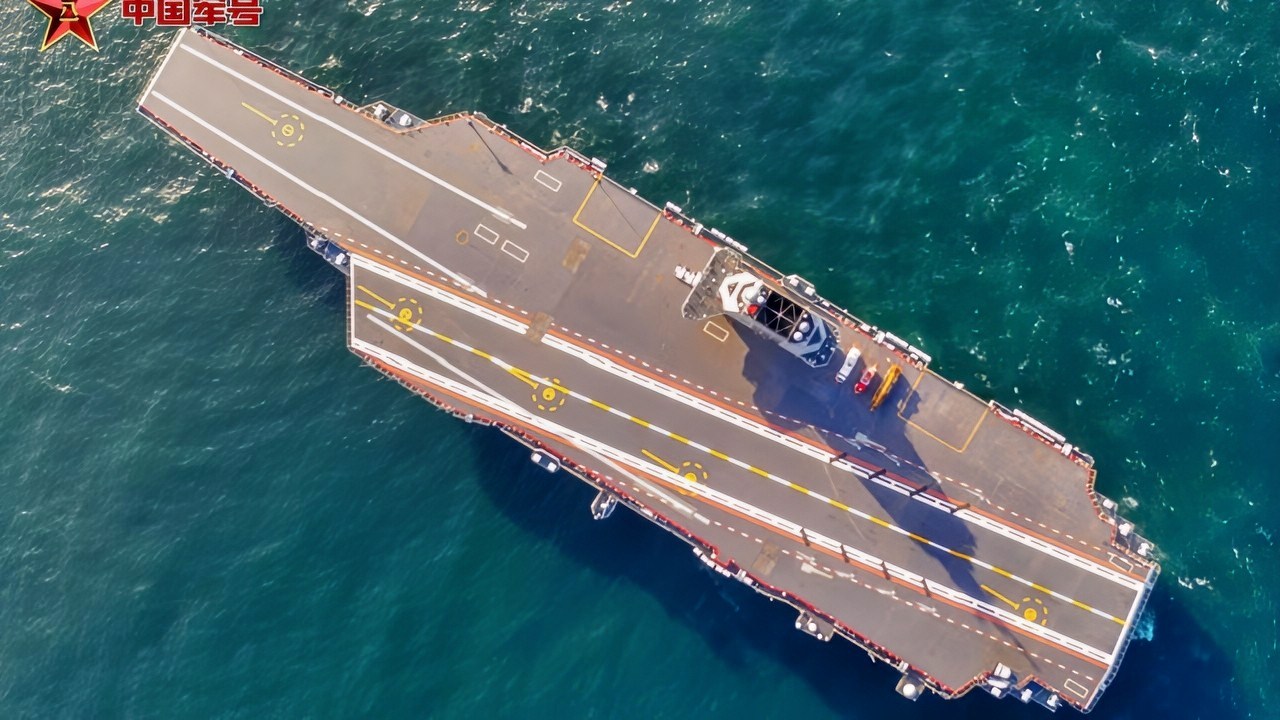
Key Points and Summary – China has commissioned CV-18 Fujian, the PLAN’s first EMALS-equipped carrier, marking a rapid jump from ski-jump decks to catapult aviation.
-Fujian’s 2024–25 trials paved the way for carrier integrations of the J-35B stealth fighter, J-15T, KJ-600 AEW&C, and Z-20J; an electronic-attack J-15DT may follow.
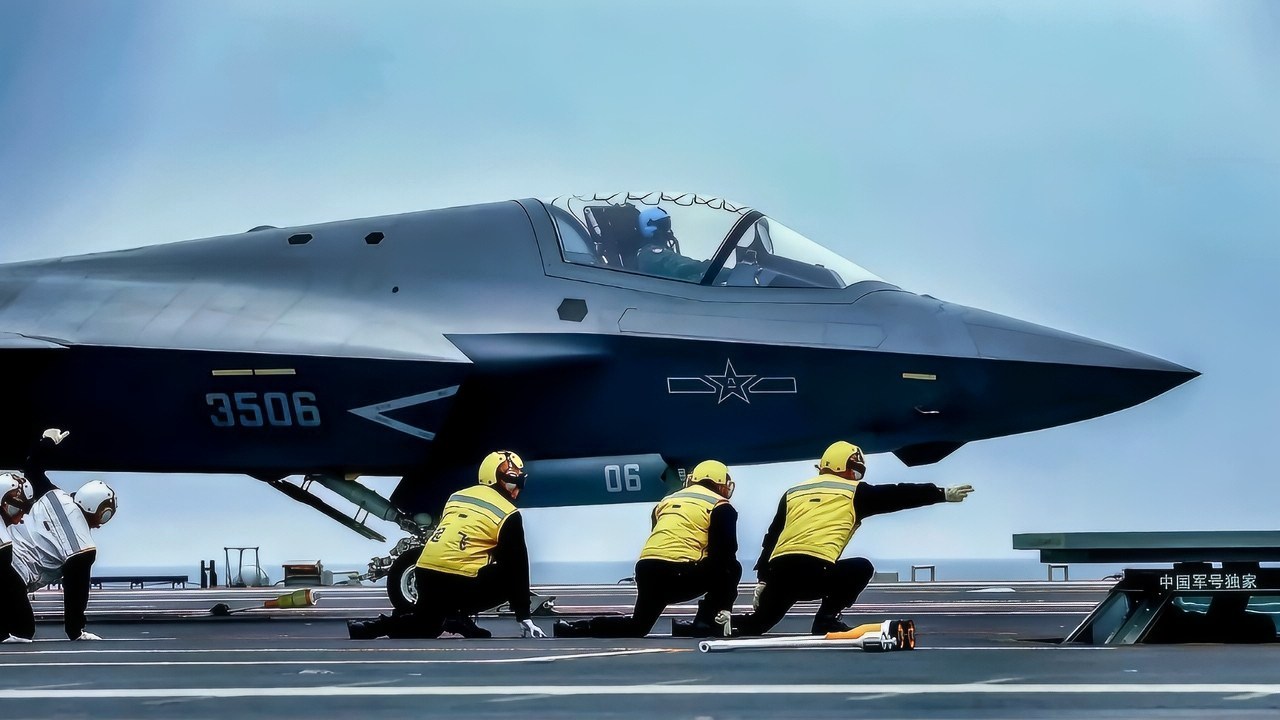
China J-35 Fighter. Image Credit: Chinese Navy/PLAN.
-At roughly 80,000 tons, Fujian is now the world’s third-largest carrier class and is expected to embark 40+ fixed-wing aircraft—far more than Liaoning or Shandong.
-EMALS promises heavier launches, faster sortie rates, and a true blue-water air wing. For U.S. and allied planners, the message is clear: China’s carrier era has decisively arrived.
CV-18 Fujian: China’s PLAN Officially Commissions its First EMALS-Equipped Aircraft Carrier
WARSAW, POLAND – On November 8, China’s People’s Liberation Army Navy (PLAN) held a ceremony to commission its first “flattop” aircraft carrier, the CV-18 Fujian. The official commissioning took place at the naval dockyard in Sanya, Hainan Island, three days earlier, on November 5.
The Chinese Ministry of Defense (MoD) formally announced the event two days later.
Attending the commissioning ceremony for the ship was none other than Xi Jinping, the General Secretary of the Chinese Communist Party and the Chairman of the Central Military Commission (CMC).
He is also the man usually referred to as the “President” of the People’s Republic of China (PRC), although this title is largely ceremonial in nature.
His real power lies as the party leader and the CMC chairman.
The manner in which the communist party leader heralded the launch of the nation’s third aircraft carrier is a textbook demonstration of how the PLA takes a long-term view, gradually building its military power to a point where it will achieve parity—if not a dominant position—vis-à-vis the US and its allies.
One of the PRC’s leading state-run newspapers called the launch of the Fujian a historic moment in the PRC’s century-long aspiration to “become a maritime power.”
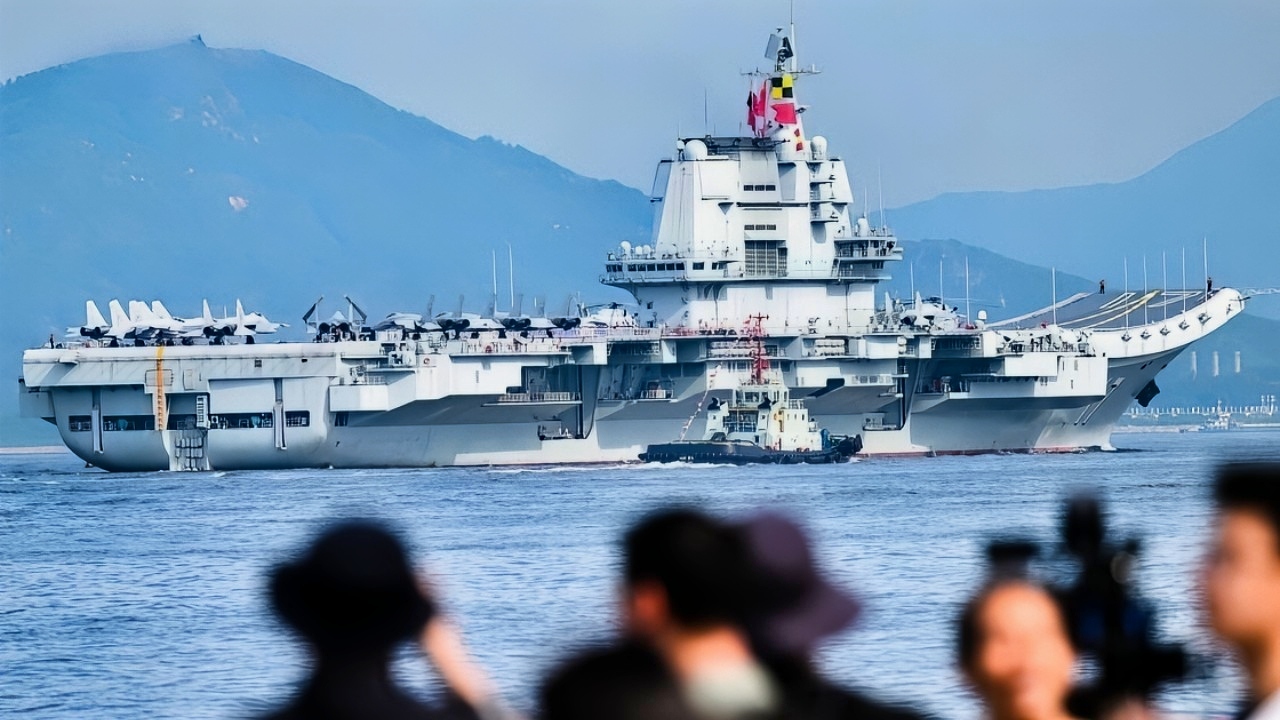
China Aircraft Carrier in Port. Image Credit: Chinese Navy.
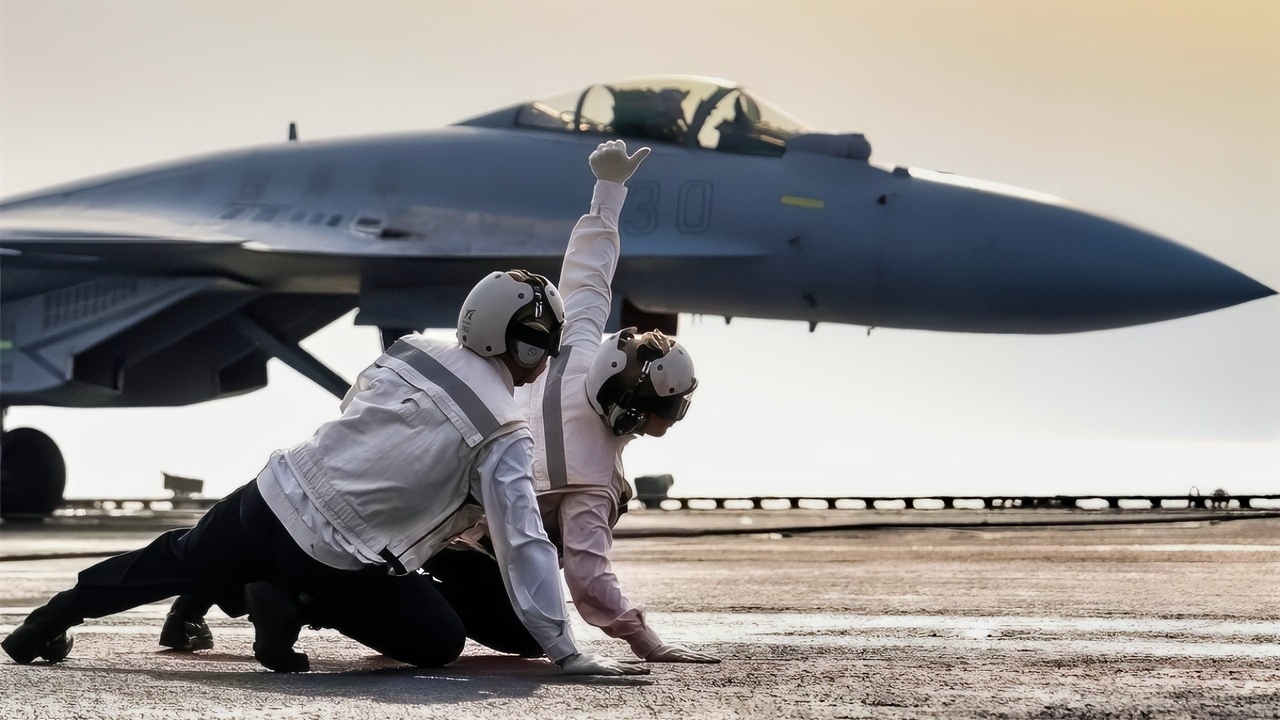
China Aircraft Carrier Operations. Image Credit: Chinese Navy.
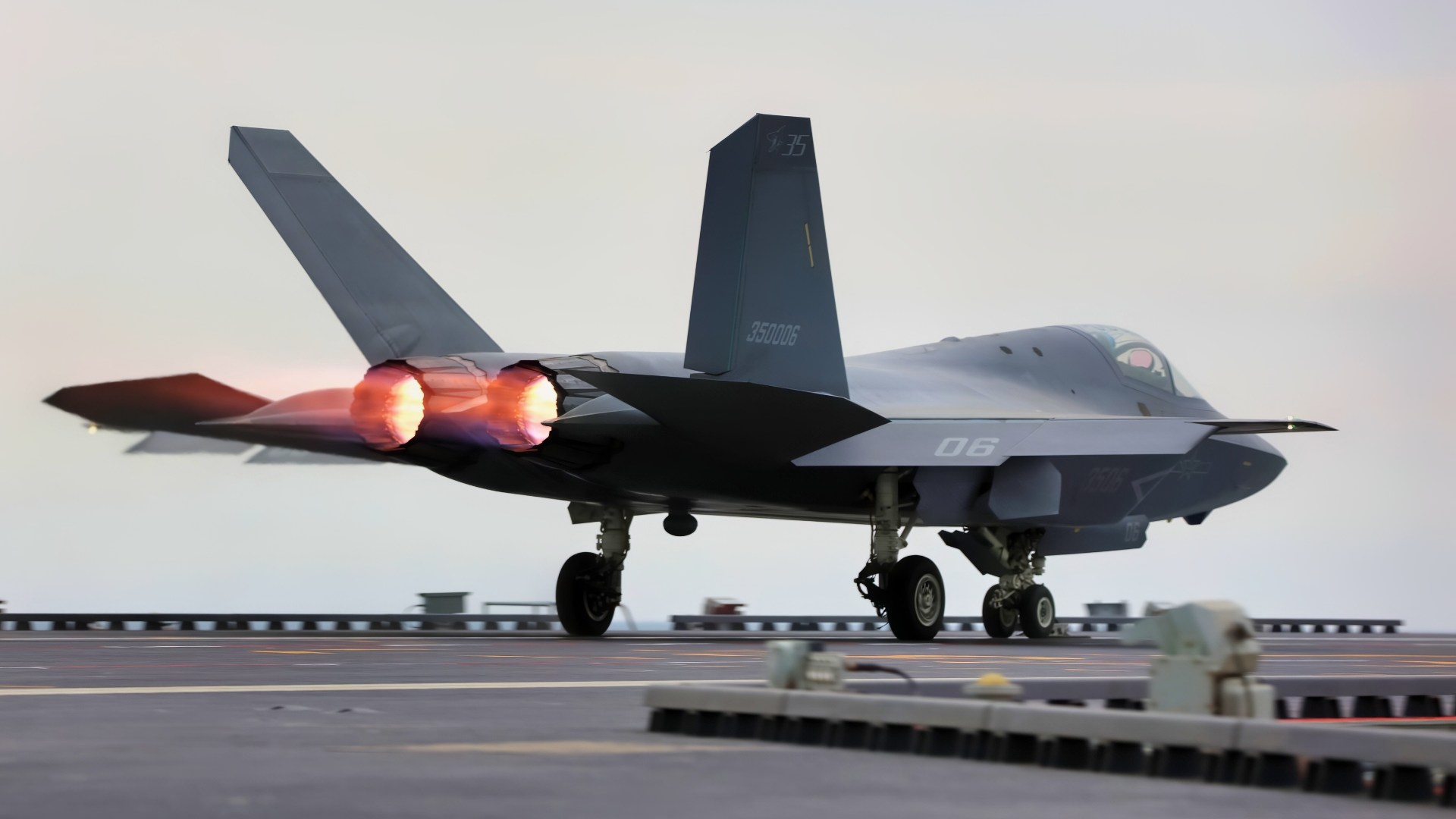
China J-35 Fighter on Aircraft Carrier. Image Credit: Chinese Navy.
Among other accomplishments, it is the first carrier to be equipped with an Electromagnetic Aircraft Launch System (EMALS) catapult.
Not surprisingly, the CV-18 is described as one of the steps that continues the process begun when the PLAN acquired the Kuznetsov-class aircraft carrier CV-16 Liaoning, originally known as the Varyag when it was built during the Soviet era at the Nikolayev shipyards in Ukraine.
A New Era in PLAN Aircraft Carrier Aviation
The acquisition of the first carrier, the Liaoning, is called the journey of “from being nothing to something.”
The construction of the CV-17 Shandong, which was a reverse-engineered and improved copy of the CV-16, is called the journey of “from being transformed to being domestically built,” and the Fujian now symbolizes the “from ski-jump to catapult” step.
The PRC, according to China’s news outlets, “in just more than a decade, has completed in three major steps the journey of the aircraft carrier that took Western navies over a century to achieve.” The implications of this achievement are both impressive and “should be a five-alarm signal to the US and other allied military planners,” say naval power analysts who spoke to National Security Journal.
The CV-18 was officially laid down in 2016 and then launched in 2022. Since May 2024, it has conducted nine or more sea trials.
The EMALS catapult is the most significant aspect of its design, as it enables this carrier to launch a significantly longer list of new-design naval aircraft. These include the Xi’an KJ-600 “Sea Plate” airborne early warning and control (AEW&C) platform, which is functionally equivalent to the US Navy’s E-2C Hawkeye.
US and UK defense media have reported that during the commissioning ceremony, four types of aircraft were parked in a static display on the flight deck of the vessel.
These included the 5th-generation Shenyang J-35B naval fighter, the Shenyang J-15T 4th-generation fighter (a reverse-engineered copy of the Russian-made Sukhoi Su-33), the KJ-600, and the Hongdu Z-20J medium multirole naval helicopter.
Size (And Capacity) Matters
The J-35B, the J-15T, and the KJ-600 all conducted maiden flight operations aboard the Fujian earlier this year, before its commissioning.
The new Chinese carrier will officially operate a fleet of approximately 40 or more fixed-wing aircraft, as well as helicopters. In comparison, the newest US carrier, the CVN-78 Gerald R. Ford, will be able to carry 76 or slightly more aircraft.
Comparing the actual size of the different PLAN carriers, one should recall that the US Navy’s (USN) Kitty Hawk-class fleet carriers, which entered service in the 1960s and were decommissioned in the late 2000s, displaced approximately 83,000 tons fully loaded. The CV-16 and CV-17 are in the 60,000-ton range.
The Fujian/Type 003 displacement is likely to be similar to that of the US Kitty Hawk-class, in the 80,000-ton range. Displaying all four types of aircraft at the commissioning indicates that Fujian’s air wing will be composed of these four platforms.
It is also possible that there will be a J-15DT electronic warfare (EW) fighter, which would be the PLAN’s answer to the US Navy’s EA-18G Growler.
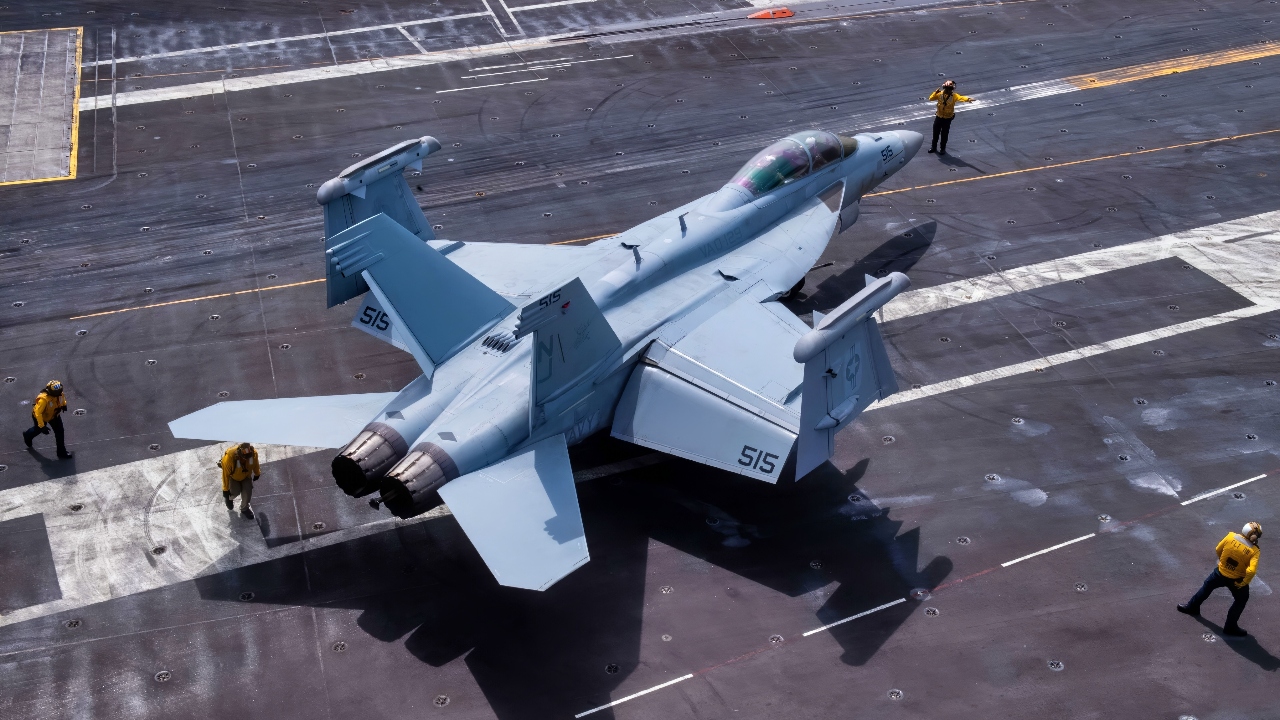
PACIFIC OCEAN (Aug. 11, 2025) – U.S. Navy Sailors direct an E/A-18G Growler, assigned to the “Vikings” of Electronic Attack Squadron (VAQ) 129, on the flight deck of the Nimitz-class aircraft carrier USS Theodore Roosevelt (CVN 71), Aug. 11, 2025. Theodore Roosevelt, flagship of Carrier Strike Group (CSG) 9, is underway conducting exercises to bolster strike group readiness and capability in the U.S. 3rd Fleet area of operations. (U.S. Navy photo by Mass Communication Specialist Seaman Apprentice Cesar Nungaray)
The Fujian is officially now the third-largest aircraft carrier class in service anywhere in the world. Only the 100,000+ ton USN Nimitz– and Ford-class flattops are larger.
The Fujian also exceeds the tonnage of the next largest carrier, the UK’s Queen Elizabeth class, which displaces approximately 70,000 tonnes.
About the Author: Reuben F. Johnson
Reuben F. Johnson has thirty-six years of experience analyzing and reporting on foreign weapons systems, defense technologies, and international arms export policy. Johnson is the Director of the Asia Research Centre at the Casimir Pulaski Foundation. He is also a survivor of the Russian invasion of Ukraine in February 2022. He worked for years in the American defense industry as a foreign technology analyst and later as a consultant for the U.S. Department of Defense, the Departments of the Navy and Air Force, and the governments of the United Kingdom and Australia. In 2022-2023, he won two awards in a row for his defense reporting. He holds a bachelor’s degree from DePauw University and a master’s degree from Miami University in Ohio, specializing in Soviet and Russian studies. He lives in Warsaw.
More Military
Europe’s New 6th Generation GCAP Stealth Fighter Looks Unaffordable
49 ‘New’ M1A1 Abrams Tanks Were Sent to Ukraine by Australia and America Doesn’t Approve
The U.S. Marine Corps Is Facing a Tough Drone Reality
‘300 Percent More Lethal’: The U.S. Army Is Putting China and Russia on Notice


