

President Donald J. Trump declared the war with Iran finished on Sunday evening, posting on Truth Social that “The Deal with the Islamic Republic of Iran is now complete” and authorizing the toll-free reopening of the Strait of Hormuz and the immediate removal of the United States naval blockade. Pakistan’s Prime Minister Shehbaz Sharif, the lead mediator, announced minutes earlier that the deal had been reached, with both sides declaring an end to military operations on all fronts.
And this time, unlike every previous false start in this war, Iran responded — and confirmed it. Well, their interpretation of it, at least.
Well, sort of. This gets a little complicated, so stick with me.
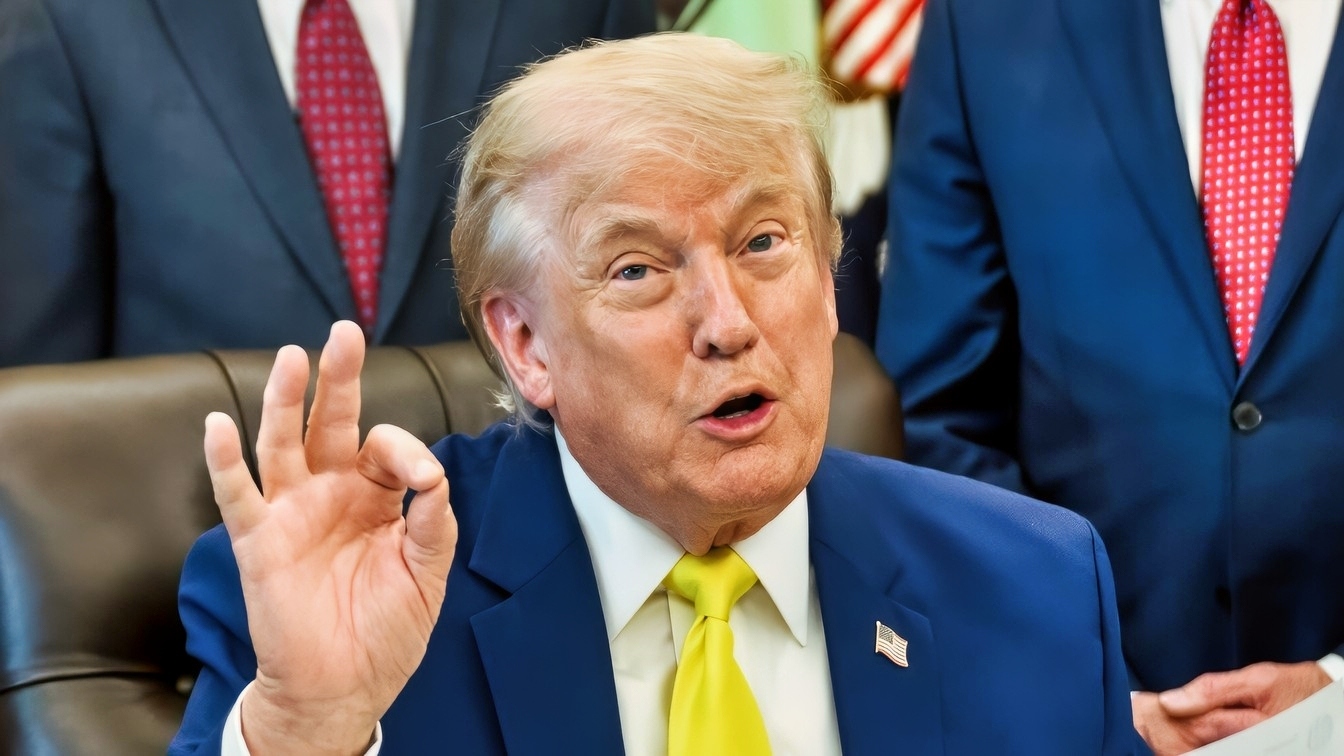
President Donald J. Trump, joined by Secretary of Energy Chris Wright, Secretary of the Interior Doug Burgum, EPA Administrator Lee Zeldin and others, makes an announcement on coal, Thursday, June 4, 2026, in the Oval Office. (Official White House Photo by Molly Riley)
The two sides are describing the same document but calling it two different things. Trump calls it a completed deal. Iran calls it a ceasefire that opens a 60-day period of negotiations.
Both are accurate to a certain extent, and the gap between the words is the gap between what each side believes it got.
What is real and takes effect now is the part that matters most tonight: the shooting between the United States and Iran is meant to stop, the blockade lifts, and the waterway that carries roughly a fifth of the world’s oil reopens (well, more to come on that).
At least, that’s what it looks like.
That is a long-term pause in the most dangerous war of the year. It is a genuine first step. It is also a long way from a finished peace.
And of course, it could all fall apart in hours.
The Trump Version: A Ceasefire That Sets Up Talks, Not A Final Deal
What Trump is calling “complete” is, by his own administration’s description, a framework rather than a settlement.
A senior Trump official, days ago, characterized it to Time magazine as a five-point, performance-based framework under which Iran receives economic benefits only after meeting specific obligations.
The structure reported more recently across mediators is a ceasefire plus a process: Iran immediately opens Hormuz while the United States lifts its blockade in parallel, Washington releases roughly $25 billion in frozen Iranian assets and waives oil sanctions, Iran agrees to neither build nor buy nuclear weapons and to halt new enrichment, and a final agreement is then negotiated over the following 60 days.
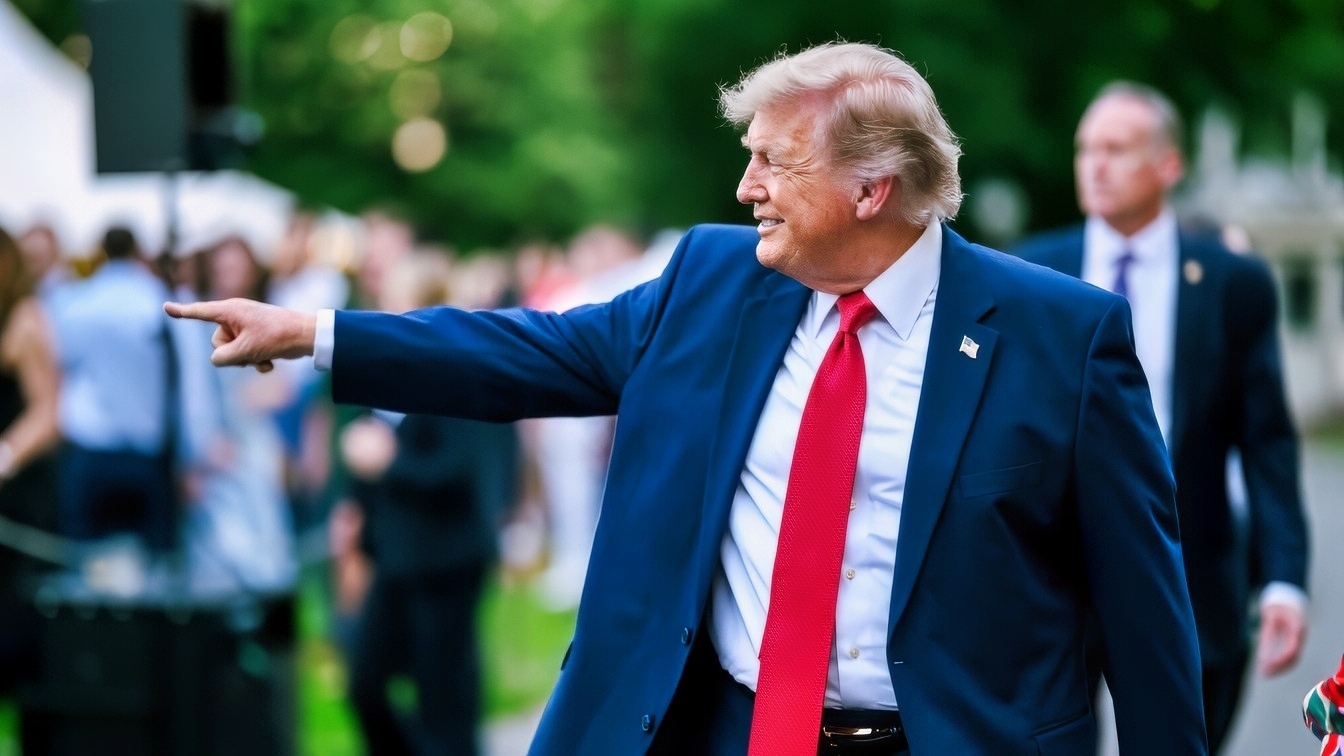
President Donald J. Trump and First Lady Melania Trump work the rope line at the Congressional Picnic on the South Lawn, Tuesday, May 19, 2026. (Official White House Photo by Daniel Torok)
That 60-day window is where the war actually ends, or does not. The hardest questions — the fate of Iran’s stockpile of highly enriched uranium, the mechanism for diluting it, the permanent status of sanctions, the limits on Iran’s missiles and its support for regional proxies — are not settled by this framework.
They are the agenda for talks that have not started. An electronic signing is expected this week, and an official ceremony is set for Friday, June 19, in Switzerland, but that ceremony opens negotiations over those issues rather than closing them.
Iran Has Responded — And It Calls This A Ceasefire, Not A Surrender
The confirmation that changes the picture came from Tehran itself.
Iran’s Deputy Foreign Minister Kazem Gharibabadi confirmed a deal had been reached and said two things take effect immediately: a permanent end to the war on all fronts, including Lebanon, and the lifting of the U.S. naval blockade, with Iran’s broader commitments beginning Friday. At least, as of now, I am not seeing any Iranian talk on the Strait of Hormuz. So, let’s hope Trump has this detail right and Tehran is silent on that for domestic audiences back home.
He confirmed the 60-day negotiation for a final deal and made Iran’s terms explicit: Tehran enters the next phase only after verifying that Washington has implemented its own commitments — ending hostilities, lifting the blockade, releasing the assets — and will take its own measures if those commitments are broken.
Iran is accepting the pause while claiming it as a victory, and the framing is pointed. Gharibabadi credited the agreement not only to diplomacy but also to what he called Iran’s military achievements, and, per the Tasnim news agency, an outlet affiliated with the Revolutionary Guard, the memorandum does not signify trust in the enemy and was drafted amid continued distrust.
The full text, Tehran says, will be published after Friday’s ceremony. This is a government agreeing to stop fighting, refusing to call it surrender, and keeping the option to walk if the other side fails to deliver.
A Real Pause, And A Long Way From A Real Peace
What is settled tonight is narrow and consequential, and it is good, if it holds, and both sides have the same understanding of the terms. The guns between the United States and Iran fall silent, the blockade ends, and Hormuz reopens (at least, according to Trump) — a development the oil markets will treat as a major de-escalation after more than three months of war and a closed strait. A long-term ceasefire is a real achievement and the necessary first step toward ending the conflict.
What is not settled is the war’s actual cause. The nuclear program, the sanctions, the missiles — the issues the war was fought over — are the work of the next 60 days, and Iran holds the verification card while framing the whole arrangement as a pause built on distrust. The fragility is already visible: Israel, which is not a party to the deal, struck Hezbollah in Beirut hours before the announcement, Iran called Lebanon a red line, and Trump himself said the strike should not have happened. The ceasefire’s Lebanon clause is being tested before the ink is dry.
The war has stopped, the strait is open (we think?), and the hardest part — what happens to Iran’s nuclear program — is the negotiation that begins Friday. That is real progress, and it is a long way from a finished peace.
A good first step is still a first step.
About the Author: Harry J. Kazianis
Harry J. Kazianis (@Grecianformula) was the former Senior Director of National Security Affairs at the Center for the National Interest (CFTNI), a foreign policy think tank founded by Richard Nixon based in Washington, DC. Harry has over a decade of experience in think tanks and national security publishing. His ideas have been published in the NY Times, The Washington Post, The Wall Street Journal, CNN, and many other outlets worldwide. He has held positions at CSIS, the Heritage Foundation, the University of Nottingham, and several other institutions related to national security research and studies. He is the former Executive Editor of the National Interest and the Diplomat. He holds a Master’s degree focusing on international affairs from Harvard University.


JingleBells
June 14, 2026 at 8:10 pm
US president donald trump’s ‘deal’ with iran could just possibly work out, if, his closest advisers, like kushner and witkoff stress on the need to solve the palestinian problem.
That problem must be solved now. Today.
The palestinian problem is the great lasting handiwork of the evilly evil brit empire.
How to solve the problem.
By getting and setting half of cyprus, or half of jordan, to become a (temporary) palestinian state, while negotiators are given time, up to the arrival of judgement day if necessary, to solve all the final issues.
Cyprus and palestine, along with jordan were controlled by the british, for decades, for london’s political profit.
Thus, the problems today in cyprus, palestine and jordan.
pagar
June 15, 2026 at 3:29 am
President’s deal with iran is expected to be officially signed in switzerland on june 19 2026.
After that date, Everybody must gather together and demand the united kingdom take responsibility for the palestinian mess that has been with the world since 1948.
Countries that have supplied weapons, weapon systems and ammo to Israel and the kyiv regime must also pay for the establishment of an independent palestinian homeland.
The HELL, big big HELL with the UK fascists and kyiv nazis. Hell to them all.
Dr. Hujjatullah M.H.Babu Sahib
June 15, 2026 at 4:15 am
Kudos to the persistence of the mediators involved. This helped bring some relief to a region which has seen protracted tensions principally at least in three fronts by pushing ceasefire if not also peace to the front office and reluctantly consigning hostilities if not also battles to the back burner where the ongoing broader geopolitics is kept simmering. Meanwhile, the world can be forgiven for staying optimistic on a future resolution. Genuine long term peace would require deep trust carefully rebuilt on mutual credibility, which at present remains elusive ! What is amazing is the U.S. and I.R. Iran have been able to transact, albeit via intermediaries,by sidelining Israel, the lame leviathan of the Levant !