

Key Points and Summary – The U.S. Air Force is reviving the B-1B Lancer with Load Adaptable Modular external pylons and refurbished jets pulled from storage.
-Six stations (5,000–7,500 lb each) could push loads to as many as 36 JASSM/LRASM-class missiles per sortie while opening room for hypersonic weapons testing like ARRW and HACM.
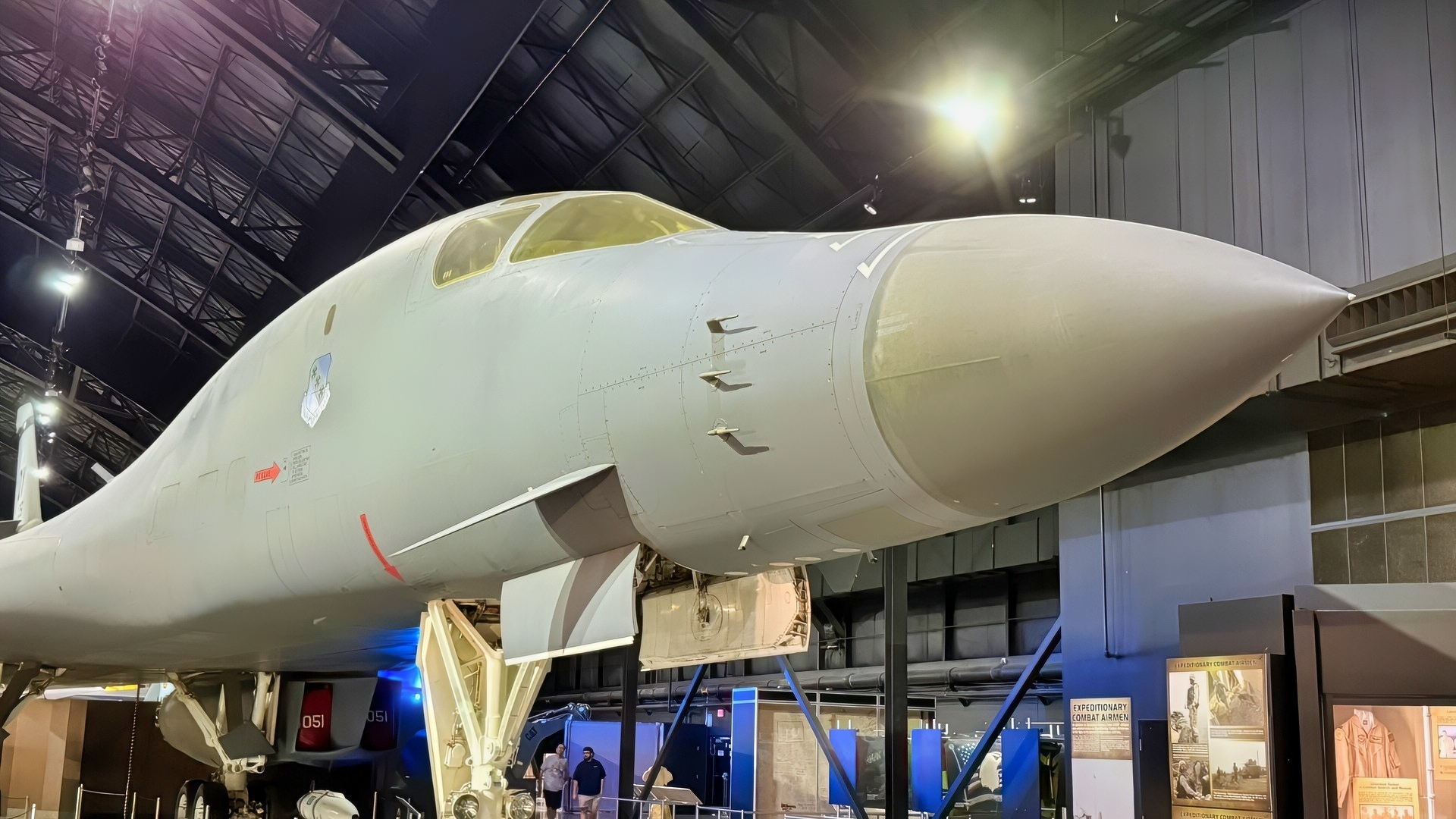
B-1B Lancer 2025 National Security Journal. Image Credit: Harry J. Kazianis/NSJ.
-With only 42 active B-1Bs and the B-21 Raider years from mass fielding, the Lancer remains a critical bridge for long-range conventional strike and Bomber Task Force deterrence.
-Its defining edge—75,000 lb payload, range, and speed—keeps the B-1B relevant for Pacific scenarios that demand massed standoff firepower.
The Air Force Is Breathing New Life Into the B-1B Lancer
The U.S. Air Force is moving ahead with plans to fit its B-1B Lancer bombers with new external pylons in a major upgrade that will substantially increase the aircraft’s already formidable payload.
The news from earlier this year, combined with recent reports that Lancers are being pulled from the Arizona “boneyard” to be repaired and redeployed, reveals the extent of ongoing upgrades designed to utilize this historic bomber as part of a modern, advanced air fleet.
The initiative, called the External Heavy-Stores Pylon program, has been allocated more than $50 million in the Fiscal Year 2026 budget and will enable the Lancer to carry heavier and more diverse standoff weapons – including future hypersonic systems.
The B-1B was first introduced in the 1980s as a nuclear bomber, but following arms control agreements in the 1990s, it was stripped of its nuclear mission and redeployed as a conventional strike aircraft.
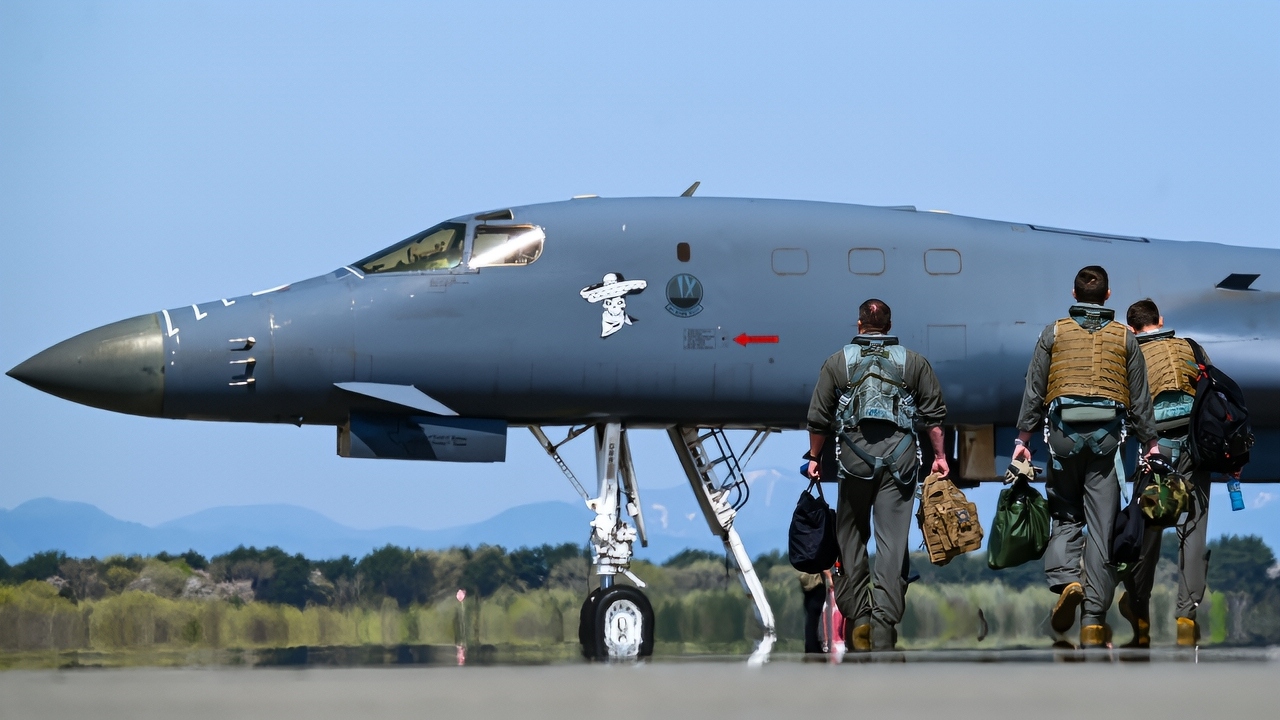
9th Expeditionary Bomb Squadron aircrew step out to the B-1B Lancer during Bomber Task Force 25-2 at Misawa Air Base, Japan, May 9, 2025. BTF 25-2 demonstrates Allied strength by forging strong alliances, showcasing our resolve, and deterring aggression, while also supporting global stability and security and strengthening military capabilities. (U.S. Air Force photo by Airman 1st Class Mattison Cole)
Today, 42 B-1Bs remain in active service, down from the original fleet of 100.
External pylons are not new to the design, however. The Lancer was originally built with six external hardpoints, intended for nuclear-armed cruise missiles. But those were deactivated under post-Cold War arms treaties.
Only one has been in regular use in recent years, carrying the Sniper Advanced Targeting Pod. The new Load Adaptable Modular (LAM) pylons, developed by Boeing, will reopen those stations and allow the bomber to carry loads of up to 5,000 pounds per pylon – potentially 7,500 pounds with further testing.
The upgrades mean each aircraft could mount as many as six pylons, carrying either two 2,000-pound class munitions or a single large hypersonic weapon each.
Combined with the B-1’s 24-missile internal bay capacity, the pylons could raise the bomber’s total load of standoff cruise missiles such as the AGM-158 Joint Air-to-Surface Standoff Missile (JASSM) and the AGM-158C Long-Range Anti-Ship Missile (LRASM) to as many as 36 per sortie. In a potential Pacific conflict, where striking power really matters, that firepower represents a significant and important increase for U.S. forces.
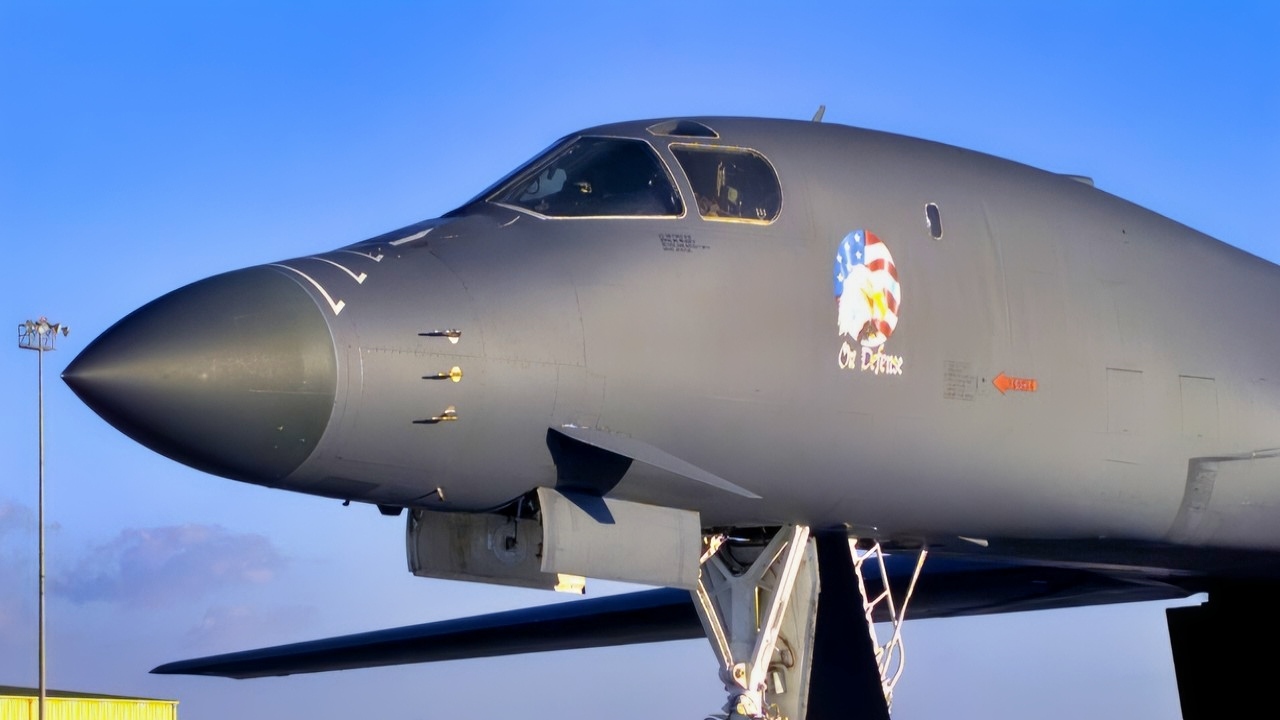
Crew Chief Senior Airman Mike Parks talks through his headset with the crew of a U.S. Air Force B-1B Lancer bomber as they go through the pre-flight checklist at an air base in the Persian Gulf region on Dec. 10, 1998. The Lancer, deployed from Dyess Air Force Base, Texas, is a multi-role, long range, heavy bomber.
(DoD photo by Senior Airman Sean M. White, U.S. Air Force. (Released))
Beyond cruise missiles, though, the pylons could also carry experimental hypersonic systems like the AGM-183A Air-Launched Rapid Response Weapon (ARRW) and the Hypersonic Attack Cruise Missile (HACM), both of which are currently in development.
Boeing has promoted the B-1 as an ideal test platform for these weapons, noting that the B-52 bomber fleet is already saturated with modernization and testing programs.
While the pylon upgrades are certainly welcome for the Air Force, officials have also recognized that this is largely a hedge against possible delays in the B-21 Raider program.
With Raider deliveries not expected in significant numbers until the 2030s, the Lancer will remain a critical bridge for long-range strikes in the meantime.
Why the Lancer Still Matters
The B-1B Lancer remains an indispensable part of the U.S. Air Force’s inventory, even as its age and structural wear have forced the service into making difficult choices.
Designed as a Cold War nuclear penetrator and later adapted for conventional missions, the aircraft has proven to be adaptable in conflicts ranging from Kosovo to Afghanistan.
Its defining strength? Its payload. The B-1B can haul 75,000 pounds of ordnance – nearly double the load of the stealthy B-2 Spirit.
In an era when both capacity and global reach are essential for modern aircraft, that sheer carrying power means the Lancer can still play a role that no other U.S. bomber can fully replicate.
It’s that reality that explains why the Air Force is bringing retired B-1Bs back into the fleet. Structural fatigue, crashes, and fires have all taken a toll on the force, yet Congress requires a minimum of 92 bombers to remain in service.
With only 19 B-2 Spirits available, a B-52 fleet still under modernization, and the B-21 Raider years away from mass production, the Air Force has little choice but to resurrect mothballed Lancers from the Arizona “boneyard.”

A U.S. Air Force B-52 Stratofortress, assigned to the 2nd Bomb Wing, receives fuel from a KC-135 Stratotanker, assigned to the 340th Expeditionary Air Refueling Squadron, during a multi-day Bomber Task Force mission over Southwest Asia, Dec. 10, 2020. The B-52 is a long range bomber with a range of approximately 8,800 miles, enabling rapid support of Bomber Task Force missions or deployments and reinforcing global security and stability.(U.S Air Force photo by Master Sgt. Joey Swafford)
Aircraft such as “Rage” and “Lancelot” have been pulled from storage to replace jets too damaged or expensive to repair.
This ongoing effort to modernize and repair Lancers, though imperfect, ensures squadrons remain at fighting strength until the B-21 arrives in meaningful numbers.
The Lancer’s ongoing revival, however, is about more than just ensuring the Air Force meets the mandated number of bombers required in its fleet at all times.
The Lancer continues to serve in frontline deterrence roles, proving itself as a capable and vital asset for the force.
Bomber Task Force deployments to Europe and the Indo-Pacific routinely feature the B-1B, sending a visible signal to rivals that the United States can deploy conventional firepower across oceans at a moment’s notice.
And new investments, such as the addition of external pylons for expanded weapons carriage, will further extend the platform’s utility, keeping it relevant for missions that demand long-range and heavy payloads.
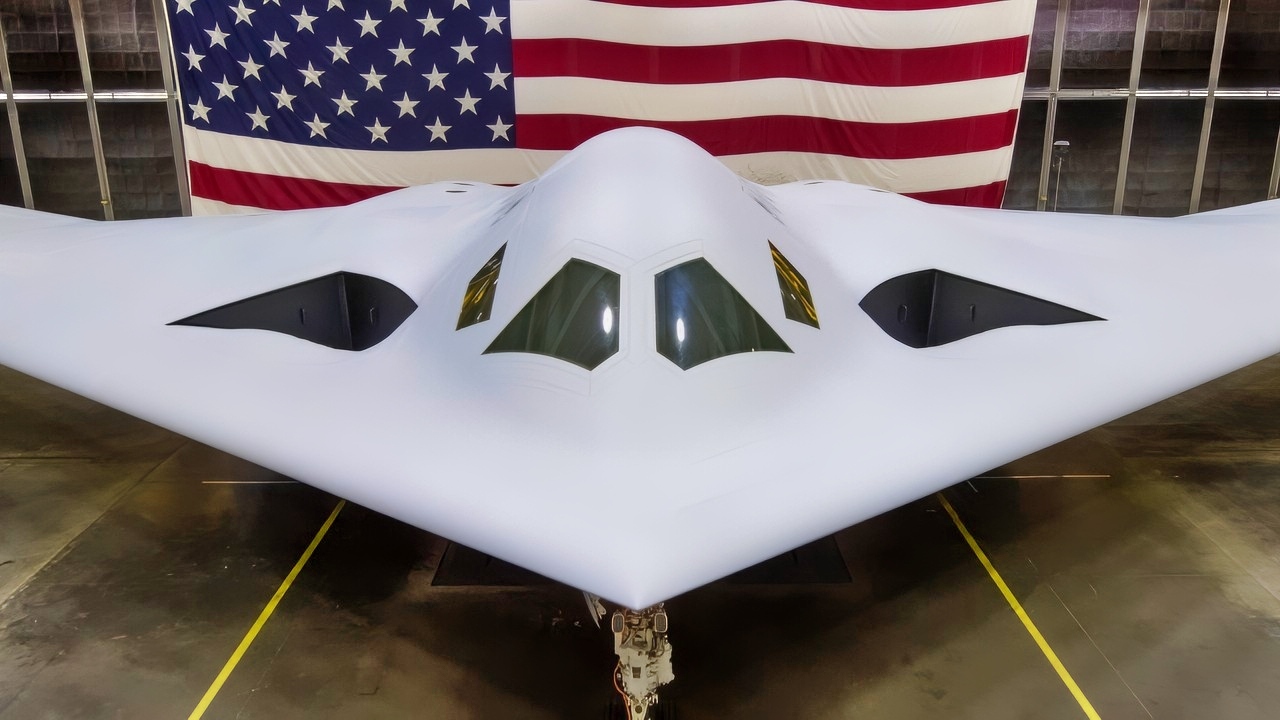
The B-21 Raider was unveiled to the public at a ceremony Dec. 2, 2022 in Palmdale, Calif. The B-21 will provide survivable, long-range, penetrating strike capabilities to deter aggression and strategic attacks against the United States, allies, and partners. (U.S. Air Force photo)
The B-21 Raider Is Coming
Ultimately, though, the B-1B serves as a bridge.
Its best years are behind it, but its size, speed, and versatility guarantee that it will remain a cornerstone of America’s long-range strike capability until the B-21 Raider finally fills the gap.
About the Author:
Jack Buckby is a British author, counter-extremism researcher, and journalist based in New York who writes frequently for National Security Journal. Reporting on the U.K., Europe, and the U.S., he works to analyze and understand left-wing and right-wing radicalization, and reports on Western governments’ approaches to the pressing issues of today. His books and research papers explore these themes and propose pragmatic solutions to our increasingly polarized society. His latest book is The Truth Teller: RFK Jr. and the Case for a Post-Partisan Presidency.
More Military
Mach 2.65 F-111 ‘Aardvark’ Strike Fighter Has a Message for the U.S. Military
Russia’s MiG-29 Fulcrum Fighter Has a Message for NATO
The X-40A Space Plane Has a Message for the U.S. Military
The Mach 6.7 X-15 Space Plane Has a Message for the U.S. Air Force


