

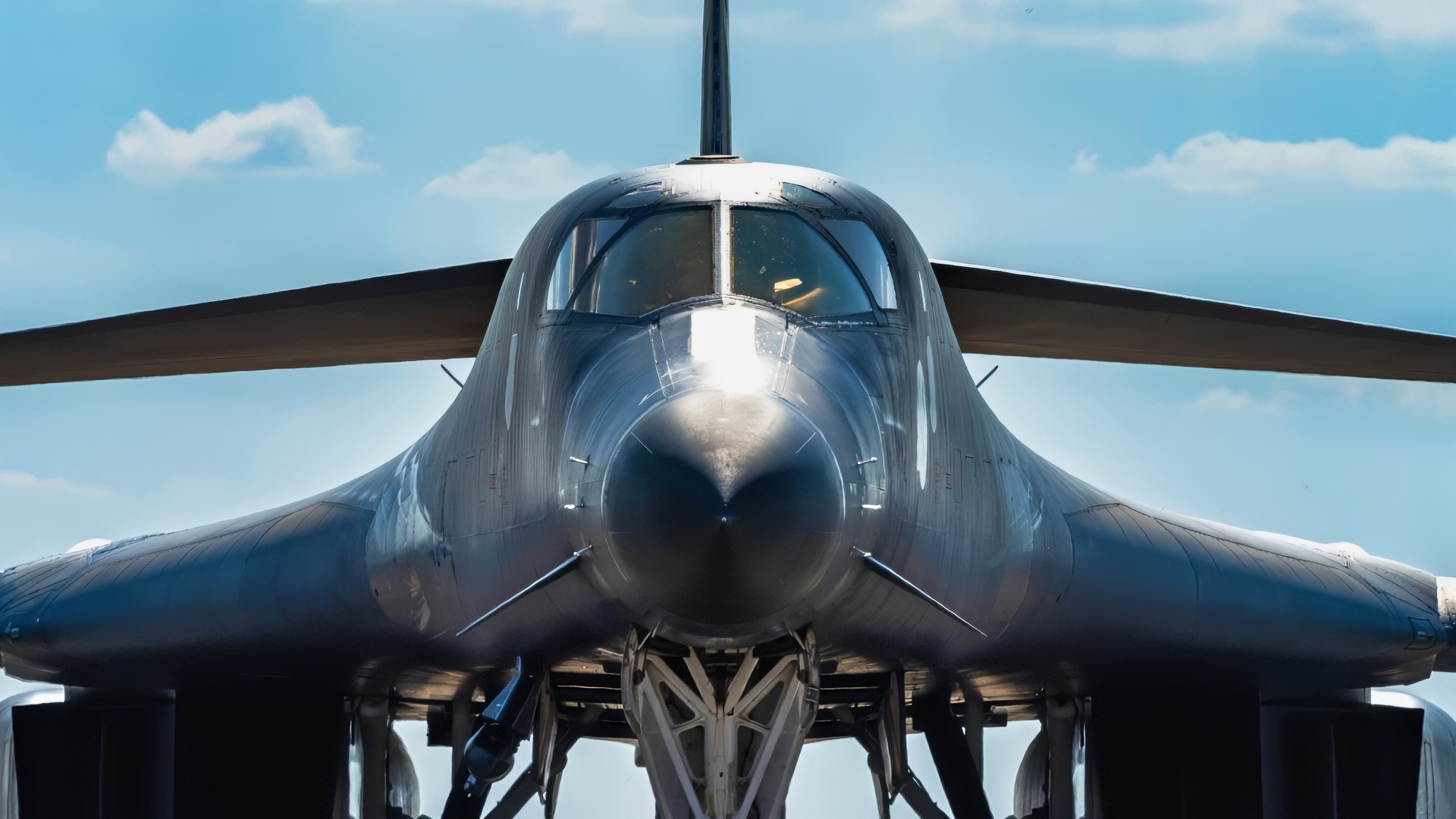
Key Points and Summary – After nearly 40 years of service, the B-1B Lancer is heading for retirement in the 2030s.
-The Air Force cites aging, fatigue-prone airframes and soaring maintenance that’s left mission-capable rates chronically low.
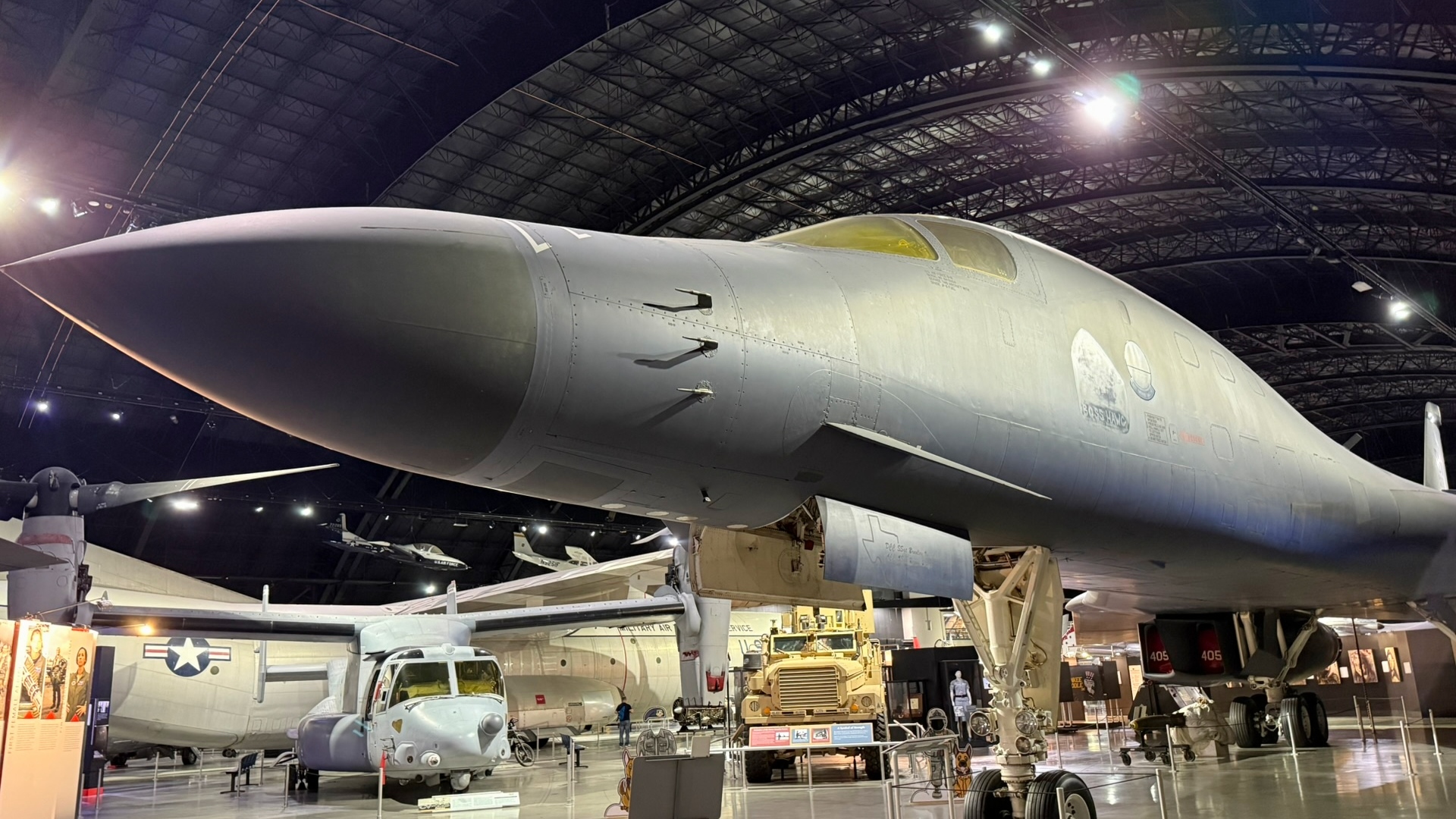
Sideview of B-1B Lancer Bomber. Image Credit: National Security Journal.
-Designed for Cold War nuclear penetration, the non-stealth B-1B struggles in modern, highly contested airspace.
-Enter the B-21 Raider: a stealthy, dual-capable successor with open-architecture upgrades and lower sustainment needs.
-With personnel tight, the USAF can’t fully support both fleets, so resources shift to the Raider. Congress has kept at least 45 B-1Bs flying for now—even reviving stored jets—but the strategic and budget logic points to a deliberate sunset.
The B-1B Lancer Moment Is Over
The B-1B Lancer has served with distinction in the U.S. Air Force for nearly forty years.
It has participated in numerous air campaigns and was a reliable and deadly tool in the U.S. arsenal.
Unfortunately, all good things must eventually come to an end, and the B-1B is now nearing the end of its service life.
Having been in service for so long, the airframes are starting to show their age and are becoming less and less reliable with age.

A U.S. Air Force B-1B Lancer assigned to the 34th Expeditionary Bomb Squadron, Ellsworth Air Force Base, South Dakota, flies over the United States, July 2, 2025. The B-1B is a heavy bomber with up to a 75,000 pound payload. (U.S. Air National Guard photo by Airman Spencer Strubbe)
The bombers are slated to remain in service until the 2030s, when the B-21 Raider is expected to replace them fully.
These are five reasons, according to the Air Force, why the B-1B must finally be retired.
Aging Air Frames
First and foremost is the issue of aging airframes and structural fatigue. The B-1B was originally designed with a relatively short service life, intended primarily for nuclear deterrence during the Cold War. However, the aircraft has remained in service for over four decades, far beyond its intended lifespan.
This extended use has taken a toll on the fleet. Many B-1Bs have flown high-stress missions in harsh environments, including deployments to desert regions that accelerated corrosion and component degradation. The aircraft’s variable-sweep wing system, while innovative, is mechanically complex and prone to failure.
These factors have led to a situation where the B-1B fleet is increasingly unreliable, with frequent breakdowns and limited mission-capable rates.
In some cases, the cost of repairing damaged aircraft has exceeded the cost of restoring mothballed units from storage, as seen in the case of the fire-damaged Lancer that was replaced by a retired aircraft nicknamed “Lancelot.” The structural fatigue and wear on these airframes make sustained operations difficult and costly.
High Cost of Maintenance
With the airframes becoming less and less reliable, upkeeping the bomber is becoming more and more costly.
The B-1B is one of the most maintenance-intensive aircraft in the Air Force inventory. Its upkeep demands a large number of personnel, specialized spare parts, and frequent depot-level repairs. In 2019, reports indicated that over 90 percent of the fleet was non-operational due to maintenance issues.
“Due to the wear and tear placed on the B-1 fleet over the past two decades, maintaining these bombers would cost tens of millions of dollars per aircraft to get back to status quo. And that’s just to fix the problems we know about,” aid Gen. Timothy Ray, commander of Air Force Global Strike Command. The Air Force has acknowledged that retiring the most problem-prone B-1Bs allows it to concentrate resources on keeping the remaining aircraft airworthy until their replacement arrives. This approach reflects a pragmatic decision to prioritize efficiency and reliability over maintaining a whole fleet of aging bombers.
Obsolete for Today’s Wars
A third reason for the B-1B’s retirement is its outdated capabilities in the context of modern threat environments.
While the B-1B was once a cutting-edge platform, it was designed for a Cold War mission profile that no longer aligns with contemporary strategic needs.
Originally built for low-altitude nuclear penetration, the B-1B was later converted to a conventional-only role following arms reduction agreements.
This conversion removed its nuclear capability, limiting its strategic flexibility.
Moreover, the B-1B lacks stealth features, making it vulnerable in contested airspace that is saturated with advanced air defense systems.
Its electronic warfare and sensor suites are outdated compared to newer platforms, reducing its effectiveness in modern multi-domain warfare scenarios. In today’s environment, where survivability and adaptability are paramount, the B-1B’s limitations make it less suitable for high-threat zones and complex missions.
Replaced by the B-21
The emergence of the B-21 Raider is perhaps the most decisive factor in the B-1B’s retirement. The B-21, developed by Northrop Grumman, is a sixth-generation stealth bomber designed to replace both the B-1B and the B-2 Spirit.

A B-2 Spirit stealth bomber assigned to Whiteman Air Force Base takes off from Oscoda, Michigan, Aug. 5, 2025. Maintainers and pilots conducted a flight crew changeover during Exercise Northern Strike, a National Guard Bureau sponsored training event designed to build readiness with joint and partner forces in all domains of warfare. (U.S. Air National Guard photo by Staff Sgt. Whitney Erhart)
It offers superior stealth, range, and payload flexibility, and features an open systems architecture that allows for rapid upgrades to sensors, weapons, and software. Unlike the B-1B, the B-21 is built for both conventional and nuclear missions, restoring the dual-role capability that was lost when the B-1B was converted.
With at least 100 B-21s planned, the Air Force aims to create a more survivable and scalable bomber fleet.
The Raider’s lower radar cross-section and modern sustainment model make it a better fit for future conflicts, where stealth and digital integration are essential. The B-21 represents a leap forward in strategic bombing capability, making the continued operation of the B-1B less justifiable.
Lack of Manpower
As lovely as it would be to fly B-1Bs and B-21s simultaneously, the sad reality is that the Air Force does not have the manpower available to operate and maintain both platforms.
The U.S. military has overall seen a shortage in personnel over the last several years. This has a detrimental effect, forcing the Air Force to downsize in certain areas. One of those areas is, unfortunately, the upkeep and operation of the B-1B.
By retiring the B-1B, the Air Force can reallocate its manpower to work on other, more critical projects, such as the B-21 or other programs.
The Air Force is shifting toward multi-role platforms that can operate across domains, including cyber and space. Maintaining the B-1B fleet is cost-prohibitive, especially when compared to the long-term savings and capabilities offered by the B-21.

B-21 Raider. Image Credit: Creative Commons.
Congress has mandated that at least 45 B-1Bs remain in service until the B-21 is fielded in sufficient numbers, but this is a temporary measure.
The Air Force has even resorted to reviving retired B-1Bs from storage to meet operational requirements, highlighting the fragility of the current fleet and the urgency of transition.
This strategic realignment reflects a desire to streamline operations, reduce costs, and prepare for future threats with more capable and sustainable platforms.
About the Author: Isaac Seitz
Isaac Seitz, a Defense Columnist, graduated from Patrick Henry College’s Strategic Intelligence and National Security program. He has also studied Russian at Middlebury Language Schools and has worked as an intelligence Analyst in the private sector.
More Military
The XM30 ‘Mini-Tank’ Has a Message for the U.S. Army
The B-1B Lancer Bomber: Can It Fire Hypersonic Missiles?
USS Enterprise (CVN-65): Best Aircraft Carrier Ever?
The Kitty Hawk-Class Aircraft Carriers Have A Message for the U.S. Navy


