

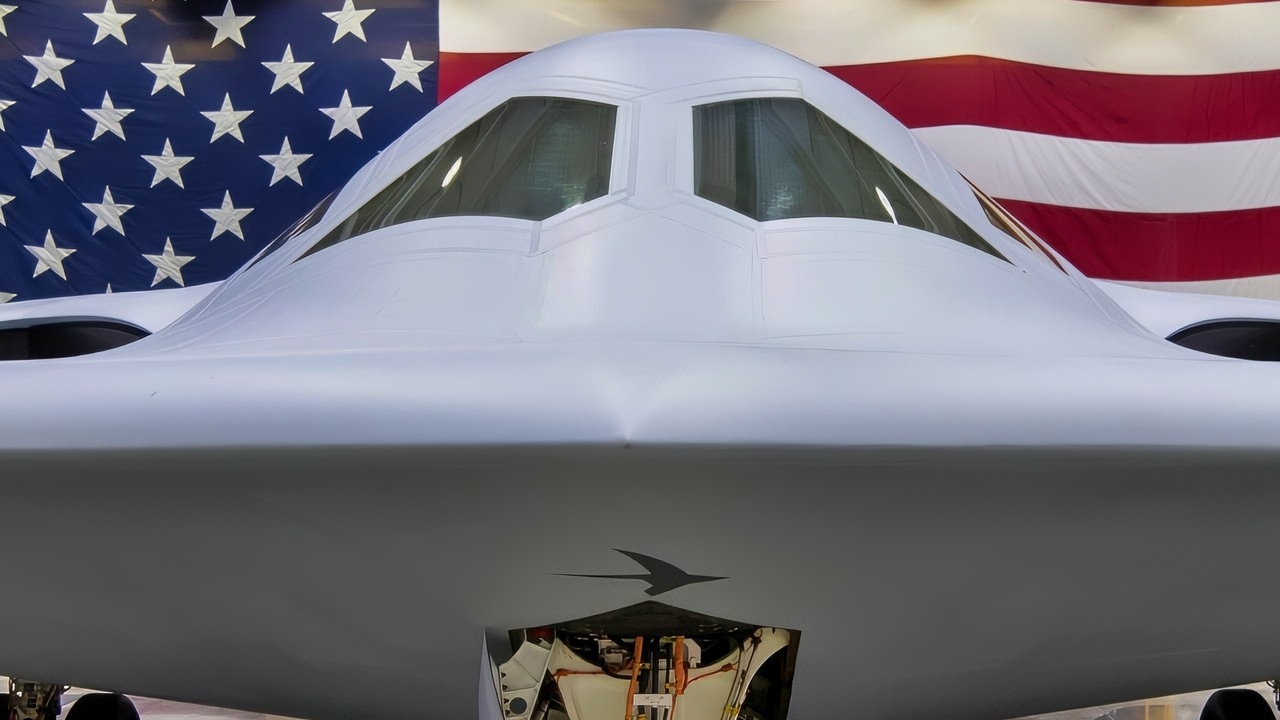
Key Points and Summary – China-linked researchers once simulated a B-21 Raider being shot down by Mach-6 missiles, but analysts question the scenario’s realism and data.
-The debate resurged as a second pre-production B-21 appeared, moving the program toward weapons and mission-systems testing.
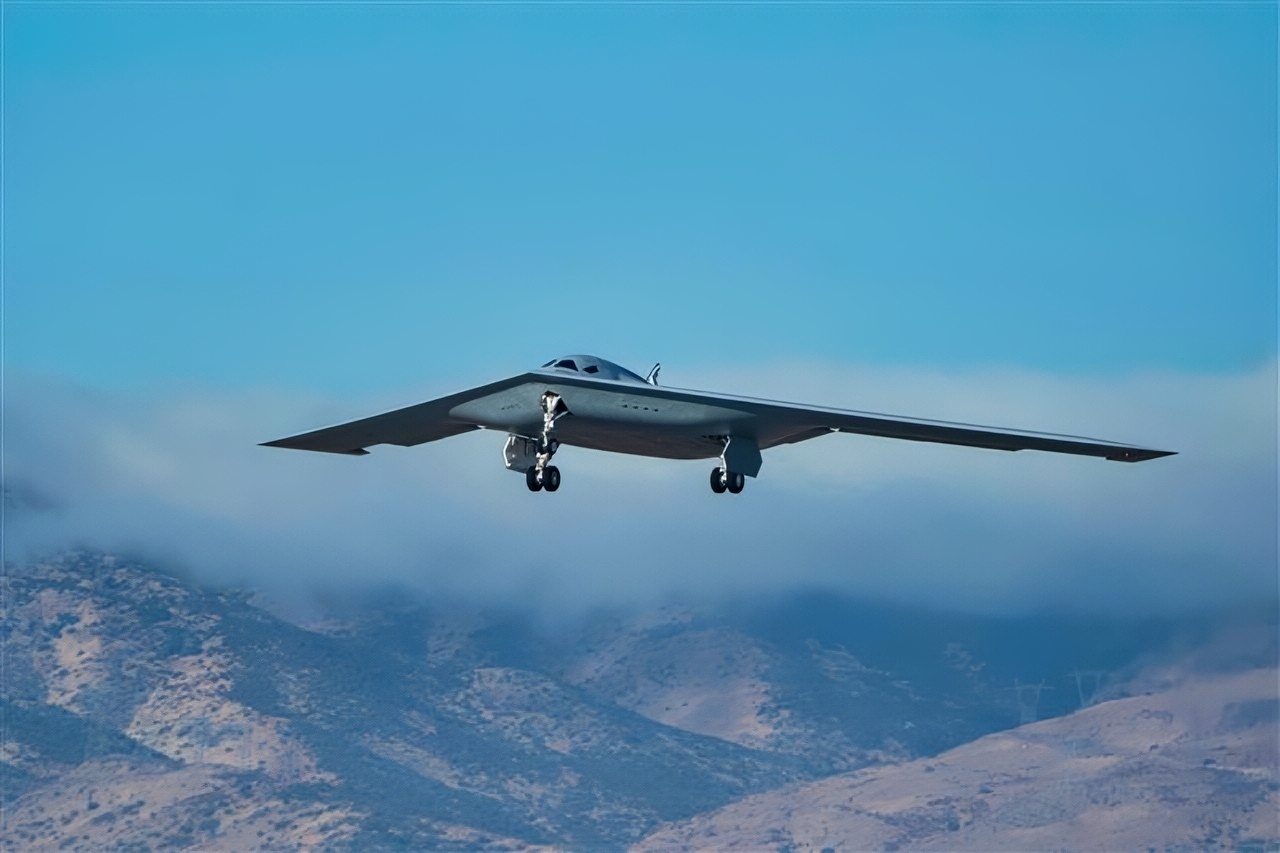
A second B-21 Raider, the nation’s sixth-generation stealth bomber, joins flight testing at Edwards Air Force Base, Calif., Sept. 11. The program is a cornerstone of the Department of the Air Force’s nuclear modernization strategy, designed to deliver both conventional and nuclear payloads. (Courtesy photo)
-Advocates like Dr. Rebecca Grant highlight stealth practices (e.g., Luneburg lenses in peacetime) and argue 100 Raiders won’t meet global deterrence demands, urging a larger buy—echoed by calls to add a second production line.
-Meanwhile, China touts opaque “sixth-gen” prototypes (J-36, J-50). Bottom line: Beijing is watching closely, but the B-21’s true survivability will hinge on numbers, networking, and rapid fielding.
Could China Shoot Down the B-21 Raider?
For as long as the B-21 Raider has been in development, a significant part of the discussion surrounding it has been related to China.
The conversation centers on whether it would stand in relation to China’s own development of fighter jets or the role the sixth-generation fighter would potentially play in combat, possibly over Taiwan.
Earlier this month, the second pre-production B-21 was photographed for the first time, along with the first. And this has people talking about the role the Raider will play. And China has noticed as well.
Back in late 2023, the South China Morning Post reported that a Chinese research firm had “staged a virtual duel between the two rivals to see what it would take to win a future air battle,” one which resulted in the shootdown of the B-21.
“In one war game, a B-21-like stealth platform and its companion drone were both shot down by China’s air-to-air missiles, which can reach a top speed of Mach 6,” the report said.
The team was led by Associate Professor Chen Jun from Northwestern Polytechnic University in Xi’an, and it was published in the peer-reviewed journal Acta Aeronautica et Astronautica Sinica.
It was, to be clear, an academic exercise, produced a year and a half ago, and long before the B-21 Raider will be combat-ready.
A recent Asia Times report about that study stated that “the simulation raises more questions than answers, and China’s opaque modernization makes such claims difficult to verify.”
B-21: A Credible Deterrent
In an op-ed published last week on the Fox News website, Dr. Rebecca Grant highlighted the B-21’s capabilities.
“Worried about Chinese spies with radar detectors watching these B-21 flights? Don’t. Stealth aircraft often strap on a Luneburg lens passive radar reflector to enhance radar return—and thus hide the B-21’s true characteristics. In combat stealth mode, even the navigation lights retract,” she writes.
However, Grant went on to argue that the Pentagon needs a significant number of the B-21s. Noting that the attack on Iran’s nuclear facilities in June required seven B-2s, she states that “for a credible deterrent strategy against Russia, China, North Korea, and who knows what else, America needs enough B-21s to repeat strikes in multiple locations.”
While Northrop Grumman received the contract for the B-21 in 2015, Grant is critical of the then-Obama Administration for only ordering what will amount to 100 of the fighters.
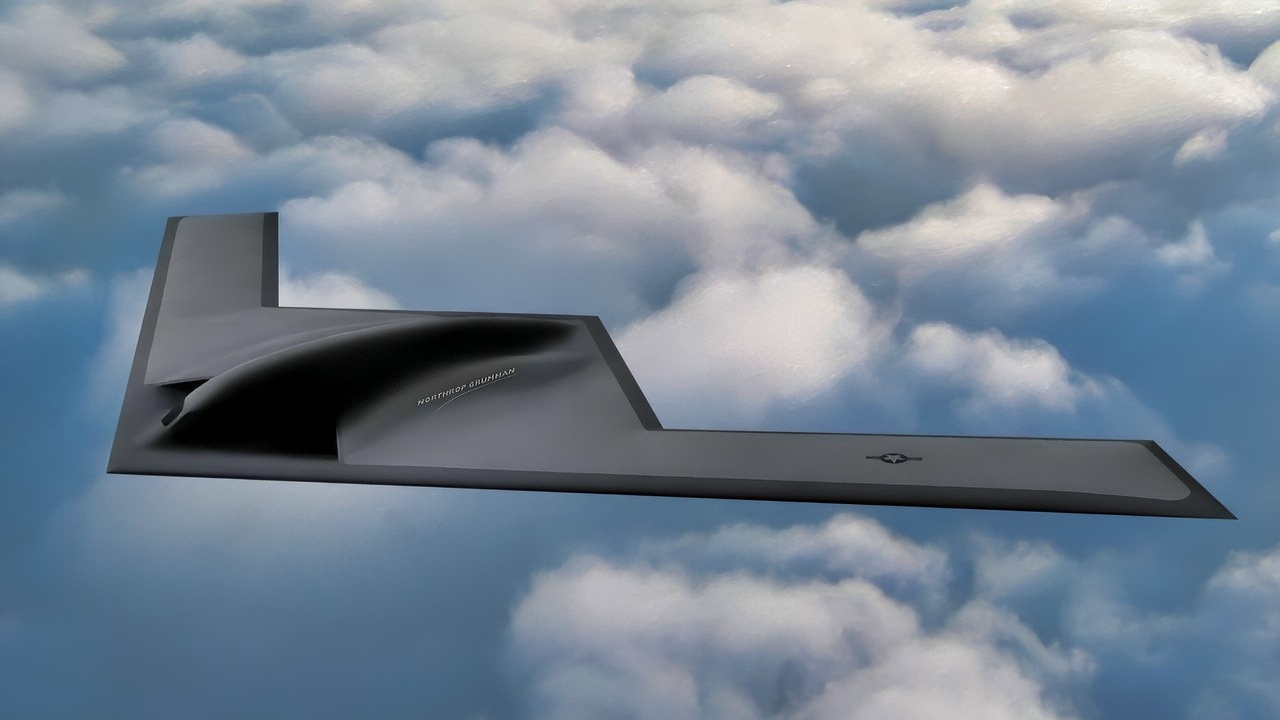
B-21 Raider Bomber Photo. Image Credit: Northrop Grumman.
“That was before China’s nuclear acceleration, the Russia-China alliance, Putin’s nuclear posturing, and North Korea’s progress with solid-fueled nuclear missiles,’ she says.
Grant is not the first analyst to suggest that the Pentagon up the production order for the B-21 Raider.
Writing for the Heritage Foundation’s website in June, Shawn Barnes and Robert Peters called for the establishment of a second production facility and for doubling the order of fighters from 100 to 200.
China’s 6th Generation
China, of course, has its own sixth-generation fighter jets, and while information about them is mostly opaque, NDTV wrote about what was known earlier this spring.
“China appears to be fast-tracking its push for air superiority, with new footage and images showing two stealth aircraft under testing – sixth-generation fighter prototypes,” the report said, noting that a jet believed to be the J-36 was spotted flying over Chengdu last December.
Another, possibly the J-50, was manufactured by the Shenyang Aircraft Corporation and was also spotted in December. New images of the possible J-50 were also spotted this April.
“Analysts see the test flights as a message: China is narrowing the technology gap with the US, which recently awarded Boeing a contract to build the F-47 fighter under its Next Generation Air Dominance (NGAD) programme,” the report said.
About the Author: Stephen Silver
Stephen Silver is an award-winning journalist, essayist, and film critic, and contributor to the Philadelphia Inquirer, the Jewish Telegraphic Agency, Broad Street Review, and Splice Today. The co-founder of the Philadelphia Film Critics Circle, Stephen lives in suburban Philadelphia with his wife and two sons. For over a decade, Stephen has authored thousands of articles that focus on politics, national security, technology, and the economy. Follow him on X (formerly Twitter) at @StephenSilver, and subscribe to his Substack newsletter.
More Military
The B-1B Lancer Bomber: Can It Fire Hypersonic Missiles?
USS Enterprise (CVN-65): Best Aircraft Carrier Ever?
The Kitty Hawk-Class Aircraft Carriers Have A Message for the U.S. Navy
The X-43A Hit Mach 9.6 (And It Was Cancelled?)
The Montana-Class Battleships Have a Message for the U.S. Navy


