

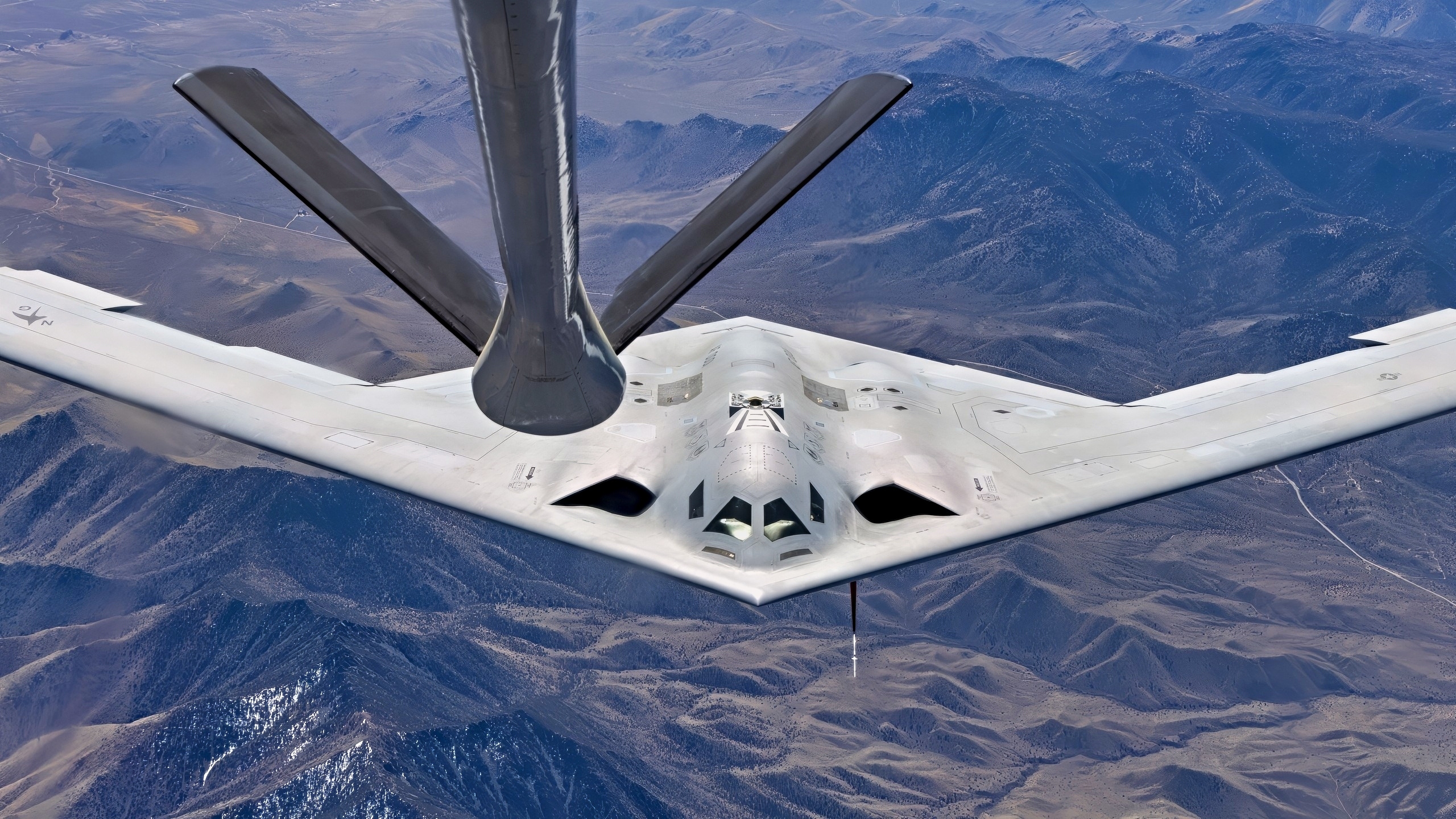
Summary and Three Key Points: During Operation Epic Fury, the U.S. military demonstrated heavy reliance on its B-2 Spirit stealth bomber fleet — flying 30-hour missions from the continental United States to strike hardened Iranian nuclear sites and missile infrastructure with bunker-buster ordnance — but the operational tempo also exposed how fragile that reliance is: the U.S. currently has just 19 B-2 bombers in the active fleet, with no surge capacity if a second simultaneous conflict were to erupt in the Indo-Pacific. The B-21 Raider, however, is coming soon.
The Air Force’s planned B-21 Raider replacement is officially capped at 100 aircraft at roughly $700 million each, though defense analysts argue 145-200 are required to match U.S. strategic doctrine — particularly because the B-21 will carry only one Massive Ordnance Penetrator per mission compared to the B-2’s two, doubling the sortie count required for the same target effect.
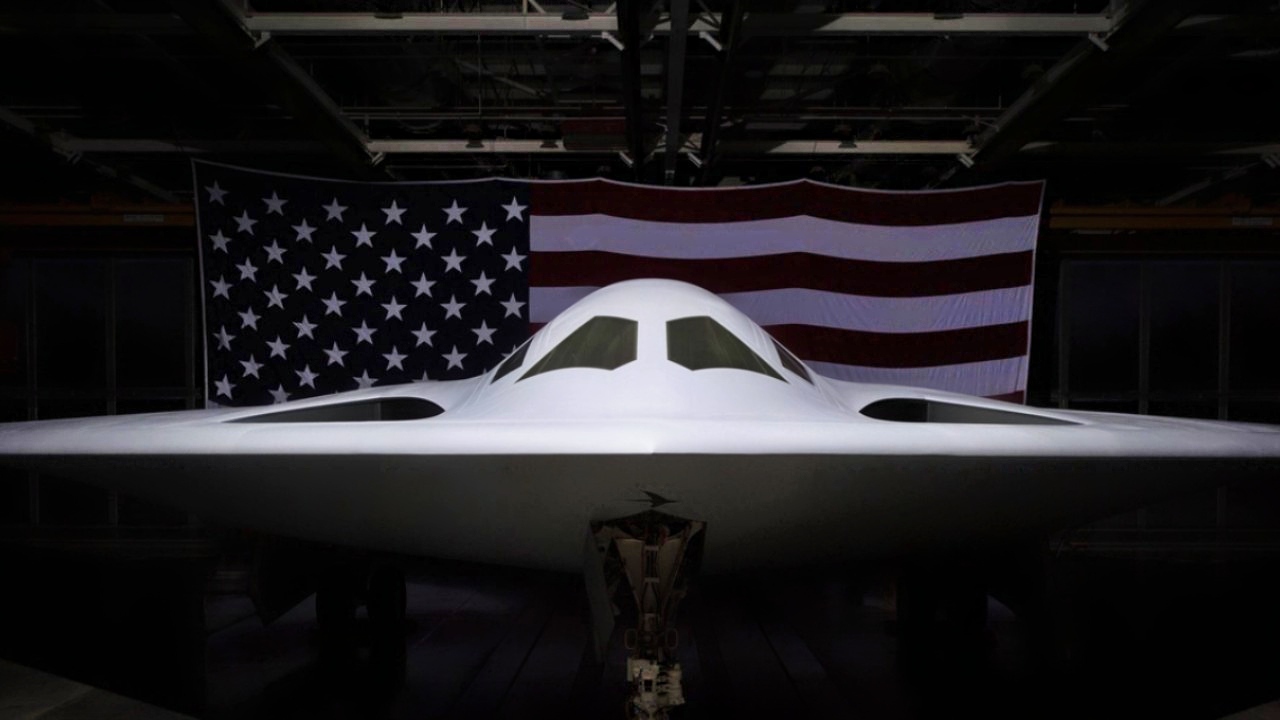
B-21 Raider Bomber. Image Credit: Creative Commons.
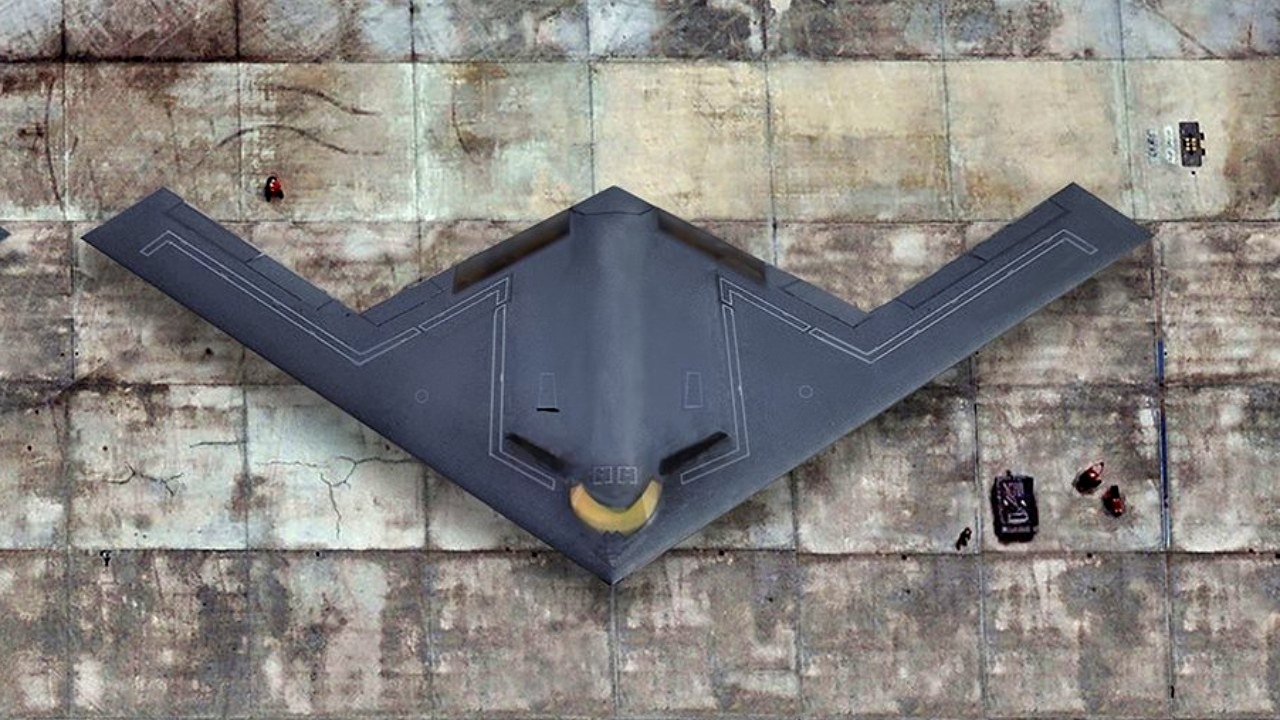
B-21 Raider Stealth Bomber Artist Image. Image Credit: Creative Commons.
Doubling the procurement plan would cost roughly $70 billion against a national debt of approximately $39 trillion.
The B-21 Raider Bomber Can’t Come Fast Enough
The B-21 Raider is a next-generation stealth bomber, currently in development, which is slated to replace the B-1B Lancer and the B-2 Spirit.
The B-21’s core mission will be deep penetration to strike hardened, defended targets, using low-observability to slip past enemy IADS.
The B-21 Raider will be both nuclear and conventional and is expected to go operational in the late 2020s. The new stealth bomber will be central to US strike doctrine, but questions remain about just how many units to procure.
The B-2 Limitation
The B-21 will be replacing the current stealth fleet, which consists of just 19 B-2 bombers.

A U.S. Air Force Maj. B-2 pilot marshals a B-2 Spirit bomber, deployed from Whiteman Air Force Base, Missouri, at Andersen Air Force Base, Guam in support of Valiant Shield 24, June 13, 2024. The speed, flexibility, and readiness of our strategic bombers plays a critical role in our ability to deter potential adversaries and signal our unwavering support to our allies and partners. Counter-maritime missions provide valuable training opportunities to improve our interoperability and demonstrate that our forces are capable of operating anywhere, anytime, to meet any challenge decisively. (U.S. Air Force photo by Staff Sgt. Kristen Heller)

B-2 Spirit stealth bombers assigned to Whiteman Air Force Base taxi and take-off during exercise Spirit Vigilance on Whiteman Air Force Base on November 7th, 2022. Routine exercises like Spirit Vigilance assure our allies and partners that Whiteman Air Force Base is ready to execute nuclear operations and global strike anytime, anywhere. (U.S. Air Force photo by Airman 1st Class Bryson Britt)
Epic Fury demonstrated how heavy US reliance is on the B-2; missions were long-range, 30-hour sorties, launched from the continental United States, targeting hardened nuclear sites and missile infrastructure.
The problem is that such a small fleet endured high operational strain, limiting surge capacity.
Indeed, the current stealth force is barely sustainable in a single conflict, suggesting vulnerabilities if the US finds itself in multiple conflicts simultaneously.
How Many is Enough?
The official plan is to procure 100 B-21s. But there is a competing view that proposes 145 to 200 B-21s are needed. The debate is driven by bomber math, sortie rates, and payload limitations.
The argument for more B-21s is that the B-2 fleet is too small, that Epic Fury nearly maxed out capacity, and that, in a two-theater scenario like the Middle East and the Indo-Pacific, the fleet’s capacity would be inadequate.
So, procuring more B21s would err on the side of caution, reducing the likelihood that stealth bomber capacity is ever exceeded.
The more B-21s argument also hinges on the B-21’s smaller payload capacity relative to the B-2: while the B-2 carries two MOP bunker-buster bombs, the B-21 carries only one.
The result is that more aircraft are needed for the same destructive output, and so, the argument goes, 100 aircraft are insufficient for simultaneous global operations.
The Current Plan
But there is a persuasive argument for maintaining the current plan to procure just 100 aircraft. At a cost of $700 million per B-21, doubling the fleet size would cost about $70 billion or more.
For context, the national debt currently sits at around $39 trillion, so while it may be nice to have more B-21s, it may not be affordable given the current budgetary climate. Further, the B-21 is a technology multiplier, with advanced computing and AI integration, likely capable of controlling loyal wingmen.
The point is that one B-21 will have more capability than one B-2. Procuring a smaller fleet is also easier to sustain with a lower logistics and maintenance burden.
Epic Fury Validation
Epic Fury did validate the need for stealth penetration but also exposed the US’s lack of depth.
A fleet numbering just 19 aircraft cannot sustain high-tempo operations and signals to the rest of the world that the US has no stealth reserve.
In a second, simultaneous conflict, the US would have no margins. But none of that negates the budgetary realities.
From a strategic perspective, the US doctrine assumes a global reach. But the current B-2 fleet does not support said doctrine.
The primary concern, of course, is the long-term threat of China, and the B-21 debate serves as a proxy for a broader strategic debate about how to posture for the Indo-Pacific.
The debate remains unresolved.
Higher production would allow for sustained operations, better deterrence, and more flexibility—but would be obscenely expensive in both dollars spent and associated opportunity costs.
Lower production would allow for resource preservation and a more flexible future, but could lead to a fragile force structure with limited surge capacity.
Either way, the B-21 will represent a massive defensive investment that will serve as the central component of US strategic bombing for the foreseeable future.
About the Author: Harrison Kass
Harrison Kass is a writer and attorney focused on national security, technology, and political culture. His work has appeared in City Journal, The Hill, Quillette, The Spectator, and The Cipher Brief. He holds a JD from the University of Oregon and a master’s in Global & Joint Program Studies from NYU. More at harrisonkass.com.


Hujjathullah M.H.B. Sahib
May 11, 2026 at 3:27 am
When procurement rationale is pegged to the negative magnitude of the national debt rather than the positive quantum of the GDP you can rest assured that questions of budgetary limitations unsurprisingly gets thrown out of the window. The prospective defence contractor goes laughing to bank while the U.S. taxpayers regret not pursuing morally justified evasion !
Raptor1
May 11, 2026 at 10:26 pm
Hujjathullah… Well now… Of course, you did neglect the fact that the US isnt the only country gearing up militarily… and that weapons are not cheap for ANYONE… And that the military industrial complex is actually undergoing a huge transfirmation as we speak… Thankfully, the Biden-types arent in control of the military right now, sitting with hands folded as London rakes in the dough and sends America off to do its bidding.
You see, its not all as simplistic as you make it sound in those bug fancy words you used.
Hujjatullah Sahib
May 15, 2026 at 11:26 pm
The fact that some other countries too are doing so reactively at a much lower scale should not be used as an excuse to continue a gross abuse of even borrowed resources on perpetuating a monsterous disarmament stupidity especially not so by a superpower often caught touting, you got it right, “exceptionalism” !