


Key Points and Summary – The B-21 Raider is edging closer to operational service, with a second test jet now flying and the Air Force refining how it will be crewed.
-A new Global Strike Command memo argues the bomber should fly with both a pilot and a weapon systems officer, reflecting how complex its mission set will be: stealthy penetration, strike, sensor fusion, electronic warfare, and real-time battle management on ultra-long sorties.
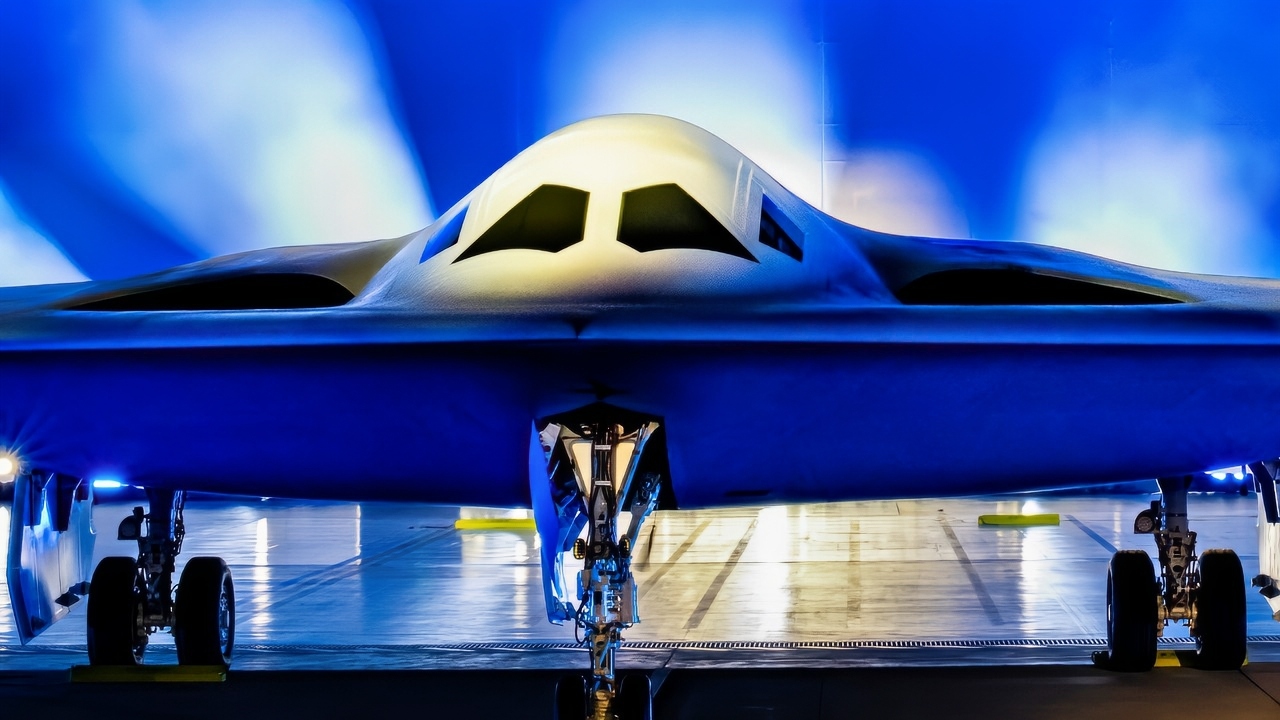
A B-21 Raider is unveiled at Northrop Grumman’s manufacturing facility on Air Force Plant 42 in Palmdale, California, Dec. 2, 2022. The B-21 will be a long-range, highly survivable, penetrating strike stealth bomber capable of delivering both conventional and nuclear munitions. (U.S. Air Force photo by Airman 1st Class Joshua M. Carroll)
-The debate also hints at heavy automation and future AI assistance. Whatever the final crew mix, the B-21 is clearly being built as much for command-and-control as for bombing.
The B-21 Raider Has a New Secret in 3 Letters: WSO
The B-21 Raider is slowly working its way towards service. The sixth-generation strategic bomber, which is being developed for the Air Force by Northrop Grumman, first flew nearly two years ago, and a second Raider took its first flight earlier this fall.
“With the arrival of the second B-21 Raider, our flight test campaign gains substantial momentum,” Secretary of the Air Force Troy Meink in an Air Force press release in September. “We can now expedite critical evaluations of mission systems and weapons capabilities, directly supporting the strategic deterrence and combat effectiveness envisioned for this aircraft.”
According to the latest reports, there is a new plan for the B-21: The bomber might fly with a weapon systems officer (WSO).
B-21 Raider in 3 Letters: What is a WSO?
An August memo from the U.S. Air Force Global Strike Command, obtained by Aviation Week, recommends that a WSO fly on the jet along with the pilot.
The memo was authored by Gen. Thomas Bussiere.
“Unleashing the Raider’s full potential demands a complex blend of skills: airmanship, weaponeering, electromagnetic spectrum operations, sensor management, real-time battle management and agile replanning in combat,” Bussiere wrote in the memo. “For this reason, the B-21 will be crewed by one pilot and one weapon systems officer.”
The memo was addressed to the Air Force secretary and chief of staff, and the commander of U.S. Strategic Command.
Is the Decision Final?
Bussiere announced his retirement from Global Strike Command earlier this week, citing family and health reasons. Also, as pointed out by Aviation Week, Gen. Kenneth Wilsbach has been confirmed as Air Force chief of staff in the time since the memo was filed, so it is possible that Air Force thinking has changed.
“Air Force Global Strike Command has provided their recommendation regarding the B-21 crew composition to the Headquarters. That document is pre-decisional. A decision has not been made,” Lt. Gen. Scott Pleus, acting vice chief of staff, told Aviation Week when they asked about the memo.
The idea of not having two service members fly in such a bomber is controversial, according to Aviation Week, in part because the bombers fly very long missions. This summer’s attack on Iran’s nuclear facilities, carried out by U.S. B-2 bombers, included a round-trip flight time of 37 hours. The B-2 has a cot onboard, allowing pilots to take turns sleeping. The B-21 is expected to feature some version of the same.
“The Air Force bomber community had been reluctant to rely on a single pilot-rated officer to fly missions in the past. The two seats on the Northrop B-2’s flight deck are filled by pilots only,” the story says. “The Boeing B-52H and Rockwell International B-1B include at least a pair of WSOs in addition to two pilots, but the WSOs are seated below deck in the former and behind the pilots in the latter.”
Aviation Week added that in a two-seat B-21, “the WSO also would likely be trained to fly the aircraft in certain scenarios,” such as when a pilot has ejected.
Hints of AI?
The War Zone, meanwhile, looked at whether there might be preference for a single pilot because of the B-21’s potential artificial intelligence capabilities.
“The prospect of single-pilot sorties for B-21s, something that on its face would raise safety concerns, strongly points to a high level of automation and AI-infused autonomy being present in the design now, which might one day open the door to fully uncrewed operations,” TWZ wrote.
That would line up with Air Force rhetoric about how revolutionary the B-21 will be.
“Bussiere’s comments here underscore that the B-21 is far more than just a bomber,” The War Zone wrote. “On top of their ability to carry out deep-penetrating nuclear and conventional strikes, the Raiders will have an extensive suite of networking, battle management, electronic warfare, and intelligence, surveillance, and reconnaissance (ISR) capabilities. The aircraft could also end up acting as forward aerial controllers for uncrewed platforms, among other missions.
TWZ called it “understandable” that the Raider would use a WSO, even if it raises questions about safety:
“Having to train pilots to be able to also manage the burdens of the Raiders’ various mission sets, which are drastically expanded over that of the B-21, would seem less than ideal, especially if the aircraft will work as a key forward node and enabler for other platforms.”
When Will It Arrive?
Defense News reported in October that Northrop Grumman is expecting to receive more contracts for the B-21 by the end of the year. The company says it is working with the Air Force to speed up production.
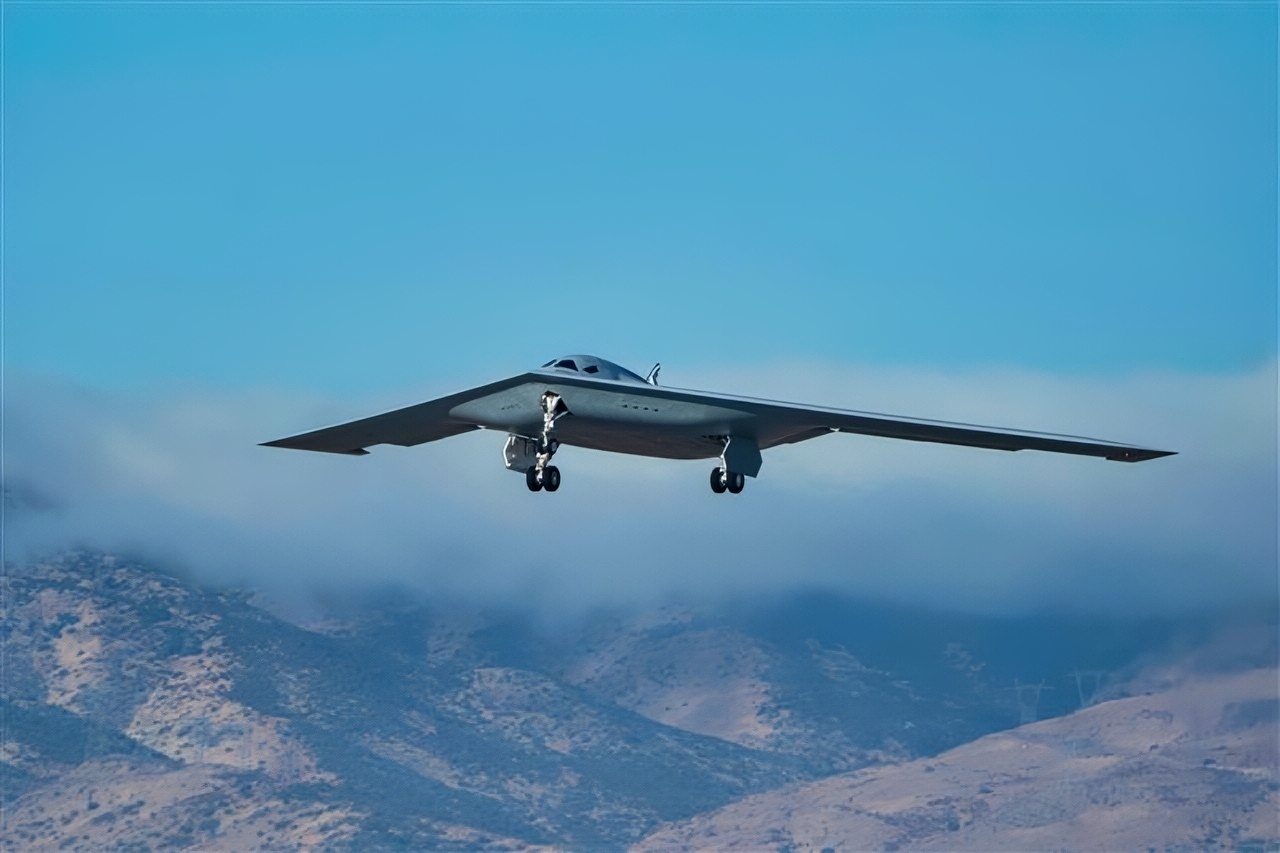
A second B-21 Raider, the nation’s sixth-generation stealth bomber, joins flight testing at Edwards Air Force Base, Calif., Sept. 11. The program is a cornerstone of the Department of the Air Force’s nuclear modernization strategy, designed to deliver both conventional and nuclear payloads. (Courtesy photo)
The One Big Beautiful Bill Act included $4.5 billion to accelerate B-21 production. The Air Force plans to buy 100 B-21s
“The actual production rates, the timing, and ultimately the outcome of those negotiations with the Air Force would define what that financial profile looks like,” Chief Executive Officer Kathy Warden said in an earnings call this fall, Defense News reported. “It’s too early for me to speculate on that.”
According to an Aviationist report last spring, the B-21 is targeted to enter service in the mid-2020s.
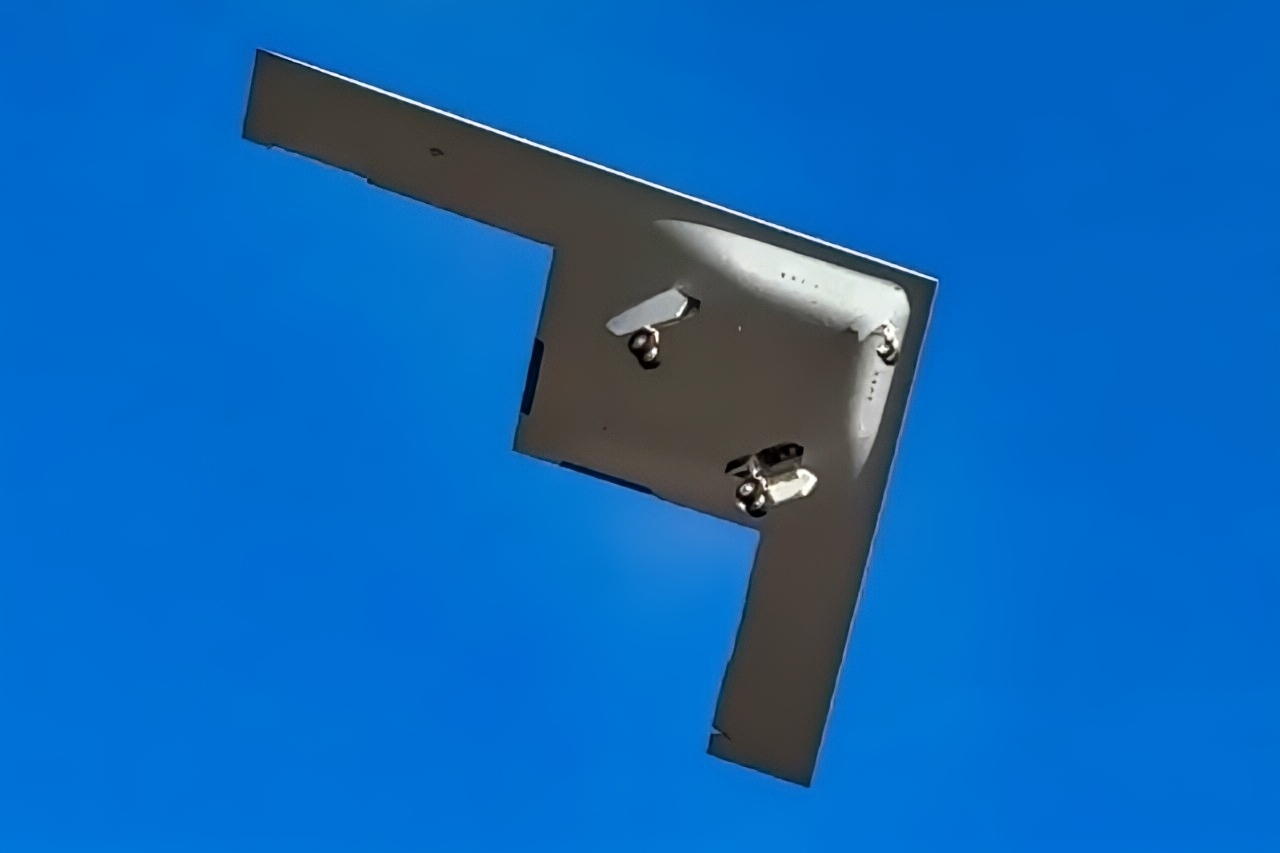
B-21 Raider New Flight of Second Bomber. Image X Screenshot from Video Posted.
“However, since we are already in 2025, this statement is open to interpretation as it could imply a timeframe ranging from the mid- to late 2020s, or potentially even the mid-2030s,” The Aviationist wrote.
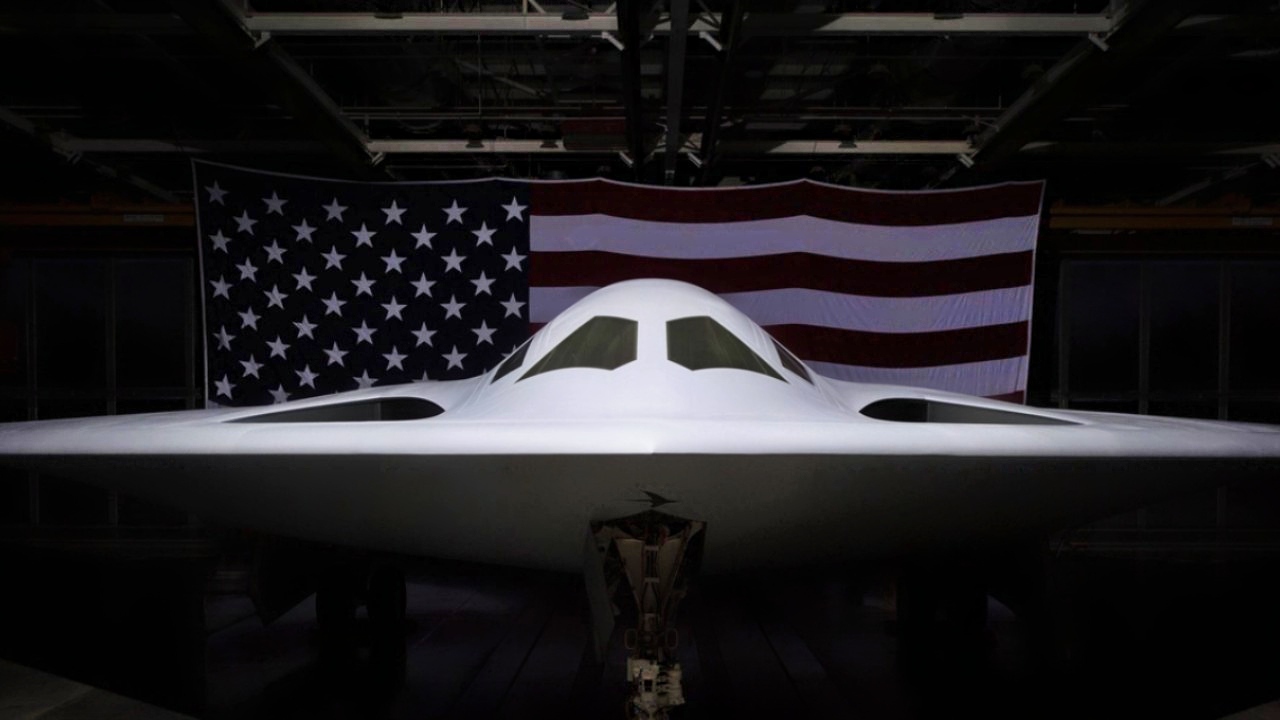
B-21 Raider Bomber. Image Credit: Creative Commons.
About the Author: Stephen Silver
Stephen Silver is an award-winning journalist, essayist, and film critic, and contributor to the Philadelphia Inquirer, the Jewish Telegraphic Agency, Broad Street Review, and Splice Today. The co-founder of the Philadelphia Film Critics Circle, Stephen lives in suburban Philadelphia with his wife and two sons. For over a decade, Stephen has authored thousands of articles that focus on politics, national security, technology, and the economy. Follow him on X (formerly Twitter) at @StephenSilver, and subscribe to his Substack newsletter.


Krystal cane
November 9, 2025 at 1:12 am
Work in progress?
Mark Carson
November 9, 2025 at 9:33 pm
WSO are “service members” – the article implies otherwise. Having a WSO capable of flying after the pilot has ejected is the most unlikely scenario. More plausible is to be in command during cruise when the pilit is having a rest break (sleeping or using the toilet). Once the B-21 is certified as a fully unmanned platform including air-to-air refueling, then a WSO might not need to be certified even in a limited manner as a pilot. Ask Ward Carroll (F-14 RIO) about the flying abilities of a typical backseater.