


Key Points and Summary – Audits of Lockheed Martin’s F-35 are multiplying. Canada is re-examining its order of 88 jets amid a tariff-driven chill with Washington.
-Britain’s National Audit Office says the UK’s fleet delivers improved combat power but less capability than planned.
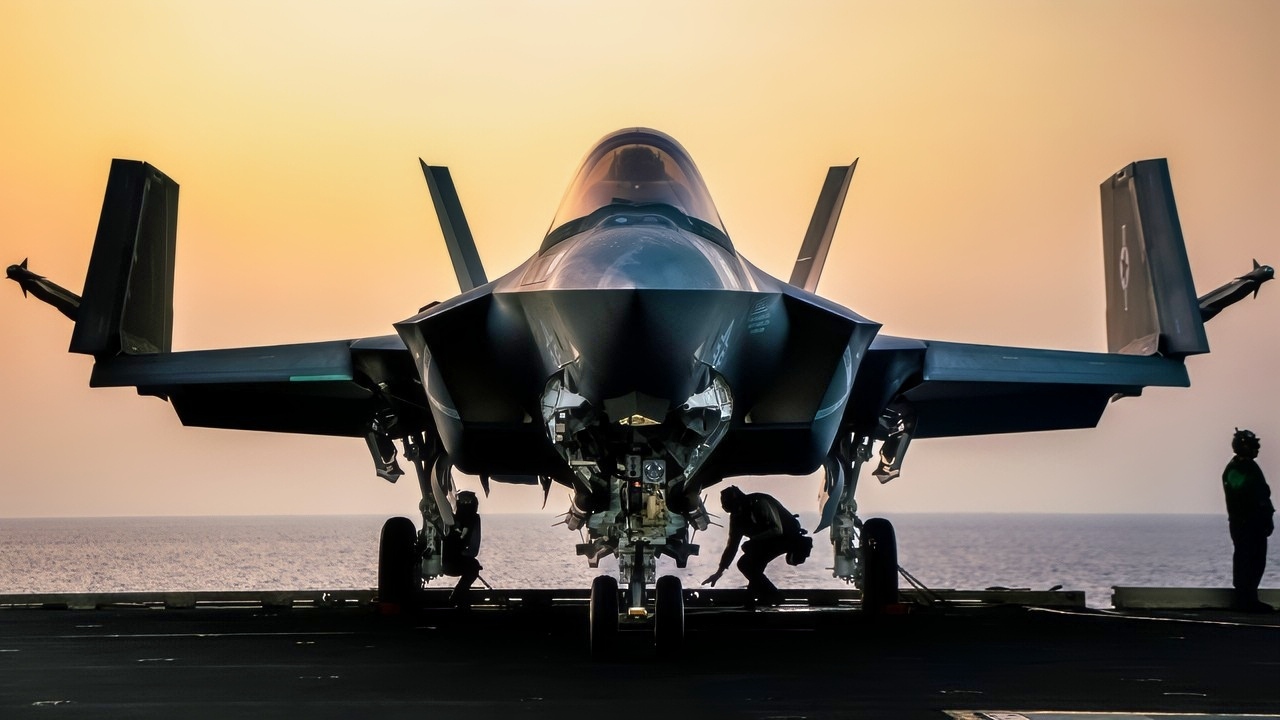
U.S CENTRAL COMMAND AREA OF RESPONSIBILITY (April 24, 2025) U.S. Sailors conduct pre-flight safety checks on an F-35C Lightning II, attached to Strike Fighter Squadron (VFA) 97, on the flight deck of the Nimitz-class aircraft carrier USS Carl Vinson (CVN 70) in the U.S. Central Command area of responsibility. (Official U.S. Navy photo)
-In the United States, the GAO reports every 2024 jet arrived late and Block 4 upgrades are billions over budget and five years behind.
-Switzerland faces a CHF 650 million to 1.3 billion cost increase on its 36-jet buy after declining a fixed price, yet Bern intends to proceed and is reviewing options to fund the overrun as inflation and tariffs bite.
The Next F-35 Crisis Is Looming
It seems like a lot of countries around the world are auditing their purchases of the F-35 fighter jet, especially in Europe.
Canada is weighing whether to go ahead with its purchase of 88 F-35s, amid the continuing trade war and other tensions with the U.S. in the second Trump era, and a final decision is expected soon.
In Britain, the National Audit Office issued a report in July about the “value for money” of the UK’s F-35 capability. It concluded that while the current F-35s “represent a significant improvement in the warfighting capability of the UK’s Armed Forces… the level of overall UK F‑35 capability is currently lower than the MoD intended it would be by now at the time of its 2013 business case, and will be for several years.”
Indeed, the U.S. recently released its own report, with the Government Accountability Office concluding that all 110 of the F-35 deliveries in 2024 were late, by an average of 238 days. It also found that the “Block 4” modernization effort is $6 billion over budget and five years late.
Now, another country is looking at its F-35 orders.
A Swiss Audit of F-35
According to Defense News, Switzerland’s F-35 order from Lockheed Martin will be “significantly more expensive than originally expected, prompting introspection in Bern about possibly altering the procurement.”
Switzerland, in 2021, had originally planned to buy 36 jets for 6 billion Swiss francs, or $7.55 billion. The Parliament approved the purchase in 2022, which set up the jets for delivery between 2027 and 2030.
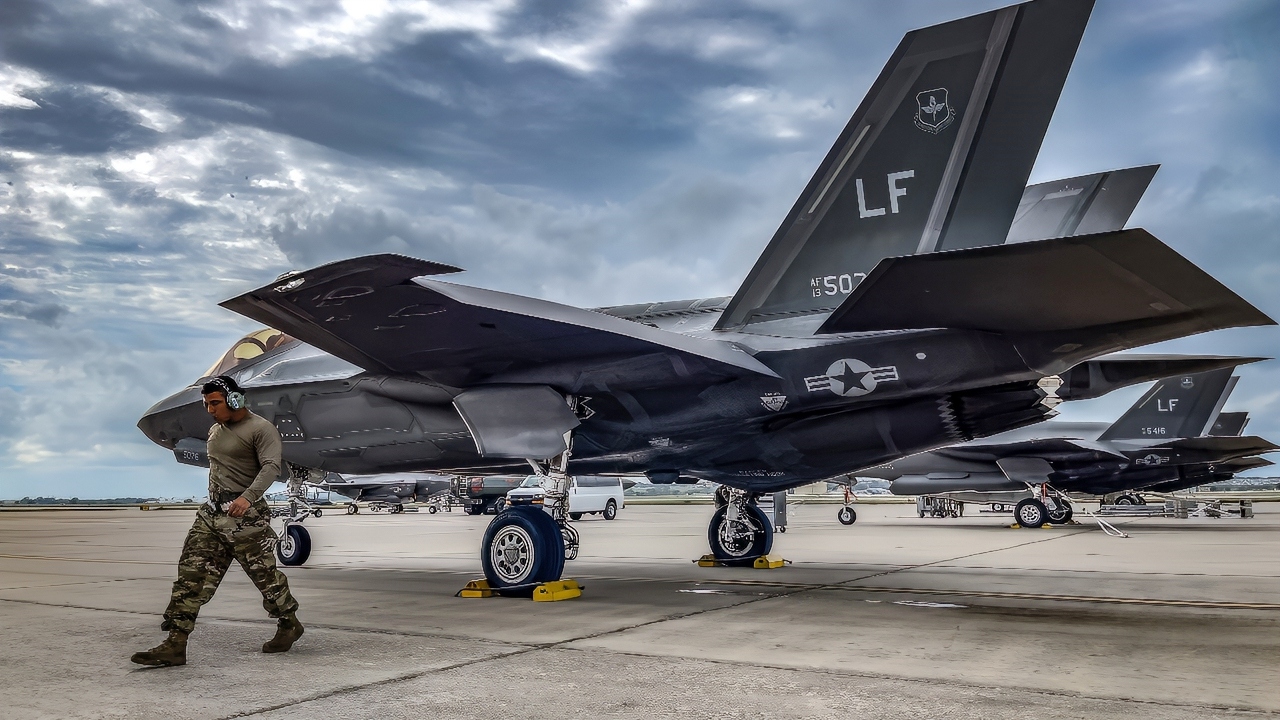
U.S. Air Force service members from the 62nd Fighter Squadron, Luke Air Force Base, Ariz., conduct flight line operations in support of the F-35 Lightning II TDY, Oct. 28, 2021, at Joint Base San Antonio-Kelly Field, Texas. The 62nd FS will be training with F-16s from the 149th Fighter Wing and the 301st Fighter Wing, along with T-38s from the 301st Fighter Wing. The multi-role capabilities of the F-35 allows them to perform missions which traditionally required numerous specialized aircraft. The complimentary air superiority capabilities of the F-35 will augment our air superiority fleet and ensure we continue to “own the skies” over future battlefields. (U.S. Air Force photo by Brian G. Rhodes)
However, the deal hasn’t quite turned out that way.
The two governments ultimately did not agree on a fixed price for the order, while the Swiss government ultimately concluded that the buy would increase in price, by somewhere between 650 million Swiss francs ($817 million) to 1.3 billion ($1.63 billion).
“The upper estimate contains a sizeable risk buffer, given the current economic uncertainties,” the Swiss defense ministry’s procurement office told Defense News in a statement.
And while the costs are growing, Switzerland does plan to ultimately go ahead with the buy.
“The question is not whether the project will be continued, but rather an in-depth examination of the options for how to deal with the increased costs of procurement,” defense spokesperson Kaj-Gunnar Sievert told Defense News.
In 2020, Switzerland held a voter referendum on whether to purchase new fighter jets, one that passed, albeit narrowly, after a previous vote failed in 2014. There have been calls, of late, for another vote on the additional costs for the F-35s, but the government has rejected such calls.
Why the Overruns?
Per the story, the rising cost has been attributed to everything from inflation to the Trump Administration’s tariffs.
Switzerland is not part of the European Union; therefore, it has its own currency and negotiates its own trade deals.
Per Global Trade magazine, the Swiss proposed a deal last month to cut U.S. tariffs. The White House announced 39 percent tariffs on most Swiss goods, although pharmaceuticals and some other categories were exempted.

A U.S. F-35A Lightning II departs after conducting aerial refueling with a KC-10 Extender from the 908th Expeditionary Air Refueling Squadron, June 11, 2019 at an undisclosed location. The fifth generation fighter provides the pilot with comprehensive situational awareness in a sphere around the aircraft for missile and aircraft warnings, day and night vision, extended range detection and precision targeting against air and ground threats, granting the U.S. Air Force and its allies’ air superiority. (U.S. Air Force photo by Staff Sgt. Keifer Bowes)
Reuters reported in August that Switzerland is “intensifying efforts to strengthen its attractiveness as a business location,” after the U.S. placed its tariffs on that country.
“(The government) wants to decisively press ahead with its economic policy agenda and is focusing on reducing the regulatory burden on companies,” the Swiss government said, per Reuters.
Earlier this week, Bloomberg News cited the International Monetary Fund in reporting that Swiss growth is “coming under pressure from global uncertainty, including high US tariffs and safe-haven flows into the franc.”
“Switzerland remains highly resilient, supported by strong institutions, prudent policies, and a skilled labor force,” the fund said. “However, global uncertainty, trade fragmentation, and persistent safe-haven flows have increased economic pressures.”
About the Author: Stephen Silver
Stephen Silver is an award-winning journalist, essayist, and film critic, and contributor to the Philadelphia Inquirer, the Jewish Telegraphic Agency, Broad Street Review, and Splice Today. The co-founder of the Philadelphia Film Critics Circle, Stephen lives in suburban Philadelphia with his wife and two sons. For over a decade, Stephen has authored thousands of articles that focus on politics, national security, technology, and the economy. Follow him on X (formerly Twitter) at @StephenSilver, and subscribe to his Substack newsletter.
More Military
SR-72 Mach 6 Mistake the Air Force Needs to End
The U.S. Navy’s Ohio-Class Missile Submarine Nightmare
America Has Mini-Aircraft Carriers
Russia’s Su-57 Felon Stealth Fighter: Made in India?
F-22 Raptor vs. J-20 Stealth Fighter: Hope This Never Happens


Michael Delahoy
September 20, 2025 at 7:53 am
Hey I like the article