
Iran’s successful use of the Strait of Hormuz as leverage against the United States may be working now, but it won’t in the long run.
The longer the disruption goes on, and the economic fallout worsens, some of the world’s biggest oil buyers are looking elsewhere for their crude – and Gulf oil producers are looking for alternative routes to the international market.

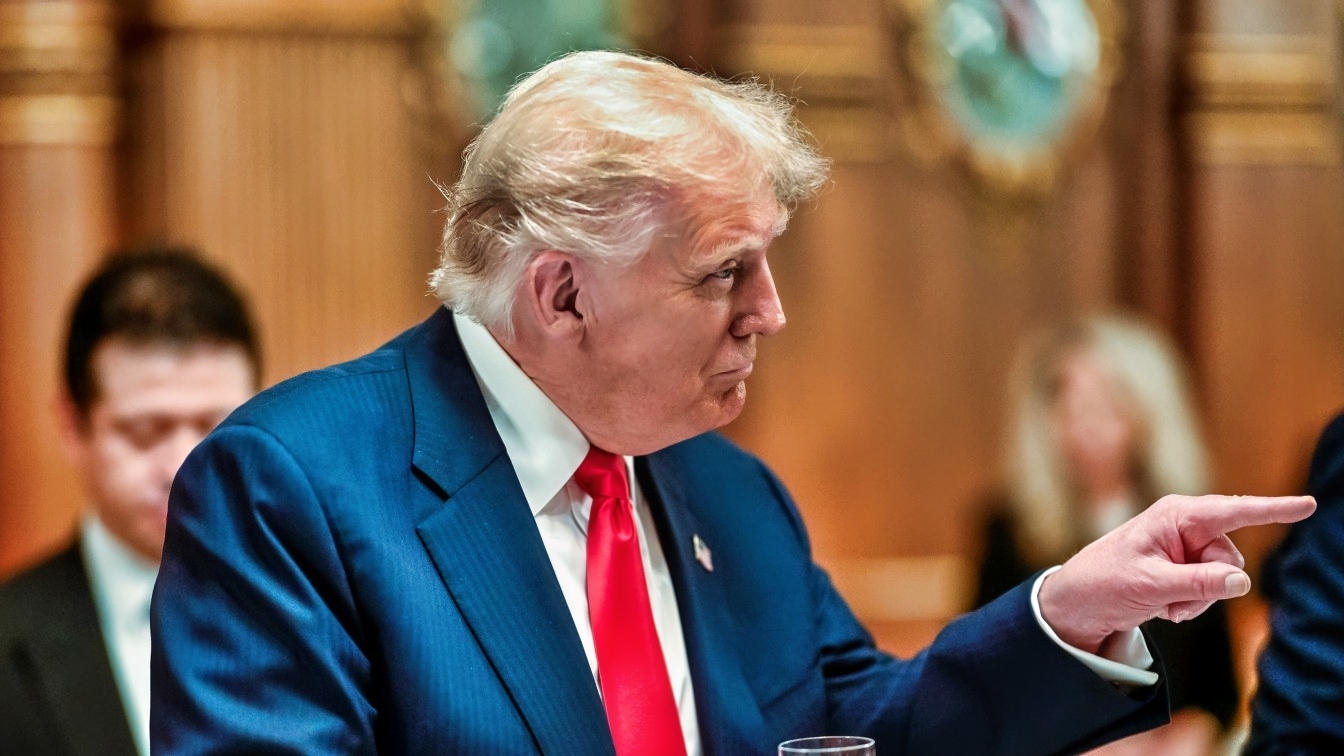
President Donald Trump attends UFC 314 at the Kaseya Center in Miami, Florida, Saturday, April 12, 2025. (Official White House Photo by Daniel Torok)

President Donald Trump attends UFC 314 at the Kaseya Center in Miami, Florida, Saturday, April 12, 2025. (Official White House Photo by Daniel Torok)
This week, reports revealed how Asian refiners bought another batch of U.S. oil, as shipping through Hormuz remained severely restricted.
Companies in South Korea, Japan, and Taiwan reportedly secured millions of barrels of oil for delivery later this year, following record drawdowns from U.S. inventories that saw a record 2.35 million barrels per day sent to Asia in July alone.
Importantly, that doesn’t mean that Asia can simply replace Middle Eastern oil.
Alternative supplies don’t actually exist, and before the Iran war, more than half of the region’s crude imports came from the Middle East; the volumes normally moving through Hormuz are far too large to replace completely in the near term.
It does, however, show that refiners are adapting to a crisis as best they can, and as Gulf producers also seek new routes out of the region and into the international market, it’s clear that Iran’s Hormuz strategy will only work for now.
Asian Refiners Are Buying American Oil
Per Reuters reporting, which cited traders familiar with the transactions, at least four Asian refiners have recently increased purchases of U.S. crude as they sought supplies that do not depend on passage through Hormuz.
South Korea’s GS Caltex bought 2 million barrels of Mars crude from Shell for November delivery, according to the traders, paying a premium of around $13 to $14 per barrel over the October Dubai benchmark.
Japan’s Cosmo Energy also purchased Mars crude, while Eneos, Japan’s largest refiner, bought 2 million barrels of West Texas Intermediate.
Taiwan’s state-owned CPC Corporation separately bought 2 million barrels of WTI and additional West African crude.
Indian state refiners Hindustan Petroleum and Mangalore Refinery and Petrochemicals have also issued new tenders seeking supplies.
Hormuz Is Still Disrupted
The shipping data explains the urgency.
The world is hurtling toward an oil crisis, and Asian buyers are trying to get ahead of it now.
Kpler ship-tracking data published on Friday showed that only nine commodity vessels passed through Hormuz on Thursday, up from five on Wednesday but still below the August average of 12.
Most vessels that did transit through the waterway did so through Iranian waters, following Tehran’s insistence that U.S.-approved waterways are not legitimate routes through the waterway.
Those figures are particularly shocking compared with daily vessel transits pre-war, which stood between 130 and 140.
Oil traffic remains far below normal, and there is no indication that it will be restored any time soon.
Gulf Producers Build Alternatives
Importers are not the only ones adapting to the problems in Hormuz.
The UAE announced in May that it was accelerating a pipeline project designed to double the amount of oil it can export through Fujairah, on the Gulf of Oman side of Hormuz, by 2027.
The project would substantially increase Abu Dhabi’s ability to send crude without sending tankers through the Strait of Hormuz.
ADNOC is also adapting by changing its shipping operations, with reports on Thursday noting that the Emirati producer has introduced a new tanker shuttle system and spent around $1.3 billion to expand its fleet, including six new VLCCs, as it tries to maintain its exports.
Iraq is also developing a way around Hormuz.
Around 900 tanker trucks per day have been carrying Iraqi oil west across Syria to the Mediterranean port of Baniyas, where it is being loaded onto tankers for export.
Kpler shipping data shows that three vessels loaded Iraqi fuel oil there between June and July for delivery to the United States, while other cargoes went to Spain and Egypt.
Now, Baghdad is looking at something much bigger, with Iraq and Syria signing an agreement last month to rehabilitate an oil pipeline to Baniyas, potentially giving Iraq a new permanent route to deliver its crude to international markets.
Iran’s Leverage Will End
None of these alternatives can replace Hormuz yet, and they will not prevent a worsening oil shortage if the strait remains disrupted for months longer. But that’s not the point.
The longer Iran holds the waterway hostage, the more money producers and buyers have to spend reducing their dependence on it. New pipelines will take years to build, and alternative suppliers cannot immediately provide the volumes Asia needs, but the process is now underway.
Iran has demonstrated just how much pressure it can put on the global economy with a handful of mines, and in doing so, Tehran has given the rest of the world a major incentive to rob it of that leverage.
About the Author: Jack Buckby
Jack Buckby is a British researcher and analyst specializing in defense and national security, based in New York. His work focuses on military capability, procurement, and strategic competition, and he produces and edits analysis for policy and defense audiences. He brings extensive editorial experience, with a career output spanning over 1,000 articles at 19FortyFive and National Security Journal, and has previously authored books and papers on extremism and deradicalization.


