

Summary and Key Points: Canada’s military readiness is at a crossroads as Prime Minister Mark Carney reviews the Lockheed Martin F-35 contract amid escalating trade tensions with Washington.
-Expert Richard Shimooka warns that pivoting to the 4.5-generation Saab Gripen E would “institutionalize weakness,” burdening the Royal Canadian Air Force with a platform designed for a previous era.
-While the Gripen offers a 12,600-job industrial promise and avoids the F-35’s 55% mission-capable rate issues, critics argue it remains dependent on U.S. avionics. Choosing the Gripen could strain the NORAD framework, forcing a total reliance on U.S. air cover in the Arctic.
Canada Choosing the Gripen Over F-35 Would “Institutionalize” Weakness Claims Expert
Writing for the National Post, Macdonald-Laurier Institute Senior Fellow Richard Shimooka warned that a decision to operate a mixed F-35-Gripen fleet would “institutionalize” weakness in the Royal Canadian Air Force for decades.
Responding to reports that the Canadian government is preparing to cancel plans to procure a final 72 Lockheed Martin F-35s as part of a previously-agreed deal, Shimooka warned that opting for Saab’s 4.5-generation fighter jet offering would weaken Canadian power at a time when it needs strength.
The F-35 Controversy Explained
Canada’s fighter procurement has long revolved around replacing the aging CF-18 Hornet fleet with a platform capable of both domestic air defence and integrated continental operations.
In 2022 Ottawa selected the U.S. Lockheed Martin F-35A Lightning II – a fifth-generation, stealth multirole fighter – committing to 88 aircraft to meet agreed NORAD, NATO, and Arctic security requirements. The F-35’s advanced sensor fusion capabilities and deep strike profile were seen as essential to defending vast northern airspace alongside U.S. forces.
However, that consensus about what it takes to meet these requirements appears to have evaporated. After Prime Minister Mark Carney ordered a review of the F-35 contract in 2025 amid escalating U.S.–Canada trade tensions, Ottawa signalled interest in alternative options – notably Sweden’s Saab JAS-39 Gripen E, a 4.5-generation fighter pitched with the promise of 12,600 Canadian industrial assembly and jobs.
In response to reports that Ottawa is on the verge of siding with Saab, U.S. ambassador Pete Hoekstra warned that a pivot away from the F-35 would strain or “alter” the NORAD framework, likely forcing the U.S. to deploy its own fighters more often into Canadian airspace if interoperability is lost.
Carney’s stance on the situation is undeniably political, reflecting ongoing friction with Washington over tariff disputes and rhetoric seen in Ottawa as unpredictable. Those problems have contributed to the growing unease among Canadian policymakers over a perceived over-reliance on U.S. defense systems.

F-35. Image Credit: British Government.

Two Dutch F-35 Lightnings patiently wait for their opportunity to maneuver into position to receive more fuel mid-air from a KC-135 Stratotanker over the Arctic Circle, May 31, 2023. The 101st ARW is taking part in Arctic Challenge Exercise 2023, a live fly exercise that serves to advance arctic security initiatives and enhance interoperability in the increasingly dynamic and contested region.
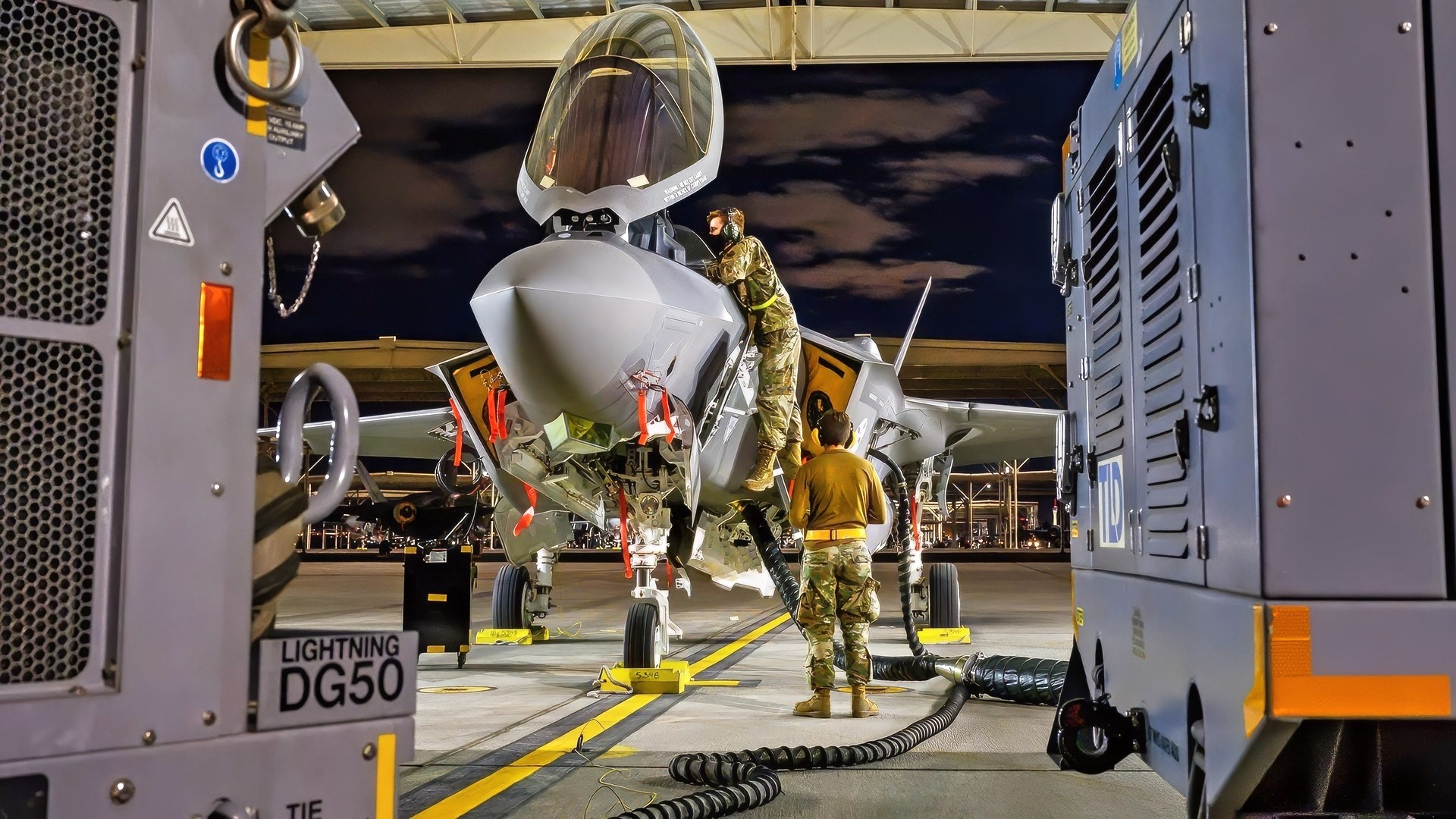
F-35 Fighters Ready. Image Credit: Creative Commons.

F-35 Near the Flag. Image Credit: Creative Commons.
What Shimooka Said
In a February 5 piece, Canadian analyst Shimooka argued that a mixed F-35/Gripen fleet would “fail us in every way,” describing the Gripen as “less capable, more expensive and still reliant on U.S. production.”
Specifically, Shimooka dissected claims by other analysts that a “hi-lo mix” of a few more capable aircraft and a fleet of less capable, cheaper aircraft, would make up for the capability difference – and noted that Canada “made a conscious decision in the 1980s to consolidate into a single fleet – with the advent of flexible multi-role aircraft like the CF-18 – in order to maximize the value of its spending.”
Beyond economics, however, Shimooka outlined an important point about Canada’s reliance on the United States – and how the Gripen platform doesn’t offer total independence from U.S. supply chains.
“Moreover it does not offer greater sovereign control over operations compared to the F-35. In fact, critical portions of the Gripen, including its core avionics, are built in the United States, and therefore subject to American controls,” Shimooka wrote.
The F-35 Has One Big Weakness
Whatever Carney’s decision may be – and it increasingly seems likely Ottawa will go with Saab – it will be fundamentally political. Carney’s case will likely rest heavily on the promise of jobs and sovereignty, rather than raw combat performance – a competition that Saab’s Gripen has already lost. He will cite Saab’s promise of 12,600 Canadian jobs, despite the fact that many of those roles depend heavily on Canada absorbing more of the Gripen supply chain than it presently does.
And, there will be the sovereignty argument. The Gripen is being pitched as a way to loosen Canada’s dependence on U.S. defense supply chains and export controls – a message that resonates amid Ottawa’s deteriorating relationship with Washington. By contrast, the F-35 is tightly integrated into an American global sustainment system overseen by the Pentagon and Lockheed Martin.
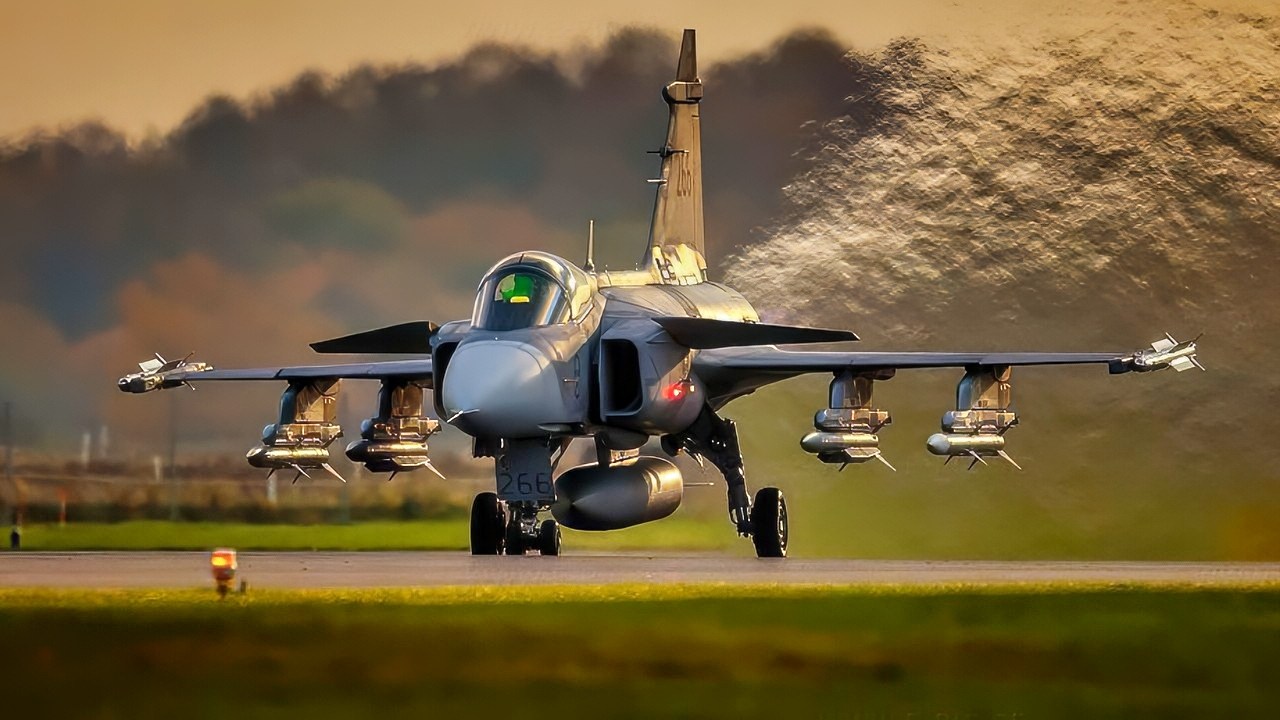
JAS 39 Gripen SAAB Image Handout

JAS 39 Gripen Flying in Formation.
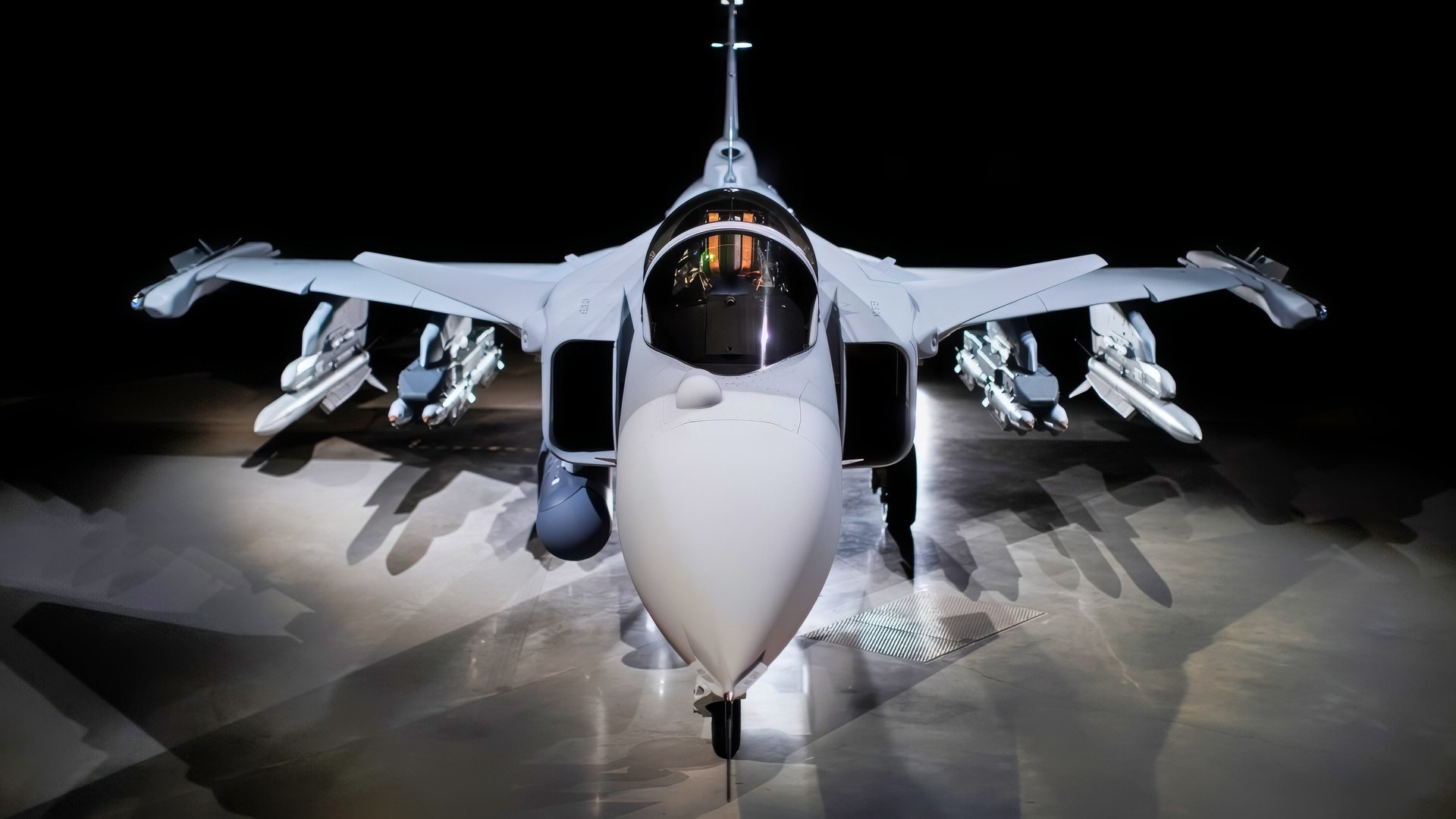
JAS 39 Gripen by Saab. Image Credit: Saab.
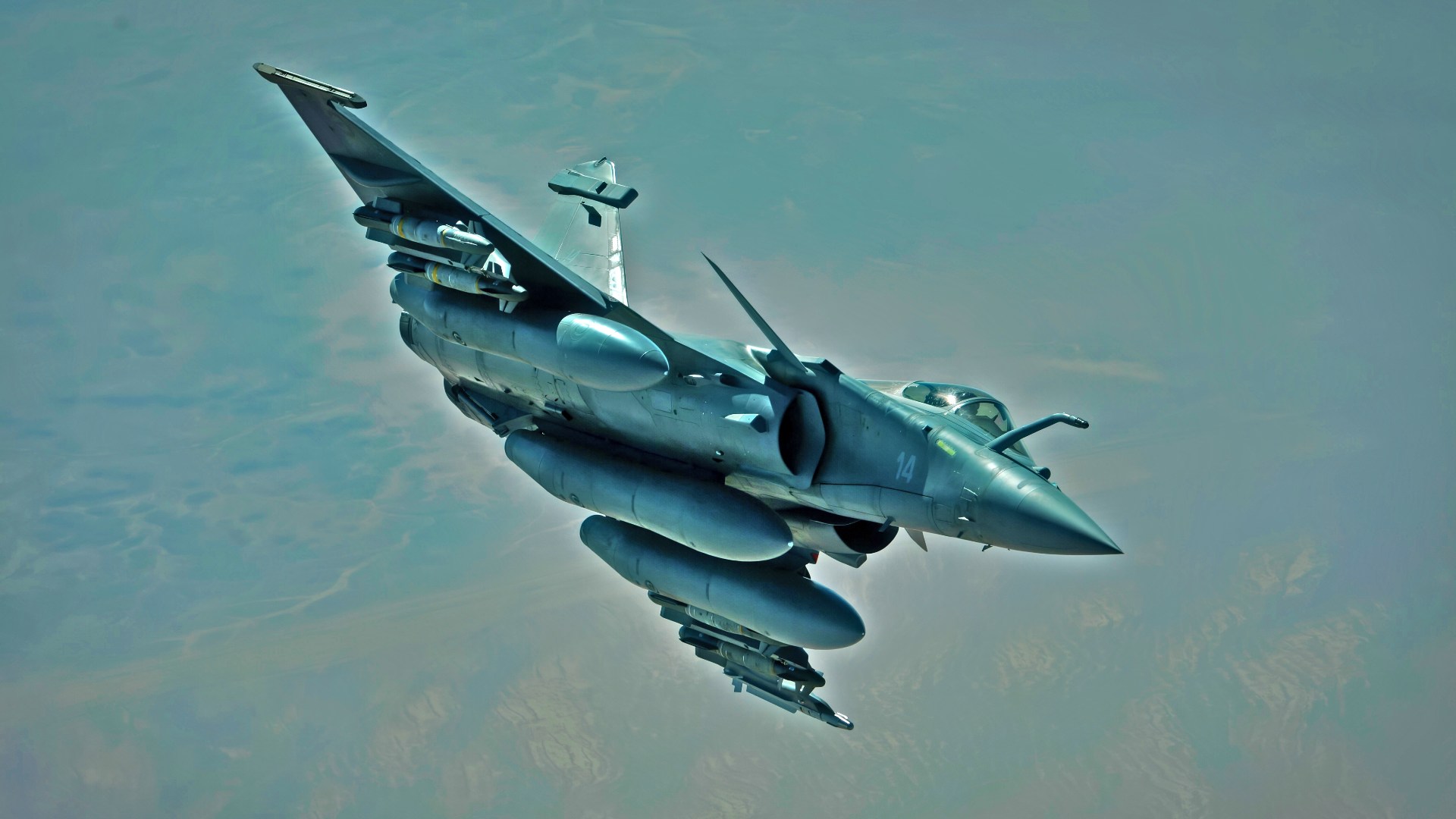
Dassault Rafale vs. JAS 39 Gripen E: Which European Fighter Jet Is Better?
But crucially, Carney will also likely lean on the F-35’s well documented readiness problems. Recent U.S. Government Accountability Office and Pentagon data show the global F-35 fleet achieving mission-capable rates of only around 55 percent – and lower for some variants, far short of the program’s targets. Ottawa can, therefore, credibly argue that an aircraft available barely half the time limits the platform’s usefulness, regardless of how advanced it is on paper. That would make the Gripen appear, politically, to be the only responsible option.
Yet, as I have argued in this outlet on multiple occasions, Canada may have many political reasons to choose the Gripen – but there will be consequences.
As Shimooka argues: choosing the Gripen now would “institutionalize” weakness across the Royal Canadian Air Force for decades to come, by choosing to invest now in a platform designed for a previous generation of air combat.
About the Author: Jack Buckby
Jack Buckby is a British researcher and analyst specialising in defence and national security, based in New York. His work focuses on military capability, procurement, and strategic competition, producing and editing analysis for policy and defence audiences. He brings extensive editorial experience, with a career output spanning over 1,000 articles at 19FortyFive and National Security Journal, and has previously authored books and papers on extremism and deradicalisation.


geh-geh
February 8, 2026 at 3:27 am
F-35 is strictly for the well-heeled, or those whose military budgets are generously well subsidized by the American public.
The f-35 isn’t as good as it has been made out to be.
According to a swedish pilot, Carl bergqvist, he has never lost a mock dogfight against American fighters.
Bergqvist says the swedish-made gripen fighter is so easy to fly, it only requires a pilot to run through just one simulator session, in order to be able to take it to the air.
Not so with the f-35.
The f-35’s avionics system may not accept every one of the pilot’s inputs, if its onboard sensors detect an instant anomaly during flight, especially an unusual one.
Result is, the pilot has to fight the plane, instead of concentrating on other tasks.
F-35 for the rich, and famous.
Doyle
February 9, 2026 at 11:20 am
Lots of platitudes and gratuitous statements. If you get an F-35 into a dogfight why bother having stealth. The fact is he would be floating down to earth in his parachute before he even knew there was an F-35 in his airspace. Ease of flying means nothing. The F-35 is likely better than it has been made out to be based simply on the basis you give no data supporting your claim just inane verbiage hand waving rhetoric. The fact is if you come to the fight with less than the best you will lose, well that is when big brother is not around to bail your sorry butts out.
Mat
February 8, 2026 at 6:21 am
Why Choosing Gripen Would Strengthen—Not Weaken—Canada’s Air Power
The argument that Canada would “institutionalize weakness” by selecting the Saab Gripen E over the F‑35 rests on outdated assumptions and a narrow understanding of Canada’s strategic needs. It assumes that only stealth and deep‑strike capability matter, while ignoring the operational realities of defending the world’s second‑largest landmass, the Arctic’s extreme environment, and Canada’s desire for greater technological sovereignty.
The Canadian fighter evaluation that critics cite was built on an early scoring matrix that did not reflect the modern Gripen E’s capabilities. It overlooked the aircraft’s updated electronic‑warfare suite, improved sensor fusion, and revised mission systems—while simultaneously failing to account for the F‑35’s well‑documented issues: low fleet availability, high sustainment costs, software instability, and the ongoing TR‑3 and Block 4 delays that have grounded or limited hundreds of aircraft worldwide. The comparison was never apples‑to‑apples.
Gripen E is not a “previous‑generation” platform. It is a different design philosophy: a highly agile, cost‑efficient, electronically dominant fighter optimized for rapid maintenance, dispersed basing, and harsh climates. These are not marginal advantages for Canada—they are central to credible Arctic defense. The F‑35 may excel in stealth and deep‑strike missions, but Gripen E outperforms it in agility, electronic warfare, operating cost, turnaround time, and cold‑weather resilience. For a country that must keep aircraft flying reliably in remote northern regions, availability matters more than theoretical maximum capability.
Nor would choosing Gripen undermine NORAD. The aircraft is fully compatible with NATO and NORAD standards, uses U.S. engines and weapons, and integrates seamlessly with allied datalinks. Interoperability is not dependent on flying identical aircraft; it is dependent on shared systems and procedures. In fact, the F‑35 places Canada under far tighter U.S. control, with centralized software, sustainment, and upgrade pipelines that Canada cannot modify or influence. Gripen, by contrast, comes with genuine technology transfer and industrial participation—something the F‑35 program has never offered.
Perhaps the most overlooked factor is that Gripen E is part of a larger system. Paired with Saab’s GlobalEye airborne early‑warning platform, it forms one of the world’s most advanced integrated air‑defense networks. GlobalEye can detect stealth aircraft at long range using S‑band radar and multi‑sensor fusion, then feed precise targeting data to Gripen E, which can track passively via IRST and engage with Meteor missiles without revealing its position. This is not a downgrade from the F‑35 ecosystem—it is a different, highly resilient architecture that aligns exceptionally well with Canada’s geography and mission profile.
Add to this the thousands of high‑value Canadian jobs, the strengthening of a partnership with a trusted democratic ally, and the strategic benefit of reducing dependence on U.S. export controls, and the case becomes clear. Choosing Gripen E is not a retreat from capability. It is an investment in sovereignty, resilience, and a fighter fleet designed for the real demands of Canadian defense—not the assumptions of a decade‑old evaluation.
Far from institutionalizing weakness, Gripen E would give Canada something far more valuable: control over its own airpower future.
Eric
February 9, 2026 at 9:21 am
Well, With the F35 you will have to wait until about 2032 before you have received the latest block4 updates and the F35 is combat ready.
Gripen will be completely updated from Start + in about 3 years you will be able to have Loyal Wingman for Gripen E. For equivalent on the F35 you will have to wait for all updates at least 10 years.
Doyle
February 9, 2026 at 11:23 am
Typical Canadian rationalizations for not doing the right thing. It is in the best interest of Canada money wise not to make a decision and spend practically nothing on their own defense. You’re cheats is what it boils down to and all the high and lofty rhetoric does not change that one bit.
Dave
February 9, 2026 at 11:44 am
Modern air combat is very different, the key benefit of the F35 is that it can talk with others and aid in both offensive and defensive capability so buying the Gripen E, you are betting on the fact that you can out fly multiple enemies at once. The era of dog fighting is mostly over and the Gripen E will be nothing but a coffin delivery system in combat.
Mat
February 9, 2026 at 12:15 pm
Dayle, while the JAS Gripen E/F is not a full stealth aircraft — a deliberate design choice — it incorporates low-observable features and excels in aerodynamics, advanced electronics, and cost-efficiency — making it a formidable alternative to the F-35 for Canada in most operational scenarios.
The F-35 wins on range, stealth capability, sustained turn rate, armament load and capability of networking with other military assets.
The Gripen E wins on top speed, instantaneous turn rate/agility, electronic warfare/jamming, lower capital cost, lower operating cost, easier/faster maintenance, parts availability and superior Arctic capability.
Throw in strengthening our sovereignty, a heightened mutually beneficial relationship with a valuable ally, many thousands of good jobs and technology transfer/development potential with the Gripen E, and it’s a clear choice for Canadians.
Furthermore, Sweden/SAAB’s combination of Gripen E and GlobalEye forms one of the worlds most advanced and fully integrated air-defense systems. GlobalEye detects stealth aircraft at long range using its S-band radar and multi-sensor fusion, then feeds precise target data directly to Gripen E. Gripen E can track the target completely passively with its IRST system and engage it with Meteor missiles at very long range — all without revealing its own position.
This isn’t two separate platforms. It’s a single, integrated system where GlobalEye provides unmatched situational awareness and Gripen E delivers the strike capability. Together, they give Sweden a modern, resilient and highly effective air-defense solution that remains credible even against advanced stealth aircraft like the F-35.
D Skroch
February 9, 2026 at 12:58 pm
Canada has made a strategic decision to decouple from the USA in potential future wars. Under Trudeau and Carney, they’d rather not use American designed and manufactured materials and systems. It won’t significantly affect the USA and I’m fine with that. They want a political divorce, so it’s time for them to go their own way.
The need for Canada to have the ‘bleeding edge’ in technology is low and the Gripen is likely to serve Ottawa well.
I don’t inherently believe that aerial combat is going to see a return to BVR missiles only and lets strip the airframes of cannons. The US did that in the 1950s and many paid the price for the Generals’ dream of ‘fire and forget’.
There is a reason I call the F-35 the “Brewster Buffalo 2.0”.
Randal Elder
February 9, 2026 at 1:21 pm
Canada is legally obligated to purchase some F35’s, and they should. Initial Contract/Firm Order: 16 aircraft were approved for initial acquisition, with first deliveries in 2026, followed by 6 more in 2027 and 6 more in 2028. One major weakness of both fighters is neither is a high-speed interceptor with long range, so it is encouraging to read Canada has been in talks with the 6th generation GCAP program made up of Britian, Japan, and Italy. What is the GCAP? Think Ferrari, Toyota, Land Rover. Fast, reliable, and tough. Test flights of this 6th gen platform, not 5th, are planned to begin next year with full operational deployment set for 2035.The United States wants Canada to purchase last year’s model, should Canada buy last year’s iPhone or wait for the new one? Canada should not purchase all 88 F-35’s in discussion but proceed with a limited number.
Richard Smiley
February 10, 2026 at 9:30 pm
When American defence commentators are talking about the F-35 as “the two trillion dollar mistake/boondoggle/disaster, and the US has just cut their own procurement in half, we should be looking at the fate of the F-22. It was “numero uno”, it was “stupendous”, it was great, it was unbeatable… at least according to its supporters… and then last year it was declared obsolete and unreliable. If it was so good, why did they stop making it and then declare it to be obsolete? An unreliable aircraft isn’t worth much. We have a lot of people who have never worn a uniform where they had to deal with American weapons systems, who never the less see themselves as being experts – but there is a huge difference between advertising fluff and what is actually out there. Since the F-35 has never been involved in a peer to peer war, what it can actually do is unknown – especially to the self proclaimed experts. What we do know is cost, maintenance requirements, and such official reports as the latest GAO report – which panned the F-35. We already know what will happen with a wildly expensive aircraft. Future governments will look around and say “Well, we aren’t in a war, so lets cut back on pilots and flight time”… that is what we did with the CF-18. Being able to afford the latest weapons and train our pilots counts for a lot when you have no idea what will happen in the next 50 years. 42 hours of maintenance per hour of flight? Requires massive infrastructure including climate controlled hangars, which will be the first target in any war? Has a tendency to become uncontrollable in “extreme low temperatures” (1.5 degrees F)? Can’t get the software right? No thank you. If we buy that pig, we will just be picking up the soap for Lockheed and the US Defense establishment. I’ve seen this movie before, and it didn’t end well for Canada.
Ron Fischer
February 9, 2026 at 3:33 pm
The Fact of the matter is that the USA is not our friend and ally anymore and we simply can’t put our faith in them honoring their commitments when we are in conflict, this makes the F-35 a liability not a benefit.
Vito DAlessandro
February 9, 2026 at 8:03 pm
Well the F35 is a great plane. Best utilized if you need stealth and are attacking a foreign nation.
Canada needs to defend its borders and not sneak up on any nation to attack.
I agree that splitting up the deal and getting both is not good long term.
They need to choose one, and they should choose the Griphen. It’s a workhorse, like an F-150 truck.
Canada doesn’t need a Ferarri to defend its borders.
Warrior24_7
February 10, 2026 at 8:20 am
What hasn’t been said is that the F35 deal for Canada is unaffordable. The overall cost of the deal ballooned significantly. Then there is the restrictions of use and dependency on American parts when the political situation has deteriorated significantly. Basically you’d be a fool to sign that deal.
Andrew
February 10, 2026 at 11:56 am
Canada is not ditching the F35. We may just be buying less. There is the 16 already on order and it seems 14 more are being ordered now. With more likely to follow.
The Gripped will likely play a role as well and that can help us build our industrial base.
James
February 10, 2026 at 1:44 pm
USAF will quickly get its Congressional followers to lap up F-35s lest cause the factory to close up. Then there is Israel waiting to scoop up Canada’s orders next to their brand new F-15 Eagles. What others who show up will be determined.
It was advantaged for Canada to take what would go to them.
Glenn Warfle
February 10, 2026 at 4:43 pm
Oh Canada, feel free to decouple your industry from the US of A. You proud communists can build your own airplanes,automobiles,tractors and other agricultural equipment, trucks, etc. What, you don’t your own brands of those items? I’m sure you’ll be perfectly happy with the Chinese versions of said products!
Hopeful
February 10, 2026 at 6:32 pm
With the Gripen, Canada can eventualy swap out US Avionics. But with the F35’s only, how will it deal with US threats to put in a “kill switch,” to make Canada the 51st state all while “defending” Canadian airspace by the US. Sounds like a shakedown.
Duke
February 10, 2026 at 11:31 pm
A Brit working in New York is hardly objective if salary may be incentive. With the F35 needs a bolt you need the part from Lockheed who may be very slow if Trump is a snit.The new hangers for the temperature sensitive F35 is a problem.. Ask Denmark about their bad experience.
Barnett Lerner
February 11, 2026 at 9:33 am
Oh sure, F-35 is sad, bad and unready.
That’s why how many countries have bought or contracted
for it?
No doubt the Israelis, who clearly know nothing about
using high performance fighters made a huge mistake
acquiring it. And, no doubt, they’re canceling the new
order they just placed, for more. What does the IDF
know about the real world. Clearly, the reports of how
important F-35 was in the 12-Day War and how happy the
IDF was with their performance are just propaganda
put out by greedy manufacturers.
There ARE problems with F-35. There generally are with
radically new systems.
Some are real.
Others turn out not to be problems, at all.
Notably, it was always part of the plan, and
reported as such, both in the media and to the
US Congress, that capabilities would be rolled
out in stages, over a period of years.
Lars Pardo
February 11, 2026 at 12:22 pm
would you buy a car and accept not owning it?
when a country’s foreign affairs is run by the pique of an aging, senile greedy old man & his sociopathic advisor, both w/questionable & sympathetic ties to russia, it simply cannot be trusted w/the national security of Canada.
When trump sold america’s most secretive chips (GB300GPU) to China, via the UAE and pocketed the money…, the question arises ‘what is the commission split that trump’s family gets from LockheedMartin’s excessively priced plane.
Furthermore, see how Ukraine destroys hundred’s of millions of dollars of russian equipment w/cheap drones.
trump’s america is simply not to be trusted…this will be evident when trump/lockheedmartin grounds Canada’s multi-billion dollar fleet w/o firing a single shot.
Mr David Haynes
February 12, 2026 at 3:21 am
For Canada’s realistic Arctic air defense requirements, the Gripen + long-endurance radar drone model is the most appropriate choice. It is cheaper, operationally effective, resilient, and capable of handling both routine CAP and emerging threats such as drone swarms.
F‑35s provide advantages only in rare high-end escalation scenarios, which are unlikely in NORAD peacetime operations. For daily defensive missions, Gripen + drones is clearly superior when considering the full system picture — aircraft, sensors, pilot training, attrition, and supply chain resilience.
Swamplaw Yankee
February 13, 2026 at 4:38 am
These op-ed armies of F-35 addicts seem to be losing sight of the recent massive attack by/of the MAGA POTUS Trump elite on the US-Canada’s economy.
The MAGA Trump elite seem uninterested in all the F-35 blab as they attack the Canadian economy, ie, source of aluminum, electrical power, etc., for many US cities.
The current Canadian power elite will last as Parliament dictators for the next 4 years. Compare that time frame with the few months that the MAGA Trump elite have in understanding/accepting their very short hold on control of Congress. 3T is quite capable of out thinking the MAGA POTUS Cabal. 3T = Third Trudeau.
Canada of 2026 has extensive Ukraine connections. As the innovative World War Xi unfolds, who understands the new KHOLOD War better: Canada or the US inner beltway living inside their aquarium? As the world observes, MAGA POTUS elite recklessly self-abdicate their leadership of the WEST. That is, the 2014 POTUS “Benedict Obama” 2014 betrayal of NATO-UK-EU by the sell out of Ukraine is accelarated by the crazed Trump wish of his illegal donation of Ukrainian soil to the WEST’s geopolitical enemies.
The 3T elite see the real performance characteristics of other modern fighter jets on the Ukrainian meat grinder line of serial Genocide. That the US refuses to field test the F-35 against the Xi regime vassal Kremlin Putin, means that all other fighter tech improves in real battles and the Canadians know the details.
Anyhow, the main test is Mexico! Until wealthy Mexico deposits cash + orders huge F-35 numbers, the fake pressure on tiny populated Canada to buy extra F-35 hardware is shown clearly as a Yankee sign of bad + ill intention. Why is Canada protecting Mexico, when the US totally refuses to make the huge population of Mexico + Central America buy into the F-35 “dream”? Shake down the wealthy Mexicans first!
GhostTomahawk
February 20, 2026 at 12:03 pm
The F35 is garbage. Slow. Poorly armed. Not a good dog fighter. Stealth isn’t stealth anymore. Completely reliant upon electronic warfare. It’s a Swiss army knife. It can theoretically do everything just not anything well.
There is no plane that can do it all. Both branches have tried. Everyone wants short supply trains and simplicity. That just doesn’t exist. Every aspect of war is nuanced.
Kill the F35. It’s too expensive and a poor performer.