


The Pentagon is moving to fast-track the U.S. Navy’s F/A-XX sixth-generation carrier-launched stealth fighter after months of internal debate over whether the program could be deferred in favor of upgraded F-35Cs. The shift reflects a hardening assessment of China’s air power trajectory: the People’s Liberation Army Air Force is on track to field roughly 1,000 J-20 fighters by 2030, the Chinese Navy has moved its J-35 carrier stealth fighter into mass production, and the PLA is now flying two sixth-generation prototypes — the J-50 and J-36. The F/A-XX will be designed for Mach 2.25 speed and roughly double the F-35C’s 1,300-nautical-mile range.
The F/A-XX Is Coming Soon
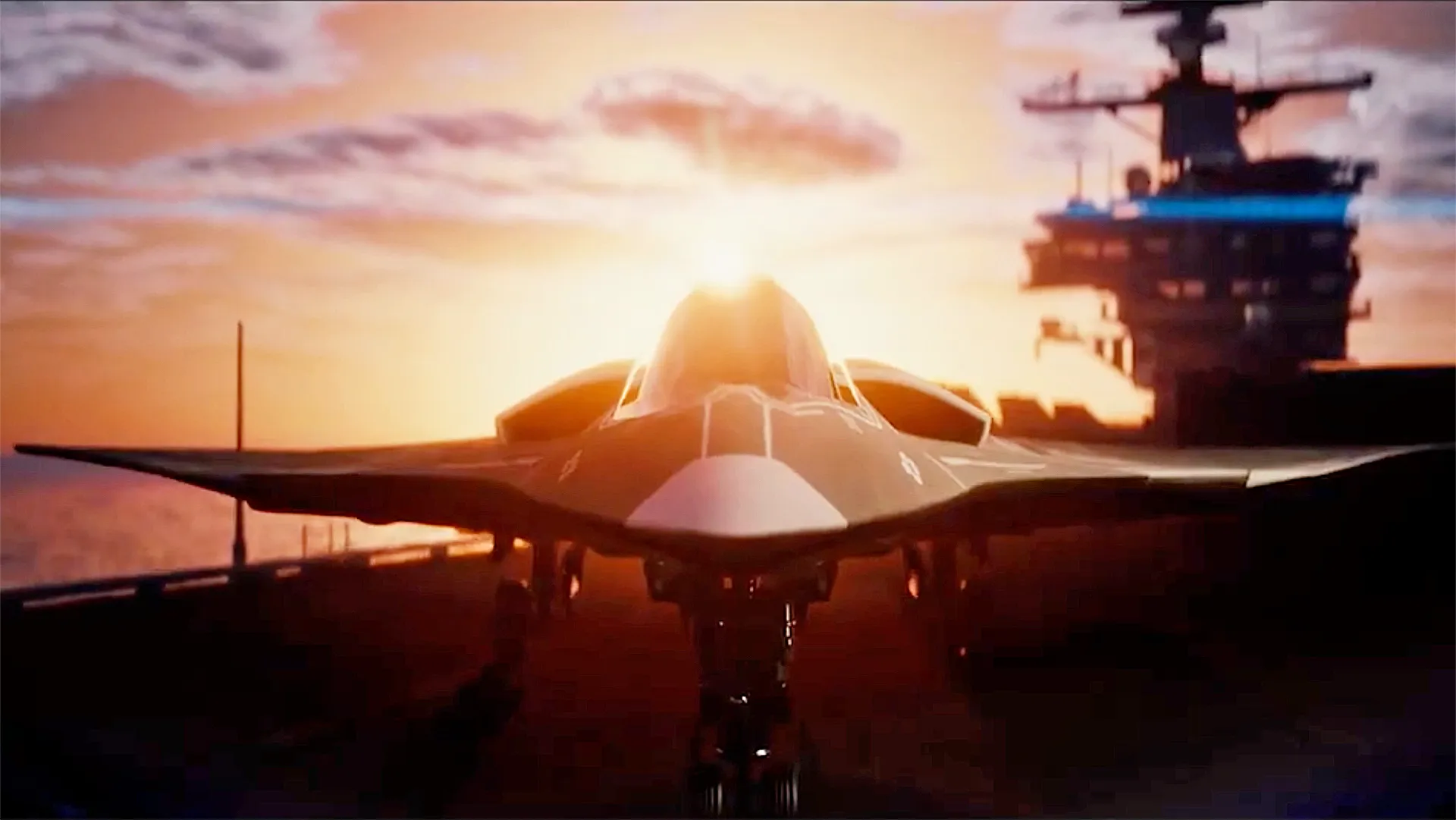
FA-XX. Northrop video screenshot.
The Pentagon may be emerging from a haze of ambiguity, indecision, and strategic paralysis to fully endorse, support, and fast-track development of the U.S. Navy’s 6th-Gen, carrier-launched stealthy F/A-XX.
Following speculation that the Pentagon may have been considering keeping its top Carrier Air Wing jet as an upgraded F-35C and “not” building the F/A-XX, the Department of War now seems clear it will prioritize production of the much-needed platform.
The thinking had been that perhaps the U.S. industrial base might struggle to sufficiently “flex” to build both an F-47 and F/A-XX, yet the expertise, production capacity, and expansion potential of U.S. industry’s best seems to be convincing decision makers that the ability to massively produce “two” 6th-gen stealth fighters simultaneously … is here.
Build 6th-Gen Fighters
The debate over production has been taking place within the broader context of a sense of strategic urgency, a belief that the U.S. Navy simply can’t afford “not” to build the jet.
The prevailing consensus seems to be that, without the F/A-XX, the U.S. Navy will increasingly be challenged to preserve its “edge” in the realm of carrier-launched stealth attack aircraft.
While the People’s Liberation Army Air Force may operate close to 1,000 J-20 stealth fighter jets by 2030, the J-20 Mighty Dragon is land-launched, and the PLA AF and PLAN have been operating at a massive 5th-generation deficit in maritime air power projection.
The U.S. and its Japanese and Australian allies operate hundreds of ocean-launched F-35Cs and F-35Bs capable of projecting power from forward maritime locations, while the PLA has in recent years operated only several prototypes of its J-35 5th-gen carrier-launched stealth jet.
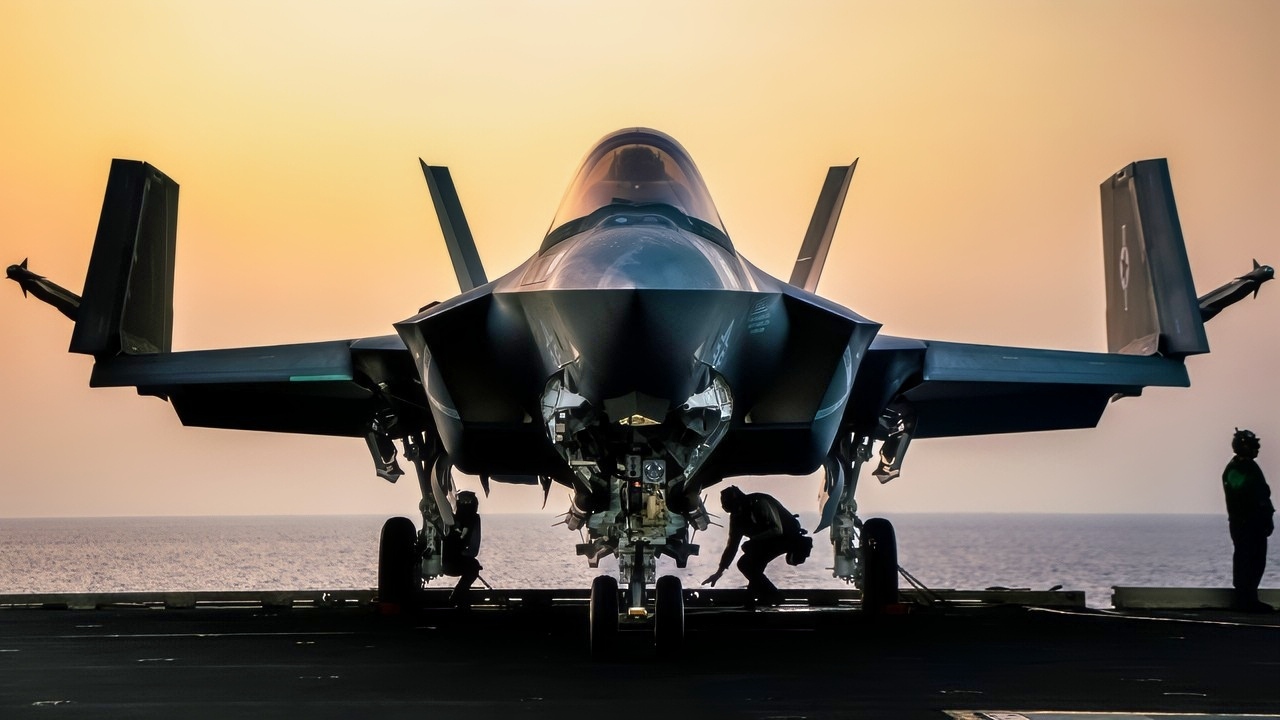
U.S CENTRAL COMMAND AREA OF RESPONSIBILITY (April 24, 2025) U.S. Sailors conduct pre-flight safety checks on an F-35C Lightning II, attached to Strike Fighter Squadron (VFA) 97, on the flight deck of the Nimitz-class aircraft carrier USS Carl Vinson (CVN 70) in the U.S. Central Command area of responsibility. (Official U.S. Navy photo)
China J-35 Ocean Threat
Now, however, these initial J-35 prototypes have evolved into a mass-producible, operational J-35 carrier-launched 5th-generation stealth aircraft. China’s civil-military fusion and known production capacity mean that the previous U.S. advantage in the realm of ocean-launched 5th-generation air attack is eroding quickly.
Added to this changing threat dynamic is the established reality that the PLA appears to now be flying “two” prototype 6th-generation aircraft, the J-50 and J-36.
In simple terms, this means that the U.S. Navy’s stealth fighter-jet power projection capability could quickly be “surpassed” unless the Pentagon accelerates F/A-XX production.
The value of the F-35C will by no means diminish, as it is an extremely “upgradeable” platform able to integrate new breakthrough weapons, sensors and computing in coming years, yet the platform suffers what could be described as a range-challenge in the Pacific; the F-35C’s 1,300 nautical miles range is certainly useful and relevant in a tactical sense, yet the great “expanse” of the Pacific theater suggests that longer-ranges would be extremely valuable.
Therefore, it’s likely that the F/A-XX will be built to double the range of the F-35C and bring F-22-like speed, agility and air supremacy to U.S. naval maritime aviation.
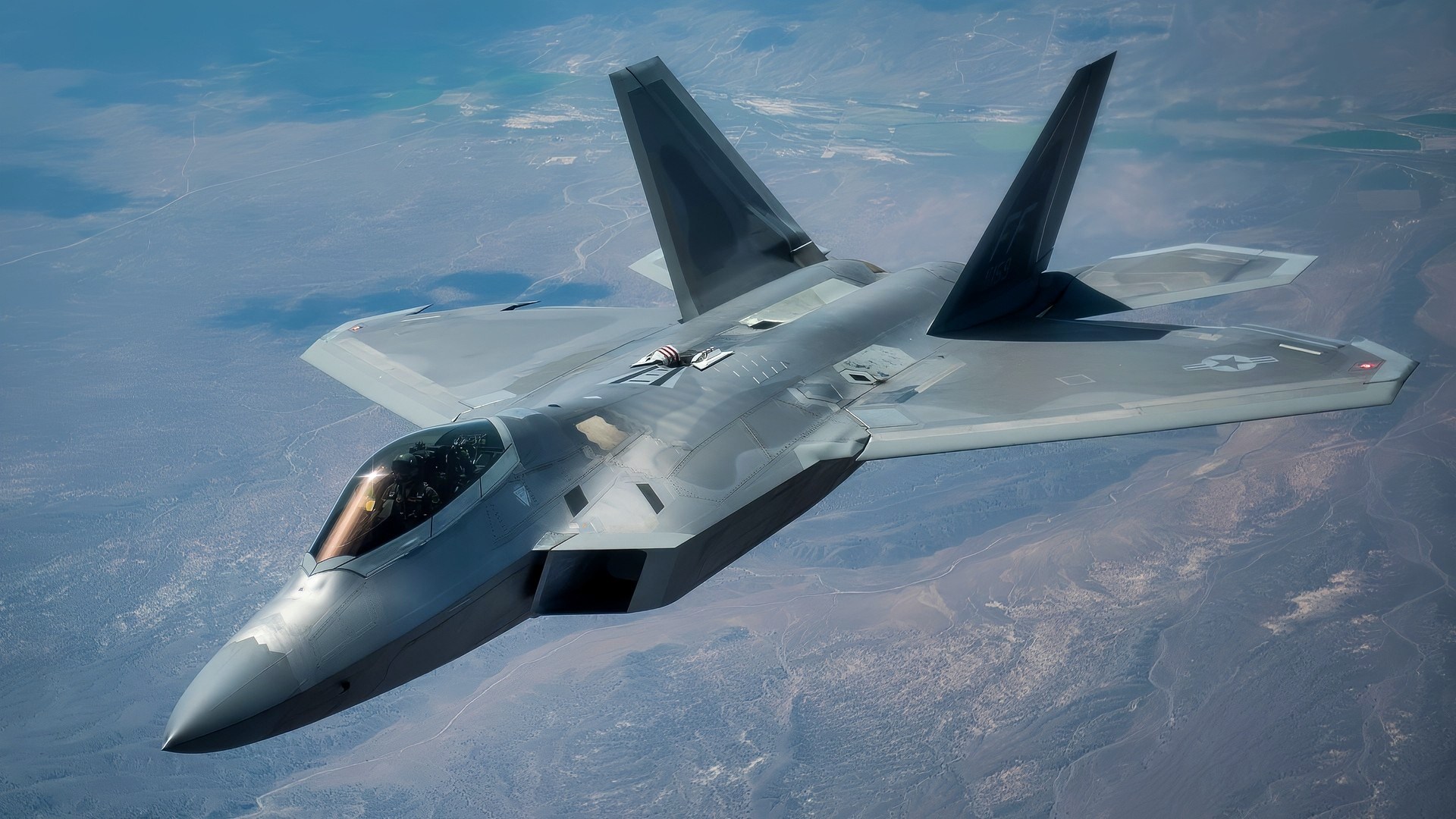
An F-22 Raptor from Langely Air Force Base, V.a. flies by after receiving fuel from a KC-135 Stratotanker from McConnell Air Force Base, Kans., July 27, 2016 during exercise Red Flag, hosted by Nellis Air Force Base, Nev. Red Flag 16-3 is aimed at teaching service members how to integrate air, space and cyberspace elements. (U.S. Air Force photo/Tech. Sgt. David Salanitri)
Maritime Stealth Attack Beyond F-35C
As a multi-role fighter known for its drone-like ISR, sensor fusion, long-range targeting and advanced computing, the F-35C brings unparalleled combat advantages to maritime air warfare, yet its maximum speed is only Mach 1.6.
China’s J-20 is cited in public specs as being able to fly at speeds of Mach 2, and the F-22 is known for its Mach 2.25 speed, so it seems extremely critical that the U.S. Navy brings high-speed, maneuverable, ocean-launched stealth 6th-gen air power to its Carrier Air Wing.
There simply are not enough F-22s, and their reach would be quite limited in the Pacific given that they are land-launched.
However, an ocean-launched air-supremacy fighter with Mach 2.25 speed and 6th-generation sensing, computing, and weapons could prove decisive in the event of a conflict with China in the Pacific.

F/A-XX Handout Photo from Northrop Grumman.

Boeing NGAD F/A-XX Fighter Rendering. Image Credit: Boeing.
F-22s would have to launch from the Philippines or Japan, a circumstance which would simply “narrow” or “shorten” their reach; a carrier-launched air supremacy high-speed fighter, however, would position the U.S. Navy to launch 6th-gen speed, agility, and lethality from anywhere in the Pacific Ocean.
About the Author: Kris Osborn
Kris Osborn is a Military Technology Editor. Osborn is also President of Warrior Maven – Center for Military Modernization. Osborn previously served at the Pentagon as a highly qualified expert in the Office of the Assistant Secretary of the Army—Acquisition, Logistics & Technology. Osborn has also worked as an anchor and on-air military specialist at national TV networks. He has appeared as a guest military expert on Fox News, MSNBC, The Military Channel, and The History Channel. He also has a Master’s Degree in Comparative Literature from Columbia University


