

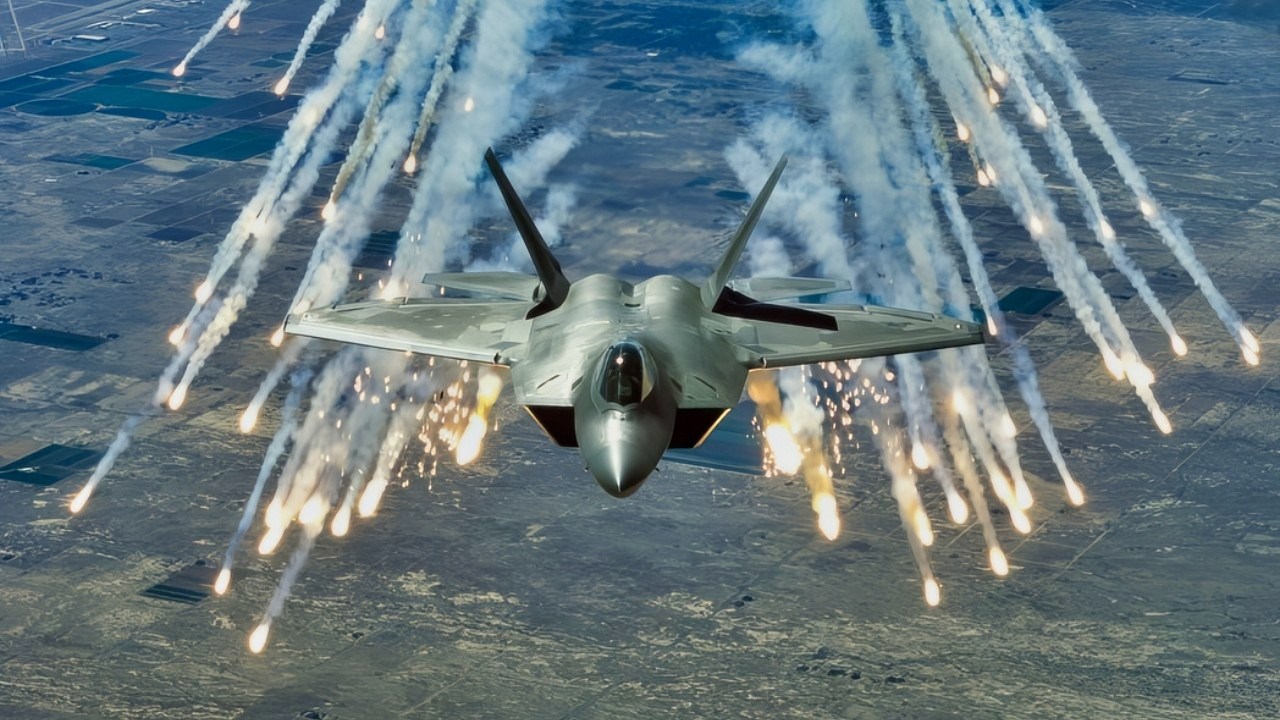
The F-22 Raptor’s 2060 Future: Why the Air Force Refuses to Retire the King of Stealth
Summary and Key Points: The U.S. Air Force has revealed a stunning plan to keep the F-22 Raptor operational well into the 2060s, defying earlier retirement projections.
-Far from a relic, the Raptor is undergoing a radical evolution with new stealth coatings, advanced AESA radars, and the massive “3.2b” software upgrade that enhances its AIM-9X and AIM-120D missiles. This extended life is a direct strategic counter to China’s rapidly growing fleet of J-20 and J-35 fighters.

F-22 Raptor Sitting in AF Museum National Security Journal Photo. Image Credit: Harry J. Kazianis
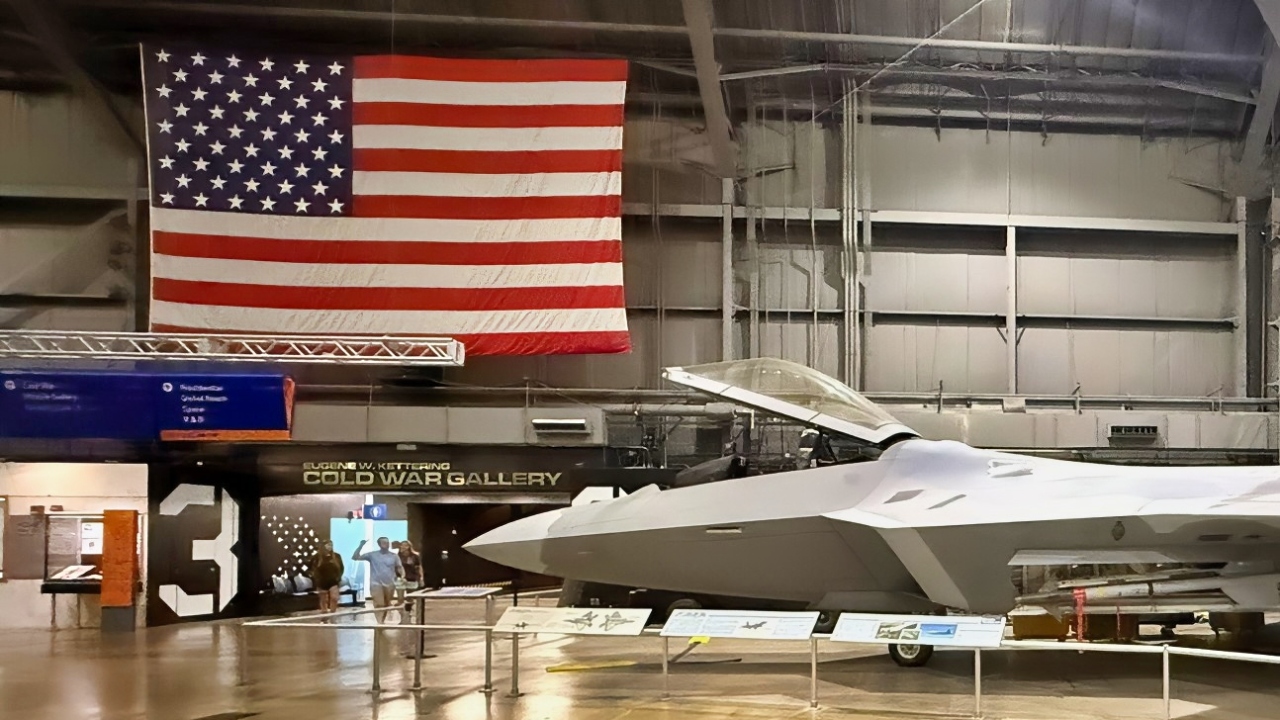
F-22A Raptor in the Air Force Museum NSJ Photo.
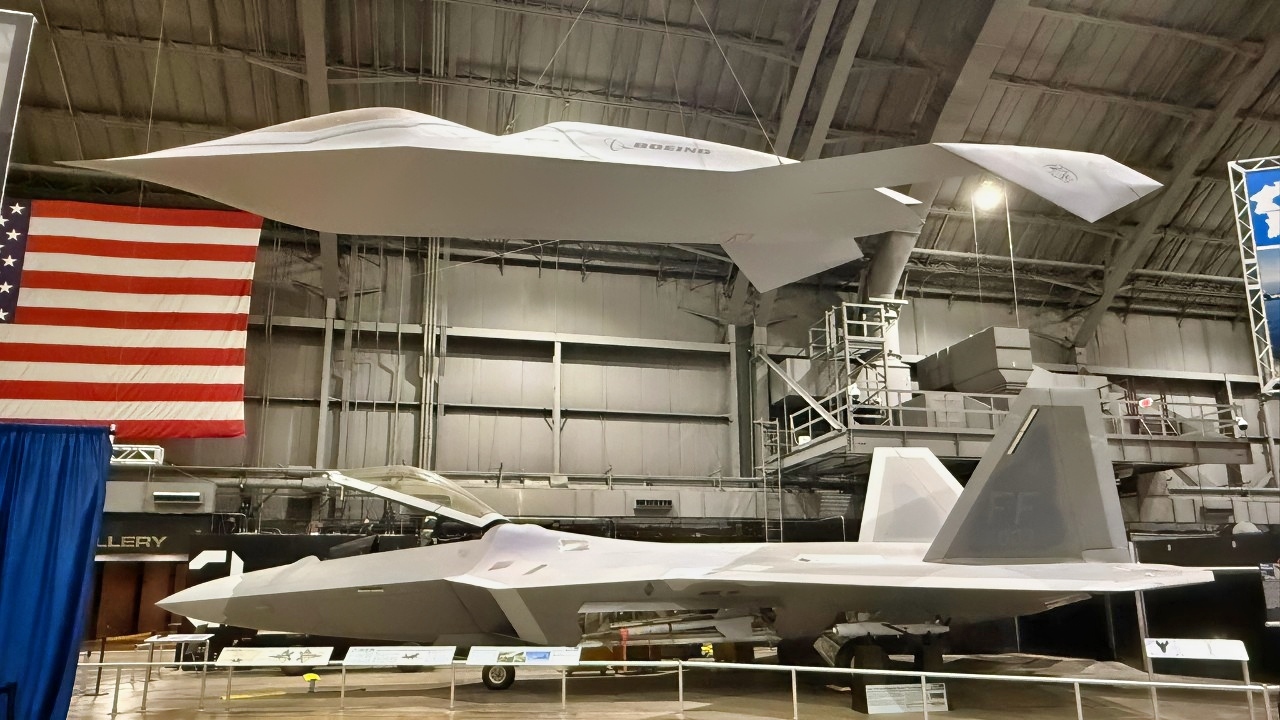
YF-118G above and F-22 Raptor Below. Image from National Security Journal.
-With the “Rapid Raptor” program enabling global strikes within 24 hours, the F-22 remains the ultimate “first shot, first kill” dominance platform, bridging the gap until 6th-generation fighters arrive.
-The U.S. Air Force intends to fly the Raptor well into the 2050s and 2060s. Such extended service is possible because the Raptor has proven to be continually upgradeable.
The F-22 Raptor Has a Message for China: We Are Flying Until 2060
Today’s Raptor is an almost entirely different aircraft from that which first took flight nearly 30 years ago; it has received new avionics, sensors, software, coating materials, and weapons.
The F-22’s Mach 2.25 speed and superior thrust-to-weight ratio enable the aircraft to vector and maneuver in flight, which contributes to its ability to prevail in air-to-air engagements and secure air superiority
The Raptor may still be the best air-dominance platform the world has ever seen.
It would likely prevail against high-speed Russian Su-27s and Su-57s and could outmatch the Chinese fifth-generation J-20 Mighty Dragon.
F-22s Counter China
Aside from pure capabilities, there are other reasons the Pentagon should sustain the F-22 for as long as possible, and these are related to production.
It may take several years for the future F-47 and F/A-XX to be delivered in sufficient numbers, like the F-35 has been, but the potential for great power conflict means the Air Force must be ready to mass fifth- and sixth-generation airpower.
The People’s Liberation Army Air Force (PLAAF) operates roughly 300 J-20 stealth jets and is fast-tracking the J-35, as well as two new sixth-generation aircraft about which little is known.
China is well known for the civil-military fusion of its technological development, as well as its ability to accelerate platform production very quickly.
Therefore, retiring the F-22 not only would remove crucial capabilities but would also leave the Air Force with a potential airpower deficit relative to the PLAAF.
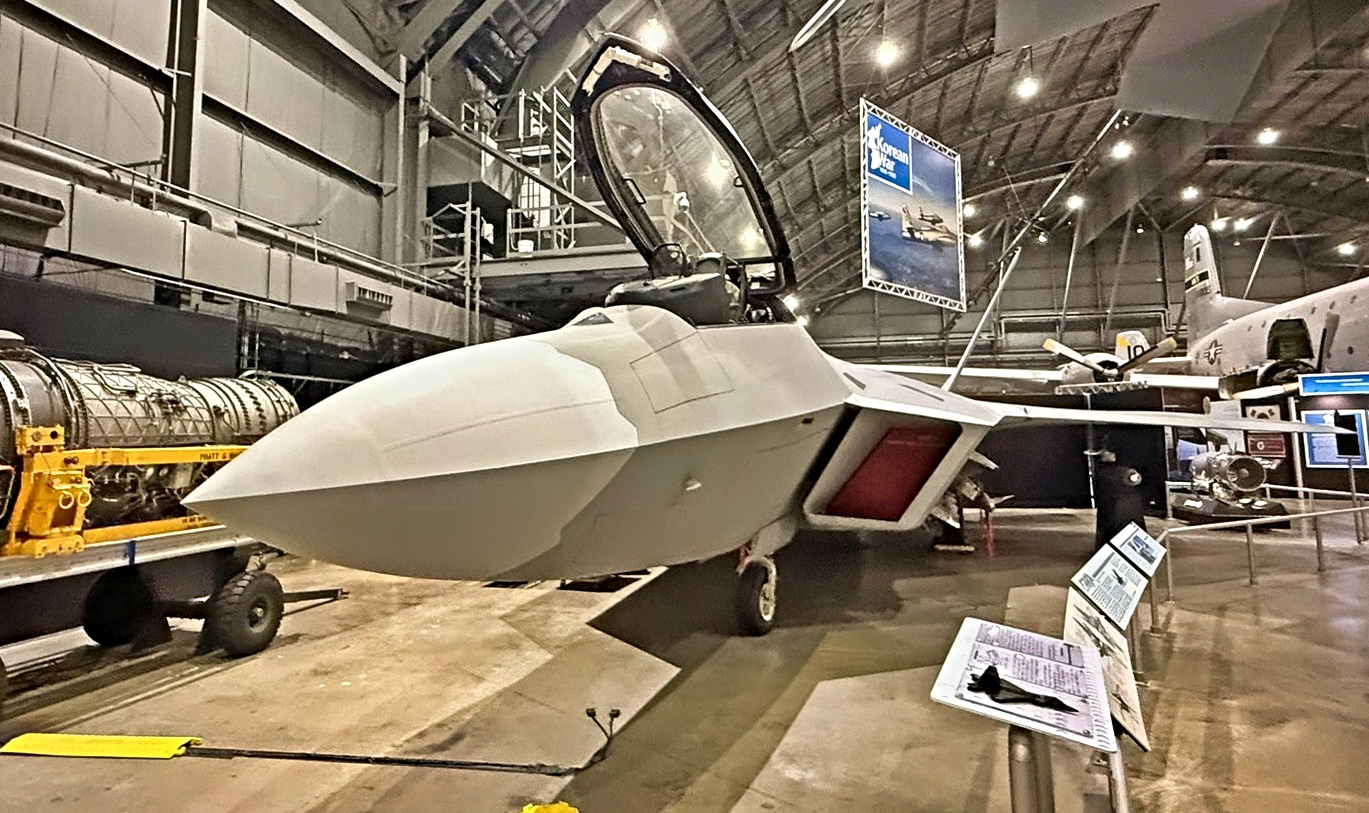
F-22 Raptor Nose Shot from U.S. Air Force Museum. Image Credit: National Security Journal.
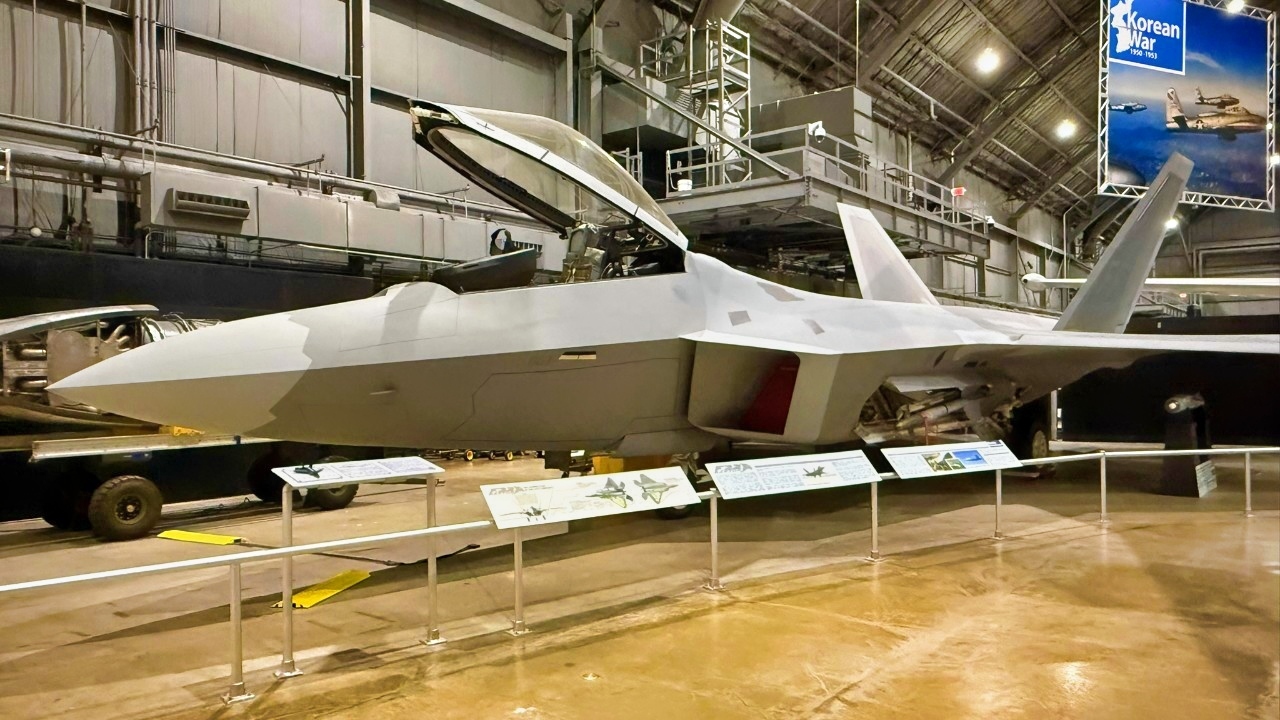
F-22 Raptor @ USAF Museum 2025. Image Credit: National Security Journal.
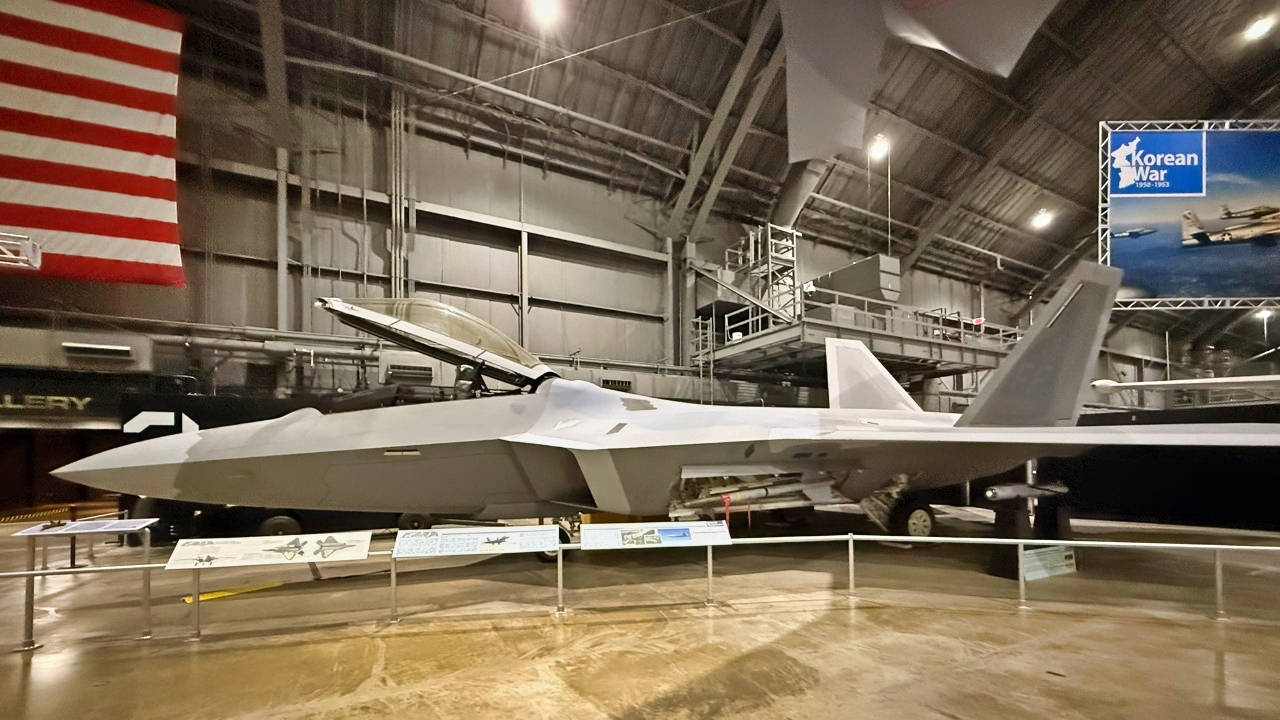
F-22 Raptor. This will be replaced by the F-47. Image Credit: National Security Journal.
Keep Entire F-22 Fleet
These are just a few of the reasons the Pentagon wants to fully upgrade the Air Force’s entire fleet of F-22s, including older airframes.
Thanks to some structural maintenance and reinforcements, the airframes of the F-22s have remained viable.
Many of the F-22’s core attributes have withstood the test of time, as its speed, stealth, and aerial maneuverability make it hard for even advanced modern air defenses to track.
The F-22’s supercruise enables the aircraft to maintain mach-speeds without needing an afterburner.
F-22 Upgrades
Upgrades to the Raptor have been going on for years and have arrived in successive waves.
Lockheed Martin has embarked upon several efforts in recent years to maintain, reinforce, and upgrade the aircraft’s stealth coating.
Nearly 10 years ago, Lockheed and the Air Force implemented a massive, fleet-wide weapons-oriented software upgrade to the Raptor called 3.2b.
The 3.2b software effort greatly expanded the capabilities of the F-22’s AIM-9X and AIM 120D air-to-air missiles.
Range, fire control, targeting precision, and anti-jam hardening were among the vital software upgrades that massively improved the capabilities of the Raptor’s weapons.
These upgrades have now been operational across the fleet for many years.
First Shot – First Kill
The Raptor is associated with the famous phrase “first shot, first kill:” Its stealth and speed position it to deliver crippling, effective first strikes.
Speed of deployment is also critical for the Raptor, which is why the Air Force pioneered and maintained a “Rapid Raptor” program to ensure the F-22 could arrive and attack any location worldwide within 24 hours.
This was accomplished by ensuring that F-22s and their necessary supplies and maintainers were strategically positioned worldwide.
In more recent years, the F-22 Raptor has dramatically improved its ability to share data with the F-35 using two-way LINK 16 functionality.
Previously, datalink connectivity was limited to one-way communication, but the Air Force upgraded this capability in recent years.
Furthermore, the F-22 has received a greatly enhanced Advanced Electronically Scanned Array radar capable of tracking multiple targets and threat trajectories simultaneously.
About the Author: U.S. Air Force Expert Kris Osborn
Kris Osborn is President of Warrior Maven – Center for Military Modernization. Osborn previously served at the Pentagon as a highly qualified expert in the Office of the Assistant Secretary of the Army—Acquisition, Logistics & Technology. Osborn has also worked as an anchor and on-air military specialist at national TV networks. He has appeared as a guest military expert on Fox News, MSNBC, The Military Channel, and The History Channel. He also has a Masters Degree in Comparative Literature from Columbia University.


