


Key Points and Summary – New ground integration tests at Edwards AFB show the ramjet-powered Meteor BVRAAM can now “talk” to, fit inside, and safely deploy from the F-35A’s internal weapons bay, a key step before flight trials and eventual Block 4 operational clearance.
-Meteor brings a genuine beyond-visual-range leap: powered flight to impact, Mach-4+ speed, and 100km-plus effective intercepts already fielded on Rafale, Typhoon, and Gripen.
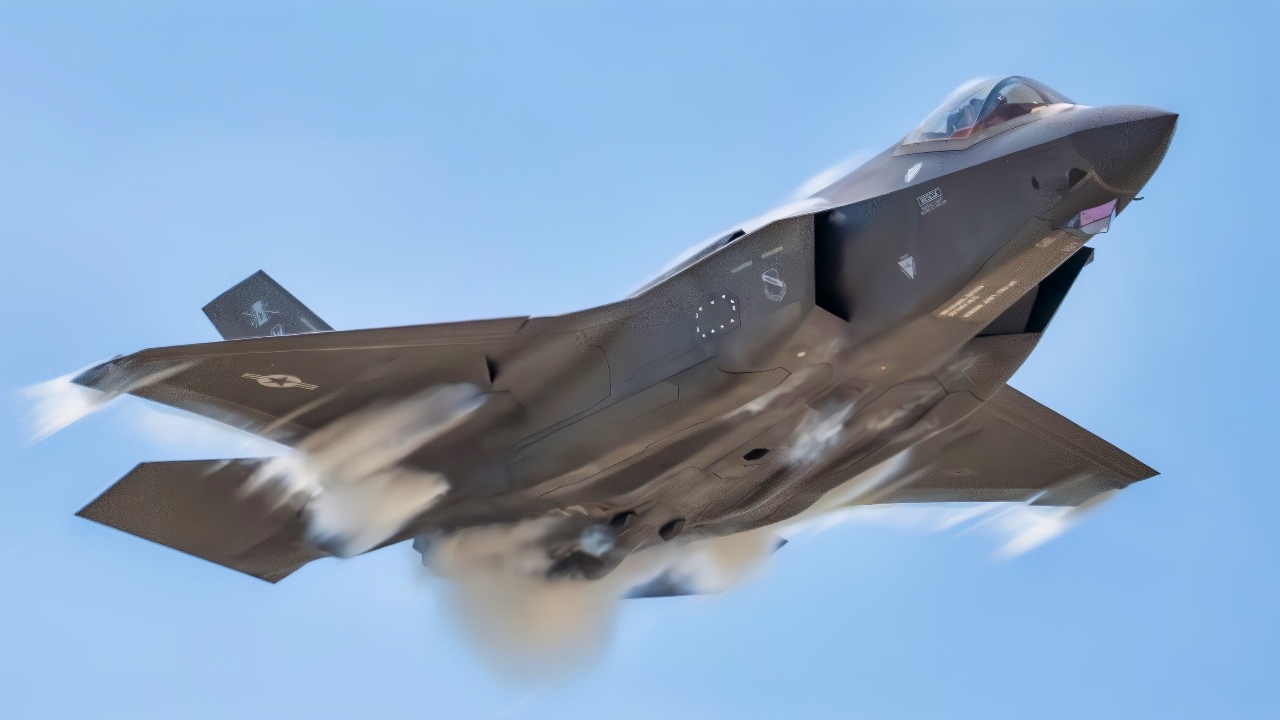
U.S. Air Force Maj. Kristin “BEO” Wolfe, F-35A Lightning II Demonstration Team pilot and commander, flies an F-35A Lightning II assigned to the 421st Fighter Generation Squadron during Naval Air Station Key West 2023 Southernmost Air Spectacular over Boca Chica Field in Key West, Florida, April 14, 2023. The F-35 demonstrated its capabilities during the airhshow, along with the U.S. Navy Blue Angels and other various performers. (U.S. Air Force photo by Senior Airman Kaitlyn Ergish)
-Italy and Germany will be the first F-35A users to employ it, while other operators continue to lag on timelines—leaving the U.S. stealth jet at a competitive disadvantage in export fights against European rivals already flying Meteor.
Ramjet Revolution: Meteor Turns the F-35 Into a True BVR Killer
According to a 4 December report, the US prime contractor for the F-35 Lightning II Joint Strike Fighter, Lockheed Martin (LM), the European air-launched weapons consortium MBDA, and the F-35 Joint Program Office (JPO) have recently completed a series of ground-based integration tests with the F-35A Joint Strike Fighter (JSF) and the Meteor ramjet powered beyond-visual-range air-to-air missile (BVRAAM).
The announcement was made one day prior to the report.
This validation was carried out at Edwards Air Force Base (AFB) California, and included ground vibration testing and internal weapons bay fit checks.
These tests are reported to have also confirmed the hardware “talkback” responses between the aircraft and missile’s launch and guidance systems.
Describing the tests as “a pivotal step before airborne tests begin,” the JPO and LM detailed that the work performed at Edwards demonstrated that the European-produced missile “can be safely stowed and deployed from the F-35A’s internal weapons bay.”
This limits the possibility of any surface imperfections being created by loading weaponry into the bay and thus preserves the aircraft’s radar cross section (RCD) profile. One ground test [still] remains before clearance to start flight testing,” they also stated.
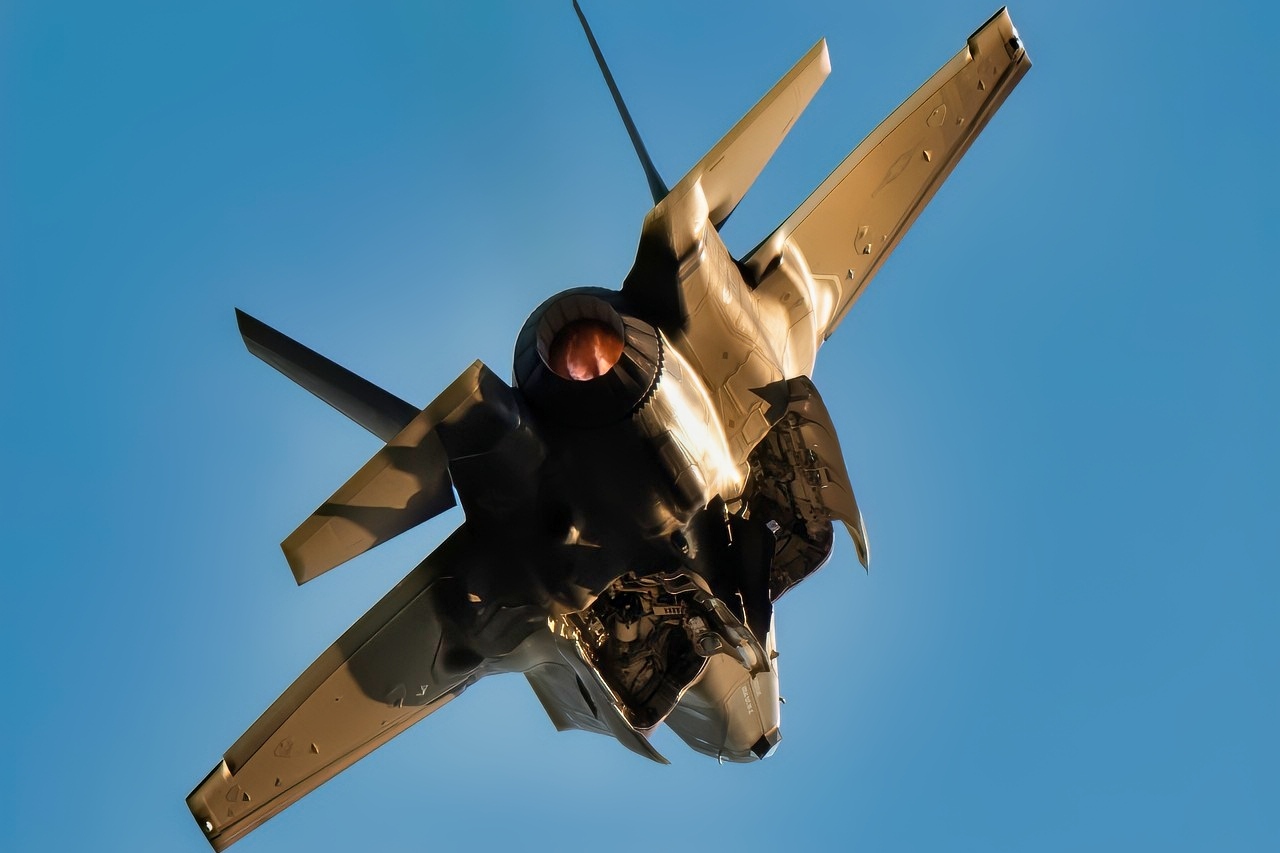
U.S. Air Force Major Kristin “BEO” Wolfe, F-35A Lightning ll Demonstration Team pilot and commander, flies during sunset over Mathers Airport, Calif., Sept. 24th, 2021, at the California Capital Airshow. The team consists of approximately 15 total Airmen to include the pilot and commander, pilot safety officers, superintendent, team chief, maintenance Airmen, aircrew flight equipment specialists, and public affairs personnel. (U.S. Air Force photo by Staff Sgt. Thomas Barley)
The Meteor missile is being integrated onto the F-35 as part of the aircraft’s Block 4 upgrade.
This is the latest variant of the aircraft, which should be operational by the early 2030s.
The Weapon’s Profile
The Meteor is the product of a long-running, six-nation cooperation program involving the UK, Italy, France, Germany, Spain, and Sweden.
Since entering service, it has been integrated onto a variety of platforms.
The missile is 3.7m (12ft 1 in) long, weighs 190kg (418 lb), and has a cropped fin, a modification from the original version.
This change was made to allow it to fit inside the F-35’s internal weapons bay.
With an operational range of 110nm (200km), the Meteor is already in frontline use on the Dassault Aviation Rafale, Eurofighter Typhoon, and Saab JAS 39 Gripen.
It also being integrated onto and cleared for the air frame of the still-in-development Korea Aerospace Industries KF-21 Boromae.

JAS 39 Gripen. Image Credit: Creative Commons.
Two days ago, it was also announced that the Brazilian Air Force (FAB) had conducted test firings of the Meteor on JAS-39E aircraft in Brazilian service.
These launches took place during the BVR-X Technical Exercise, at Natal Air Base in Rio Grande do Norte, with the participation of the FAB’s First Air Defence Group (1º GDA).
The initial firing of a Meteor from any model of the F-35 was previously reported to have taken place at the end of February.
This test firing was conducted by the UK Royal Air Force (RAF), which stated a F-35B short take-off and vertical landing (STOVL) variant of the fighter belonging to the US Marine Corps (USMC) had participated in this test.

A U.S. Marine Corps F-35B Lightning II aircraft with Marine Fighter Attack Squadron (VMFA) 242 conducts a low pass next to the Japanese Ship Izumo off the coast of Japan, Oct. 3, 2021. U.S. Marines and Sailors embarked aboard the Japanese Ship Izumo in support of the first ever F-35B Lightning II operations aboard a Japanese vessel. The U.S. and Japan continue to work closely together to broaden their operational capabilities, support the Treaty of mutual Cooperation and Security, and maintain a free and open Indo-Pacific. (U.S. Marine Corps photo by Lance Cpl. Tyler Harmon)
The test reportedly was conducted with an inert missile during tests flown out of Naval Air Station (NAS) Patuxent River in Maryland.
As noted in the official announcement, the tests involved both the UK and US governments, as well as the UK Ministry of Defence (MoD), Defence Equipment and Support (DE&S), and the major industrial partners MBDA and LM.
Game-Changing Weapon for F-35
The Meteor AAM has been described by industry and military officials among all the program partners as a steep enhancement in air-to-air combat capabilities.
Achieving speeds greater than Mach 4 and with an intercept range in excess of 100 km is due to the missile’s ramjet motor.
This type of propulsion system means the weapon is moving under full power up to the point of impact.
This differs from most conventionally powered air-launched weapons, which have an engine lit only during a comparatively short boost phase after launch. After the rocket motor’s fuel supply is consumed, they will then glide unpowered to their target.
During the glide phase, they slowly lose velocity as energy bleeds off, which is the limiting factor in their range.
“Meteor is the UK’s primary air-to-air missile and is carried on operations by [the Eurofighter] Typhoon, with this step being progress towards enabling Meteor’s capability on F-35. While the UK is leading the integration campaign for F-35B, Italy is sponsoring integration onto the F-35A model, allowing both aircraft types to take advantage of Meteor’s inclusion,” the RAF said.
On the F-35A, the Meteor will initially be carried by Germany and Italy. The United Kingdom recently disclosed that it is acquiring the F-35A, but no weapons have been specified for the aircraft other than the B61 nuclear bomb for the shared NATO mission.
The missile will eventually be integrated into the F-35As for other operators, but the dates are consistently being pushed back.
This has the US stealthy jet competing at a disadvantage in export competitions against European-made jets that are already cleared for the weapon.
About the Author: Reuben F. Johnson
Reuben F. Johnson has thirty-six years of experience analyzing and reporting on foreign weapons systems, defense technologies, and international arms export policy. Johnson is the Director of Research at the Casimir Pulaski Foundation. He is also a survivor of the Russian invasion of Ukraine in February 2022. He worked for years in the American defense industry as a foreign technology analyst and later as a consultant for the U.S. Department of Defense, the Departments of the Navy and Air Force, and the governments of the United Kingdom and Australia. In 2022-2023, he won two awards in a row for his defense reporting. He holds a bachelor’s degree from DePauw University and a master’s degree from Miami University in Ohio, specializing in Soviet and Russian studies. He lives in Warsaw.


Emil
December 8, 2025 at 4:01 pm
It is described as “game-changing” that the F-35 will receive the Meteor in about 8-10 years, in a modified version with “cropped fins” (meaning reduced maneuverability). In contrast, the Gripen is already fielding it.
Queue F-35 fanboys textwalling forums about how this proves how superior their favourite 5th gen fat duck is to any measly 4th gen fighter. Despite it being slower, has a shorter range, is not “stealthy” when it fires, has fewer weapons (or almost as many if mounted externally, losing stealth), and, of course, seems to have an issue with it falling out of the sky in sub-zero temperatures. Oh yeah… It also requires a battalion of technicians to maintain it, flying 1 sortie a day, compared to 6-8 for the Gripen.
Gamechanger indeed.