

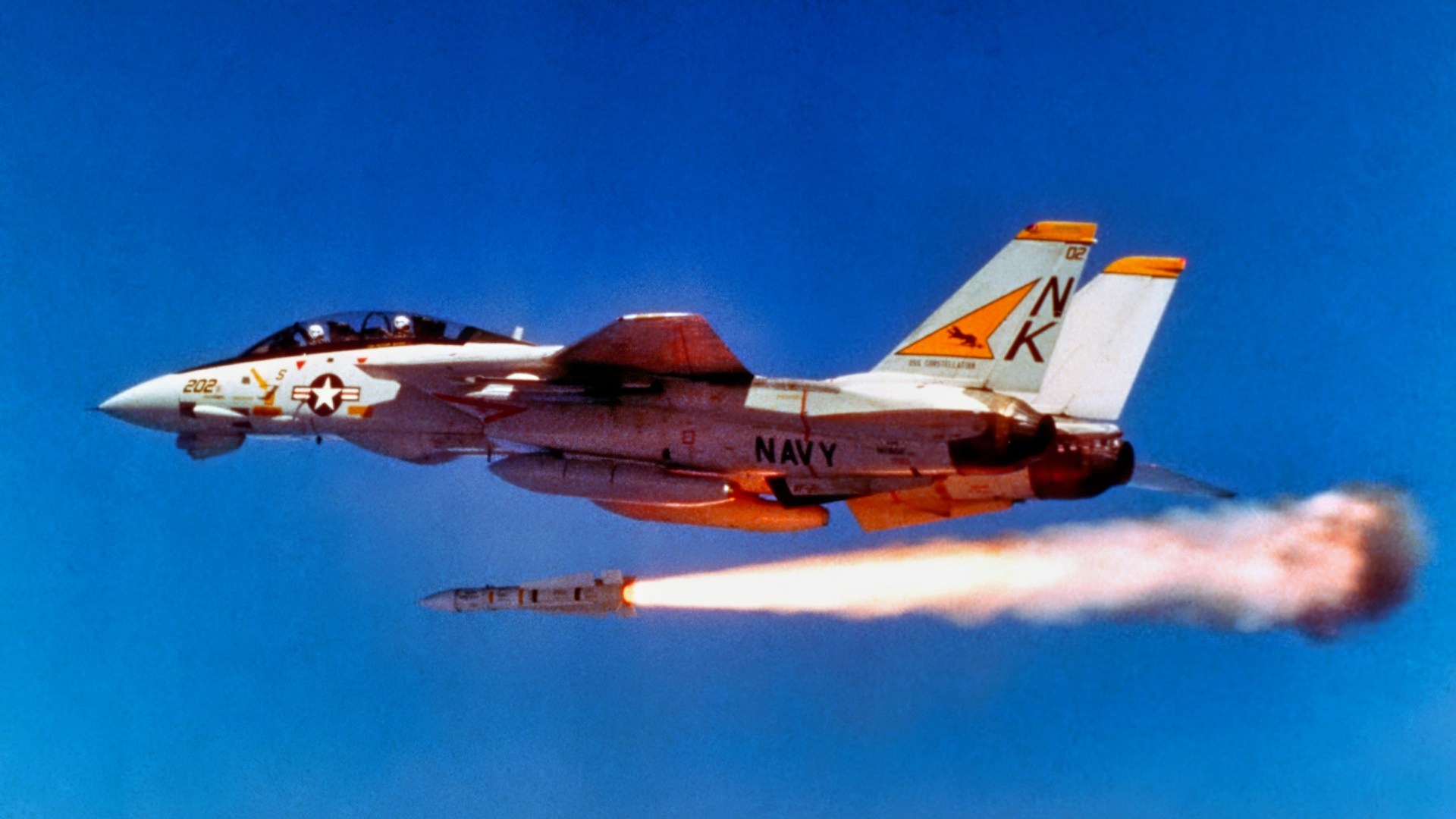
Bottom Line Up Front: A direct comparison between the legendary F-14D Tomcat and the modern Dassault Rafale reveals how raw power has given way to sensor fusion and agility.
The Tomcat Advantage: Built for fleet defense, it dominated with Mach 2.34 speed and the massive AIM-54 Phoenix missile (160km+ range).

F-14D Tomcat Onboard USS Intrepid in NYC. Image Taken by National Security Journal on 9/19/2025.
The Rafale Advantage: A 4.5-gen omnirole fighter, it utilizes superior sensor fusion (RBE2 AESA radar), SPECTRA electronic warfare, and high-agility canards.
The Verdict: While the F-14 was unmatched in its era, the Rafale’s stealth features, Meteor missiles, and 9G maneuverability make it the clear victor in a modern engagement.
Mach 2.34 Speed vs. 9G Agility: Why the F-14 Would Lose to the Rafale
During the Cold War, the F-14D Tomcat served as the U.S. Navy’s Carrier aircraft of choice. Its speed and long range made it perfect for fleet defense or longer-range strike missions.
At the height of the Cold War, the Tomcat was a significant force to be reckoned with.
Still, several decades after its retirement, it is now largely obsolete compared to modern aviation.
Case in point, the Dassault Rafale is a modern aircraft developed by Dassault Aviation in France that outclasses the F-14D in most aspects, aside from raw speed.
What would happen if these two warplanes got into a battle?

F-14D Tomcat at Smithsonian In Washington DC. Image by Brent M. Eastwood/National Security Journal.
Overview: The Tomcat vs the Rafale
The F-14D was conceived during the Cold War as a long-range fleet defense interceptor, later transforming into a multirole strike fighter.
It first flew in 1970 and entered service in 1974, serving primarily with the U.S. Navy until its retirement in 2006.
The aircraft is large and imposing, measuring over 19 meters in length with variable-sweep wings that could extend to nearly 20 meters.
Powered by two General Electric F110-GE-400 afterburning turbofans, each producing 28,200 pounds of thrust, the Tomcat could reach speeds of Mach 2.34 and operate at altitudes approaching 50,000 feet.
Its range was approximately 3,000 kilometers, and its crew consisted of a pilot and a Radar Intercept Officer, a configuration that allowed workload sharing during complex missions.
In contrast, the Dassault Rafale is a 4.5-generation multirole fighter designed for versatility and survivability in modern network-centric warfare.
First flown in 1986 and entering service in 2001, the Rafale is smaller and lighter than the Tomcat, measuring about 15 meters in length with a wingspan of 10.9 meters.
Its canard-delta wing configuration, combined with fly-by-wire controls and relaxed stability design, gives it exceptional agility and high instantaneous turn rates.
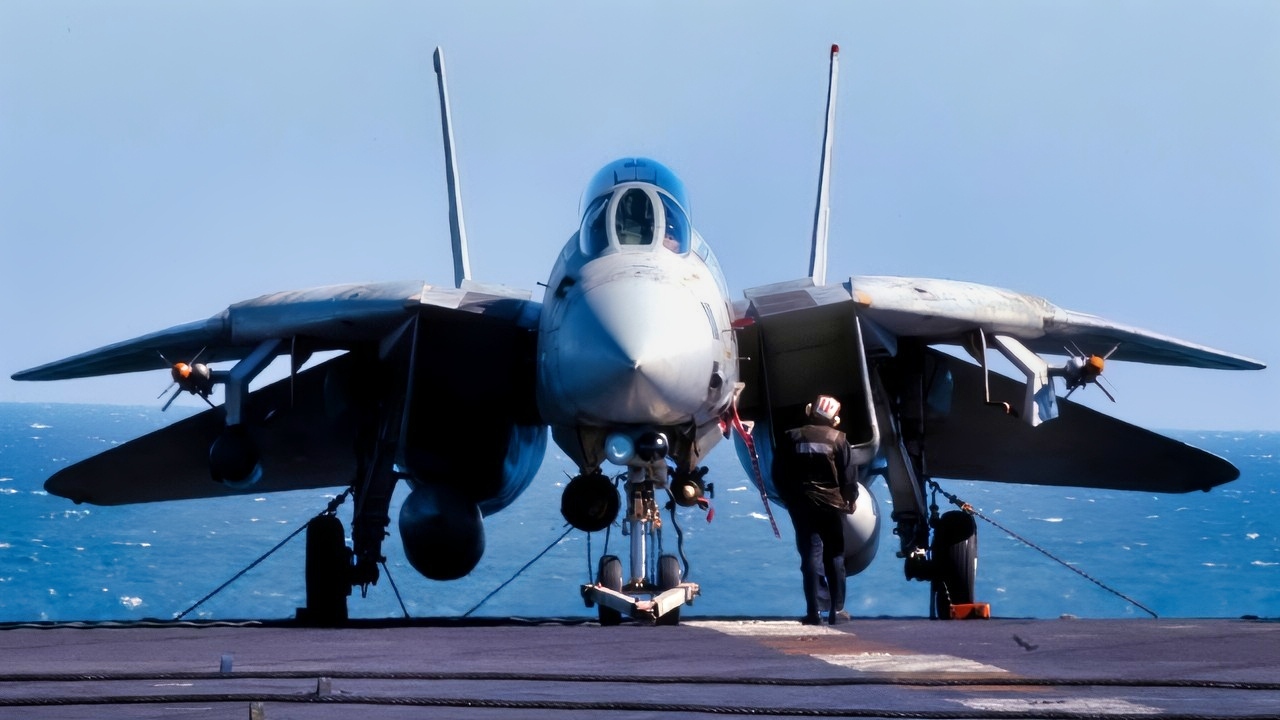
At sea aboard USS Abraham Lincoln (CVN 72)– A lone plane captain conducts a walk around inspection of his F-14D Tomcat that is assigned to Fighter Squadron Three One (VF-31). THe F-14D is armed with AIM-9 Siderwinder Missiles and a Joint Direct Attack Munition (JDAM) and a GBU-14. USS Abraham Lincoln (CVN 72) and Carrier Air Wing FOURTEEN (CVW 14) are conducting combat operations in support of Operation Southern Watch. U.S. Navy photo by Photographer’s Mate Third Class (AW/PJ) Philip A. McDaniel. Cleared for release by ALBG PAO, LCDR Jeff Bender.
Powered by two Snecma M88-2 engines producing 17,000 pounds of thrust each, the Rafale can reach Mach 1.8 and operate at altitudes slightly above 52,000 feet.
Its thrust-to-weight ratio and nine-G structural limit make it highly maneuverable in close-in combat.
Avionics and Electronics
The F-14D’s avionics suite included the AN/APG-71 radar, an advanced digital evolution of the AWG-9, capable of tracking multiple targets and guiding the AIM-54 Phoenix missile to ranges exceeding 160 kilometers.
This gave the Tomcat unmatched long-range interception capability during its prime. It also carried AIM-7 Sparrow and AIM-9 Sidewinder missiles for medium and short-range engagements, along with a 20 mm M61 Vulcan cannon.
Later upgrades allowed precision strike capability with JDAMs and laser-guided bombs, supported by the LANTIRN targeting pod.
Despite these strengths, the F-14D was a large, heavy aircraft with a significant radar cross-section and lacked the stealth and sensor fusion technologies of modern fighters.
The Rafale’s avionics are state-of-the-art, featuring the RBE2 AESA radar, an advanced infrared search and track system, and the SPECTRA electronic warfare suite.
These systems provide superior situational awareness, sensor fusion, and electronic countermeasures compared to the F-14D’s legacy equipment.
Rafale’s weapons include the MICA missile for both beyond-visual-range and within-visual-range engagements, the Meteor ramjet-powered missile for long-range air combat, and a 30 mm GIAT cannon.
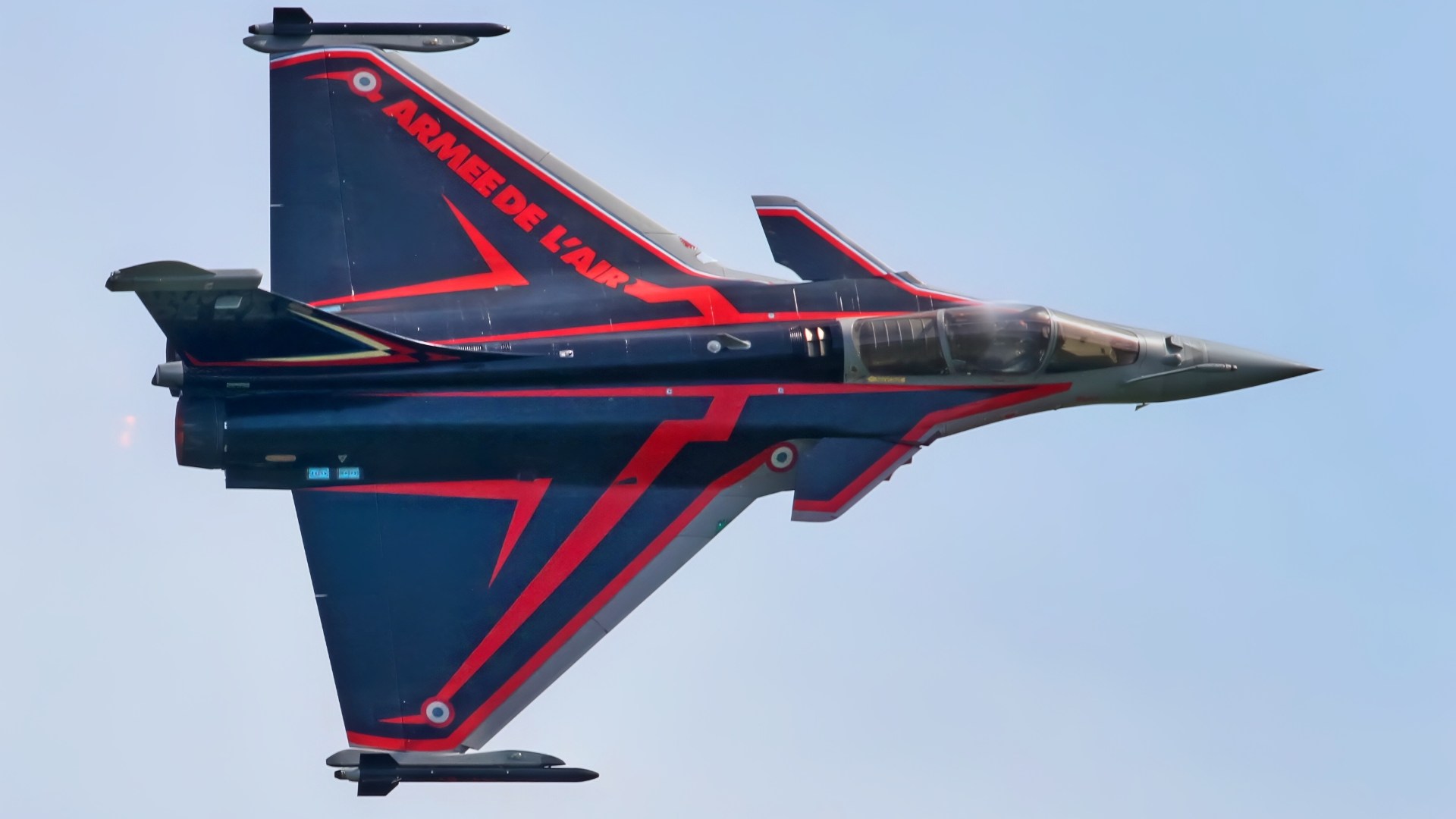
Dassault Rafale Fighter. Image Credit: Creative Commons.
For strike missions, it can carry SCALP-EG cruise missiles, AASM precision-guided bombs, and Exocet anti-ship missiles, among others.
Its reduced radar cross-section and advanced EW capabilities make it far more challenging to detect and target than the Tomcat.
Performance Metrics
When comparing the two aircraft in terms of aerodynamics, the F-14D’s variable-sweep wings were an ingenious solution for optimizing performance across speed regimes, allowing it to adapt between high-speed interception and low-speed carrier landings.
However, its large size and weight limit its agility compared to modern fighters. The Rafale’s canard-delta design, combined with fly-by-wire controls, enables superior agility, high angles of attack, and rapid energy changes, making it preferable in close-in dogfights.
The F-14D is faster overall at Mach 2.34 compared to Rafale’s Mach 1.8, but speed alone is not decisive in modern air combat.
Rafale’s higher thrust-to-weight ratio, nine-G limit, and advanced avionics give it a clear edge in maneuverability and survivability.
Its electronic warfare suite and reduced radar signature make it far more challenging to target, while the Tomcat’s large radar cross-section and older ECM systems leave it vulnerable.
Does the Tomcat Stand a Chance?
In a one-on-one fight, the outcome depends on the engagement scenario. At extreme ranges, during the Tomcat’s operational era, its Phoenix missiles and powerful radar would have given it a decisive advantage over most adversaries.
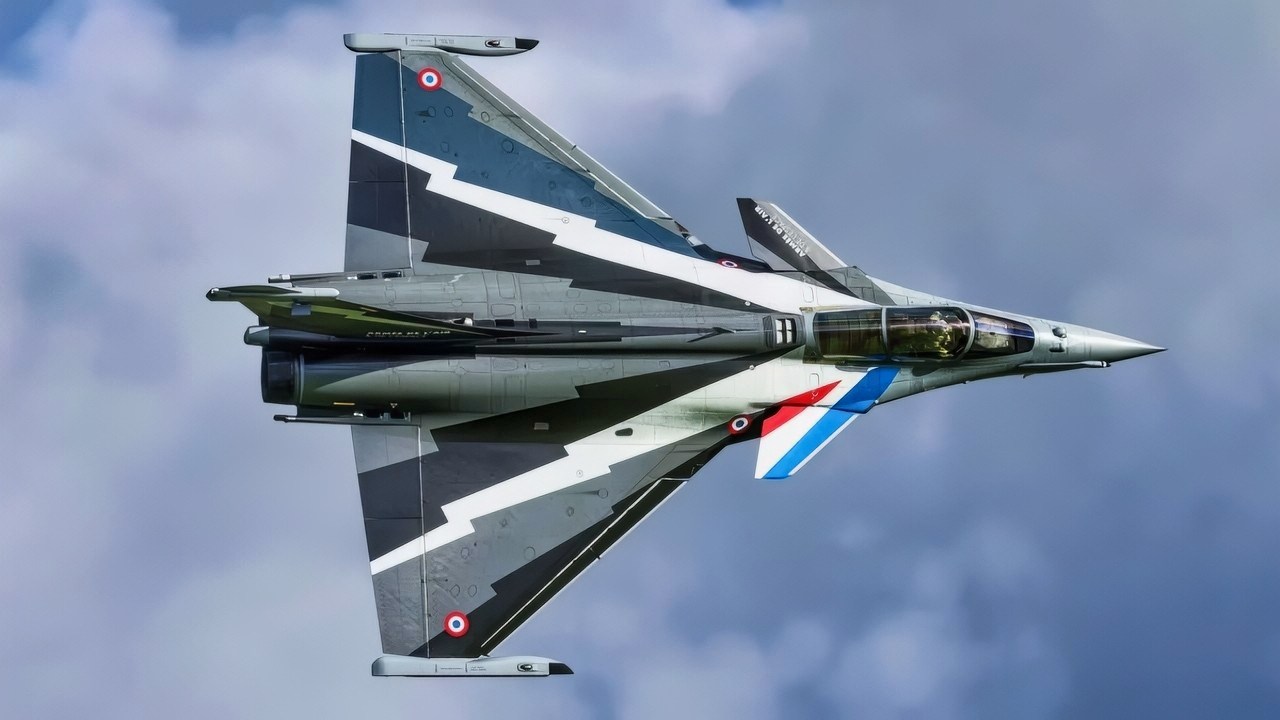
Dassault Rafale Fighter from France. Image Credit: Creative Commons.
Against Rafale, however, those advantages disappear. Rafale’s Meteor missile, AESA radar, and EW capabilities make it superior in beyond-visual-range combat.
In a close-in dogfight, Rafale’s agility, advanced sensors, and modern weapons ensure dominance. The Tomcat’s only advantage, speed, cannot compensate for its lack of contemporary avionics and agility.
Who Wins in 1 Word: Rafale
Ultimately, the F-14D was an exceptional Cold War fighter jet, but it was designed for a very different threat environment.
The Dassault Rafale, benefiting from decades of technological advancement, is optimized for modern air combat, where stealth, sensor fusion, and electronic warfare matter as much as raw performance.
In a hypothetical engagement today, Rafale would win, both at long range and in close quarters.
The only scenario where the Tomcat could prevail would be in a historical context, facing contemporaries from its own era.
In modern air combat, Rafale is the clear victor.
About the Author: Isaac Seitz
Isaac Seitz, a Defense Columnist, graduated from Patrick Henry College’s Strategic Intelligence and National Security program. He has also studied Russian at Middlebury Language Schools and has worked as an intelligence Analyst in the private sector.


Snorbert zangox
December 2, 2025 at 11:06 am
Can pilots withstand 9 Gs?