

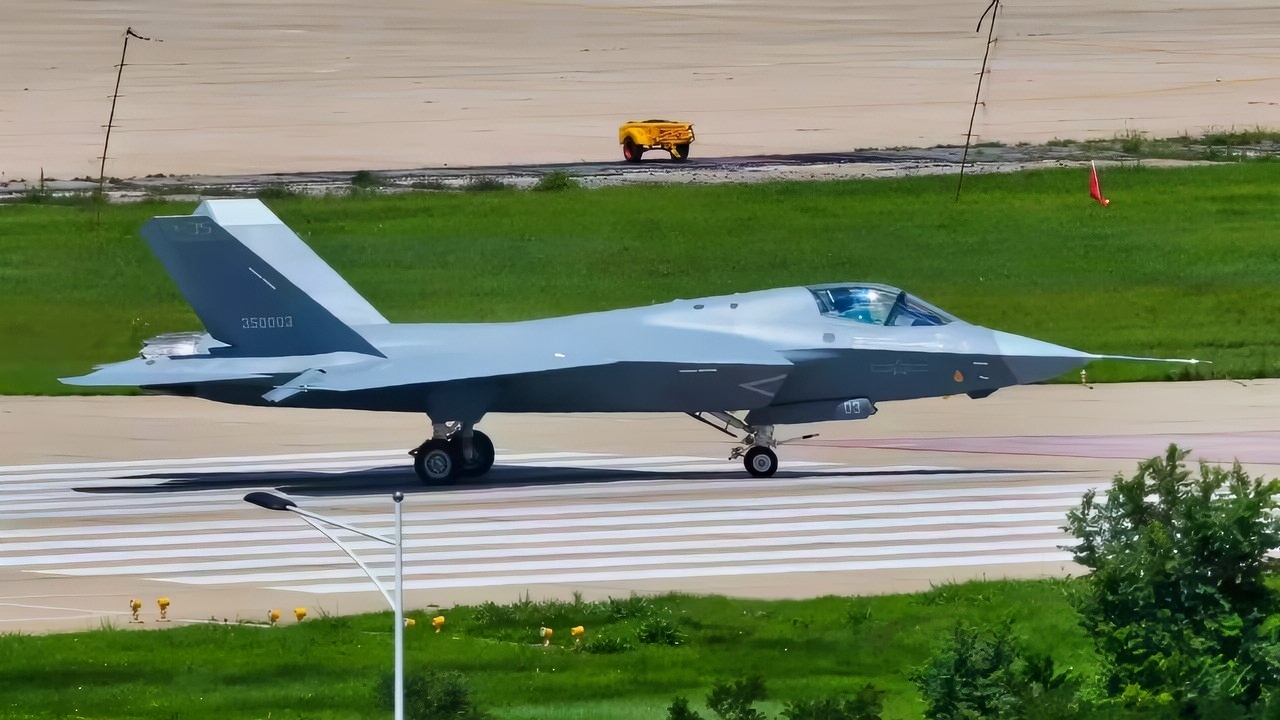
Key Points and Summary – This analysis pits China’s new J-35 stealth fighter against Israel’s heavily customized F-35I Adir in a hypothetical matchup, framed by the threat of Iran acquiring the Chinese jet.
-The analysis contrasts the J-35—a new, theoretically capable but combat-unproven aircraft—with the battle-hardened F-35I, which features superior, Israeli-made electronic warfare systems and has seen extensive combat.
-The verdict is clear: the F-35I’s proven stealth and advanced, tailor-made avionics would likely give it the decisive “first-look, first-shot” advantage in any engagement, making it the superior fighter in this comparison.
J-35 vs. F-35I Adir: Who Wins?
In recent months, news has circulated that indicates that Iran may be considering procuring fighter jets from China. Currently, it is rumored that Iran may purchase the J-10C or J-16; however, if the alliance deepens enough, Iran may acquire a J-35 stealth fighter.
In this hypothetical scenario, the Iranian Air Force would pose an even greater threat to Israel. But how would the J-35 fare against Israel’s greatest fighters, namely the F-35I?
China’s Newest Fighter vs Israel’s Best Fighter
The Chengdu J-35, also known as the J-35A in its land-based configuration, is China’s newest fifth-generation stealth fighter. Developed by Shenyang Aircraft Corporation, the J-35 is a twin-engine, single-seat, multirole aircraft designed to operate from both land bases and aircraft carriers.
It represents China’s effort to field a more versatile and agile stealth fighter to complement the heavier Chengdu J-20. The J-35’s design draws heavily from the earlier FC-31 Gyrfalcon prototype.
Still, it has undergone significant refinements to meet the operational requirements of both the People’s Liberation Army Air Force (PLAAF) and the People’s Liberation Army Navy (PLAN). As of September 2025, the J-35 has officially entered service, although it remains in the early stages of operational deployment and testing.
In contrast, the F-35I Adir is a customized variant of the Lockheed Martin F-35A, explicitly developed for the Israeli Air Force (IAF). Israel was the first country outside the original F-35 development consortium to receive the aircraft and remains the only nation permitted to modify its core systems.
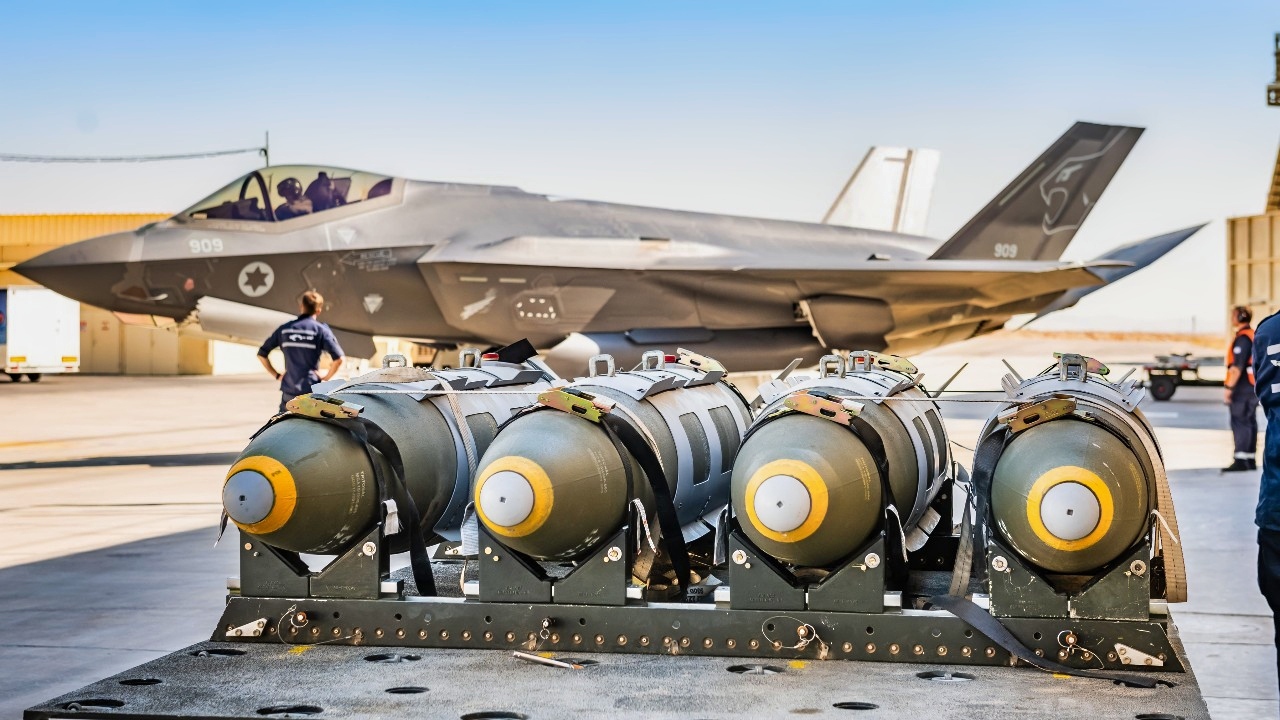
Israel F-35I Adir Stealth Fighter. Image Credit: IAF.

An Israeli Air Force pilot walks to an F-35I Adir prior to a Red Flag-Nellis 23-2 mission at Nellis Air Force Base, Nevada, March 15, 2023. Red Flag is an opportunity to build on the success of JUNIPER OAK 23-2, JUNIPER FALCON, and additional combined exercises to enhance interoperability with Israel, strengthen bilateral cooperation, and improve capabilities in ways that enhance and promote regional stability and reinforce the United States’ enduring commitment to Israel’s security. (U.S. Air Force photo by Airman 1st Class Trevor Bell)
The F-35I has been tailored to meet Israel’s unique strategic needs, incorporating indigenous electronic warfare systems, sensors, and weapons. It has already seen extensive combat use in the Middle East, including missions over Syria, Lebanon, and Iran.
It has proven its ability to penetrate advanced air defense networks and conduct precision strikes.
Stealth Features and Engine Performance
The J-35 features a blended wing-body design with serrated panel edges and enclosed engine housings intended to reduce its radar cross-section. Its overall shape and configuration bear a strong resemblance to the F-35, suggesting that Chinese engineers have closely studied Western stealth designs.
However, analysts remain skeptical about the effectiveness of the J-35’s radar-absorbing materials and coatings, which are believed to be less advanced than those used on Western platforms. The F-35I, on the other hand, incorporates advanced stealth coatings and radar-reflective canopy materials that have been combat-tested against Russian and Iranian air defense systems. Its stealth capabilities are not theoretical; they have been validated in real-world operations.
In terms of propulsion and performance, the J-35 is powered by twin engines, likely variants of the WS-13E or the newer WS-19. This twin-engine configuration offers redundancy and potentially better thrust-to-weight ratios, which could be advantageous in certain combat scenarios.
However, Chinese jet engines have historically faced challenges related to reliability, fuel efficiency, and stealth optimization. The F-35I uses the Pratt & Whitney F135 engine, a single-engine design that has proven highly reliable and efficient.
While the single-engine layout may seem less robust than a twin-engine setup, it contributes to the F-35’s overall stealth and aerodynamic efficiency.
Avionics: Who Has Better Electronics?
Avionics and electronic warfare systems are critical components of any fifth-generation fighter. By now, you may be noticing a pattern here: the F-35I has had a lot of opportunities to prove itself, while the J-35 has not even entered service yet.
The J-35 is believed to include a chin-mounted electro-optical targeting system (EOTS), distributed aperture sensors, and modern data links. However, these systems are still under development, and information about these systems is still highly classified. More importantly, the J-35 has not yet been tested in combat, so its avionics and sensor fusion capabilities remain speculative.
The F-35I, by contrast, replaces the standard BAE electronic warfare suite with an Israeli-developed system from Elbit Systems.
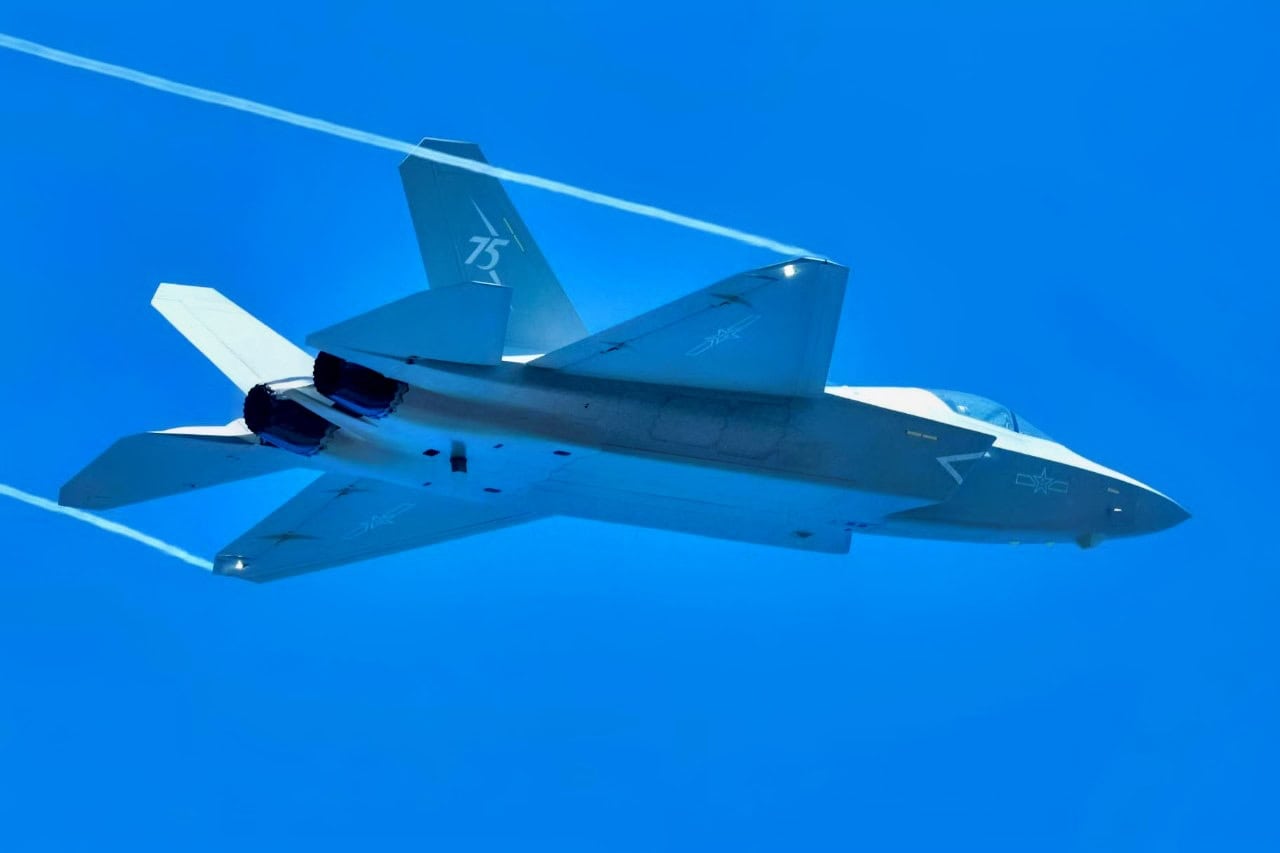
J-35 Fighter. Image Credit: Chinese State Media.
This indigenous EW architecture is specifically designed to counter threats from Russian-made S-300 and S-400 air defense systems, as well as Iranian radar networks (to my knowledge, it has yet to face any Chinese technology).
The F-35I also features a plug-and-play architecture, allowing Israeli engineers to rapidly integrate new sensors and weapons as needed. It functions as a sensor fusion hub, capable of guiding other aircraft such as the F-15I Ra’am during joint operations.
In 4 Words: The F-35I Adir Wins, J-35 Defeated
When it comes to weapons and payload, the J-35 is expected to carry a mix of PL-15 long-range air-to-air missiles, guided bombs, and anti-ship missiles. Its internal weapons bay allows it to maintain stealth while engaging targets, and its carrier variant includes folding wings and a catapult launch bar for naval deployment.
However, the exact integration of weapons and targeting systems is still being refined, and export variants may differ significantly from the domestic models. The F-35I, on the other hand, integrates a wide range of Israeli-made weapons, including the Python-5 air-to-air missile, SPICE precision-guided munitions, and one-ton bunker-busting bombs.
It can also carry external weapons when stealth is not a priority.
Additionally, the F-35I supports conformal fuel tanks, which extend its range to over 1,700 kilometers without requiring aerial refueling.

F-35I Adir. Image Credit: Creative Commons.
In a hypothetical head-to-head air-to-air engagement between the J-35 and the F-35I, Israel would likely come out on top. Stealth and detection would play a crucial role, and the F-35I’s combat-proven stealth and superior electronic warfare systems would likely give it the advantage in a first-look, first-shot scenario.
The J-35’s capabilities, while promising on paper, have not yet been tested in combat and may not match the effectiveness of the F-35I. Not to say that the J-35 wouldn’t be a threat, but based on our current understanding of the fighter, it does not look like it matches the Adir’s capabilities. Future developments may change that.
About the Author: Isaac Seitz
Isaac Seitz, a Defense Columnist, graduated from Patrick Henry College’s Strategic Intelligence and National Security program. He has also studied Russian at Middlebury Language Schools and has worked as an intelligence Analyst in the private sector.
More Military
The U.S. Navy’s ‘Achilles Heel’: China’s Underwater Drones
The F-35 Has a ‘5-Year Late’ Problem
X-37B: Russia Thinks This is a Space Bomber


