

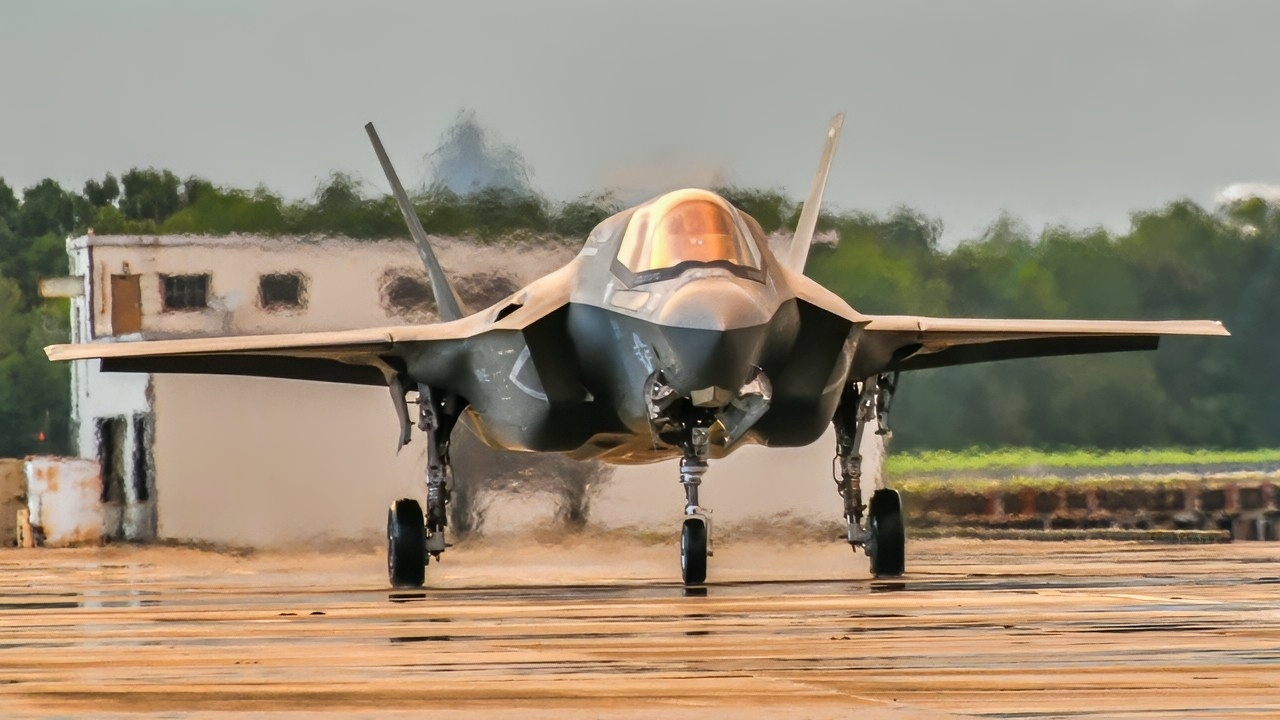
Key Points and Summary – A recent GAO report reveals the F-35’s critical Block 4 upgrade is now five years behind schedule and $6 billion over budget.
-This delay is more than a line item; it directly impacts combat capability by preventing the jet from using a new generation of crucial weapons.
-These include the long-range AIM-260 missile, designed to counter Chinese and Russian fighters, and the advanced all-weather Stormbreaker smart bomb.
-Without these vital upgrades, the F-35’s ability to maintain air superiority against peer adversaries is now at significant risk.
The New F-35 Fighter Drama
The F-35 is able to adapt due to its ability to upgrade. Incremental software “drops” for the F-35 have been a defining element of the 5th-generation aircraft’s maturation and modernization trajectory over a period of several decades.
Each new software configuration has progressively expanded the jet’s weapons envelope, sensing, and overall performance parameters, yet the most recent and extremely critical Block 4 software upgrade is encountering developmental and production delays.
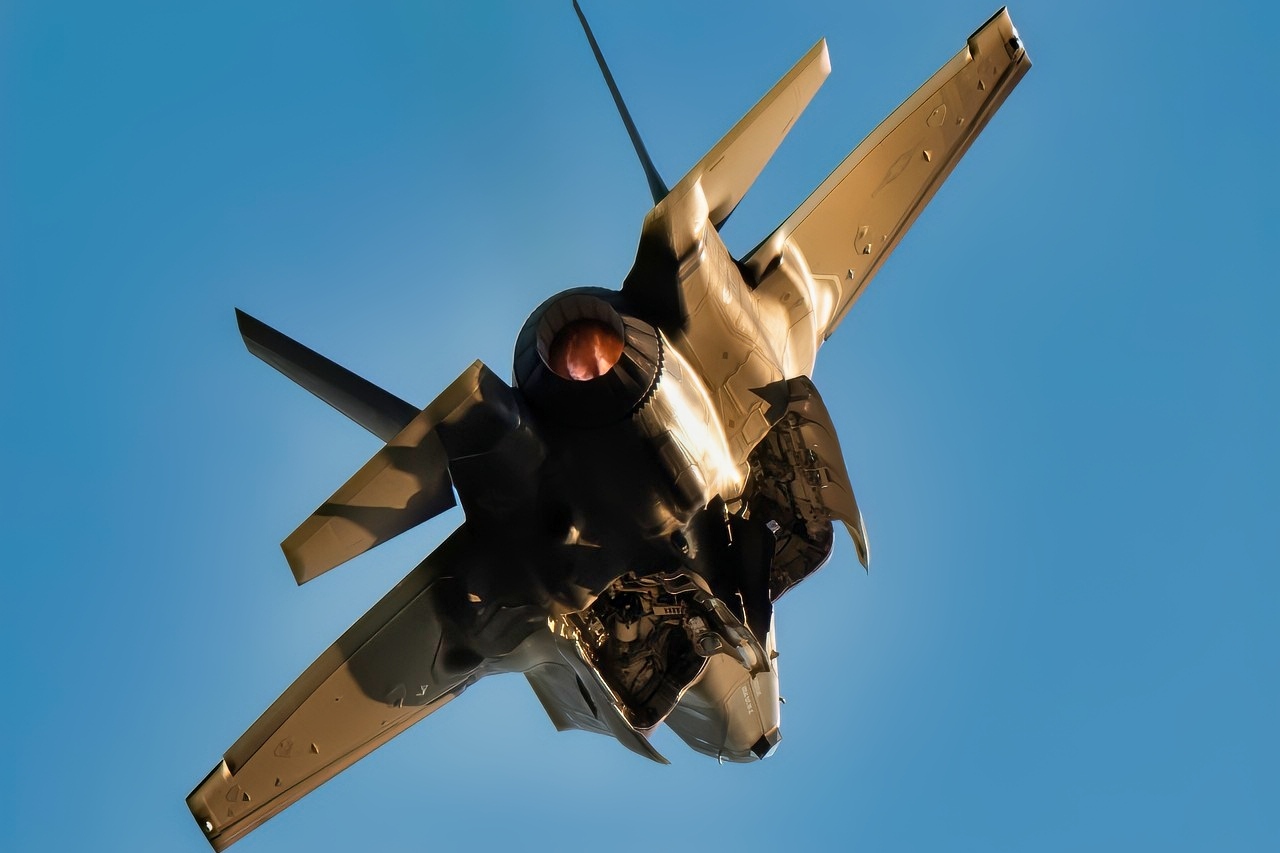
U.S. Air Force Major Kristin “BEO” Wolfe, F-35A Lightning ll Demonstration Team pilot and commander, flies during sunset over Mathers Airport, Calif., Sept. 24th, 2021, at the California Capital Airshow. The team consists of approximately 15 total Airmen to include the pilot and commander, pilot safety officers, superintendent, team chief, maintenance Airmen, aircrew flight equipment specialists, and public affairs personnel. (U.S. Air Force photo by Staff Sgt. Thomas Barley)
A recent Government Accountability Office (GAO) report says the completion of Block 4 will be at least five years behind original estimates.
F-35 Block 4 Upgrade: 5 Years Late
“After years of cost growth and schedule delays in its hardware and software modernization effort for the F-35 aircraft, known as Block 4, the Department of Defense is in the process of establishing a new major subprogram to help meet cost, schedule, and performance goals. Currently, Block 4 costs are over $6 billion more and completion is at least 5 years later than original estimates. The program plans to reduce the scope of Block 4 to deliver capabilities to the warfighter at a more predictable pace than in the past,” the GAO report states.
The success and implementation of Block 4 hinges upon the continued production of a technological upgrade to the F-35 referred to as Tech-Refresh 3, something which introduces new generations of computer processing power into the jet.
“Much like a new mobile cell phone or personal computer, TR-3 will host new Block 4 capabilities and applications with significantly more computing power and memory than the legacy infrastructure,” Lt. Gen. Michael Schmidt, F-35 Program Executive Officer, said in an essay published by Lockheed.
F-35 at Risk?
The implications of these delays upon the F-35’s ability to meet current threats are potentially significant, given that the new software drops enable the ability to fire new weapons.
Block 4, in particular, enables the F-35 to fire weapons such as the new ultra-high-tech, long-range AIM-260 Joint Advanced Tactical Missile.
This air-to-air and air-to-ground attack weapon is more precise, less detectable, and more lethal. It has a longer range than the existing AIM-120 AMRAAM, as it was engineered specifically to address the changing threat equation.
A delay with this weapon, therefore, could potentially limit or even imperil the F-35’s attack ability in an engagement with 5th-generation Russian or Chinese aircraft.
Details of the AIM-260 are not fully available publicly for security reasons, yet its arrival could prove critical to the continued relevance of the F-35.

A pilot from the 34th Fighter Squadron conducts pre-flight preparations in the cockpit of an F-35A Lighting II on the tarmac at Santa Maria Airport, Calif., during Bamboo Eagle 24-3. During Bamboo Eagle, the 388th Fighter Wing is functioning as a force element at a “spoke location,” providing fifth-generation airpower to a larger force operating in the eastern Pacific region. The spoke locations are smaller than an airbase, a cluster of tents, a small footprint of equipment and personnel. (U.S. Air Force photo by Micah Garbarino)
As has been the case throughout the multi-year trajectory of the F-35, software “drops,” “adaptations,” “interfaces,” and fire control specs are needed to accommodate new generations of weapons as they appear, so a delay in the integration of Block 4 means the AIM-260 simply will not fire from the F-35.
Stormbreaker & AARGM-ER
Block 4 also enables the F-35 to fire the AGM-88G Advanced Anti-Radiation Guided Missile Extended Range, a significant air-attack weapon engineered to identify and destroy ground-based enemy air defenses emitting an electronic signature.
The ER or “extended range” component of this is highly significant, as it is designed to enable a manned fighter jet to target and attack air defenses from safer stand-off ranges.
The most significant impact of the Block 4 delay, however, likely pertains to a critically important weapon known as the Stormbreaker, a guided air-dropped bomb capable of tracking and destroying targets at ranges up to 40 nautical miles.
In development for many years by Raytheon, the Stormbreaker incorporates a now-famous “tri-mode seeker,” meaning it can leverage radio frequency (RF), laser, or all-weather millimeter wave guidance and targeting technology.
The weapon is also engineered with a two-way data link enabling retargeting and in-flight adjustments.
Tactically speaking, the GBU-53/B Stormbreaker can track a moving target through fog or weather obscurants from great distances and adjust course as needed. This much-anticipated weapon will greatly multiply and expand the F-35’s attack capabilities in more dynamic modern threat environments.
Block 4 also increases the overall size of the weapons arsenal with which the F-35A and F-35C can fly due to the addition of a “Sidekick” weapons rack, expanding the internal weapons-carrying capacity of the jets from four to six missiles.
China and Russia Gain by F-35 Problems
Given available information about Russia’s Su-57 and China’s J-20, it seems reasonable to posit that Block 4 delays could slow down or compromise the necessary pace at which the Pentagon’s F-35 can sustain air superiority.

J-20 Fighter. Image Credit: Creative Commons.
About the Author: Kris Osborn
Kris Osborn is the President of Warrior Maven – Center for Military Modernization. Osborn previously served at the Pentagon as a highly qualified expert in the Office of the Assistant Secretary of the Army—Acquisition, Logistics & Technology. Osborn has also worked as an anchor and on-air military specialist at national TV networks. He has appeared as a guest military expert on Fox News, MSNBC, The Military Channel, and The History Channel. He also has a Masters Degree in Comparative Literature from Columbia University.
More Military
J-20 vs. F-47: Which Stealth Fighter Wins?
F-14 Tomcat: We Got As Close To This Fighter as the Law Allowed Us (Full Tour/Pictures and Video)
F-22 vs. J-20: Who Wins a Stealth Fighter Dogfight?


Doyle
September 6, 2025 at 9:40 am
Seriously dude get over yourself. These upgrades are not as critical as you infer. The weapon systems you bemoan the F35 not being able to use are of such low inventory they would not be the game changers TODAY at all. God I hate these articles, like they’re anything but part of the problem.
JDDrouin
September 6, 2025 at 9:59 am
Yet the Israelis were able to take on the best the Rooossians could give or sell the Iranians, take their names, and send them to an early grave at will. What a ‘strange’ set of circumstances.
George Taylor
September 6, 2025 at 2:10 pm
Everything F-35 is a day late and a dollar short. But I’m guessing the Lockheed Martin C-suite are still getting their bonuses, their lobbyist are eating the finest steaks, drinking single malts with promises of campaign donations to are elected officials.
Jeff
September 6, 2025 at 7:19 pm
This writer is a clown. You can tell he by looking at his LinkedIn resume of a bunch a 1-3 year stints at various jobs. He is far from being an expert at anything. One look at him tells me all I need to know.
Steve S.
September 6, 2025 at 9:13 pm
Time to tell my Google feed to not show content from this loser website and its clown contributors.
dan mullock
September 7, 2025 at 7:06 pm
I think we should debate respectfully. Mr. Osborn has the right to share his point of view and we are not obligated to agree or even read it. I personally think that Lockheed Martin is solely responsible for the lateness of these updates because, i am guessing, they deliberately made the software integrated and inflexible the same way that the big tech companies say their browsers etc cannot be modified to allow competitive changes. They did this because they make more money from the after sale services than they did from the initial sale of the jet. We need to move on from the F35 to an open and modular suite of software where there are “empty sockets” for software controlling new weapons and upgrades. LM has had too much time and too much money to make these changes. Move on and apply the learnings.
David S Peralta
September 7, 2025 at 11:47 pm
I used to respect Kris Osborn, but this article is a lot of fluff and no substance. When were these weapon systems completed to a stage where they could be integrated? When was Lockheed given the contract change to include them? What is the current time frame for the pieces of Block 4 to be completed? Is the Air Force adding any additional changes to block 4? A competent analyst would have addressed these questions.
Len Mullen
September 8, 2025 at 10:00 pm
All this plane needs is GE engines!