

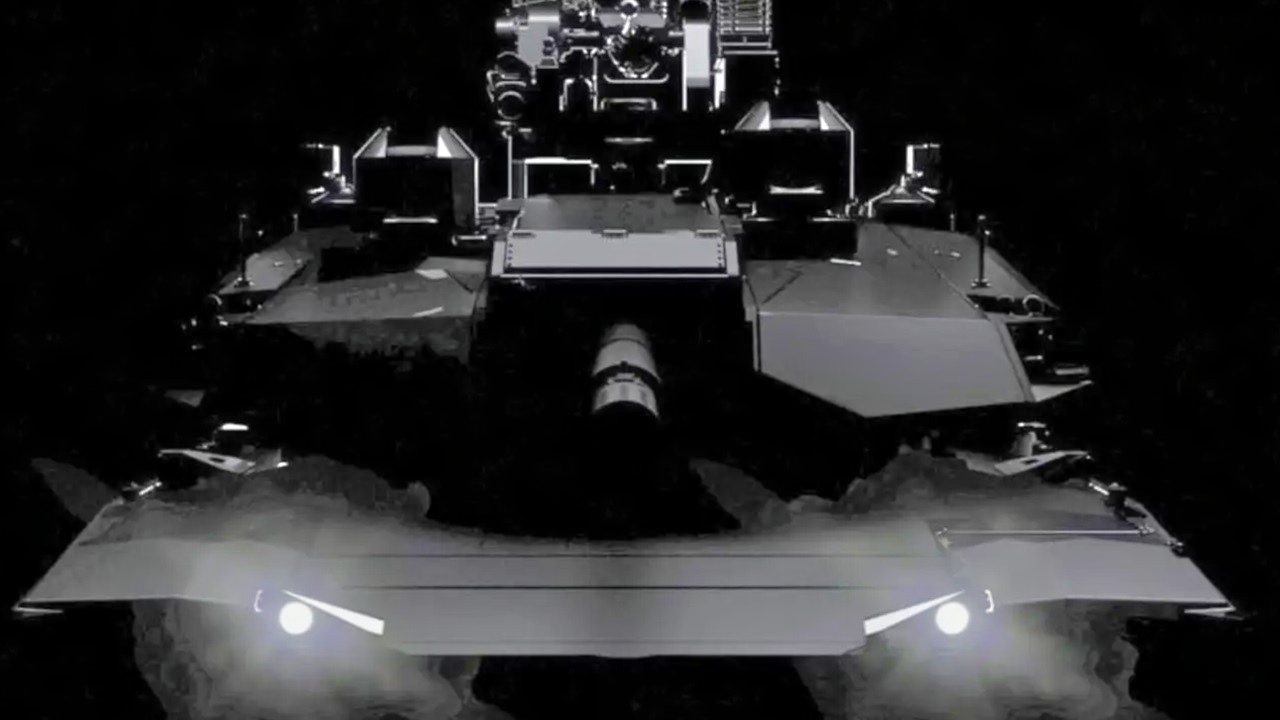
The United States Army announced that the First Cavalry Division will receive prototype versions of the two next-generation armored vehicles beginning in the Fall of this year. Those two new systems are the M1E3 Abrams Main Battle Tank (MBT) and the XM30 Mechanized Infantry Combat Vehicle.
Big Green plans to assign these systems to operational units.
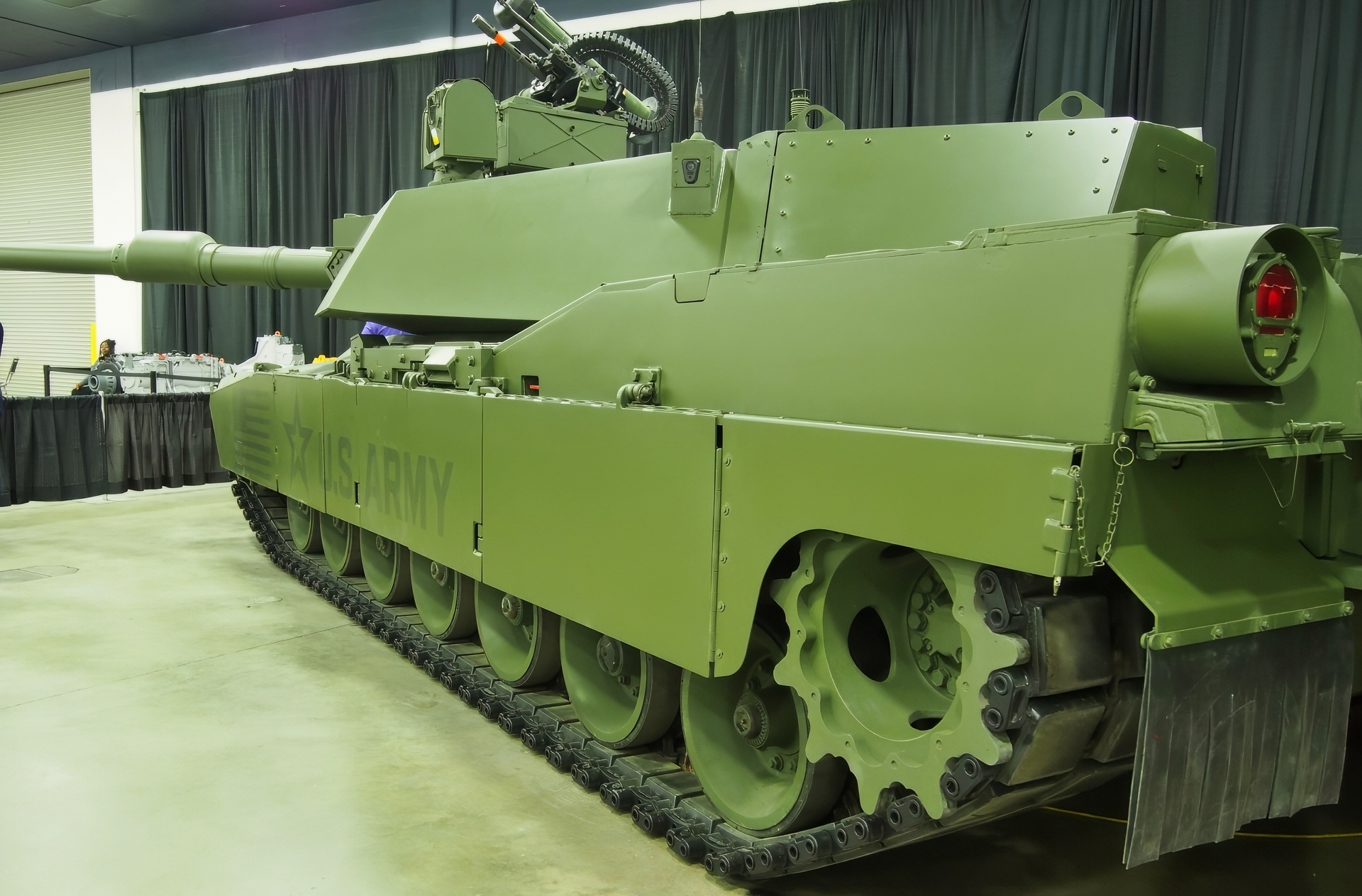
M1E3 Abrams from Detroit Auto Show. National Security Journal Photo.
They’ll go to the National Training Center for realistic combat exercises. Soldiers will use them in field conditions and provide feedback before the Army commits to production.
Why This Matters
The Army is implicitly acknowledging that the war in Ukraine has changed armored warfare. That’s a good thing. For years, many observers feared that the United States military was simply ignoring the brutal lessons of the Ukraine War out of bureaucratic inertia and political considerations.
You see, for decades, the assumption was that tanks would dominate the battlefield if properly supported. Ukraine demonstrated something quite different.
Cheap drones can hunt and murder tanks at will, no matter how new or advanced those MBTs were. Long-range sensors make concealment difficult, too. Electronic warfare (EW) is becoming as important as armor thickness. Thus, survivability depends on detection and networking rather than simply adding more steel.
The Army’s response is not to abandon the MBT. Instead, their approach is to redesign them for the age of drones.
The M1E3 Abrams Tank
According to Army officials, the M1E3 isn’t your typical Abrams upgrade. We know personally: we visited and saw the M1E3 Abrams at the Detroit Auto Show months back and have a few pictures included in this article.
This newer MBT supposedly incorporates artificial intelligence (AI), counter-drone defenses, hybrid propulsion, reduced logistics load, reduced weight, a remote-operated turret, and an autoloader. That last one is particularly significant because it reduces the crew from four soldiers to three.
The inclusion of an autoloader is a major cultural change for American armor forces, which have preferred to employ human loaders since the original Abrams entered service in the 1980s.
That’s because the Americans have fretted over the fact that autoloaders can stop working during intense combat, thereby rendering the tank’s primary gun combat-ineffective.
Still, the counterargument is that most of the rest of the world’s tanks have used autoloaders for decades, and concerns about the autoloader not working have been only a marginal issue for those militaries.
Why the U.S. Army Wants It
Currently, the M1A2 Abrams MBT is too heavy. Depending on the configuration, it approaches 80 tons. That creates problems for strategic mobility and fuel consumption.
The M1A2 is also maintenance-intensive. As for concerns about fighting in the Indo-Pacific region, a region of tiny pockets of jungle divided by vast distances of ocean, the Pentagon today fears that the current M1A2 Abrams MBT is poorly suited for that environment.
The Army, therefore, wants the M1E3 to retain the Abrams-level firepower while dramatically reducing sustainment demands. Officials have even suggested they might reduce logistics requirements.
The XM30
Then there’s the XM30 Mechanized Infantry Combat Vehicle, which will replace the aging M2 Bradley Infantry Fighting Vehicle (IFV). Having served for more than 40 years, the Bradley is in dire need of replacement.

XM30. Image Credit: U.S. Army.
Multiple attempts over the years to replace this system have failed, though. There were the Future Combat Systems (FCS) and the Ground Combat Vehicle (GCV), both of which failed to deliver what the Army desired in a Bradley replacement.
XM30 is designed around open-architecture software, meaning the underlying systems will remain relevant for decades to come, even as newer, more advanced software becomes available.
Like the new M1E3 Abrams, the XM30 comes with AI-enabled systems. Because of the onboard software, robust cybersecurity systems are in place to prevent hacking. Plus, the Army is imbuing the XM30 with autonomous capabilities.
The Army specifically wants a platform that can continually absorb new technologies rather than becoming obsolete every decade.
Implications
What’s significant about this news is that the Army is testing both the M1E3 Abrams MBT and the XM30 fighting vehicle together.
US Army Maj. Gen. Thomas Feltey emphasized that the M1E30 and XM30 are part of a combined-arms system rather than standalone platforms. The Army wants tanks, infantry, engineers, air defense, drones, and electronic warfare (EW) assets working as one.
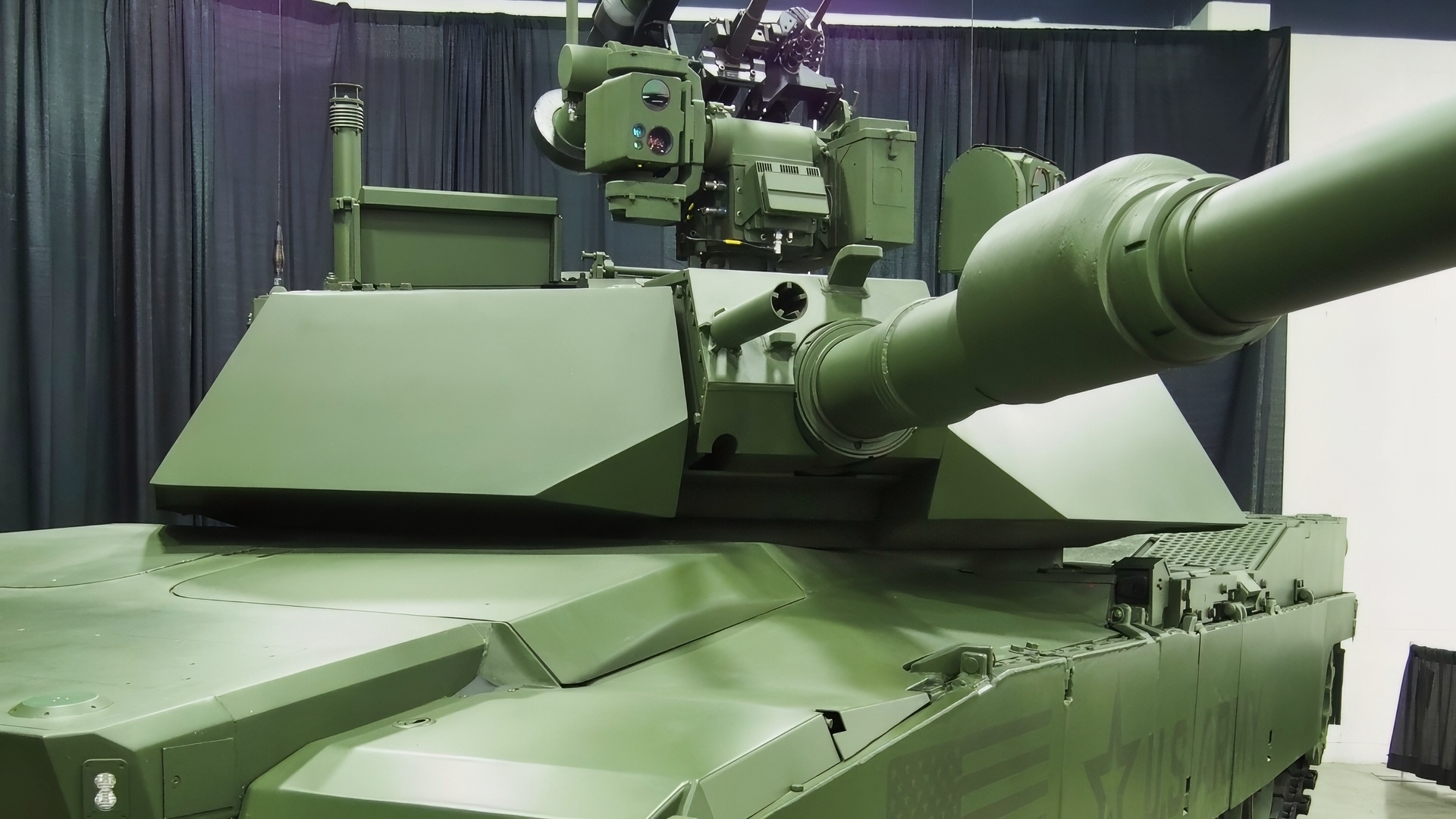
M1E3 Abrams at the Detroit Auto Show This Year. National Security Journal Photo.
So, the Army’s effort is not simply about creating a better tank for itself. The Army wants to create an entire ground combat ecosystem that lasts the rest of the century and can endure all manner of new threats, like those presented by drone swarms.
Interestingly, the Army apparently rejects two seemingly extreme conclusions derived from the Ukraine War.
Big Green isn’t letting go of its armored capabilities anytime soon. These developments are a direct challenge to those who say that the Ukraine War proves tanks are essentially obsolete.
The Army doesn’t buy it. And they’re likely right. Tanks and their supporting armored vehicles now face a new set of operating parameters on the modern battlefield, thanks to the advent of new threats like drone swarms.
The other conclusion that the Army thankfully rejects is to simply ignore the hard lessons from the Ukraine War on the future of armored warfare.
That’s why the Pentagon isn’t just endlessly upgrading the Abrams. The Army is instead seeking a middle path for developing its armored warfare capabilities.
They’re making armor lighter and, therefore, more maneuverable. Like everything else today, the Army is integrating AI into its wider framework of armored warfare. The new armored systems Big Green is building for itself can allegedly defeat drones.
Beyond that, the Army is making its armor less burdensome for logistics and maintenance. In a future war, where speed, maneuverability, and concealment will be key, that’s a major change.
Oh, and the Army is networking everything to ensure these armored systems become nodes in an integrated warfighting concept.
Testing these two systems at the National Training Center will be the Army’s first serious attempt to determine whether its new concept works in practice.
But the real question is whether the Army is preparing for the right war. Ukraine has become the dominant influence over US armored doctrine today.
Yet a future conflict with China would feature vast distances, maritime logistics, space-based targeting, long-range precision strikes, and massive levels of EW.
Big Green is betting that lessons learned in Eastern Europe will also apply to the Indo-Pacific. Whether that linkage is correct will become the most important defense question of the next decade.
We won’t have a good answer until the shooting starts in the Indo-Pacific. Let’s hope it never does, and we never have to find out.
About the Author: Brandon J. Weichert
Brandon J. Weichert is Senior National Security Editor. He also manages The Weichert Brief on Substack. Weichert hosts “National Security Talk” on Rumble, too. He is the author of four bestselling national security books, the most recent of which is A Disaster of Our Own Making: How the West Lost Ukraine (Encounter Books). Follow him via Twitter/X @WeTheBrandon.


