
Yemen Edges Toward Renewed Civil War As Trump Pushes Iran: The years-long de-escalation that has largely kept Yemen’s civil war contained since 2022 is now showing signs of breaking down, as Yemeni officials and Western diplomats warn that recent Houthi attacks on Saudi Arabia have pushed the country back to the brink of conflict. It comes as U.S. President Donald Trump announced that Washington would hold Iran directly responsible for future Houthi attacks in the Red Sea, and before American forces launched yet another night of strikes against Iranian military targets.
The Iranian-backed Houthis are now aggressively threatening vessels transiting the Bab el-Mandeb Strait, leaving or destined for Saudi ports, having declared a blockade against the kingdom. Houthis have also launched missile and drone strikes on Saudi-owned oil tankers in the Red Sea, sparking concern that the wider conflict could not only plunge the region back into war, but that the global oil market will suffer even more.
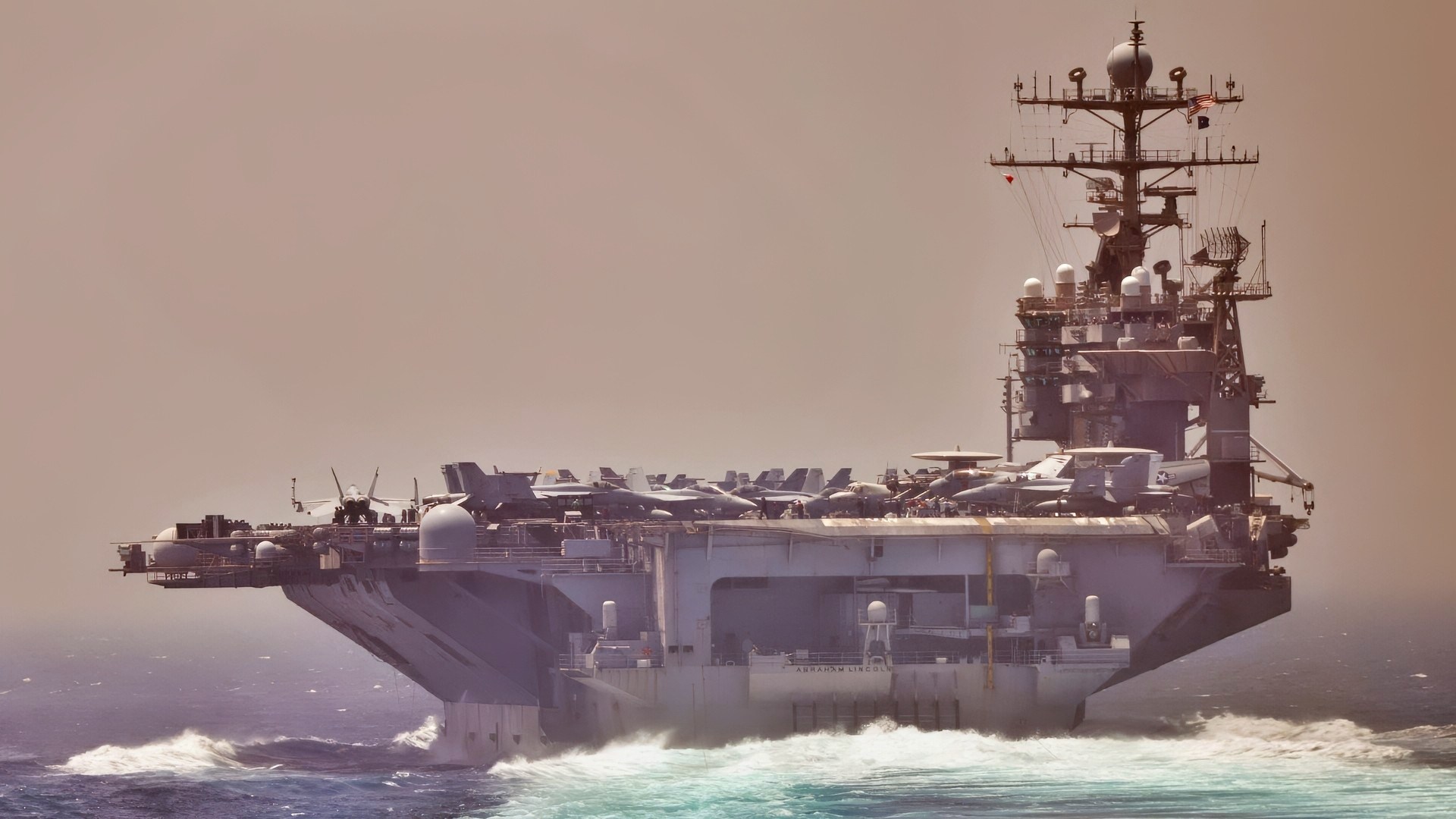
STRAIT OF HORMUZ (May 1, 2012) The aircraft carrier USS Abraham Lincoln (CVN 72), left, and the guided-missile cruiser USS Cape St. George (CG 71) transit the Strait of Hormuz. Abraham Lincoln and Cape St. George are deployed to the U.S. 5th Fleet area of responsibility conducting maritime security operations, theater security cooperation efforts and support missions as part of Operation Enduring Freedom. (U.S. Navy photo by Mass Communication Specialist 3rd Class Alex R. Forster/Released)
Officials Warn Yemen Could Return to Large-Scale Fighting
Reuters reported on Friday, July 24, that Yemeni officials and Western diplomats now believe the risk of renewed large-scale fighting in Yemen has risen significantly as tensions increased between the Houthis and Yemen’s internationally recognized government, which is backed by Saudi Arabia.
Per the report, both sides have now reinforced their positions along key front lines while regional mediation efforts led by Oman and supported by the United Nations are under significant strain. Houthi and Yemeni forces have built up along a front line that spans the Houthi-controlled northwestern region of Yemen, which runs from the Red Sea coast to the Saudi border, according to Yemeni military officials.
Baraa Shiban, a Yemeni analyst and associate fellow at the Royal United Services Institute think tank in the United Kingdom, told Reuters that the buildup amounts to the “most serious preparations for a conflict” he has “ever seen.”
Additionally, a statement issued to Reuters by United Nations special envoy for Yemen Hans Grundberg said that he had just returned from trips to Oman and Saudi Arabia to explore options to de-escalate and return the region to some level of stability.
“Recent events have taken Yemen in the opposite direction, and that is a setback for Yemenis above all. My efforts continue, and the United Nations always stands ready to support the parties in reversing course and putting the interests of Yemenis first,” Grundberg said.
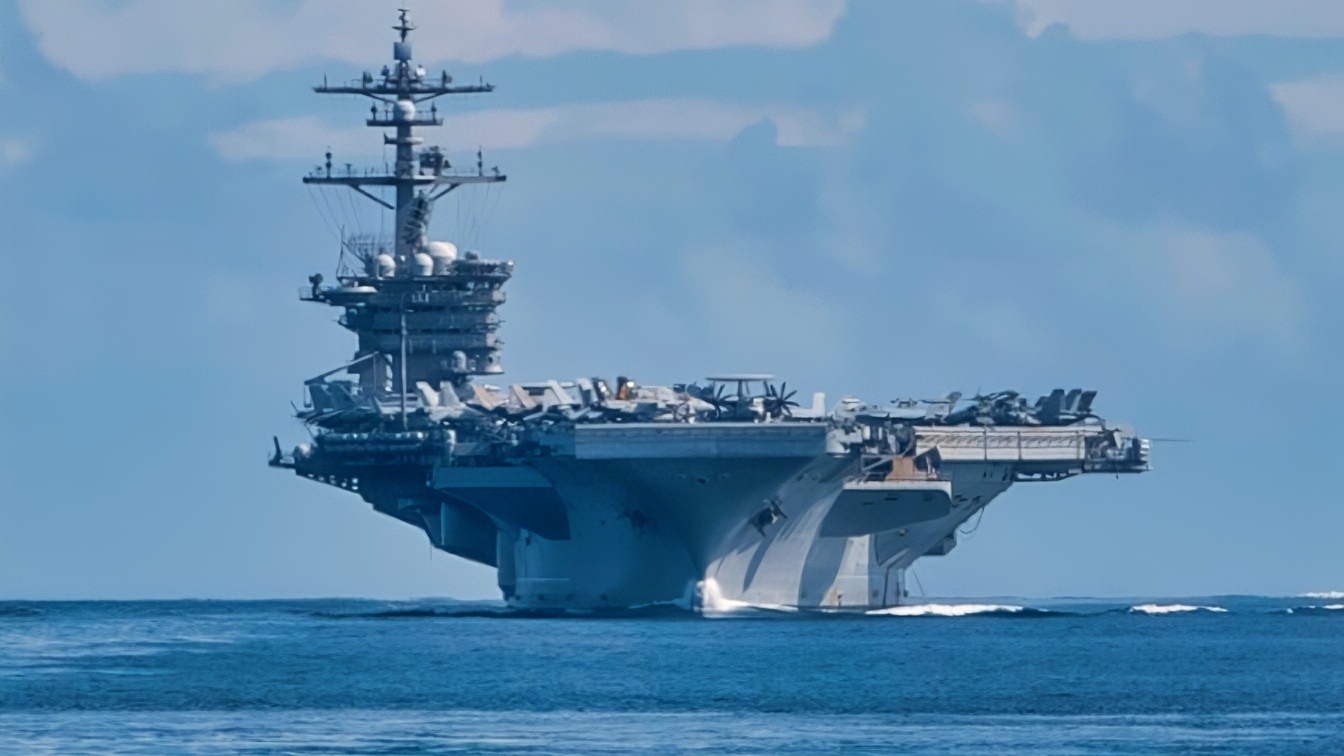
SIBUTU PASSAGE (Feb. 6, 2025) – The Nimitz-class aircraft carrier USS Carl Vinson (CVN 70), left, and the Ticonderoga-class guided-missile cruiser USS Princeton (CG 59) transit the Sibutu Passage Feb. 6, 2025. The Carl Vinson Carrier Strike Group is underway conducting routine operations in the U.S. 7th Fleet area of operations. (U.S. Navy photo by Mass Communication Specialist 3rd Class Brianna Walker)

The guided-missile destroyer USS Donald Cook (DDG 75) steams behind the aircraft carrier USS Theodore Roosevelt (CVN 71) in the Persian Gulf on Jan. 31, 2006. The Roosevelt Carrier Strike Group is conducting maritime security operations in the Persian Gulf.
(DoD photo by Airman Apprentice Nathan Laird, U.S. Navy. (Released))
The conflict that analysts and diplomats are concerned about reigniting began in 2014 when the Houthis seized control of the Yemeni capital, Sanaa, and forced the internationally recognized government into exile. Saudi Arabia then led a military coalition that itervened in March 2015 in support of the exiled government. In April 2022, a United Nations-brokered truce dramatically reduced the number of cross-border attacks and large-scale conflict, but no comprehensive peace agreement has ever been signed.
Houthi Campaign Intensifies
The concerns published on Friday follow a rapid escalation by the Houthis against Saudi Arabia, which is widely believed to be an extension of Iran’s pressure campaign against Gulf states and the U.S.
On July 20, the group announced a naval blockade of Saudi Arabia, declaring that vessels would not be permitted to load or unload cargo at Saudi ports on the Red Sea. Houthi military spokesman Yahya Saree said that the measure was being implemented in response to Saudi aggression, warning shipping companies against violating the blockade.
On Wednesday, the Houthis followed through on their threats, launching missiles and drones at the Saudi-owned tankers Encelia and Layla as they transited the Red Sea near the Bab el-Mandeb Strait. The group said that the vessels had violated the blockade and that other ships would be targeted. The attack also rocked oil markets, with Brent crude briefly trading above $100 per barrel.
Trump Says Iran Will Be Held Responsible
In an effort to encourage Tehran to rein in its proxy groups, U.S. President Donald Trump announced that he would hold Iran accountable for any attacks against commercial vessels in the Red Sea.
Writing on Truth Social, the president described the Houthis as a proxy for Iran, and said that their actions would not be considered independent strikes.
“Please let this TRUTH serve to represent that if they do this again, the U.S. will hold Iran responsible, in that the Houthis are a Surrogate and/or Proxy of Iran, and major military punishment will be inflicted upon Iran and, of course, the Houthis, themselves, who I am very disappointed with in that they have, until now, acted very professionally and smart,” Trump said.
Trump also said the United States would seize Iranian funds held by the United States to compensate for future attacks against vessels, adding another point of economic pressure against Tehran that Washington clearly hopes will dissuade continued Houthi attacks. However, given the sustained pressure under which Tehran finds itself now, and its continued refusal to negotiate, it’s unclear whether the measures will work in the near term.
About the Author: Jack Buckby
Jack Buckby is a British researcher and analyst specializing in defense and national security, based in New York. His work focuses on military capability, procurement, and strategic competition, producing and editing analysis for policy and defense audiences. He brings extensive editorial experience, with a career output spanning over 1,000 articles at 19FortyFive and National Security Journal, and has previously authored books and papers on extremism and deradicalization.


DeadGlowySandyN
July 25, 2026 at 4:51 pm
turn iran into a glass parking lot. enough already
tell the rest of them, you figure your own squabbles out and if you DARE try to involve the us in it you’ll be next.