


Key Points and Summary – While 6th-generation fighters are still in development, defense experts are already speculating on the “not too far-fetched” concept of a 7th-generation fighter.
-Based on current trends, it is “safe to assume” a 7th-gen fighter will be an unmanned, AI-operated platform.
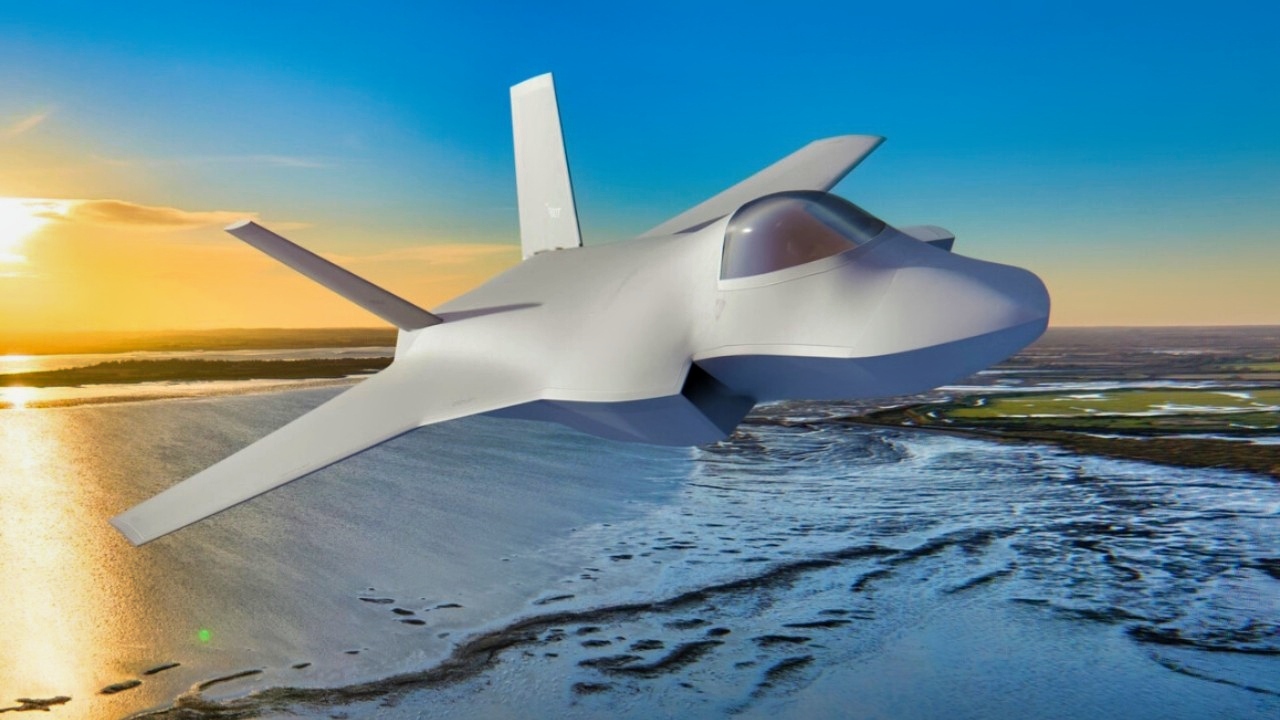
Tempest Fighter from BAE Systems.
-Hypothetical capabilities include hypersonic (Mach 5+) speed, next-generation stealth coatings, and the revolutionary ability to exit the atmosphere and conduct strikes from near-space.
-However, some industry experts, such as those at BAE Systems, are already arguing that the “generational” label itself will soon become obsolete as aircraft evolve continuously.
A 7th Generation Fighter Coming Soon?
Yes, dear readers, you read that title correctly.
It’s not a misprint.
We know this is far-reaching.
Fourth-generation and 4.5-generation fighters haven’t been phased out yet, 5th-generation fighters such the Lockheed Martin “Skunk Works” F-22 Raptor and Lightning II are all the current rage, and 6th-generation warbirds such as the Northrop Grumman B-21 Raider bomber and the Boeing F-47 Next Generation Air Dominance (NGAD) and F/A-XX fighters are currently being hyped as the next big thing in aviation warfare.
So, are we getting ahead of ourselves by discussing 7th-generation fighters already?
Or would the number 7 be as lucky in the warbird realm as it is in gambling?
What might a 7th-generation fighter look like? And what would it sound like, for that matter?
Bottom Line Up Front (BLUF)/The Basics: Not Yet In Development, But …
A useful baseline notion (laying the groundwork, at least in the theoretical sense) is provided by aviation journalist Mark Finlay in a May 6, 2024, article for Simple Flying titled “Is There Such A Thing As A 7th-generation Fighter Jet?”
Right off the bat, Mr. Finlay states in his opening sentence that “No seventh-generation fighter jets are being developed, with the sixth-generation not expected to enter service until the 2030s.” However, in the following paragraph, Mark hastens to add that “When looking into the crystal ball, it is conceivable that, given technological advances, the concept of a seventh-generation fighter is not too far-fetched.”
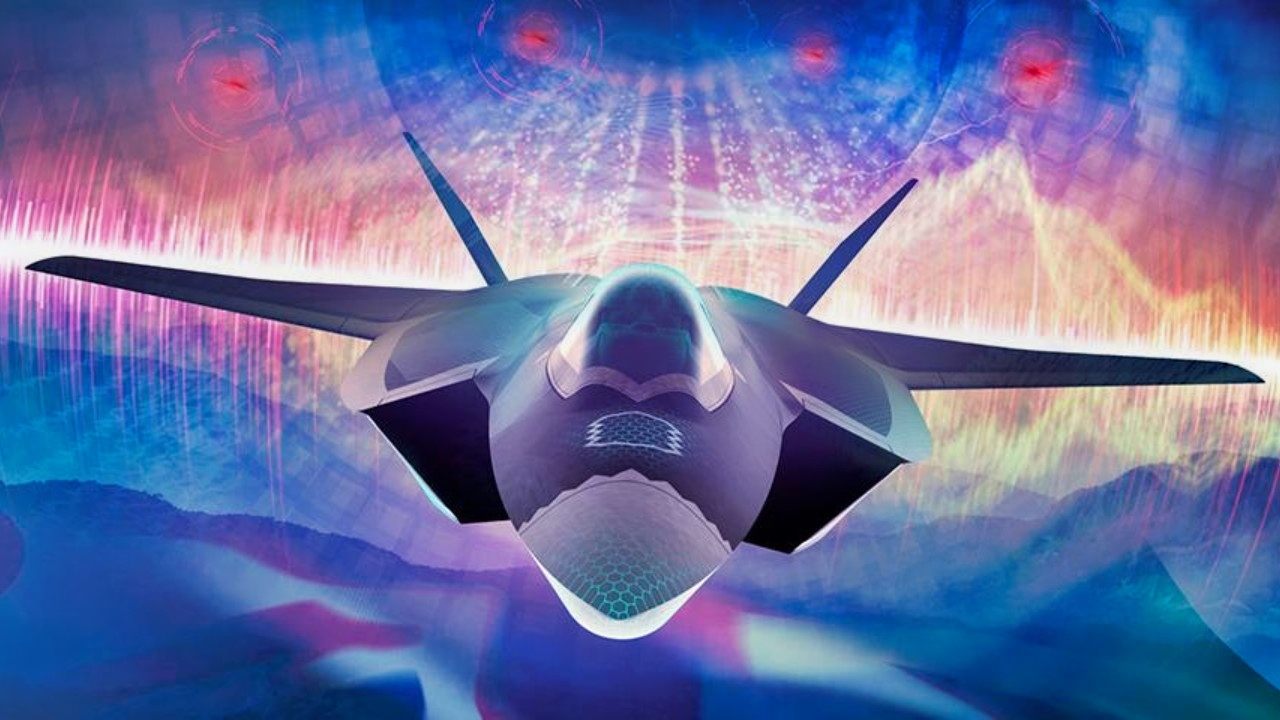
GCAP Fighter. Image Credit: Creative Commons.

GCAP 6th Generation Fighter.
He then opines that “Looking at how unmanned aerial vehicles (UAVs) are being developed to replace manned aircraft, it’s safe to assume that seventh-generation fighter jets will be unmanned and operated using Artificial Intelligence (AI).”
CCA and ANCILLARY: Portents of Things to Come?
Speaking of UAVs, Skunk Works® already has a stealth drone project in the works whose existence has not only already been confirmed, it might also give us a sort of sneak preview at eventual 7th-generation designs: on September 21, 2025, that prestigious plant officially unveiled Vectis, a so-called “Group 5 collaborative combat aircraft (CCA),” at the Air, Space & Cyber Conference 2025. Vectis is designed to integrate with U.S. and allied fighters for precision strike, electronic warfare (EW), and ISR missions, and the manufacturer has pledged to build and flight-test it within 2 years.
Meanwhile, DARPA has the Advanced Aircraft Infrastructure-less Launch And Recovery (ANCILLARY) program, which aims to deliver weaponized unmanned X-planes capable of vertical takeoff and landing (VTOL) that can operate from aircraft carriers.
That said, what are some of the specific features likely to become manifest in 7th-generation warplanes?
Hypothetical Capability #1: Hypersonic Speed
In a February 3, 2025 article, the anonymous admin for the FLYAJETFIGHTER.com website projects that a 7th-generation fighter will have hypersonic capabilities, i.e., a max airspeed in excess of Mach 5 (3,386 mph; 6,125 km/h; 3,333.69 knots): “At these speeds, an aircraft could cover 1,000 kilometers in less than 10 minutes, considerably reducing response time on critical missions.” To put that in perspective, as impressive as the F-47 NGAD is expected to be, its own airspeed is projected to top off at a comparatively modest Mach 2+.

NGAD. Image Credit. Lockheed Martin.
Given the current concerns about hypersonic missiles, an aircraft with the potential for evading and outrunning such missiles would undoubtedly be a desirable thing. The challenge is to build an airframe from materials capable of withstanding the extreme heat generated at such speeds.
Accordingly, the 7th-generation fighter’s own weapons would presumably also need to be hypersonic, a capability which is already addressed by another DARPA program, the Hypersonic Air-breathing Weapon Concept (HAWC) project.
Hypothetical Capability #2: Even Stealthier
China claims to have developed radars that render 5th-generation stealth obsolete.
Though this claim has yet to be independently verified, the US and its allies can ill afford to be complacent about current stealth capabilities.
Ergo, a 7th-generation warplane would require next-generation radar-absorbing coatings and aerodynamic designs that further reduce thermal and radar signatures, e.g., advanced composite materials and internal structures designed to scatter electromagnetic waves.
Along those lines, a 7th-generation warplane would conceivably maintain the trend toward tailless flying wing designs being demonstrated in the 6th-generation B-21.
Hypothetical Capability #3: Outer Space Fighters
There has already been plenty of talk about space being the next major domain in warfare, but 7th-generation fighters could conceivably take that concept to a whole different level, thereby taking space fighter craft beyond the sci-fi realm of Star Wars and Battlestar Galactica and into reality.
Gen 7 warbirds are foreseen as able to exit Earth’s atmosphere, which, needless to say, would confer a range of potential strategic advantages, such as conducting high-altitude reconnaissance missions, conducting strikes from space, or deploying tactical satellites.
7th-Generation Semantics?
First things first, of course; we’ll have to see how well Gen 6 fighters and bombers perform in real-world combat before Gen 7 planes make it past the speculative phase.
Meanwhile, some experts are already opining that the 7th-generation label may become outdated even before the eponymous flying machines become a reality! Mike Baulkwill, BAE Systems’ Combat Air Strategy Director, was quoted in a May 16, 2024, article in Breaking Defense as saying that he “didn’t know where 7G aircraft development is heading,” but then adding, “‘ We need to lose the generational name because aircraft are going to be evolving all the time.'”
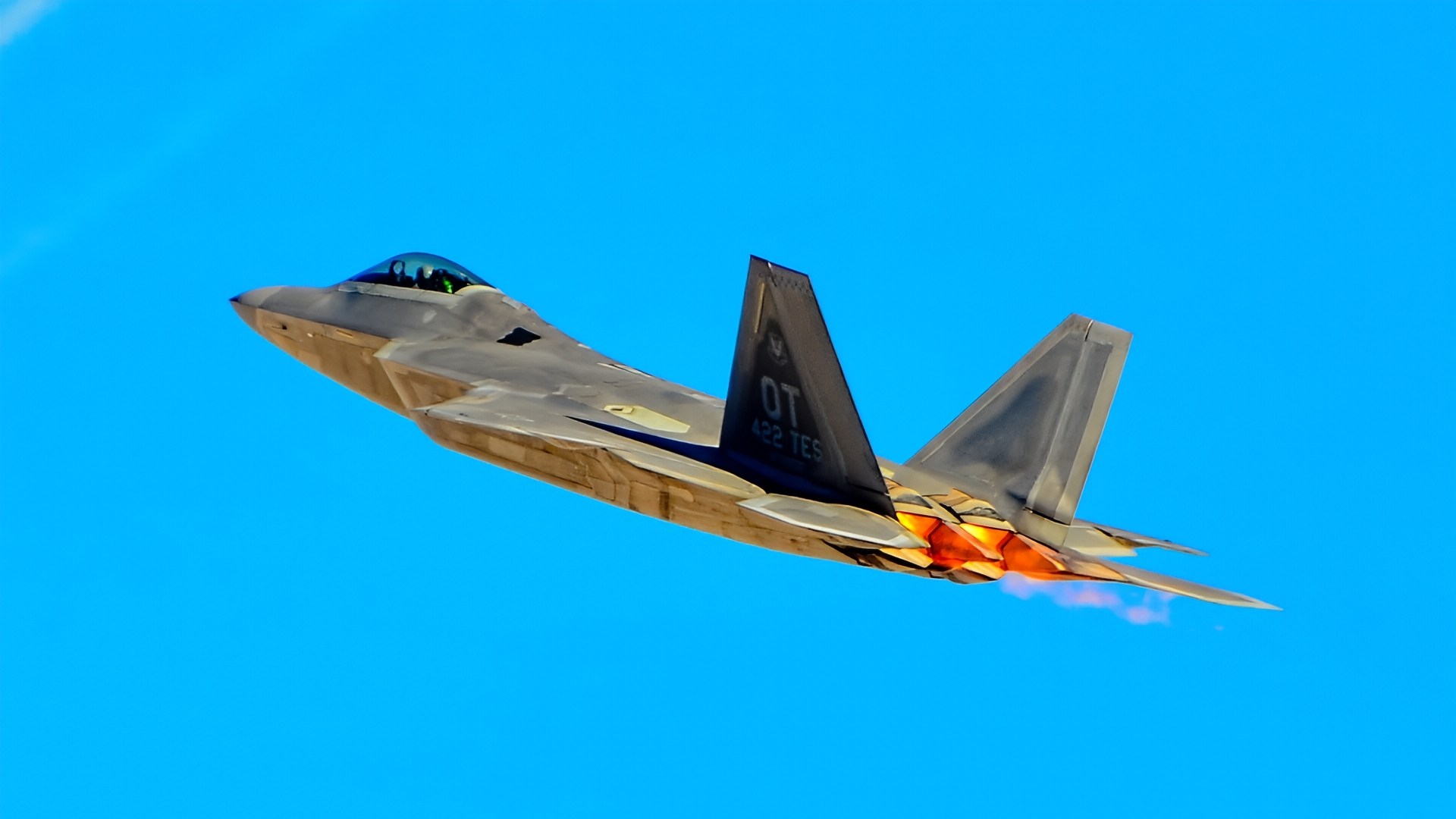
F-22 Raptor Stealth Fighter Flying. Image Credit: Creative Commons.
Mr. Baulkwill’s sentiments were backed up by his colleague Jonny Moreton, “partnership director and military advisor for the Future Combat Air System (FCAS), who agreed ‘generational nomenclature’ will disappear in the future. ”
About the Author: Christian D. Orr, Defense Expert
Christian D. Orr is a Senior Defense Editor. He is a former Air Force Security Forces officer, Federal law enforcement officer, and private military contractor (with assignments worked in Iraq, the United Arab Emirates, Kosovo, Japan, Germany, and the Pentagon). Chris holds a B.A. in International Relations from the University of Southern California (USC) and an M.A. in Intelligence Studies (with a concentration in Terrorism Studies) from American Military University (AMU). He is also the author of the newly published book “Five Decades of a Fabulous Firearm: Celebrating the 50th Anniversary of the Beretta 92 Pistol Series.”
More Military
China’s New J-35 Navy Stealth Fighter Summed Up in 2 Words
China’s ‘Mighty Dragon’ J-20 Air Force Stealth Fighter Summed Up in 2 Words
China Is Trying to Turn the Indo-Pacific Into a Giant U.S. Navy ‘No-Go Zone’
$13 Billion Mistake? USS Gerald R. Ford Is the Navy’s Aircraft Carrier Agony
China’s ‘Thousands of Missiles’ Have a Message for U.S. Navy Aircraft Carriers


Larry Goad
October 28, 2025 at 2:05 pm
Unmanned combat aircraft are coming faster then expected and are almost mandated by economics. Combat pilots are highly trained but take years to learn these skills to an expert level. We then saddle the best with command duties that eventual erodes their skills. The best “shooters” have a far higher life expectancy then rookies and this has been proven in every “air” war. The cost of aircraft is going thru the roof and we can afford only the best to fly “half-billion” dollar aircraft” thus we need to “protect” the best of the best. Even experts can get shot down but unmanned aircraft can put that “downed” expert back in the combat seat within minutes. Going from manned to unmanned will also extend their fighting years to probably double, due to less wear & tear on their bodies and AI enhanced control/decision making responses.
-CaBuckeye