

Key Points and Summary – China’s “carrier-killer” missile strategy relies on three key land-based systems. The DF-21D is the original, a medium-range ballistic missile (MRBM) with a maneuverable warhead designed to strike U.S. carriers inside the First Island Chain.
-The DF-26B “Guam Killer” is a longer-range IRBM (4,000 km) that extends this threat to U.S. bases in the Second Island Chain. Most dangerous is the DF-17, which deploys a hypersonic glide vehicle (HGV).
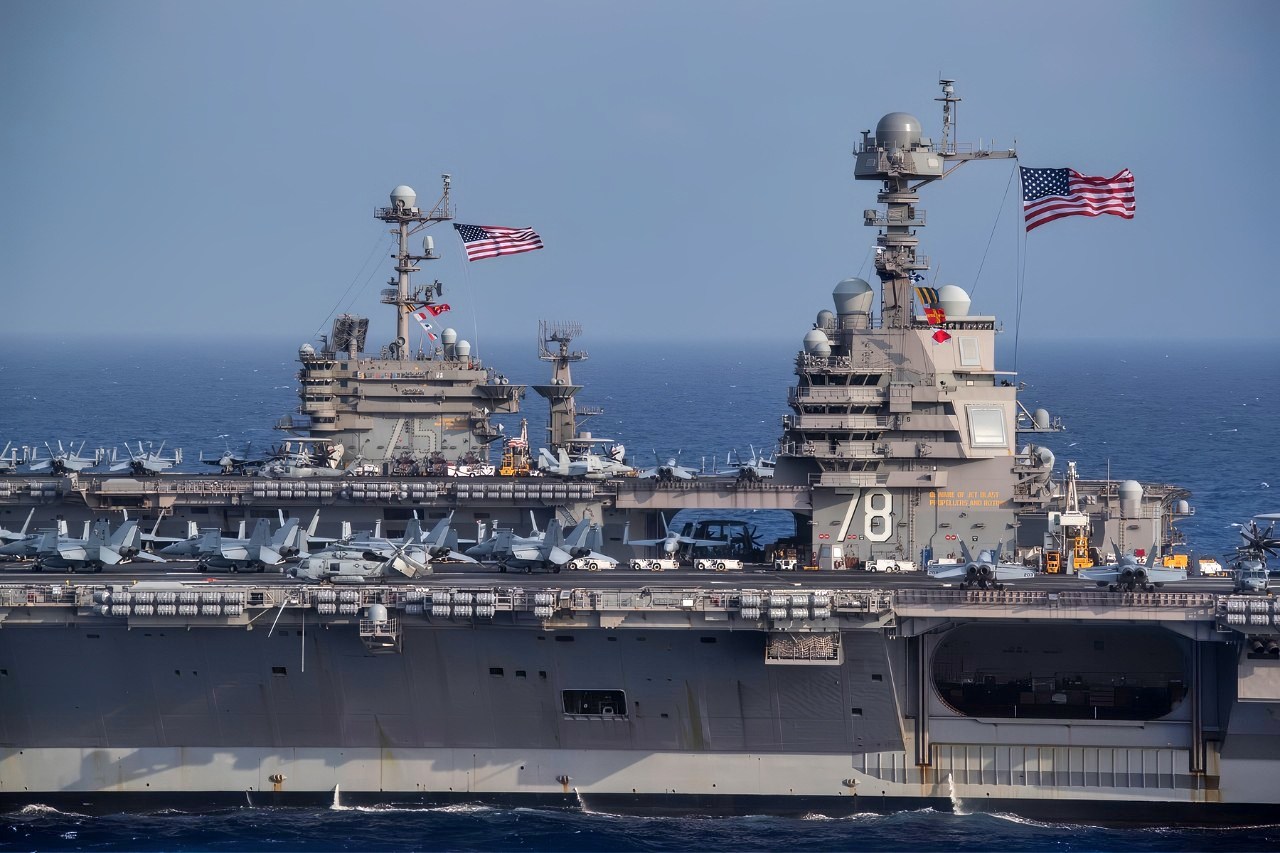
ATLANTIC OCEAN (June 4, 2020) The Ford-class aircraft carrier USS Gerald R. Ford (CVN 78) and the Nimitz-class aircraft carrier USS Harry S. Truman (CVN 75) transit the Atlantic Ocean, June 4, 2020.
-This Mach 10+ weapon flies an unpredictable trajectory, making it theoretically capable of bypassing U.S. air defense systems and posing a severe, hard-to-intercept threat.
China’s Aircraft Carrier Killer Missiles: The Threat to the U.S. Navy
In recent years, the People’s Liberation Army Rocket Force (PLARF) has fielded a suite of land-based missiles aimed squarely at denying the U.S. Navy’s aircraft carrier strike groups freedom of operation in the Western Pacific.
At the very core of China’s missile strategy, and its growing arsenal of missiles, are three key systems: the DF-21D, DF-26B (the anti-ship variant of the DF-26), and the DF-17 hypersonic missile.
DF-21D – The Original “Carrier Killer”
The DF-21D is a road-mobile medium-range ballistic missile (MRBM) based on the DF-21 family. The DF-21D entered service around 2012 and boasts a range estimated at roughly 1,450-1,550 km – according to U.S. open-source reporting.
Some Chinese-language sources have suggested that the missile’s range is actually closer to 2,000 km or more, though these figures cannot be verified.
The warhead is also understood to include a maneuverable re-entry vehicle (MaRV) designed to engage moving surface targets at sea.

Souda Bay, Crete, Greece (Feb. 22, 2006)
Nimitz-class aircraft carrier USS Theodore Roosevelt (CVN 71) heads to sea following a brief logistics stop on the Greek island of Crete. Roosevelt and Carrier Air Wing Eight (CVW-8) are currently underway on a regularly scheduled deployment supporting maritime security operations.
Roosevelt is the fourth ship in the NIMITZ – class of nuclear powered aircraft carriers and is homported in Norfolk, VA.
U.S. Navy photo by Mr. Paul Farley
The DF-21D forms part of China’s anti-access/area denial posture. It is a missile capable of targeting carrier strike groups operating inside the First Island Chain.
It’s worth noting, however, that while the DF-21D is capable of destroying American aircraft carriers from thousands of kilometers away, the weapons are dependent on information given to them by radars, drones, satellites, and other assets – meaning that the missile can only serve its intended function if sensors are capable of tracking the target.
In terms of being an operational threat, the DF-21D is arguably the main, and original, focus of China’s “carrier-killer” narrative.
Analysts have touted it for years as turning nuclear-powered aircraft carriers into sitting ducks, contributing to a broader discussion about the future of aircraft carriers and the significance of new undersea systems.
Anti-Ship DF-26B
The DF-26, meanwhile, is a two-stage solid-fuel intermediate-range ballistic missile (IRBM) that China began deploying around 2016. The anti-ship variant, known as the DF-26B, is designed for maritime strike missions.
The missile’s strike zone extends well beyond the First Island Chain, making it a major threat to U.S. carriers and assets in the event of a conflict.
The range is estimated at around 4,000 km in many open-source reports, and the missile supports both conventional and nuclear payloads. Some reporting has suggested that the warheads are in the 1,200-1,800 kg class.
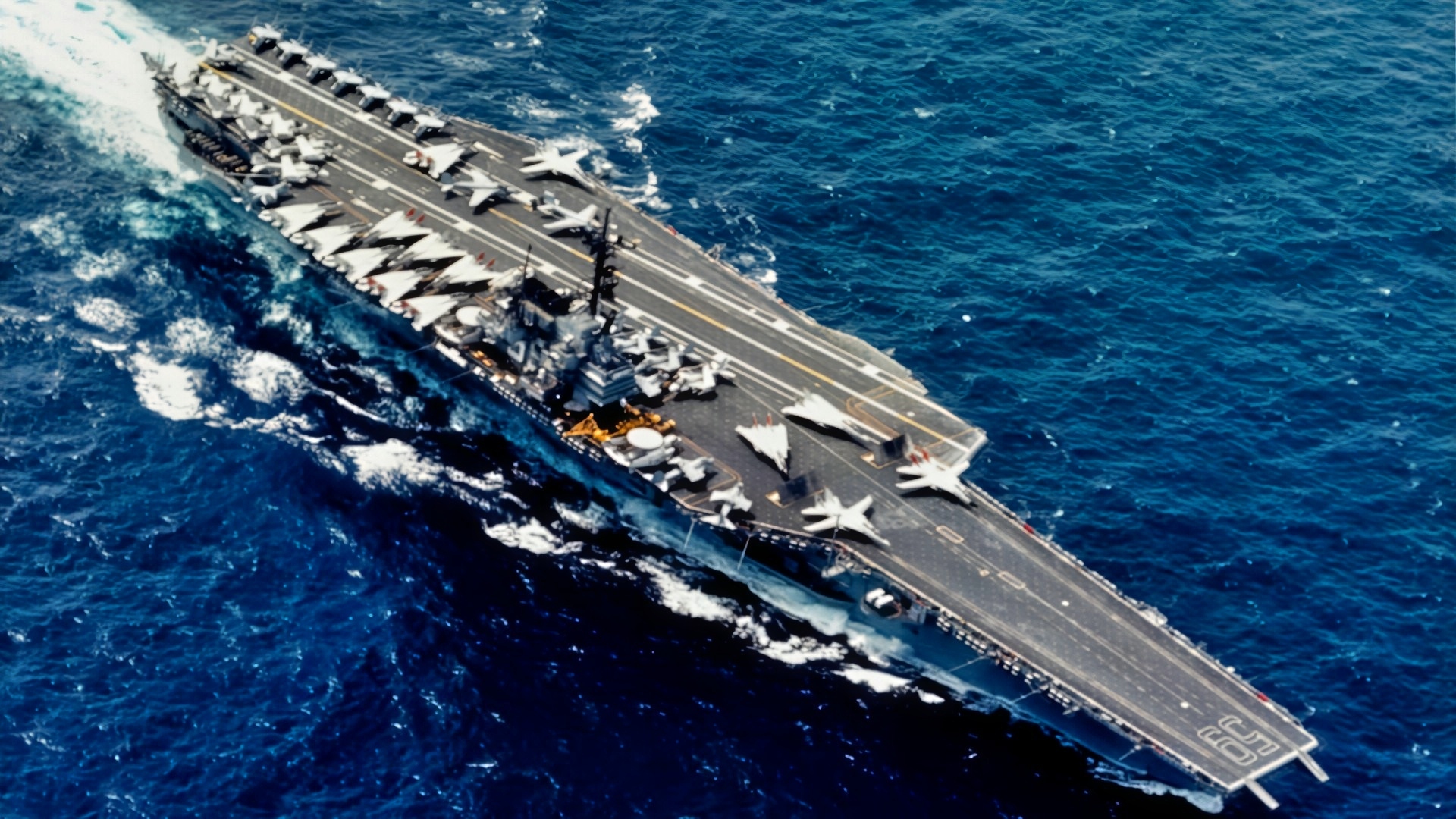
USS Forrestal Aircraft Carrier. Image Credit: Creative Commons.
The DF-26B significantly expands China’s ability to strike targets at a distance.
While the DF-21D was designed to attack carriers operating relatively close to China’s coast, the DF-26B goes a step further and can reach carriers farther out in the Pacific, including at bases like Guam. That’s why the missile has been labeled the “carrier killer” by many Western analysts.
And thanks to its compatibility with mobile launchers, the missile is a flexible and valuable tool for the Chinese military, both for strikes and deterrence.
From a strategic vantage point, the DF-26B absolutely raises the stakes for U.S. carriers, proving that China can target valuable assets farther out at sea.
Vessels that were previously out of range may now be back in range— but some operational questions remain.
As with the DF-21D, accurately targeting a large, moving warship thousands of kilometers away may be possible, but has not actually been proven.
Accurate targeting, again, also depends on the Chinese systems’ ability to track a moving American vessel and penetrate newer, more advanced missile systems.
U.S. forces’ layered air-sea defense systems and sensor platforms could complicate a scenario in which China launches this missile at ships.
The DF-26B, therefore, is significant – but it’s not yet proof that American aircraft carriers are completely vulnerable.
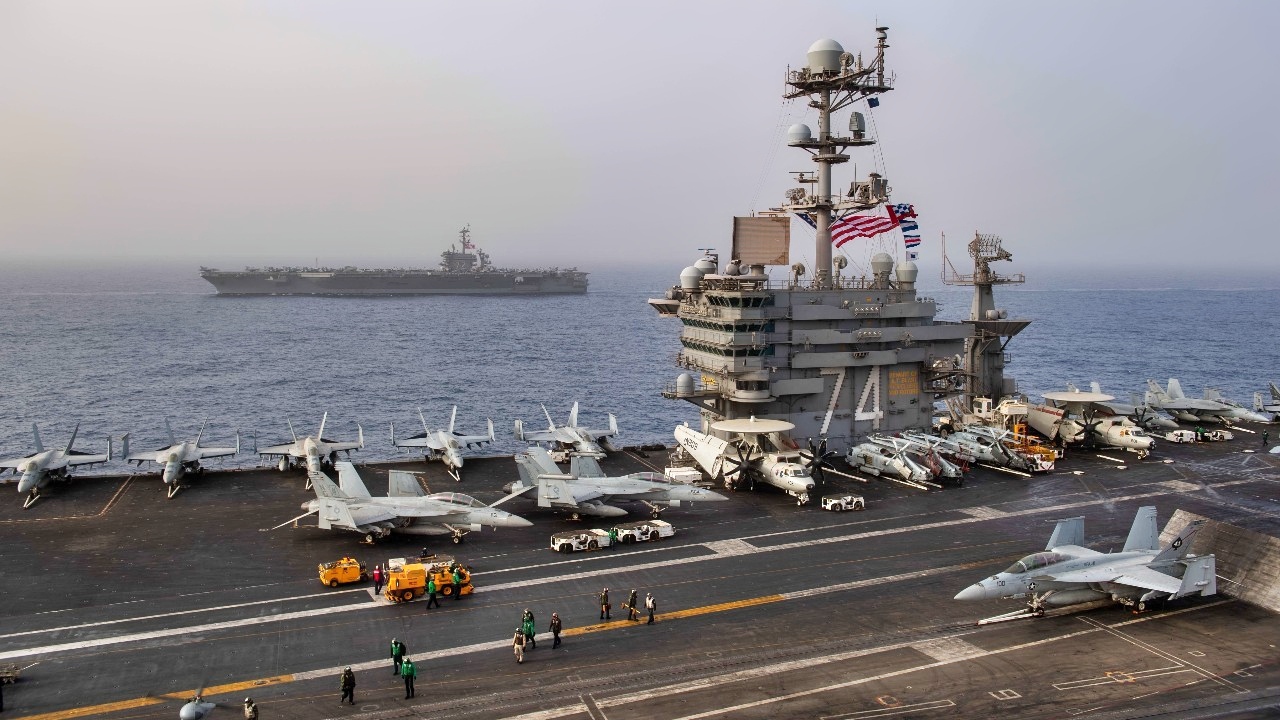
The aircraft carrier USS Abraham Lincoln (CVN 72), back, steams alongside the aircraft carrier USS John C. Stennis (CVN 74) in the Mediterranean Sea, April 24, 2019. The John C. Stennis Carrier Strike Group (CSG) 3 and Abraham Lincoln Carrier Strike Group (CSG) 12 are conducting dual carrier operations, providing opportunity for two strike groups to work together alongside key allies and partners in the U.S. 6th Fleet area of operations. John C. Stennis is underway in the Mediterranean Sea as part of the John C. Stennis Carrier Strike Group (JCSCSG) deployment in support of maritime security cooperation efforts in the U.S. 6th Fleet area of responsibility. (U.S. Navy photo by Mass Communication Specialist 3rd Class Grant G. Grady)
Hypersonic DF-17
The DF-17 is particularly interesting. It is the world’s first operational medium-range ballistic missile (MRBM) deployed with a hypersonic glide vehicle (HGV) known as the DF-ZF.
According to American researchers, the missile has a range of 1,800-2,500 km. Its speed in glide phase can reach somewhere between Mach 5 and Mach 10, and it also comes in a road-mobile configuration.
An HGV is a system that is launched atop a ballistic missile, separating after the boost phase. It then glides at speeds over Mach 5 through the atmosphere towards its target.
Unlike traditional re-entry warheads, it follows a low, unpredictable, and maneuverable path – making interception of these missiles particularly difficult.
HGVs can adjust their course mid-flight, enabling precision strikes on distant targets, even those that are heavily defended.
In this sense, the DF-17 goes above and beyond both the DF-26B and DF-17, not only providing the range required to target American carriers from a distance but also the technology necessary to, in theory, navigate around American air defense systems.
Together, China’s growing arsenal of new missiles poses a greater threat to U.S. carriers than ever—but as the U.S. develops its own technologies, this new reality applies to every major naval force in the world.
About the Author:
Jack Buckby is a British author, counter-extremism researcher, and journalist based in New York. Reporting on the U.K., Europe, and the U.S., he works to analyze and understand left-wing and right-wing radicalization, and reports on Western governments’ approaches to the pressing issues of today. His books and research papers explore these themes and propose pragmatic solutions to our increasingly polarized society. His latest book is The Truth Teller: RFK Jr. and the Case for a Post-Partisan Presidency.
More Military
The ‘Super’ B-52J Stratofortress Bomber Is Coming
The Air Force’s ‘New’ B-1B Lancer Super Bomber Is Coming Soon
‘Flying Dorito’: The A-12 Avenger II Stealth Bomber Summed Up in 1 Word
Never Finished: USS Illinois Is the U.S. Navy’s ‘Scrapped’ Iowa-class Battleship


Everett
October 29, 2025 at 7:55 pm
Blah blah