


Key Points and Summary – Dr. Ted Galen Carpenter argues the Trump administration is inflating Venezuela into a major U.S. security threat to justify forceful actions at sea and possible regime change.
-He says Caracas is not a central player in fentanyl trafficking, and Washington has not sought congressional authorization, turning the campaign into another presidential war.

A U.S. Sailor prepares an F/A-18F Super Hornet aircraft for launch from the flight deck of the world’s largest aircraft carrier, Ford-class aircraft carrier USS Gerald R. Ford (CVN 78), while underway in the Caribbean Sea, Nov. 25, 2025. U.S. military forces are deployed to the Caribbean in support of the U.S. Southern Command mission, Department of War-directed operations, and the president’s priorities to disrupt illicit drug trafficking and protect the homeland. (U.S. Navy photo)
-Carpenter places the rhetoric in a long pattern of threat exaggeration used to sell interventions from Vietnam to Iraq, including the infamous Kuwait incubator story.
-He warns that Maduro’s unpopularity could ease domestic support for escalation, and urges realism and restraint before the United States repeats costly mistakes abroad.
Trump’s Exaggeration of Venezuela “Threat” Echoes Propaganda of Previous Administrations
The Trump administration continues to insist that Venezuela’s leftist government poses a serious national security threat. United States officials especially assert that Nicolas Maduro’s regime is deeply involved in the illegal drug trade coming into the United States, including the surge in fentanyl in recent years. Indeed, Trump and his associates maintain that Venezuela’s government is little more than a disguised drug cartel. Washington has invoked the argument to justify an escalating series of attacks on small boats, including fishing vessels, in waters near that country.
Presidential War
Contending that illegal drug trafficking constitutes a national security threat sufficiently serious enough to warrant using the US military against a sovereign country is a dubious argument. Moreover, Venezuela is not a major player in the fentanyl trade.
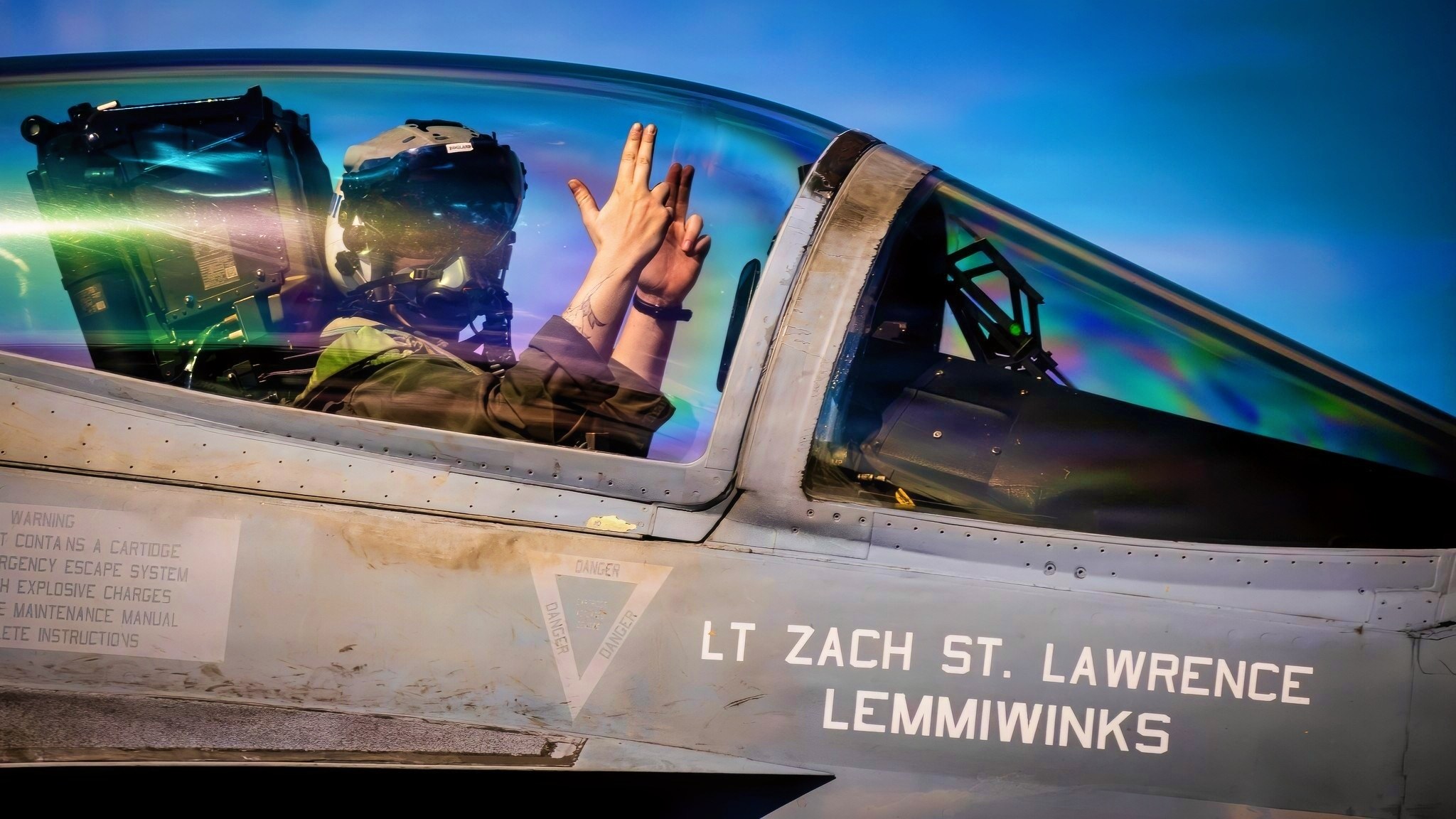
A U.S. Sailor assigned to Strike Fighter Squadron 37 signals to arm ordnance in an F/A-18E Super Hornet aircraft on the flight deck of the world’s largest aircraft carrier, Ford-class aircraft carrier USS Gerald R. Ford (CVN 78), while underway in the Caribbean Sea, Nov. 30, 2025. U.S. military forces are deployed to the U.S. Southern Command area of responsibility in support of Operation SOUTHERN SPEAR, Department of War-directed operations, and the president’s priorities to disrupt illicit drug trafficking and protect the homeland. (U.S. Navy photo)
Several countries, including Mexico and China, are more deeply involved in the trafficking of that particular drug. Moreover, Trump has not asked Congress for a declaration of war against Venezuela or even a more limited approval of his administration’s use of force. If the alleged threat is grave, one would assume that the president would seek congressional backing to validate his assessment. Instead, America has embarked on yet another presidential war based on deficient evidence and extremely weak domestic political support.
Unfortunately, threat inflation is nothing new. Three pro-war administrations managed to obtain sufficient support from Congress and the public for military action against tiny, distant North Vietnam, based on the absurd notion that it posed a security threat to the United States. Several recent White House occupants have engaged in similar threat inflation, with respect, to justify wars against designated US adversaries.
Some of the cases were at least plausible, including the arguments that Joe Biden used to support NATO’s proxy war against Russia after the Kremlin’s 2022 invasion of Ukraine. Russia is a significant military power, and its use of force against a neighbor was unsettling.
Nevertheless, the notion that Moscow had both the ambition and the ability to dominate all of Europe was a wild exaggeration.
Threat Inflation
Most of the other recent cases of threat inflation were even more egregious, and Washington’s official justifications barely passed the laugh test. It took a barrage of creative propaganda to make the case that such small countries as Panama, Serbia, Libya, and Syria were such dangerous players that Washington was justified in taking military action against them. Yet, administration after administration successfully used threat inflation to bully opponents.
Another example in that category was the Persian Gulf War—the US-led military crusade in 1990-1991 against Iraq. President George H.W. Bush’s administration successfully marketed even transparently illogical assertions to the American public.

An F/A-18F Super Hornet, attached to the “Blacklions” of Strike Fighter Squadron (VFA) 213 and a F/A-18E Super Hornet, attached to the “Golden Warriors” of Strike Fighter Squadron (VFA) 87 fly over the world’s largest aircraft carrier, USS Gerald R. Ford (CVN 78), the Arleigh Burke-class guided-missile destroyer USS Mahan (DDG 72), April 11, 2025. The Gerald R. Ford Carrier Strike Group is underway in the Atlantic Ocean completing integrated naval warfighting training. Composite Training Unit Exercise (COMPTUEX) is the Joint Force’s most complex integrated training event and prepares naval task forces for sustained high-end Joint and combined combat. Integrated naval training provides America’s civilian leaders and commanders highly-capable forces that deter adversaries, underpin American security and economic prosperity, and reassure Allies and partners. (U.S. Navy photo by Mass Communication Specialist 2nd Class Maxwell Orlosky

The world’s largest aircraft carrier USS Gerald R. Ford (CVN 78) steams in the Adriatic Sea, June 23, 2023. Gerald R. Ford is the U.S. Navy’s newest and most advanced aircraft carrier, representing a generational leap in the U.S. Navy’s capacity to project power on a global scale. The Gerald R. Ford Carrier Strike Group is on a scheduled deployment in the U.S. Naval Forces Europe area of operations, employed by U.S. Sixth Fleet to defend U.S., allied, and partner interests. (U.S. Navy photo by Mass Communication Specialist 2nd Class Jackson Adkins)
For example, administration officials painted Iraqi dictator Saddam Hussein as the “new Hitler” who posed a mortal danger to the peace of the Middle East and beyond. His conquest of Kuwait, they warned, if allowed to stand, would be the first in a massive wave of expansion. Any reasonably detached, sober analysis would have raised serious doubts about that argument.
After all, Iraq had just emerged from a bruising decade-long war with Iran’s revolutionary regime. That conflict had caused major damage to essential infrastructure and depleted military manpower. Iraq was a beleaguered survivor, not a strutting conqueror.
Moreover, despite enjoying multiple advantages, including weapons and logistical support from the United States and its allies, as well as internal turmoil continuing to afflict revolutionary Iran after the ouster of the Shah, Saddam’s forces emerged with nothing better than a draw against their adversary. Yet the Bush administration and its political allies sold the narrative that a regime which could not conquer one badly weakened opponent nevertheless posed a major regional and global security threat.
Venezuela Legitimizing Threats
The administration even succeeded in legitimizing some of the most transparently phony propaganda being circulated by Kuwait’s exile regime and its US patrons. An especially shameful example was the account alleging that Iraqi soldiers had pulled premature infants from their incubators in a hospital in occupied Kuwait City.
This episode, which read like something from crude British propaganda broadsides in World War I about the German “Huns” bayonetting babies in Belgium, was widely circulated by the administration and its allies in the media.
It turned out that the principal alleged witness to the incubator’s atrocity story was the daughter of Kuwait’s ambassador to the United States. Despite such amateurism, the Bush administration’s propaganda offensive proved sufficient to generate public support for the military intervention launched by the US-led international coalition in the spring of 1991.
Given the long track record of Washington’s successful threat inflation around the world, one needs to be cautious about assuming that the Trump administration will be unable to sell the proposition that Venezuela poses a credible security threat to its neighbors and ultimately to the United States.
Maduro’s nasty dictatorship is not well-positioned to attract an extensive roster of human rights activists, advocates of democracy, and other typical opponents of US imperial aggression. A sizable percentage of conservatives in the United States may even be inclined to sign on to a regime change military intervention against that regime.
The willingness of Nobel Peace Prize winner Maria Corina Machado to publicly endorse the Trump administration’s coercive measures against her country may embolden the White House further.
What Happens Now?
Yet another regime change war is beckoning, even though such a conflict is the last thing that the United States needs right now. Sensible Americans need to stay focused on embracing a foreign policy of realism and restraint.
They must also be alert to manifestations of threat inflation. We have been down that road far too often, and the destination frequently is very unpleasant.
About the Author: Dr. Ted Galen Carpenter
Ted Galen Carpenter is a senior fellow at the Randolph Bourne Institute and a contributing editor at The National Security Journal and The American Conservative. He is the author of 13 books and more than 1,500 articles on national security, international affairs, and civil liberties. His latest book is Unreliable Watchdog: The News Media and US Foreign Policy (2022).


25th amendment
December 20, 2025 at 7:43 am
Fentanyl entering the US comes from three countries, if neglecting those from south Asia.
The three countries are mexico, Canada, and china.
Why don’t the war dept send the US military to tickle those three countries.
Leave Venezuela alone.
Don’t covet caracas’ oil.
CROWTUS
December 20, 2025 at 11:58 am
And because of this very slanted and untrue editorial, National Security is now BANNED because you are no longer a credible source.
Swamplaw Yankee
January 4, 2026 at 1:13 am
Well, this op-ed speculator bet on the wrong horse. Let us look at his totalister ticket. How much did he really place as a cash bet? OMG. Zero dollars.
Ok, regime change for tens of millions is now, – OK. Hey, that Greenland place just needs a visit from the boy scouts earning a badge. The kids just visit the three post office spots, change the stamp supply and all is functional.
The US constitution will suddenly apply there and that is the best bonus for these forgotten folks.