


Key Points and Summary – The U.S. military buildup around Venezuela is no routine counternarcotics mission.
-Washington is assembling a carrier strike group, amphibious forces, long-range bombers, and dense ISR coverage to coerce Nicolás Maduro into dismantling the foothold China, Russia, and Iran have built inside the Western Hemisphere.

A B-52H Stratofortress sit parked on the flight line at Minot Air Force Base, North Dakota, Aug. 8, 2022. The B-52 is capable of dropping or launching gravity bombs, cluster bombs, precision-guided missiles and joint direct attack munitions. (U.S. Air Force photo by Airman Alysa Knott)
-Venezuela’s own options are limited: a hollow air force, a negligible navy, and gray-zone tools that cannot offset American conventional dominance.
-External patrons are unlikely to risk direct confrontation in the Caribbean.
-The result is a sharp hemispheric power imbalance—one the U.S. is now leveraging to break rival influence and reassert regional primacy.
China, Russia, Iran in the Caribbean? How Venezuela Triggered a U.S. Clampdown
The military posture the United States is now adopting in the Caribbean has little to do with counternarcotics missions or routine regional presence. Washington is concentrating a level of force around Venezuela designed to compel the Maduro regime to dismantle one of the most significant footholds China, Russia, and Iran have carved out inside the Western Hemisphere. In an era defined by great-power competition, Venezuela has become a strategic outpost for powers intent on challenging U.S. influence in its own neighborhood—and the American response reflects that shifting reality.
The buildup now underway is no token show of force. It is a multidomain concentration of American conventional military power positioned close enough to Venezuela to impose costs swiftly if Washington chooses to. The scale alone signals that the United States is no longer willing to tolerate the geopolitical drift that allowed external powers to entrench themselves in Caracas.
A Carrier, Amphibs, Airpower, and ISR: The Emerging Order of Battle
The clearest measure of U.S. intent is the naval picture. A carrier strike group in the Caribbean provides persistent airpower, deep strike capacity, and intelligence coverage across every corner of Venezuela. Its complement of cruisers, destroyers, and electronic-warfare assets gives Washington the ability to target regime infrastructure, military sites, and the networks linking Caracas to its extra-hemispheric patrons.
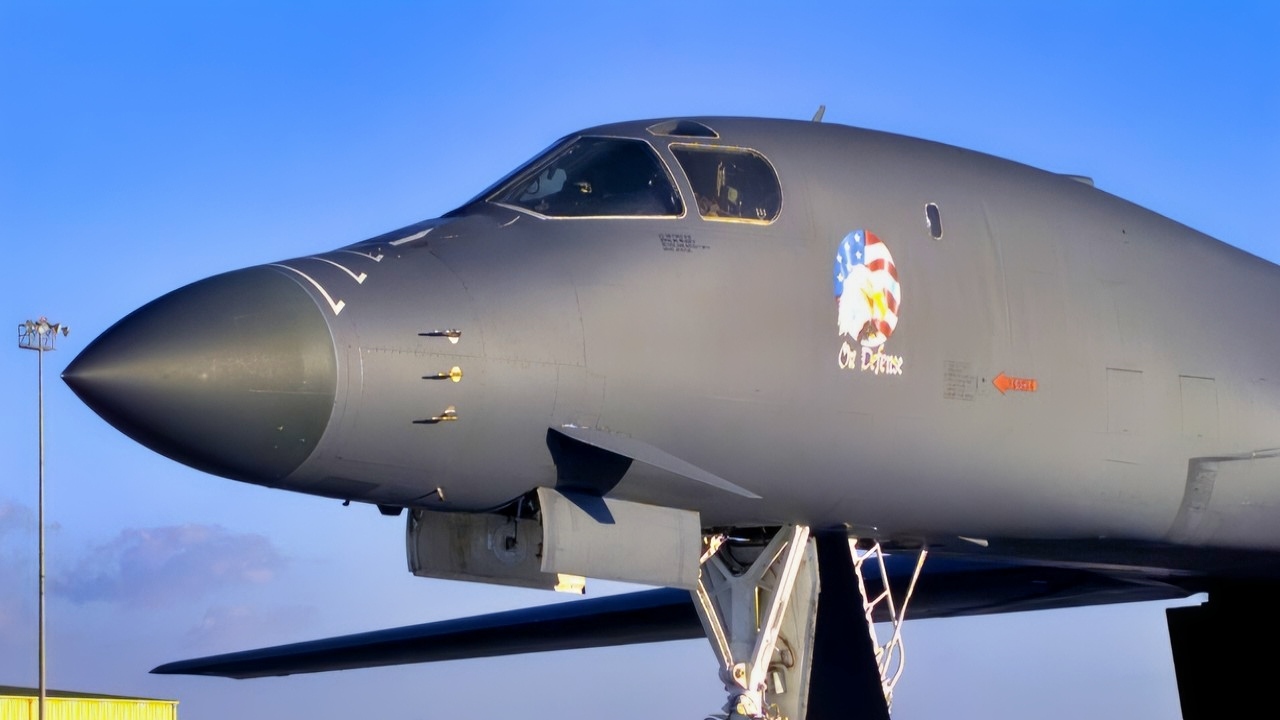
Crew Chief Senior Airman Mike Parks talks through his headset with the crew of a U.S. Air Force B-1B Lancer bomber as they go through the pre-flight checklist at an air base in the Persian Gulf region on Dec. 10, 1998. The Lancer, deployed from Dyess Air Force Base, Texas, is a multi-role, long range, heavy bomber.
(DoD photo by Senior Airman Sean M. White, U.S. Air Force. (Released))
Alongside it sits a reinforced amphibious presence: an Amphibious Ready Group with Marines capable of rapid insertion, limited raids, and securing terrain crucial to any coercive action. This is not a prelude to invasion—it is the backbone of a campaign meant to give Washington options beyond symbolic pressure.
The air picture is equally striking. U.S. long-range bombers have cycled through regional bases with growing regularity. Fighter aircraft have been staged within reach of Venezuelan airspace. And a web of manned and unmanned ISR platforms now blankets the northern arc of South America. This surveillance architecture tracks troop movements, foreign advisors, militia deployments, and any activity that hints at escalation or external support.
Behind these visible assets is a new U.S. special operations and rapid-deployment posture configured for high-intensity coercion: the interdiction of transnational patronage, the seizure of shadowy revenue flows, and the manipulation of elite conduct short of outright war. These forces sit alongside—but analytically distinct from—any irregular or guerrilla-style resistance that might emerge after a successful U.S. conventional campaign, which lies outside the scope of this argument.
Why Venezuela Is the Target of This Pressure
The reason for this massing of force is rooted in the broader logic of great-power competition. The Maduro regime has become an entry point for Chinese surveillance infrastructure and digital penetration, Russian intelligence and military cooperation, and Iranian proxy networks. That combination gives America’s competitors a strategic presence inside the hemisphere at precisely the moment Washington is reorienting toward geopolitical rivalry.
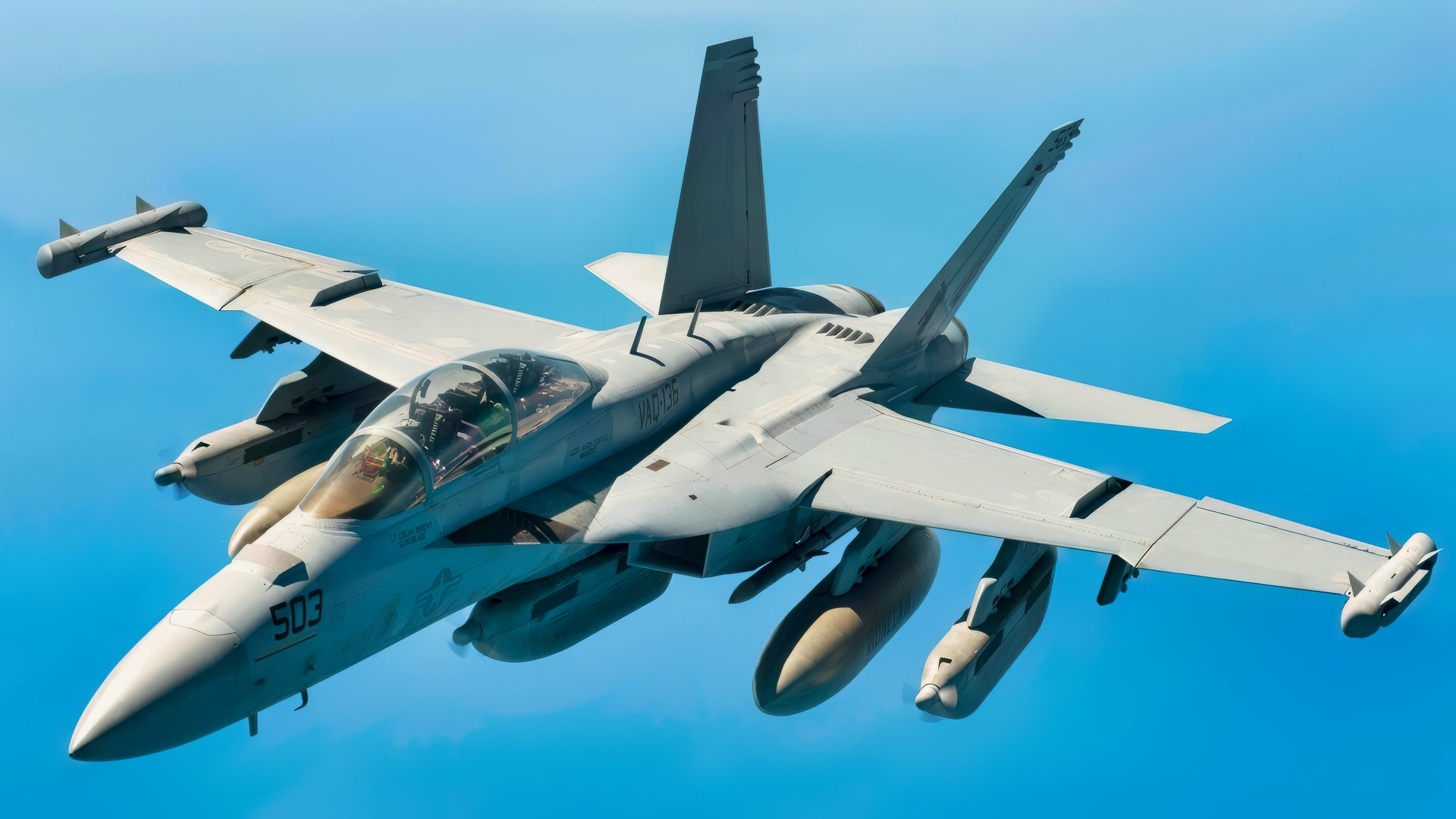
A U.S. Navy EA-18G Growler assigned to the USS Carl Vinson breaks away from a U.S. Air Force KC-135 Stratotanker from the 909th Air Refueling Squadron after conducting in-air refueling May 3, 2017, over the Western Pacific Ocean. The 909th ARS is an essential component to the mid-air refueling of a multitude of aircraft ranging from fighter jets to cargo planes from different services and nations in the region. (U.S. Air Force photo by Senior Airman John Linzmeier)
The United States is not trying to topple Maduro for its own sake. It is trying to break the external relationships that turn Venezuela into a forward operating platform for rival powers. Every aircraft, ship, and special operations element massing near Venezuela is part of that coercive logic.
What Venezuela Can Do in Response
Set against this concentration of power, Venezuela’s ability to respond is sharply limited.
Its air force is a relic of earlier decades—undercapacity, undermanned, and undermodernized. Only a portion of its fighters are reliably flyable. Its air-defense network, anchored by aging Russian systems, is more imposing on paper than in practice. Venezuela can harass U.S. air operations but cannot meaningfully contest them.
Its navy is even weaker. Years of neglect and sanctions have left Caracas with coastal patrol craft, not a fleet capable of challenging American sea control. Any confrontation at sea would be wildly asymmetrical.
The regime’s most effective instruments are those in the grey zone: militias, intelligence services, criminal organizations and allied militias. They can create local friction or exert pressure on neighbors. But they aren’t strategic answers to U.S. hard power. They are acts of desperation, not deterrence.
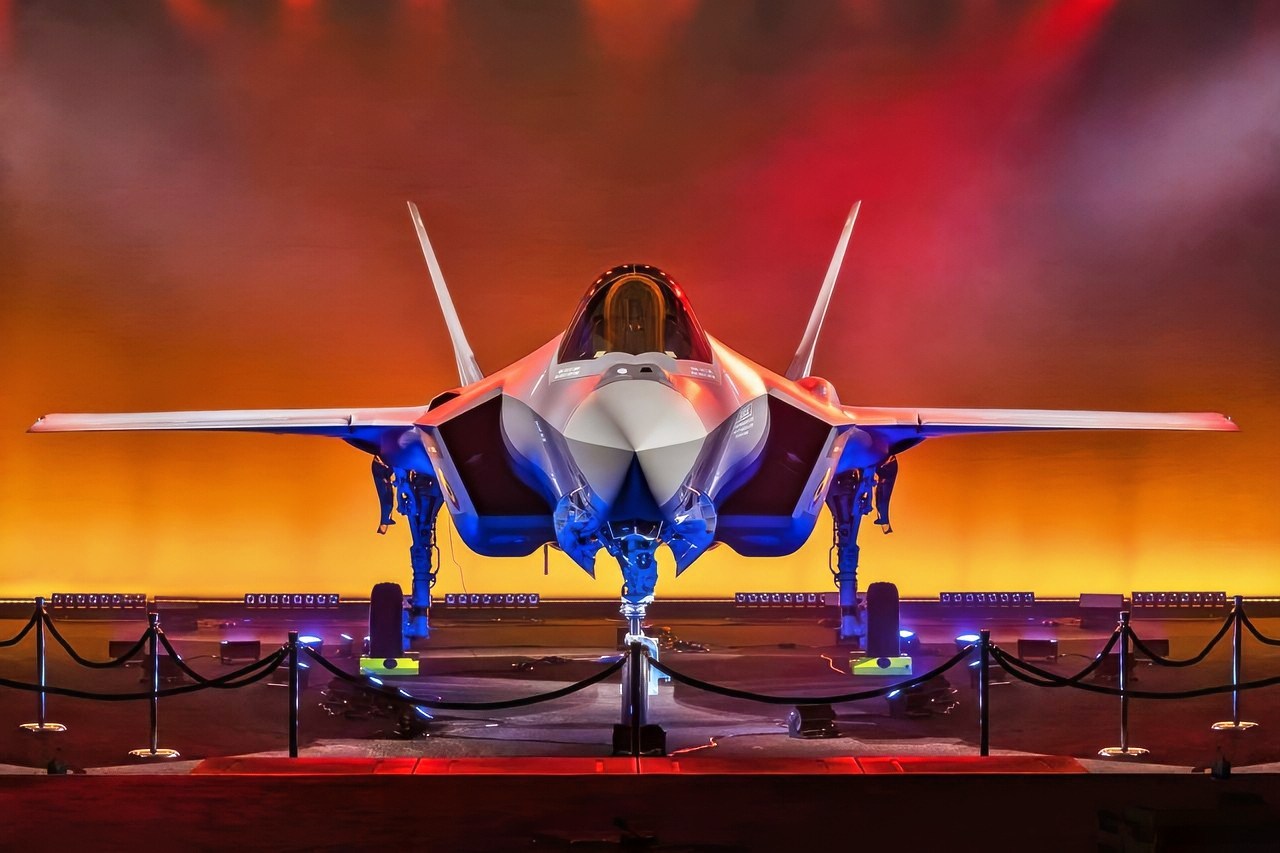
F-35 Fighter in Belgium. Image Credit: Creative Commons.
Foreign powers could, in theory, bolster Venezuela—but China, Russia, and Iran all face constraints of their own. None is in a position to confront the United States directly in the Caribbean, and all prefer influence without escalation. Maduro can count on rhetorical support, not reinforcements.
A Hemispheric Power Imbalance
When you lay the pieces side by side, the scale of the imbalance becomes stark.
The United States is massing enough force to conduct precision strikes, isolate the regime, and pressure its foreign enablers while keeping the crisis below the level of major war. Venezuela, by contrast, possesses only fragments of conventional capability and a suite of hybrid tools that complicate but do not alter strategic outcomes.
That asymmetry is the point. Washington is not seeking a fight; it is seeking leverage. And leverage in great-power competition is measured not in diplomatic statements but in the very real power a state like the U.S. can bring to bear against a state like Venezuela that has almost nothing to match it.
Where This Is Headed
The coming months will test whether Venezuela bends under the weight of this compellence campaign or whether the regime gambles that external patrons can shield it. But the strategic shape of the moment is unmistakable. The United States is massing force at a scale designed to force political change, disrupt foreign influence, and reassert hemispheric primacy at a time when great-power rivals are pressing every advantage.
Venezuela can protest. It cannot counter. And as great-power competition moves ever closer to America’s shores, Washington is making clear that this is one part of the world where it will not tolerate losing ground.
About the Author: Dr. Andrew Latham
Andrew Latham is a non-resident fellow at Defense Priorities and a professor of international relations and political theory at Macalester College in Saint Paul, MN. You can follow him on X: @aakatham. He writes a daily column for National Security Journal.


