

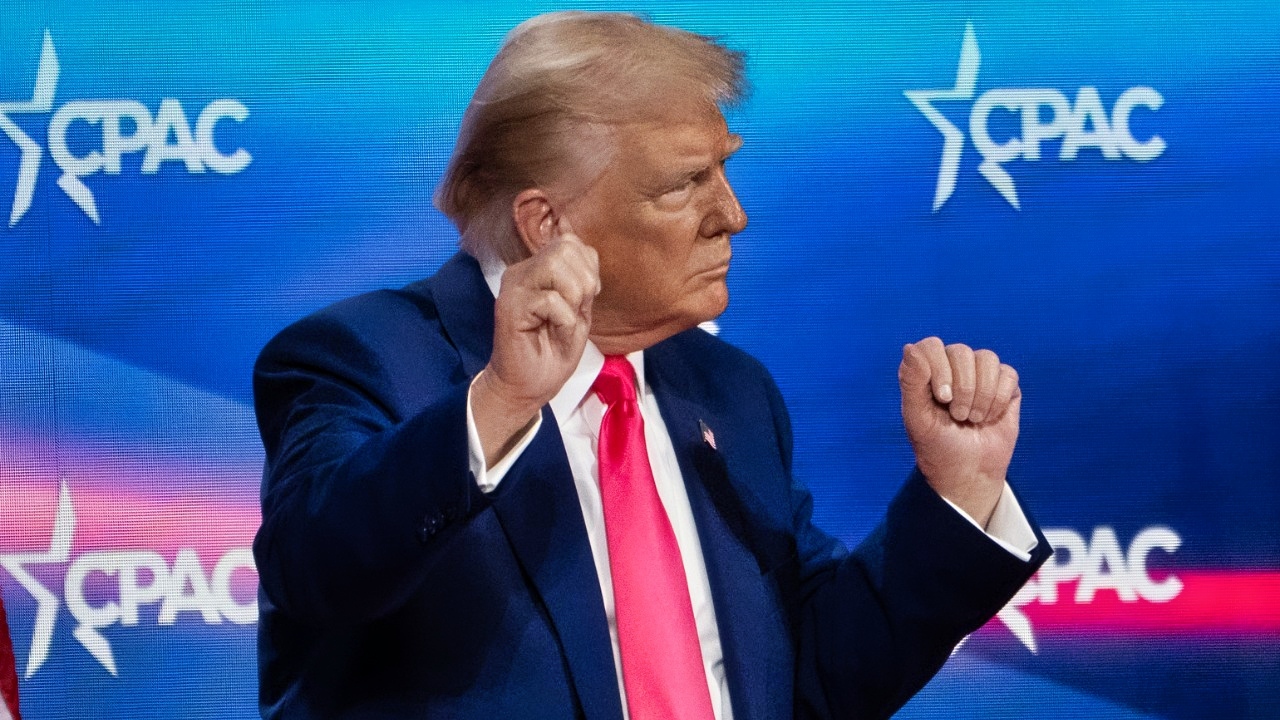
Donald Trump’s standing with Hispanic voters has been one of the more fascinating subplots of his years-long rise in American politics. However, new data raises questions about whether that support is holding.
Donald Trump and Hispanic Voters
In early 2013, following the GOP defeat in the 2012 presidential election, the Republican National Committee conducted what it called a “post-election review,” which history has referred to as “the RNC autopsy.”
The 100-page report called for the party to conduct what it called “extensive outreach to women, African-American, Asian, Hispanic, and gay voters.” Its most famous recommendation was for the party to back what was known as “comprehensive immigration reform.”
In most versions, comprehensive immigration reform entailed a bipartisan compromise that would combine new levels of immigration enforcement with a path to citizenship for current undocumented immigrants. The idea was that the GOP had alienated Hispanic voters and needed a way to get them back.
However, no such bill ever passed in Barack Obama’s second term, as Republican grassroots sentiment opposed such a bill.
And then, just over two years after the autopsy, Donald Trump came along with a different approach.
Enter Trump
Trump, of course, began his 2016 presidential campaign by calling for a wall on the border with Mexico, and also calling Mexican immigrants “rapists.”
He denounced an American-born judge as “Mexican” and engaged in numerous other rhetorical flights of fancy that could have been seen as offensive to Hispanic voters.
However, in 2016, when Trump won, he got 29 percent of the Latino vote, according to an exit poll at the time, which was considerably better than polls had expected him to do. However, that performance was better than the 27 percent earned by Mitt Romney in 2012. George W. Bush had won 40 percent of the Latino vote in his 2004 re-election.
It soon became clear that the Hispanic and Latino vote was much more nuanced and complex than the authors of the GOP autopsy, as well as the greater political conventional wisdom, had assumed. Political views differ considerably among the Hispanic population, depending on national heritage, geography, age, class, and numerous other factors.
Trump’s share of the Latino vote, according to AS/COA, reached 32 percent in 2020. Per that exit poll, “Joe Biden’s performance compared to Hillary Clinton’s four years earlier was a mixed bag, gaining support in places like California and Arizona, but losing support in Nevada and Colorado.”
And then came 2024, when Trump improved his performance with almost every demographic, Latinos included.
According to AS/COA’s analysis of that race, Trump “may have broken a Latino voting record for a Republican candidate in his 2024 presidential victory,” winning 42 percent of the Latino vote in his second election victory. While that did not constitute a majority, it did beat out George W. Bush’s performance in 2004 and gained the votes of 47 percent of Latino men.
Demographic exit poll data is inexact and never “official”; Edison Research exit polls showed Trump won 46 percent of the Hispanic vote in 2024, per Reuters.
The Honeymoon is Over with Hispanics
However, new polling shows that Trump’s support with that demographic hasn’t survived the actual governance of his second term.
Per a new Reuters/Ipsos poll, “the surge in support from Hispanic voters that helped power Trump to victory has waned since he took office.” Trump’s approval rating among that demographic is now down to 34 percent, compared to a disapproval rating of 61 percent, which is much worse than Trump’s 53 percent disapproval among the entire population.
Various explanations have been given for Trump’s sagging approval ratings with Latinos, from deportation policies seen as crueler than what Trump has supported in the past, to a sense that the economy and inflation haven’t improved but rather have gotten worse since Trump’s return.
“What really helped Republicans in 2024 is economic discontent and now that folks are not feeling better is an alarm bell for Republicans,” Clarissa Martinez de Castro, head of the Latino Vote Initiative for the nonpartisan civil rights organization, UniDos, told Reuters. “I think what is happening now is that Trump owns the economy.”
She added that while eight in ten Latino voters “support deporting dangerous criminals,” but also believe the government “should not target long-residing undocumented immigrants without criminal records.”
About the Author: Stephen Silver
Stephen Silver is an award-winning journalist, essayist and film critic, and contributor to the Philadelphia Inquirer, the Jewish Telegraphic Agency, Broad Street Review and Splice Today. The co-founder of the Philadelphia Film Critics Circle, Stephen lives in suburban Philadelphia with his wife and two sons. For over a decade, Stephen has authored thousands of articles that focus on politics, technology, and the economy. Follow him on X (formerly Twitter) at @StephenSilver, and subscribe to his Substack newsletter


