

Up to 1 billion barrels of oil supply have been removed from the global market. The Strait of Hormuz has been effectively closed for two months. Morgan Stanley estimates 4.8 million barrels of oil per day were pulled from global trade between March 1 and April 25. Brent crude is now trading above $103 per barrel. U.S. gasoline averages $4.52 per gallon, with some California stations charging over $8. Pakistan — the country mediating the U.S.-Iran negotiations — has only 20 days of strategic oil supply left. JP Morgan projects Europe could hit “operational minimum” oil levels by September. The Trump administration is reportedly considering a suspension of the federal gas tax.
Global Oil Shock Is Hitting Countries Around the World Hard

Iran Missiles. Image Credit: Creative Commons.
Countries around the world are running out of oil reserves at a rate not seen in decades.
The crisis in the Strait of Hormuz and the Iranian-American stand-off are hurting various nations’ ability to have an appropriate level of oil for internal consumption.
There could be a supply shock not seen since the 1970s, raising oil prices further and causing pain at the pump worldwide. Approximately 20 percent of the world’s oil and natural gas transits through the strait, prompting analysts to wonder what the future will hold for energy storage.
How Long Can Stockpiles Last?
Fortune and Bloomberg explained in recent articles how the Iran war is affecting the world’s oil supplies.
Stockpiles keep shrinking. There could be more shortages and price spikes affecting air conditioning electricity rates this summer. Jet fuel prices can raise fares. Petrochemicals will be more expensive. This has knock-on effects on inflation worldwide.
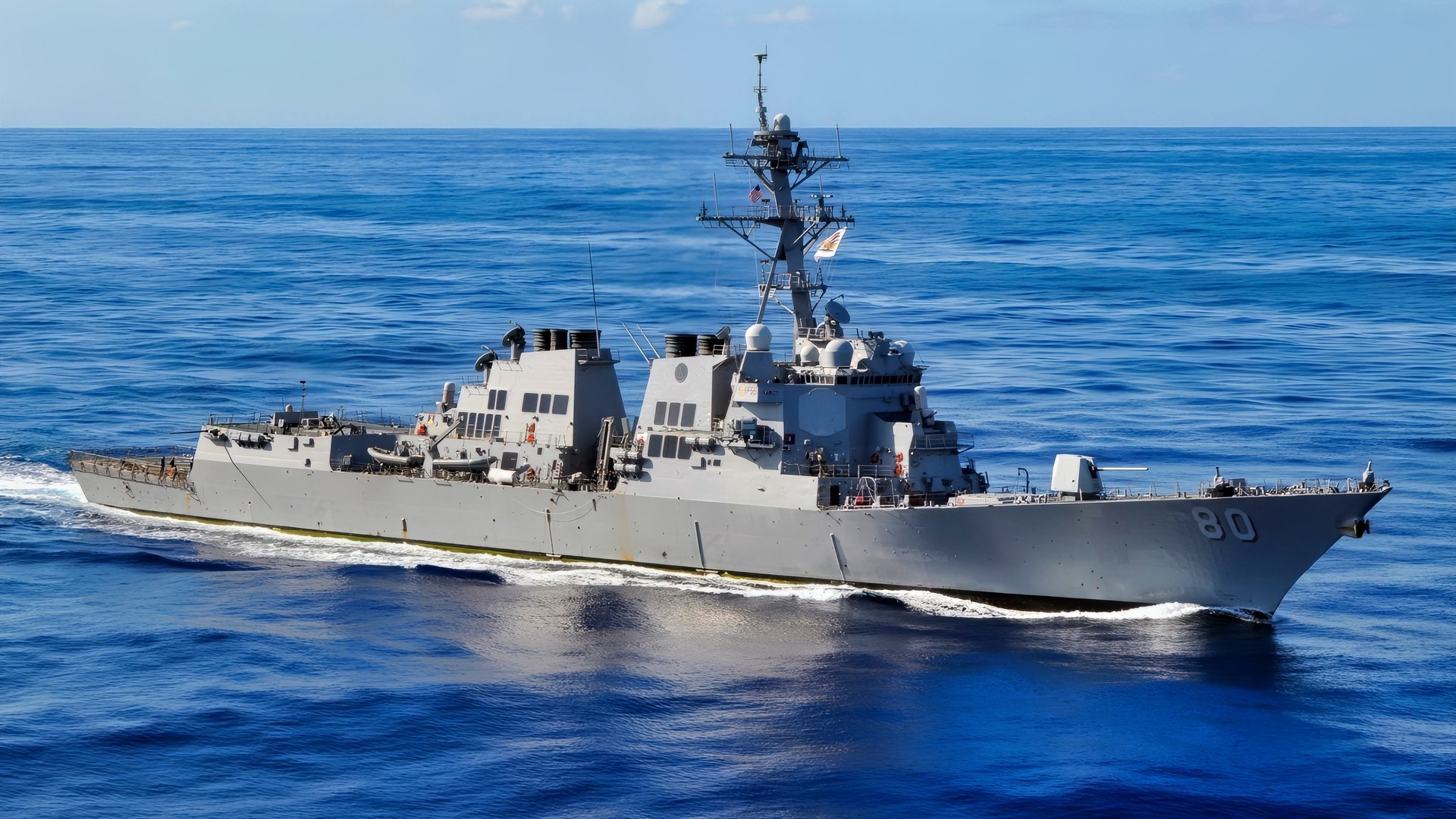
ATLANTIC OCEAN (Sept. 06, 2008) – The guided-missile destroyer USS Roosevelt (DDG 80) steams through the Atlantic Ocean. Roosevelt is deployed as part of the Iwo Jima Expeditionary Strike Group (ESG) in support of maritime security operations in the Navy’s 5th and 6th fleet areas of responsibility. The Iwo Jima ESG is made up of Roosevelt, homeported at Mayport, Fla.; the amphibious assault ship USS Iwo Jima (LHD 7); the amphibious dock landing ship USS San Antonio (LPD 17); the amphibious transport dock ship USS Carter Hall (LSD 50); the guided-missile cruiser USS Vella Gulf (CG 72); the guided-missile destroyer USS Ramage (DDG 61); all homeported at Norfolk, Va.; and the fast attack submarine USS Hartford (SSN 768), homeported at Groton, Conn. U.S. Navy photo by Mass Communication Specialist 2nd Class Jason R. Zalasky (Released)
Oil Supplies Are Dwindling
There could be as many as a billion barrels of supply removed from the market.
The Strait of Hormuz has been effectively closed to most shipping for two months, and there is no end in sight to the crisis.
From March 1 to April 25, Morgan Stanley believes that 4.8 million barrels of oil per day have been removed from global trade.
Energy Markets Are Out of Balance
The global energy system requires a minimum level of oil to function. Supply and demand most affect the price, but geopolitical shocks like wars and blockades can send oil traders into a panic. This doom loop places pressure on the market, and the price remains stubbornly high.
The Americans Are Worried
The U.S. Secretary of Energy Chris Wright was interviewed by NBC’s Meet the Press on May 10. Wright is optimistic that peace will prevail between Iran and the United States and that the Strait of Hormuz will soon be open to oil commerce.
Wright said the Trump administration is considering any ideas that could lower gasoline prices while negotiations are underway. This could include stopping the federal gas tax.
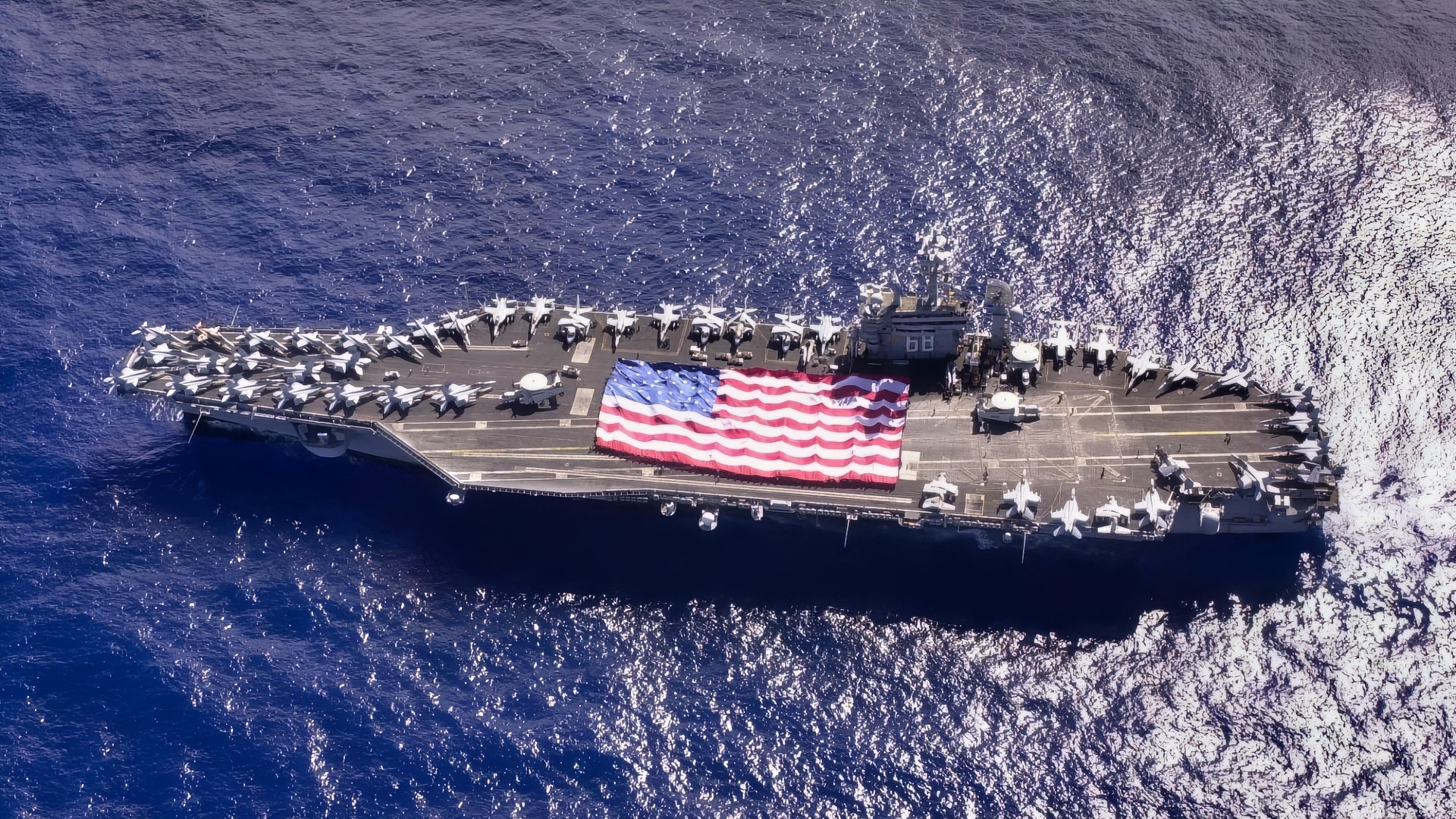
Pacific Ocean (Nov. 3, 2003) — USS Nimitz (CVN 68) crewmembers participate in a flag unfurling rehearsal with the help of family and friends on the ship’s flight deck during a Tiger Cruise. The Nimitz Carrier Strike Group and embarked Carrier Air Wing Eleven (CVW-11) are en route to San Diego, Calif., following an eight-month deployment to the Arabian Gulf in support of Operation Iraqi Freedom. U.S. Navy photo by Photographer’s Mate 3rd Class Elizabeth Thompson. (RELEASED)
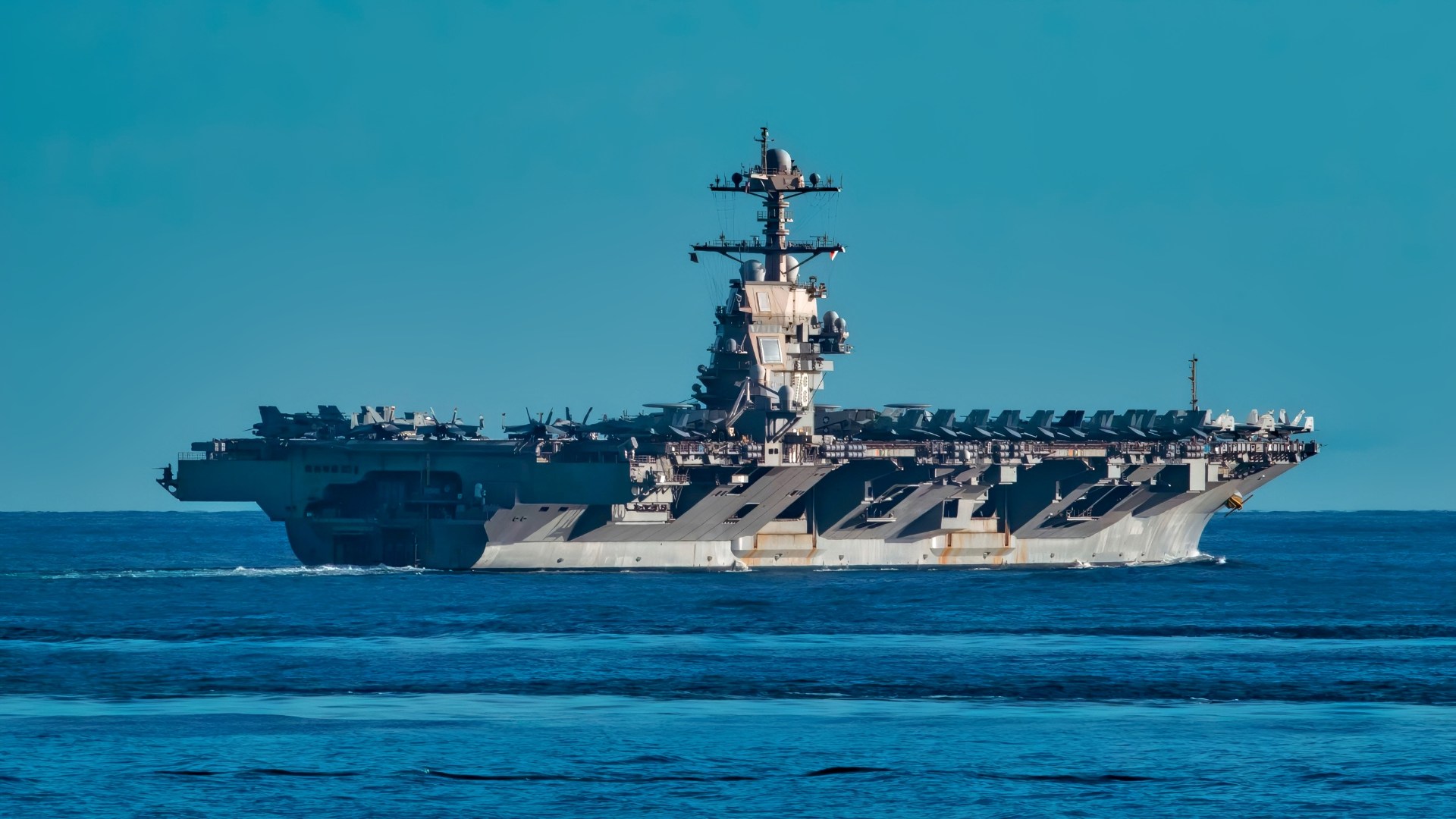
The Arleigh Burke-class guided-missile destroyer USS Winston S. Churchill (DDG 81) sails alongside the world’s largest aircraft carrier the USS Gerald R. Ford (CVN 78), Sep. 24, 2025. Winston S. Churchill, as part of Carrier Strike Group 12, is on a scheduled deployment in the U.S. 6th Fleet area of operation to support the warfighting effectiveness, lethality and readiness of U.S. Naval Forces, Europe-Africa, and defend U.S. Allied and partner interest in the region. (U.S. Navy photo by Mass Communication Specialist Seaman Hector Rodriguez)
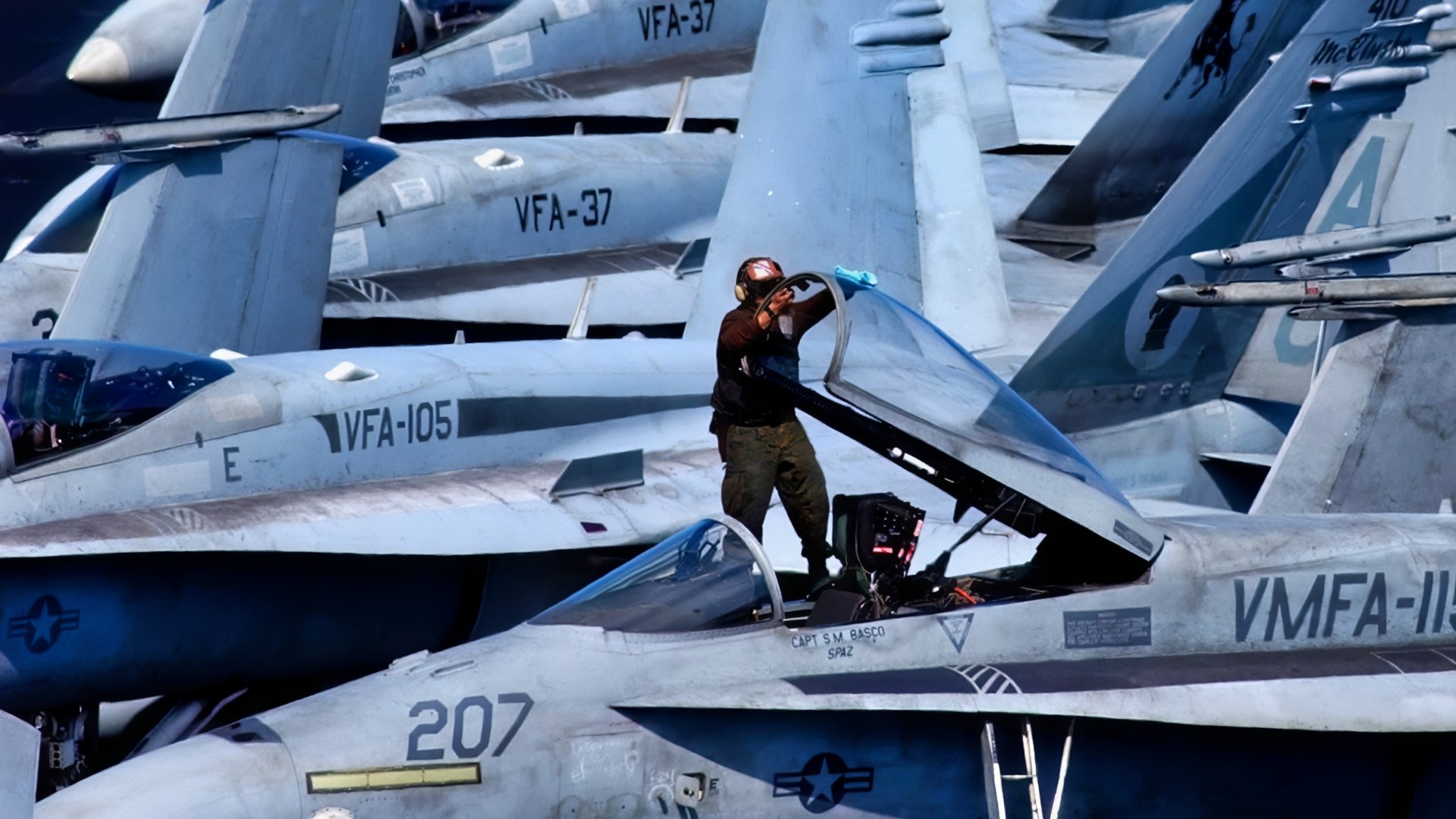
Marine Cpl. Rodger Lagrange cleans the canopy of a Marine F/A-18A+ Hornet onboard the USS Harry S. Truman (CVN 75) while the aircraft carrier operates at sea on Feb. 14, 2005. The Truman Strike Group and Carrier Air Wing 3 are conducting close air support, intelligence, surveillance, and reconnaissance missions over Iraq. Lagrange is attached to Marine Fighter Attack Squadron 115 deployed from Marine Corps Air Station Beaufort, S.C.
(DoD photo by Airman Philip V. Morrill, U.S. Navy. (Released))
Gasoline prices in the United States are averaging $4.52 per gallon, and some stations in California are charging over $8.00 a gallon. The summer driving season is beginning, and many Americans are frustrated that vacations and leisure trips will be put off. Diesel prices hurt semi-truck transportation, and the delivery of goods will likely increase, adding to inflation.
Asked by moderator of Meet the Press Kristen Welker, if he would favor suspending the federal gas tax, Wright said that “all measures that can be taken to lower the price at the pump and lower the prices for Americans, this administration is in support of.”
Global Supply Shocks
Meanwhile, the global energy situation is worsening. Oil stocks are at their lowest levels since 2018, Bloomberg reported. Plus, it is not easy for governments to estimate the amount of oil they have and to forecast future needs.
“Estimating global inventories involves both art and science. A large part is strategic crude and fuel reserves controlled by governments, either directly or by requiring the industry to maintain a level of reserves that can be released when needed, or a combination of the two. But there’s also a huge amount in commercial stockpiles —the inventories of oil producers, refiners, traders and distributors held as part of normal business operations,” according to Fortune.
Some Asian Countries Are In Trouble
Countries in East Asia that import much of their fuel are especially vulnerable to an oil supply shock. Vietnam, the Philippines, and Indonesia are highly at risk of running out of crude. This could bring their economies to a halt by increasing the price of energy used to manufacture goods. Exports would take a nosedive, and worker lay-offs could be necessary. India is also facing a natural gas shortage that could affect its economy. Japan is facing low stock levels in its strategic oil storage.
Europe Fears Travel Costs Rising
European countries whose workers take long summer holidays and prefer time off for beach destinations may see airline and train ticket prices rise. This could hurt the tourist economies in countries like Spain or Italy.
Europe could reach “operational stress levels” in June if commerce in the strait doesn’t restart, and then hit “operational minimum” levels by September, JP Morgan estimated.
Give Peace Efforts a Chance to Work
However, diplomacy could help resolve tensions between the United States and Iran. There are now unrealistic demands from both sides. That could change, and the strait will eventually open, likely by June. Countries around the world will have to tighten their belts until then. Energy ministries are scrambling to have their researchers and analysts examine oil stocks and estimate how much supply remains in the system. Governments are watching prices closely.
Current Price Levels
As of 11 am on May 11, Brent crude is over $103 a barrel, and West Texas Intermediate is more than $97 a barrel.
Still, the war has unintended consequences. Energy experts and Middle East analysts were correct to predict that the Strait of Hormuz could be closed in a war.
But if the peace process stalls, as it has recently, countries will be in a sad shape not seen since the energy crises of the 1970s during OPEC embargoes. Many countries lack their own hydrocarbon supplies and depend on imports. When total market supply is limited, prices can only rise.
Pakistan Needs Peace Soon
Pakistan, the mediator in the Iran-United States dispute, has much at stake in its negotiating strategy. The country imports its oil and gas and has a strong interest in ensuring the strait opens soon. Countries are hoping Pakistan can mediate peace before oil supplies dwindle this summer. Pakistan may have only 20 days of strategic supply left.
About the Author: Dr. Brent M. Eastwood
Author of now over 3,500 articles on defense issues, Brent M. Eastwood, PhD, is the author of Don’t Turn Your Back On the World: A Conservative Foreign Policy and Humans, Machines, and Data: Future Trends in Warfare, plus two other books. Brent was the founder and CEO of a tech firm that predicted world events using artificial intelligence. He served as a legislative fellow for US Senator Tim Scott and advised the senator on defense and foreign policy issues. He has taught at American University, George Washington University, and George Mason University. Brent is a former US Army Infantry officer. He can be followed on X @BMEastwood.


