

Russian geological surveys aboard the research vessel Akademik Alexander Karpinsky have mapped sedimentary formations beneath Antarctica’s Weddell Sea that could hold roughly 511 billion barrels of oil — nearly double Saudi Arabia’s proven reserves and roughly 10 times the North Sea’s total historical production. Russia’s state geological company Rosgeo has described the surveys, which intensified between 2020 and 2024, as scientific research conducted under the Antarctic Treaty. But the 1991 Madrid Protocol explicitly bans all commercial oil and mineral extraction on the continent — meaning even if the reserves are real, no country can legally drill a single barrel.
Russia Says Antarctica Holds Massive Oil Reserves – But International Law Says Nobody Can Drill Them
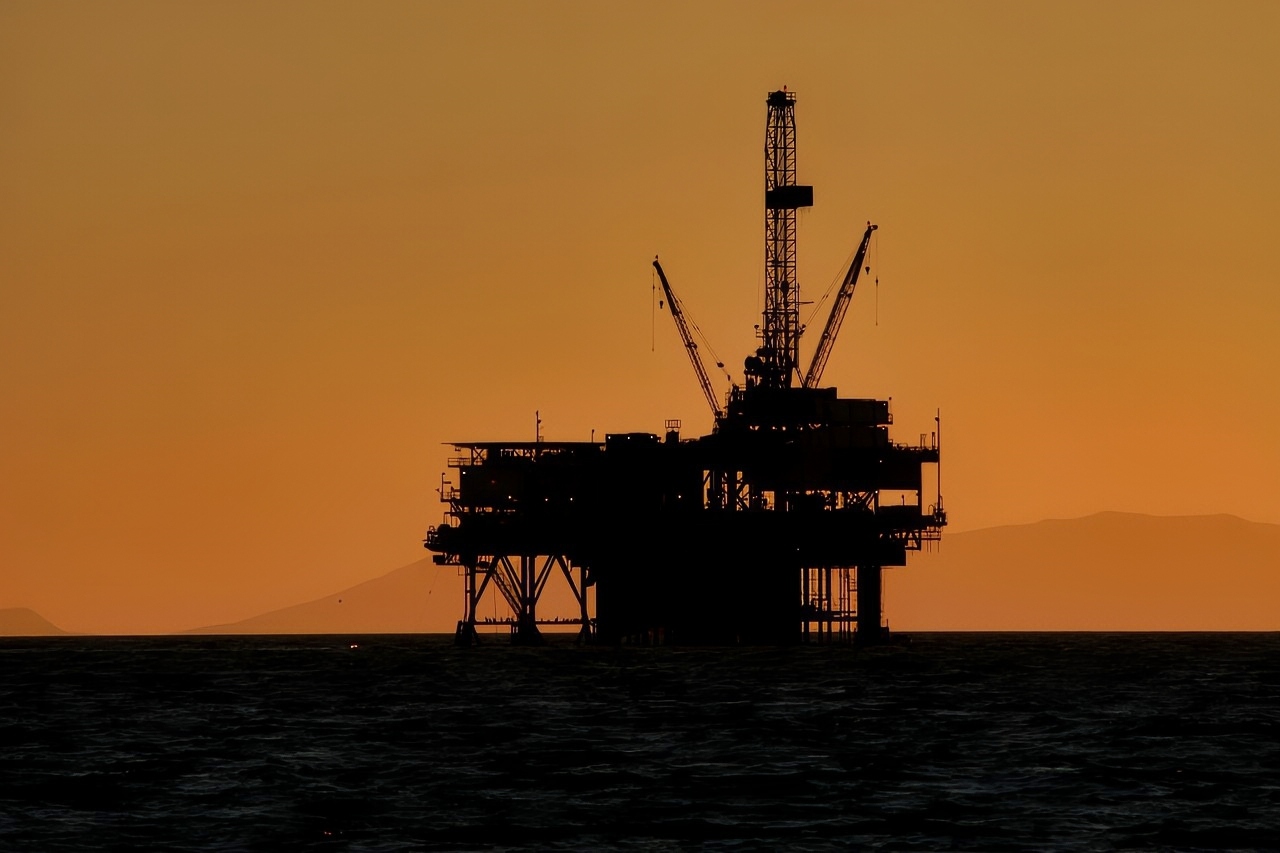
Oil Platform. Image Credit: Creative Commons.
Russian geological survey missions in Antarctica may have identified one of the largest potential untapped oil deposits on Earth, according to evidence discussed by British lawmakers last year, raising new concerns about whether Moscow is positioning itself to gain access to the resources in the future. It’s particularly curious given the longstanding debate over the territory and the fact that commercial drilling is currently illegal under international law.
During discussions in the British Parliament in May 2024, parliamentarians cited reports suggesting that Russian surveys had mapped geological formations that could contain roughly 511 billion barrels of oil. The figure would be approximately 10 times the North Sea’s total historical oil production and nearly double Saudi Arabia’s currently proven oil reserves. The survey work was conducted by the Russian research vessel Akademik Alexander Karpinsky in the Weddell Sea, a region of Antarctica south of the Atlantic Ocean near territory claimed by the United Kingdom.
The surveys were carried out by Rosgeo, Russia’s state geological exploration company, during Antarctic expeditions that reportedly intensified between 2020 and 2024. Moscow has publicly described the missions as scientific research, but British officials and Western analysts have questioned whether the surveys amount to energy prospecting under the guise of science.
Antarctica is one of the few major regions on Earth where oil drilling and commercial mineral extraction are explicitly prohibited by international treaties. Russia cannot legally extract the oil even if commercially viable reserves exist beneath the seabed.
Instead, the growing concern among Western governments is that countries – including Russia and others – may already be preparing for a future in which Antarctica’s environmental protections weaken and its vast natural resources become contested or later extracted.
What Russia Is Doing In Antarctica
The Akademik Alexander Karpinsky is a specialized Russian geological survey ship designed for offshore seismic mapping and mineral exploration missions. Operated by Rosgeo, the vessel has conducted multiple Antarctic expeditions over the past decade as part of Russia’s polar research program.
During Russia’s 65th Antarctic Expedition in 2020, Rosgeo announced extensive geophysical survey operations in Antarctic waters to study the seabed’s geological structure and evaluate sedimentary basins in the Weddell Sea region. At the time, Russian officials said the research was conducted in accordance with the Antarctic Treaty.
It’s important to note, though, that seismic surveys themselves do not directly discover oil. Instead, survey ships fire compressed air pulses into the seabed while sensors record how sound waves bounce back through underground rock formations.

Putin in Briefing. Image Credit: Russian Government.
Vladimir Putin in Syria. Image Credit: Creative Commons.
The technique is widely used by oil and gas companies prior to drilling because it allows geologists to identify sedimentary basins that may contain hydrocarbons. British lawmakers and others have expressed concerns that Russia’s surveys appeared to focus specifically on geological formations that could contain hydrocarbons.
Why Antarctica Is So Politically Sensitive
Antarctica occupies a unique position in global politics because it is governed by a Cold War-era treaty system designed to prevent territorial conflict and military competition. The Antarctic Treaty was signed in Washington in 1959 and entered into force in 1961. Original signatories included the United States, Soviet Union, United Kingdom, Australia, Argentina, Chile, France, Norway, and New Zealand.
Before the treaty, multiple countries maintained overlapping territorial claims across Antarctica. Britain, Argentina, and Chile all claimed overlapping sections of the Antarctic Peninsula and surrounding regions near the Weddell Sea. The treaty froze those disputes without permanently resolving them while also prohibiting military activity except for peaceful support and scientific operations.
Neither the Soviet Union nor the United States formally recognized most territorial claims, but both reserved the right to make future claims if the treaty system ever collapsed. Russia then inherited the Soviet Union’s position after 1991.
Disagreements or sensitivity surrounding territorial claims in the region are not surprising, given the vast natural resources likely buried beneath the ice. Antarctica contains the majority of Earth’s freshwater ice reserves, as well as significant fishing zones and potentially large deposits of oil, natural gas, coal, and minerals. Climate change and shifting polar conditions have sparked renewed interest in the region, with Western analysts and governments now expressing concern that resource competition could intensify in the coming decades.
Nobody Can Drill for Antarctic Oil
The 1991 Protocol on Environmental Protection to the Antarctic Treaty, commonly known as the Madrid Protocol, is the primary legal barrier preventing oil extraction on the continent.
The agreement entered into force in 1998 and formally designated Antarctica a “natural reserve, devoted to peace and science.”
Article 3 of the protocol applies basic principles to human activities in the region and bans all activities “relating to Antarctic mineral resources, except for scientific research.” That means no oil drilling or natural gas extraction are legal in the Antarctic, nor can any country begin mining operations. Russia, therefore, may not have broken that treaty – but only because the activity was described as scientific research.
The larger concern, though, is not that Russia is about to immediately begin drilling for Antarctic oil; such a move would spark an international backlash and possible military response.
The concern is really that major powers might be preparing for a future in which the treaty system weakens and climate conditions make access easier – and it’s hard to predict what might happen in a few decades’ time.
About the Author: Jack Buckby
Jack Buckby is a British researcher and analyst specializing in defense and national security, based in New York. His work focuses on military capability, procurement, and strategic competition, producing and editing analysis for policy and defense audiences. He brings extensive editorial experience, with a career output spanning over 1,000 articles at 19FortyFive and National Security Journal, and has previously authored books and papers on extremism and deradicalization.


