

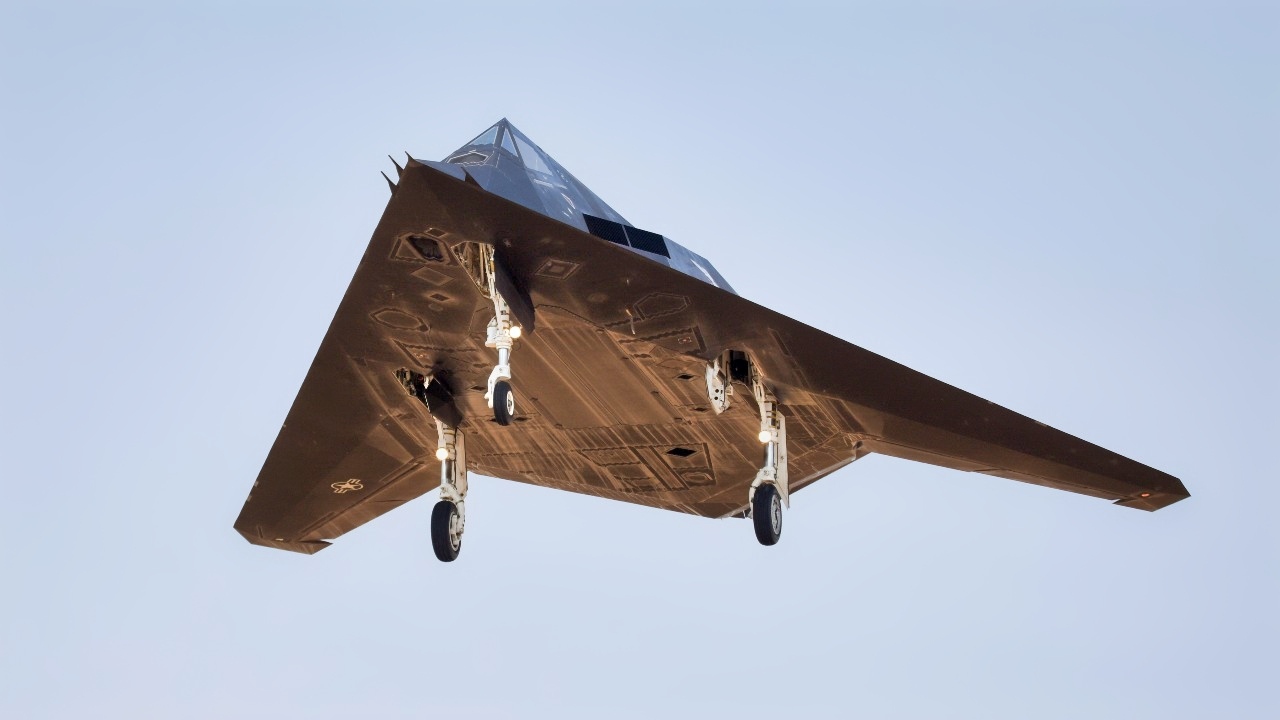
Key Points and Summary – On March 27, 1999, during NATO’s Operation Allied Force, a Serbian air defense unit under the command of Colonel Zoltán Dani achieved the impossible: they shot down a US Air Force F-117 Nighthawk stealth aircraft.
-This historic first was not luck, but a result of tactical ingenuity.
-The Serbians used antiquated, Soviet-made S-125 (SA-3 Goa) low-frequency radars in short bursts to detect the F-117.
-They also exploited predictable NATO flight paths and benefited from the absence of US electronic warfare support, which was grounded by bad weather, proving that even advanced stealth technology is not invincible against a crafty and disciplined adversary.
How the F-117 Stealth Fighter Was Beaten
Stealth technology does not make an aircraft invisible (yet). It simply reduces its radar signature. Stealth is an essential quality for any fifth-generation and beyond aircraft to possess.
However, stealth is not a be-all-end-all solution.
Case in point: in 1999, during NATO’s intervention in Yugoslavia, Serbian air defenses were able to detect and shoot down an F-117 Nighthawk, which was one of the US’ most advanced fighters at the time. How did the Serbs accomplish this with antiquated Soviet technology?
The Serbians were crafty with their tactics and understood their enemy well, enabling them to fight against technologically superior adversaries.
The First Stealth Jet Ever Shot Down
In March 1999, NATO launched Operation Allied Force, a sustained air campaign aimed at halting the ethnic cleansing of Kosovar Albanians by Yugoslav forces under President Slobodan Milošević. The United States contributed a wide array of aircraft to the operation, including the F-117 Nighthawk.
This aircraft, introduced in the early 1980s, was the first operational platform built around stealth principles. Its angular design and radar-absorbent materials made it extremely difficult to detect using conventional radar systems. During the Gulf War in 1991, the F-117 had performed with near impunity, striking high-value targets deep within Iraqi territory without suffering a single loss.
However, on the night of March 27, 1999, the record was broken. An F-117A with the callsign “Vega 31,” piloted by Lieutenant Colonel Dale Zelko, was flying a mission over Serbia. After releasing its payload near Belgrade, the aircraft was on its return leg when it was detected and engaged by the 3rd Battalion of the 250th Air Defense Missile Brigade of the Yugoslav Army.
This unit, under the command of Colonel Zoltán Dani, was equipped with the S-125 Neva/Pechora surface-to-air missile system, designed by the USSR and known to NATO as the SA-3 Goa. Though the system was developed in the 1960s and considered outdated by Western standards, it proved capable of downing one of the most advanced aircraft in the world under the right conditions.
How Serbia Downed an Advanced Stealth Fighter
The question remains: how did Serbia, with outdated Soviet technology, manage to down one of the most advanced aircraft at the time? As it turns out, it wasn’t mere luck that enabled the Serbs to down the Nighthawk; it was the result of careful planning, tactical innovation, and a deep understanding of NATO operations.
One of the key factors that enabled the shootdown was the predictability of NATO flight paths. The F-117s, like many other aircraft in the campaign, often used similar ingress and egress routes to and from their targets. Over time, Serbian air defense units began to anticipate these routes, allowing them to position their missile batteries more effectively.
Another critical factor was the use of modified radar tactics. While stealth aircraft are designed to evade radar detection, they are not entirely invisible to radar. The F-117 was optimized to avoid detection by high-frequency radar; however, low-frequency radar, although less precise, could still detect its presence under certain conditions. Colonel Dani’s unit used older, low-frequency radars. The crew operated the low-frequency radar in short bursts, typically no more than 17 seconds at a time, to avoid being targeted by NATO’s anti-radiation missiles. This tactic allowed them to detect the F-117 at a range of approximately 23 kilometers.
Never Underestimate Your Enemy
Compounding the aircraft’s vulnerability that night was the absence of electronic warfare support. EA-6B Prowler aircraft, which typically accompanied stealth missions to jam enemy radar, were grounded due to bad weather. The lack of accompanying craft left the F-117 more exposed to detection and engagement.
Once the aircraft was detected, the Serbian unit launched two V-601M missiles from the S-125 system. The first missile passed close enough to shake the aircraft, while the second detonated nearby, spraying shrapnel that severely damaged the jet. Lieutenant Colonel Zelko ejected and was later rescued by US forces.
Serbian forces recovered the wreckage of Vega 31, and parts of it are now displayed at the Belgrade Aviation Museum. Other parts were given to Serbia’s allies, such as Russia, for intelligence purposes. The event was a propaganda victory for Serbia and a sobering moment for NATO.
It demonstrated that stealth technology, while highly effective, was not foolproof.
The incident prompted the US and NATO to reassess their tactics, particularly regarding the overreliance on stealth and the importance of maintaining robust electronic warfare support.
The event also reinforced the old mantra of never underestimating your enemy. Despite their technological inferiority, the Serbians were crafty and could adapt their tactics to counter advanced enemies. Colonel Zoltán Dani’s success was attributed not just to the equipment he used but to his discipline, mobility, and tactical innovation.
He frequently relocated his missile batteries, avoided prolonged radar emissions, and studied NATO tactics extensively.
His approach exemplified how a technologically inferior force could still achieve significant victories through clever strategy and adaptability.
About the Author:
Isaac Seitz, a Defense Columnist, graduated from Patrick Henry College’s Strategic Intelligence and National Security program. He has also studied Russian at Middlebury Language Schools and has worked as an intelligence Analyst in the private sector.
Hypersonic Weapons In Depth
Russia’s Hypersonic Missiles Summed Up in 4 Words


Pingback: How the F-117 Nighthawk 'Stealth Fighter' Transformed Warfare - National Security Journal